As ore grades decline and fine particle recovery becomes more critical, conventional separation methods are reaching their limits. Electrostatic separation, particularly based on triboelectric (tribotic) charging, is gaining renewed attention—but even this technology has room for improvement. That’s where a hybrid roller and plate-type electrostatic separator comes in.
Traditional electrostatic systems typically rely on either plate-type separation (for controlled particle trajectories) or drum/roller-type systems (for continuous processing and higher throughput). Each has advantages—but also limitations. Plate systems offer precision but limited capacity, while drum systems provide throughput but less control over fine particle behavior.
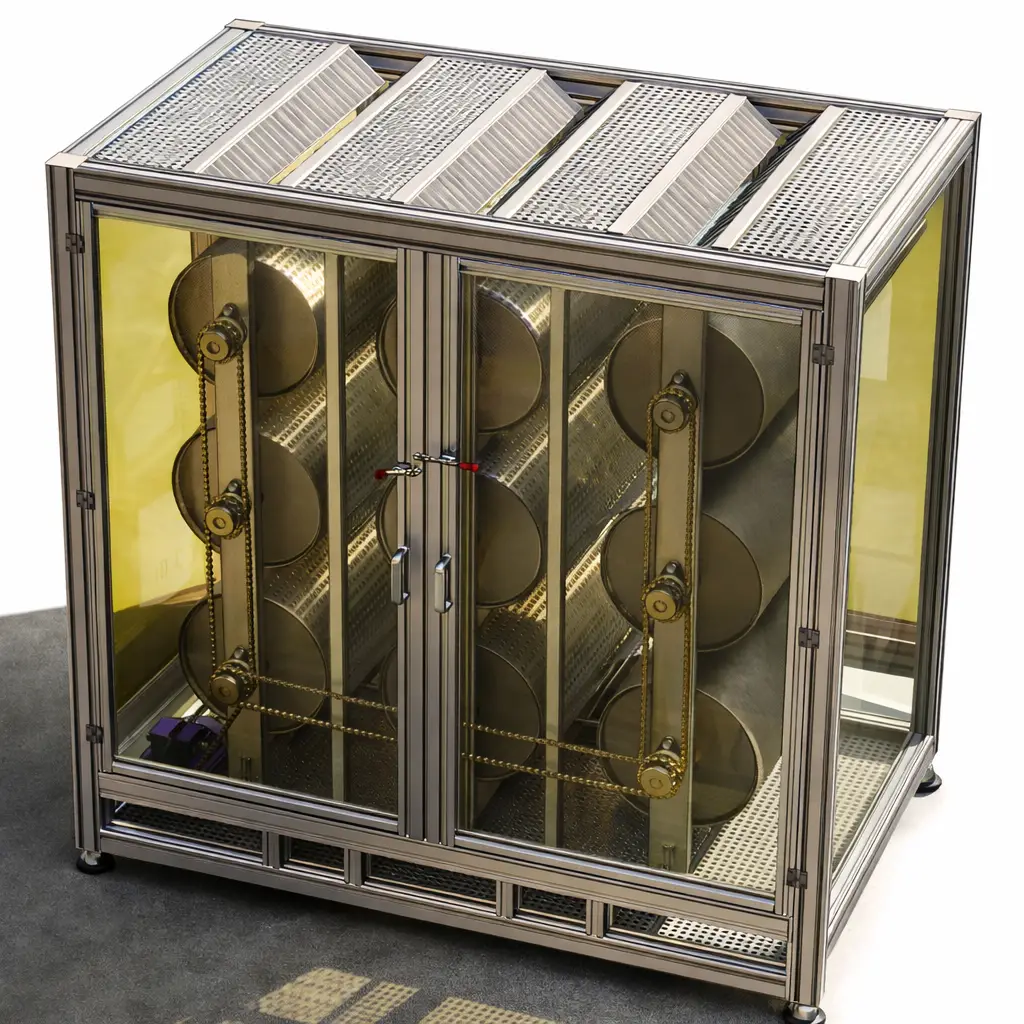
The system shown here integrates both approaches into a single enclosed module, leveraging the strengths of each.
At the core is a multi-stage rotating roller assembly, where particles undergo continuous triboelectric charging through contact and friction. As materials pass over the rollers, differences in conductivity and surface properties cause particles to acquire either positive or negative charges.
Immediately following this, the material transitions into a plate-based electrostatic field zone, where high-voltage electrodes create a controlled separation environment. Here, particle trajectories are precisely influenced—conductive materials are attracted or repelled differently than non-conductive ones, enabling sharper separation boundaries.
This hybrid approach offers several key advantages:
- Improved Fine Particle Recovery: Better control over particles below 200 microns
- Higher Throughput: Continuous roller feeding avoids bottlenecks
- Enhanced Separation Efficiency: Combination of frictional charging + electrostatic field control
- Compact, Enclosed Design: Reduced dust emission and safer operation
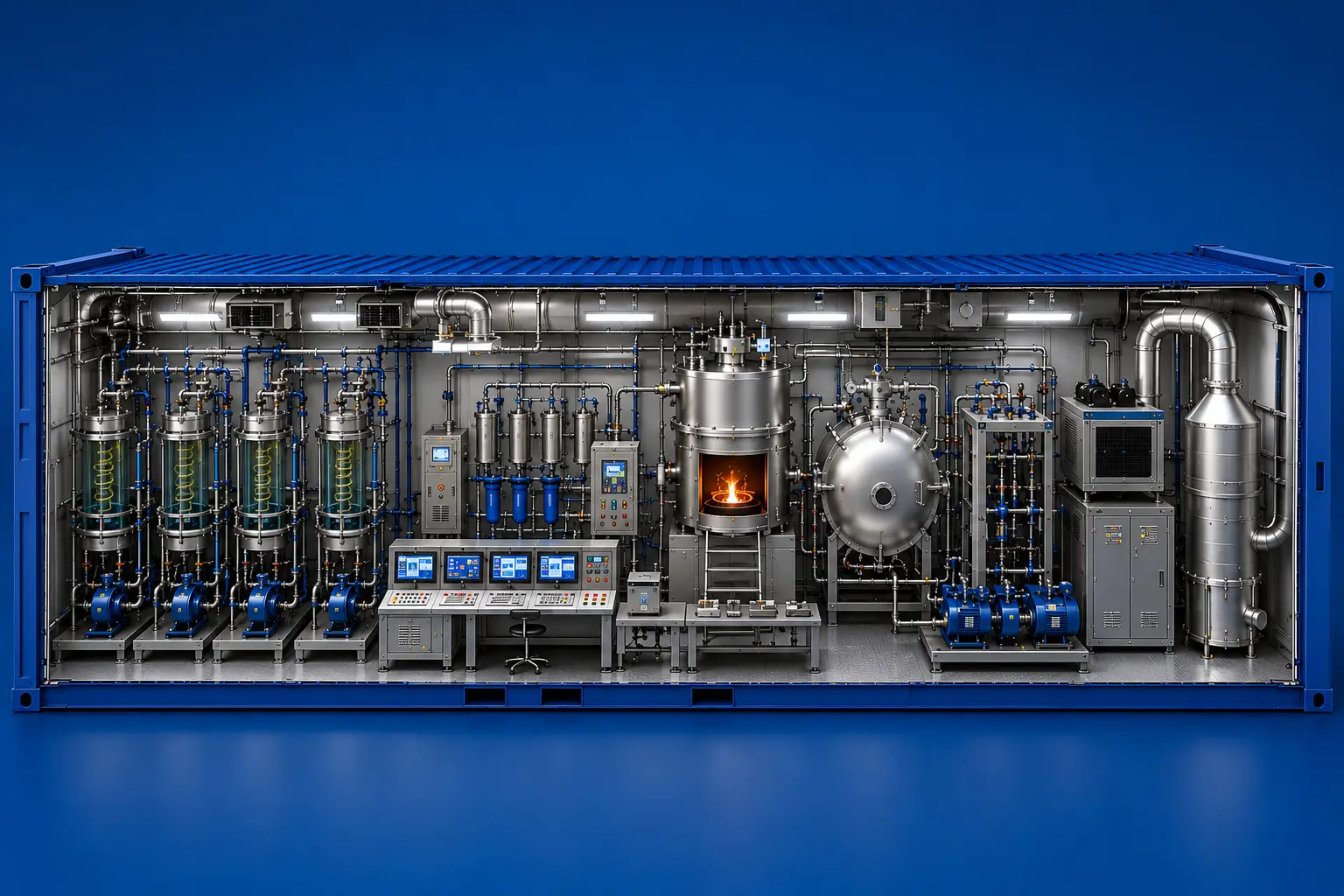
- Modular Integration: Easily fits into containerized processing systems
The enclosed structure also allows for controlled humidity and airflow, which are critical parameters in triboelectric separation performance. Maintaining stable environmental conditions significantly improves consistency and repeatability—something often overlooked in traditional open systems.
This type of system is particularly well-suited for:
- Dry processing of gold-bearing ores
- Heavy mineral sands (zircon, rutile, ilmenite)
- Rare earth elements (REE) separation
- Recycling of conductive vs non-conductive materials
As the mining industry shifts toward waterless processing, energy efficiency, and modular plants, hybrid electrostatic systems like this represent a meaningful step forward. By combining mechanical interaction (rollers) with electrical precision (plates), we can unlock higher recovery rates from increasingly complex ores.
The future of mineral separation won’t rely on a single method—it will be integrated, hybrid, and optimized at every stage.