Mineral Processing Machines & System Theory
Metallurgy
May 10, 2026
May 10, 2026
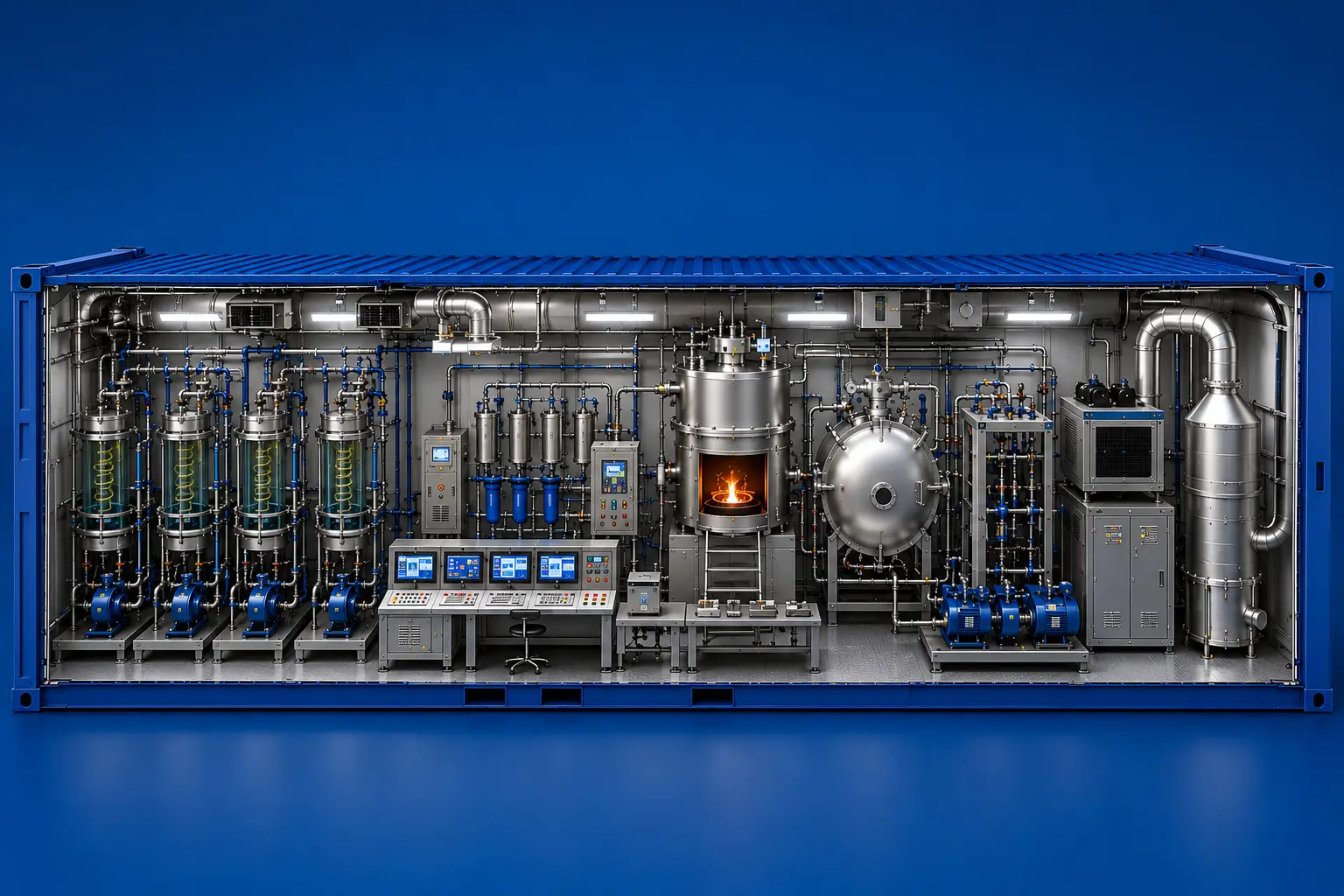
Mineral Processing Machines System Theory is an integrated engineering framework developed by Avimetal Inc. that redefines modern mineral processing through modular containerized plants, advanced dry separation technologies, intelligent recovery systems, and environmentally responsible refining methods.
The system is designed to recover valuable metals more efficiently from ores, tailings, slag, and complex mineral resources while reducing capital expenditure, construction time, water consumption, and environmental impact. By combining scalable plug-and-play processing modules with next-generation concentration and refining technologies, the platform enables rapid deployment of high-performance mineral recovery operations for precious metals, critical minerals, rare earth elements, and industrial metals worldwide.
A primary crushing machine that reduces large rocks and ore through compressive force between a fixed jaw and a moving jaw.
The material is progressively crushed into smaller sizes suitable for secondary processing. Commonly used in mining, aggregate, and recycling operations.
A high-speed impact crusher that breaks material using rotating hammers.
The repeated impact fractures brittle ore, slag, limestone, coal, and industrial materials into smaller particles. Suitable for medium and fine crushing applications.
A crushing and grinding system that compresses material between two counter-rotating rollers. The process creates uniform particle size while generating less dust and lower energy consumption compared to impact crushing systems.
A high-velocity grinding system that uses strong airflow turbulence, centrifugal force, and particle collision for ultra-fine grinding and mineral liberation. The vortex motion increases particle interaction and improves fine material reduction efficiency.
A rotating grinding mill lined with ceramic material and filled with ceramic grinding media. The mill reduces particle size through impact and friction while minimizing iron contamination during fine grinding of minerals and chemicals.
A gravity concentration system that uses centrifugal force to separate heavy minerals from lighter material in slurry form. Fine gold and dense minerals are concentrated along the rotating bowl while lighter particles are discharged.
A mineral separation system that introduces air bubbles into slurry mixed with flotation reagents. Hydrophobic mineral particles attach to bubbles and float to the surface, while unwanted material remains suspended or sinks.
A gravity separation device that uses differential motion, water flow, and deck vibration to separate minerals based on density and particle size. Heavy minerals remain near the concentrate zone while lighter particles wash away.
A solid-liquid separation system that applies mechanical pressure to slurry through filter media. Water passes through the filter cloth while solid concentrate remains trapped, producing dewatered material for transport or further processing.
A gravity concentration machine that separates particles according to density using pulsating water flow. Heavy minerals move downward through the jig bed while lighter material is displaced upward and discharged.
A classification system that separates material according to particle size using vibrating screen decks. Oversized particles remain on the screen surface while smaller particles pass through the openings.
A dry separation system that uses electrostatic charging and electric fields between plate electrodes to separate conductive and non-conductive mineral particles based on electrical properties
A conductive mineral separation system using rotating grounded rollers and high-voltage electrodes. Conductive particles discharge quickly and separate differently from non-conductive particles.
A hybrid electrostatic separation system combining plate and roller technologies to improve mineral separation efficiency, recovery performance, and processing flexibility for complex materials.
A water-free mineral recovery system that combines airflow, vibration, gravity, and electrostatic charging to separate fine conductive and heavy minerals in dry processing environments.
A thermal drying system that removes moisture using indirect steam heating. Heat transfers through metal surfaces without direct flame contact, reducing oxidation and improving energy efficiency.
A slowly rotating cylindrical furnace used for drying, calcination, roasting, reduction, and thermal treatment of minerals and industrial materials under controlled temperature conditions.
A sealed high-pressure reaction vessel used for chemical leaching, oxidation, and hydrometallurgical processing under elevated temperature and pressure to accelerate mineral reactions.
An air filtration system designed to capture airborne dust particles generated during crushing, grinding, conveying, and thermal processing operations using filters, cyclones, or pulse cleaning systems.
A particle separation system that uses centrifugal airflow motion to separate dust and solid particles from gas streams. Heavier particles move outward and downward while clean air exits through the center.
An exhaust gas treatment system that removes harmful gases, fumes, acidic vapors, and particulate matter by contacting contaminated gas streams with liquid absorbents or chemical solutions.
A plasma processing system that combines cold plasma generation with liquid-phase or thermal reaction technologies to enhance material transformation, chemical activation, and metal recovery processes.
The system produces highly reactive ions, electrons, radicals, and energized particles capable of accelerating chemical reactions at relatively low bulk temperatures.
Applications include mineral activation, hydrometallurgical enhancement, wastewater treatment, surface modification, gas treatment, fine particle processing, and advanced material purification with reduced thermal damage and improved energy efficiency.
An advanced thermal processing technology combining plasma energy with conventional heating or chemical processes for metal extraction, slag treatment, waste reduction, and critical mineral recovery.
A high-temperature furnace used to melt complex ore, concentrates, slag, and recycled materials for metal separation and recovery. In copper-assisted fusion processing, molten copper acts as a collector metal that absorbs gold, silver, and platinum group metals (PGMs) due to strong metallurgical affinity.
Unwanted minerals separate into slag while the heavier precious-metal-bearing copper phase settles at the bottom.
The collected metals are later recovered through electrorefining, leaching, or additional refining processes.
A continuous casting system designed to produce metal anodes for electrorefining and electrowinning processes. Molten metal is continuously poured into controlled molds and cooled to form uniform anode plates with consistent thickness, density, and surface quality.
The system improves production efficiency, reduces casting defects, and supports continuous large-scale metal refining operations.
An advanced electrorefining system that utilizes cyclone-induced vortex flow within the electrolyte chamber to improve metal purification efficiency. The rotating fluid motion enhances ion transport, increases electrolyte circulation, reduces concentration polarization, and promotes more uniform metal deposition on cathode surfaces.
The system is designed to improve refining speed, reduce impurity buildup, lower energy consumption, and produce higher-purity refined metals with smoother and denser deposits during electrochemical refining processes.
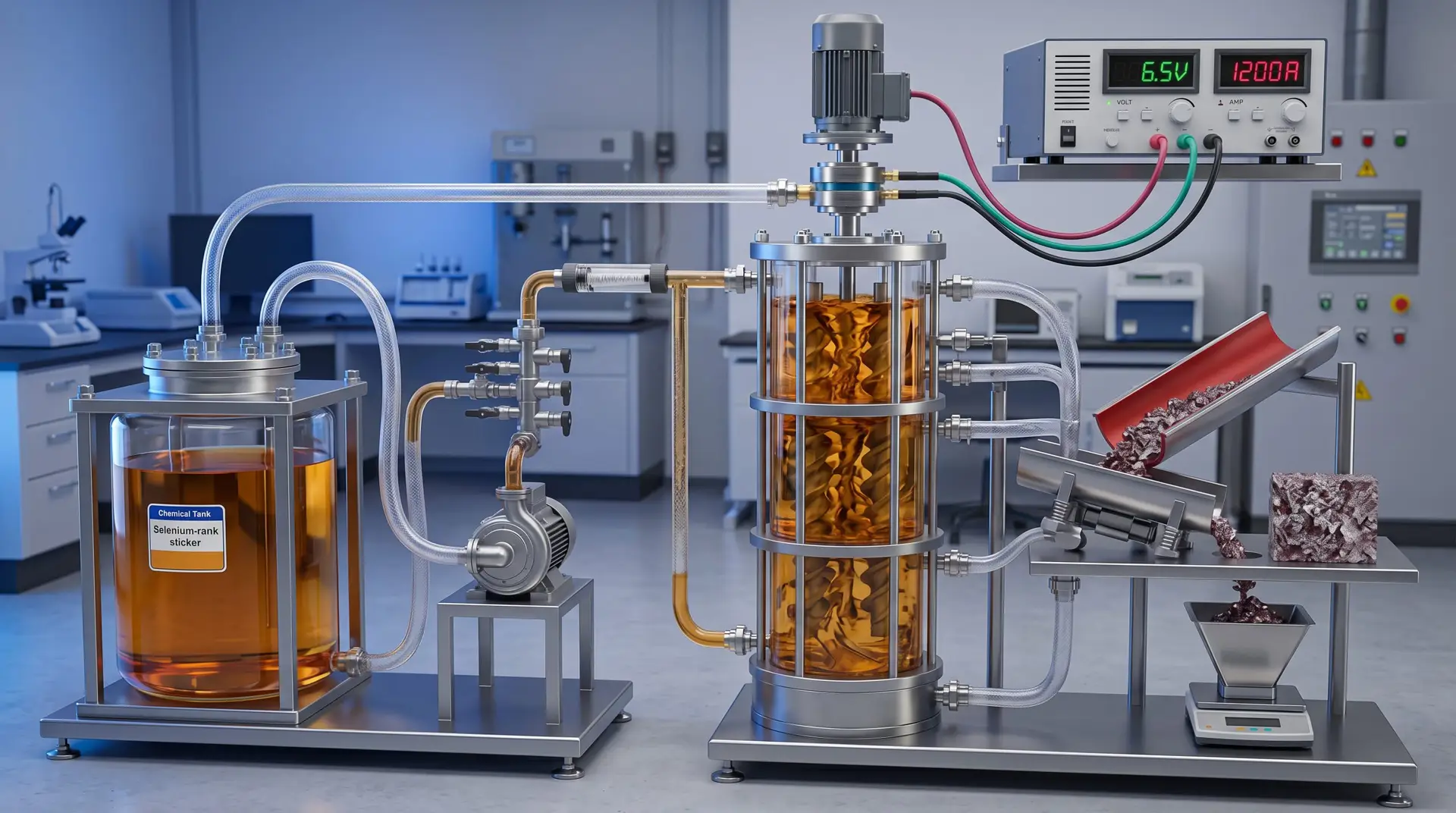
An advanced electrowinning system that combines electrochemical metal recovery with cyclone-induced fluid motion inside the cell. The rotating vortex flow improves electrolyte circulation, increases mass transfer, reduces boundary layer resistance, and enhances contact between dissolved metal ions and electrode surfaces.
The system is designed to improve metal deposition efficiency, increase recovery rates, reduce energy consumption, and minimize electrode passivation during recovery of copper, gold, silver, nickel, rare metals, and other dissolved metals from solution.
An advanced electrowinning process using rotating electrodes to improve electrolyte circulation, mass transfer, deposition efficiency, and metal recovery rates.
A rotating electrode refining technology designed to improve impurity removal, increase metal purity, enhance current distribution, and produce smoother refined metal deposits.