Modular Tilting Furnace System
The modular tilting furnace system is designed as a compact, transportable smelting unit built from standardized container-based modules for rapid installation and efficient plant integration. The system consists of five 5,900 mm modules plus one 11,800 mm double-stacked module for air handling, dust collection, and gas scrubbing.
The 5,900 mm modules include:
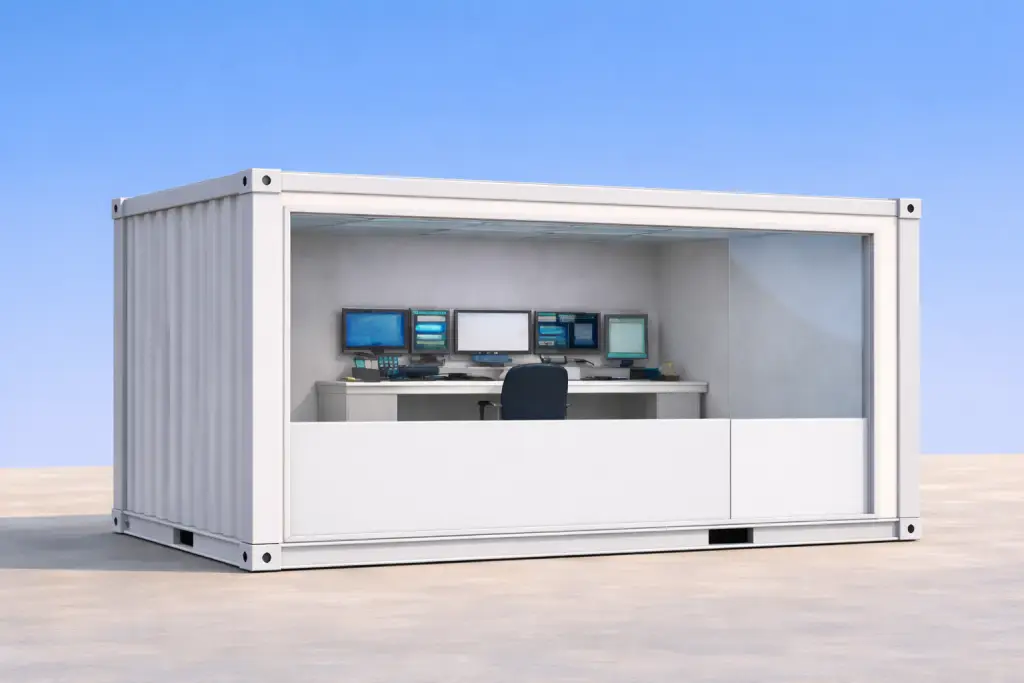
- Control Room Module – houses the control panel, rectifier, and operating systems
- Bottom Storage Module – provides space for materials, tools, and auxiliary components
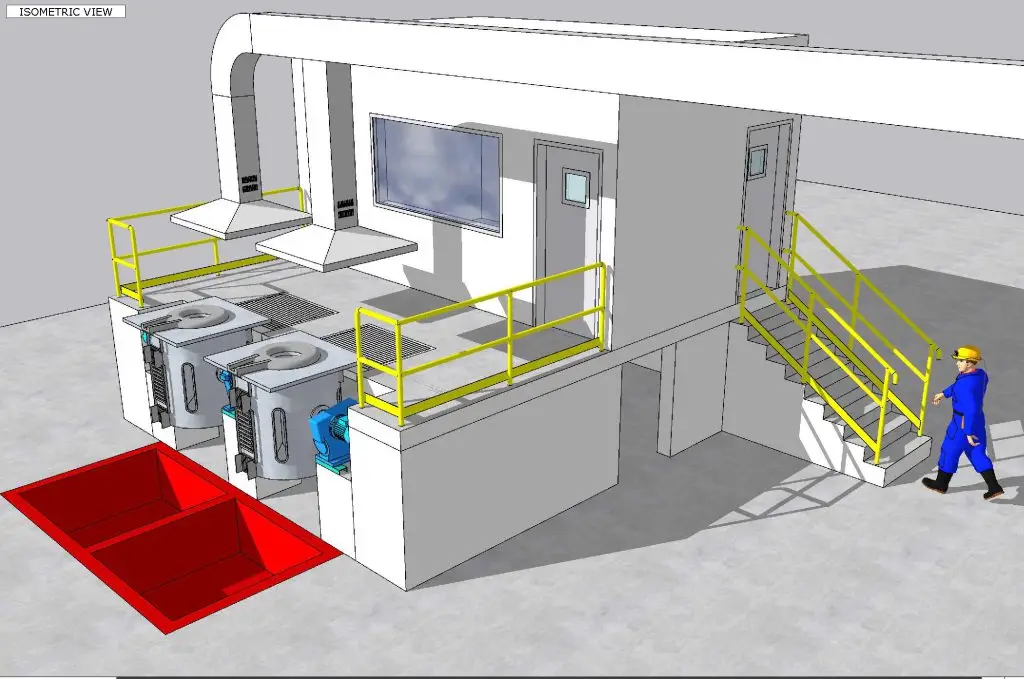
- Double Tilting Furnace Module – includes two tilting furnaces with an upper working platform for operation and maintenance
- Furnace Hood Module – mounted above the furnace area for fume capture and ventilation
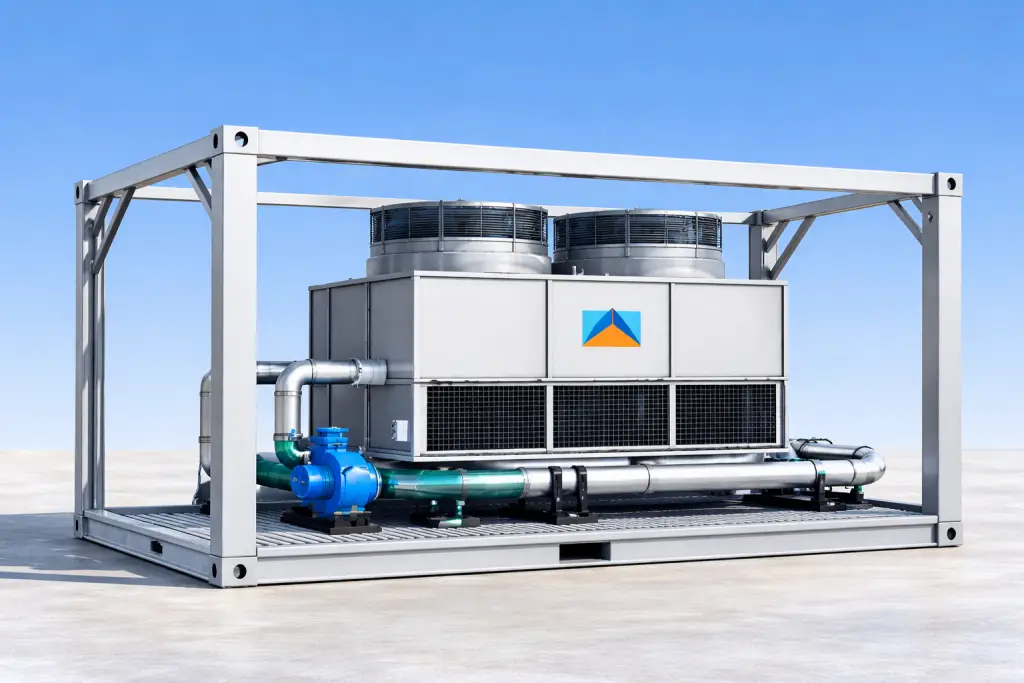
- Cooling Tower Module – supports cooling and temperature control for stable operation
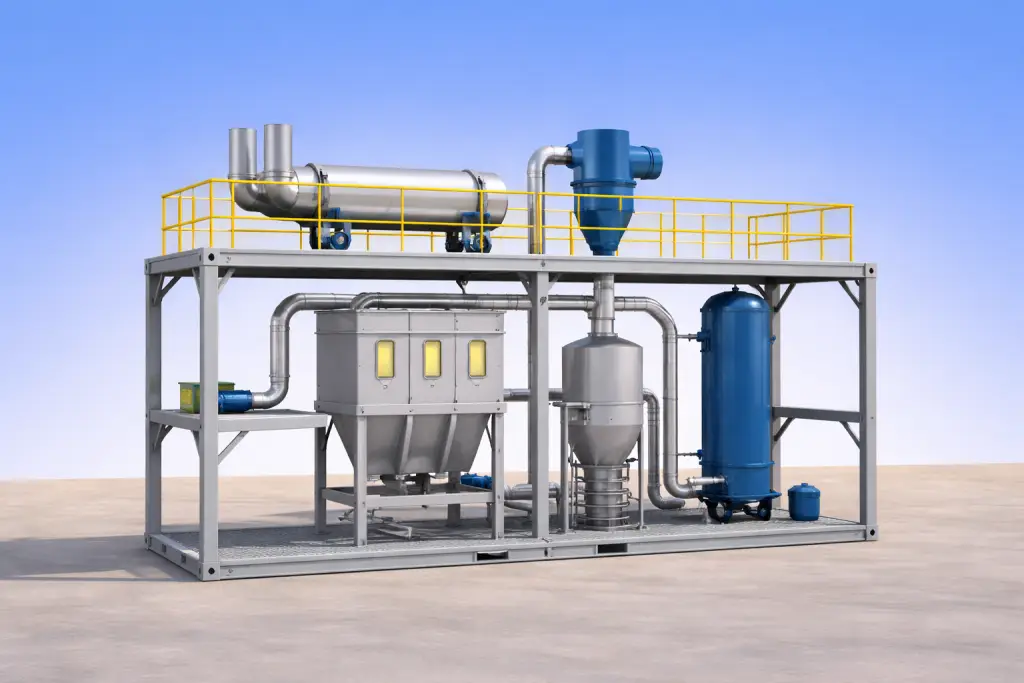
The 11,800 mm double-stacked module is dedicated to environmental control. The bottom container houses the lower sections and auxiliary parts of the dust collector, air cyclone, and gas scrubber, while the top container contains the main bodies of these systems. The two containers are designed to align and connect precisely, forming one integrated air pollution control unit.
This modular arrangement allows fast deployment, reduced civil work, simplified transportation, and easy expansion. It is ideal for smelting plants requiring compact layout, efficient fume handling, and plug-and-play installation.
Key Features
- Five 5,900 mm modular units plus one 11,800 mm double-stacked environmental module
- Double tilting furnace with elevated work platform
- Integrated control room with rectifier
- Dedicated storage and cooling tower modules
- Matched double-stack dust collector, cyclone, and gas scrubber system
- Fast installation with modular, transportable construction
- Reduced foundation and on-site construction costs
This system provides a practical and scalable solution for modern furnace operations where mobility, environmental control, and efficient installation are essential.