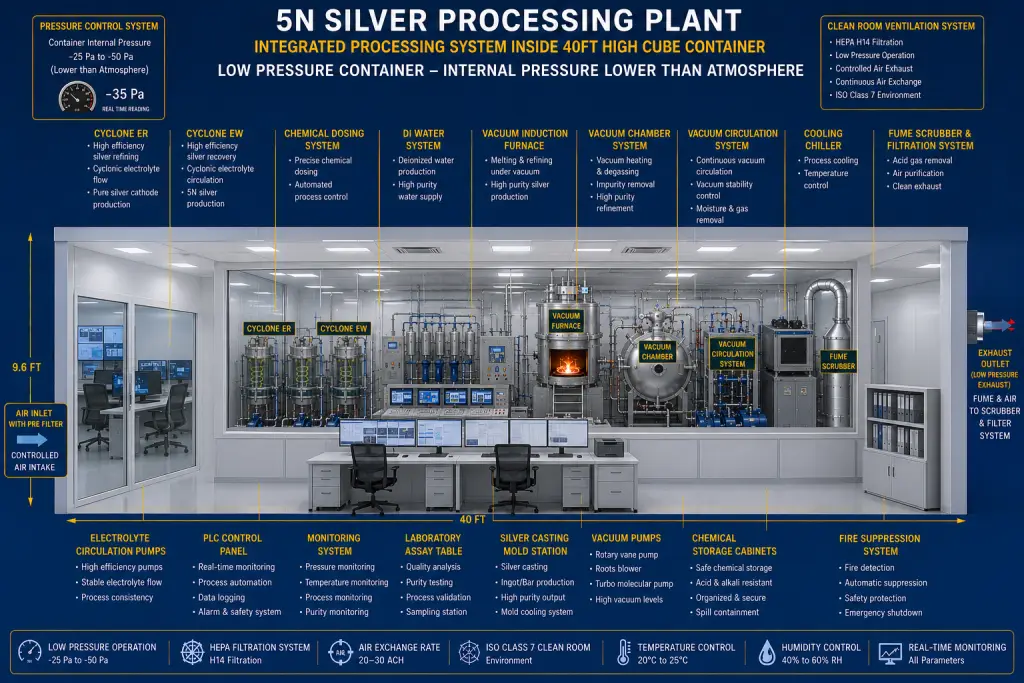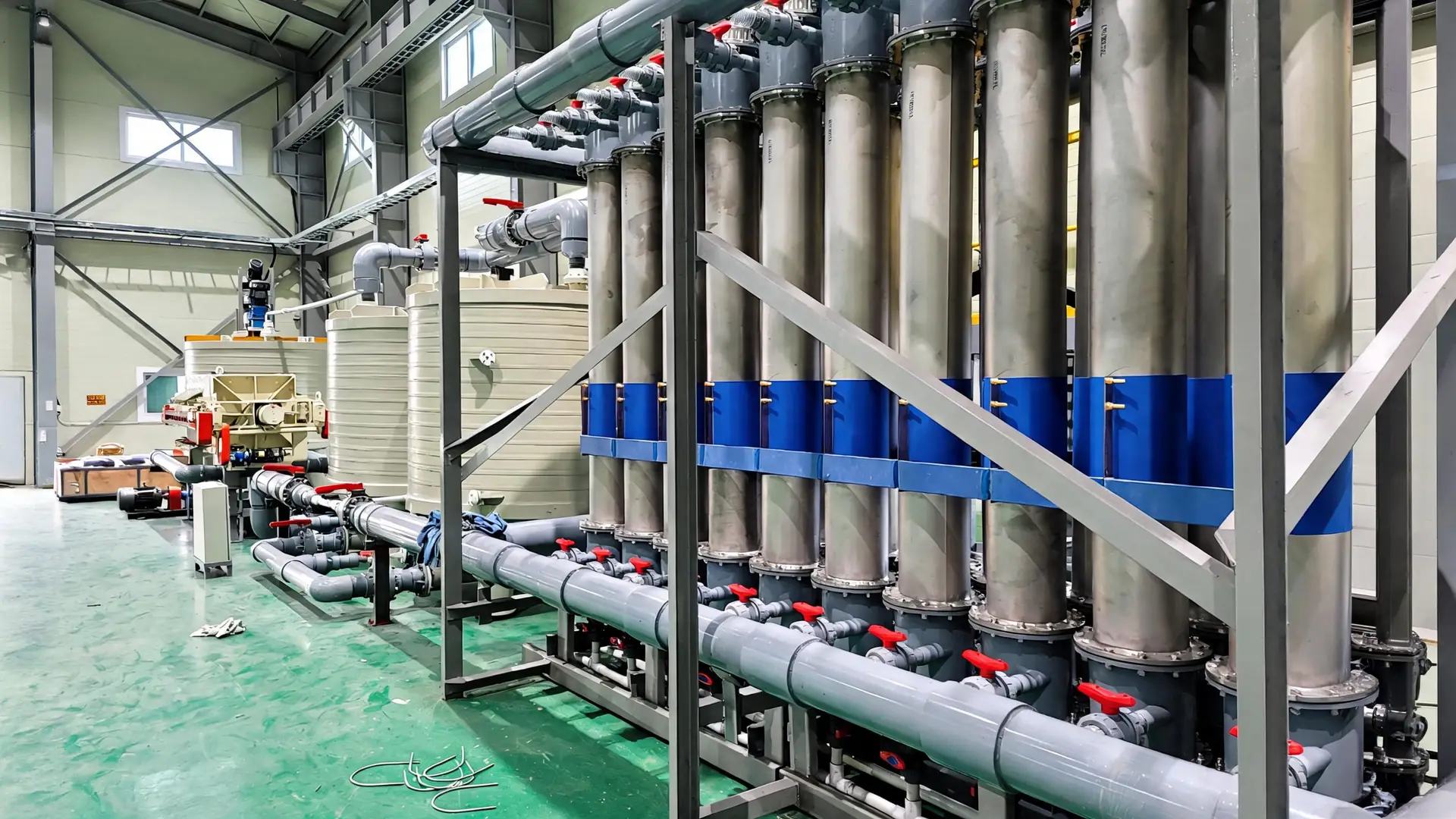
Cyclone Electrowinning System
Producing 5N (99.999%) silver is no longer just a refining step—it’s a critical requirement for aerospace, defense, semiconductors, renewable energy systems, and advanced electronics.
The process begins with something simple: a raw silver bar. But transforming standard silver into ultra-high purity metal requires a carefully controlled combination of thermal, chemical, and electrochemical engineering.
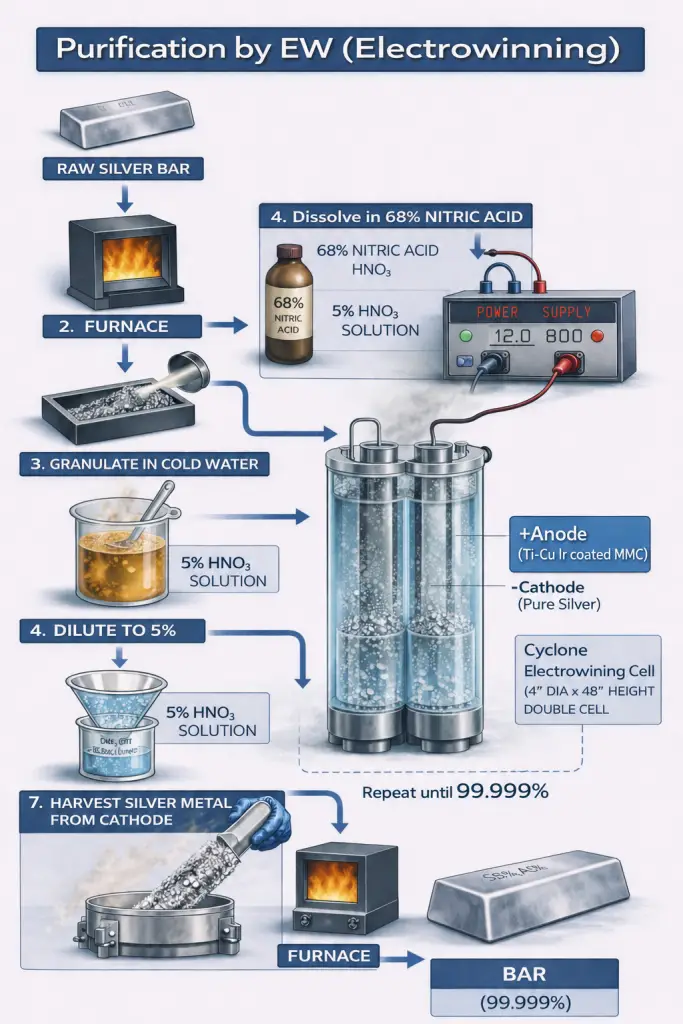
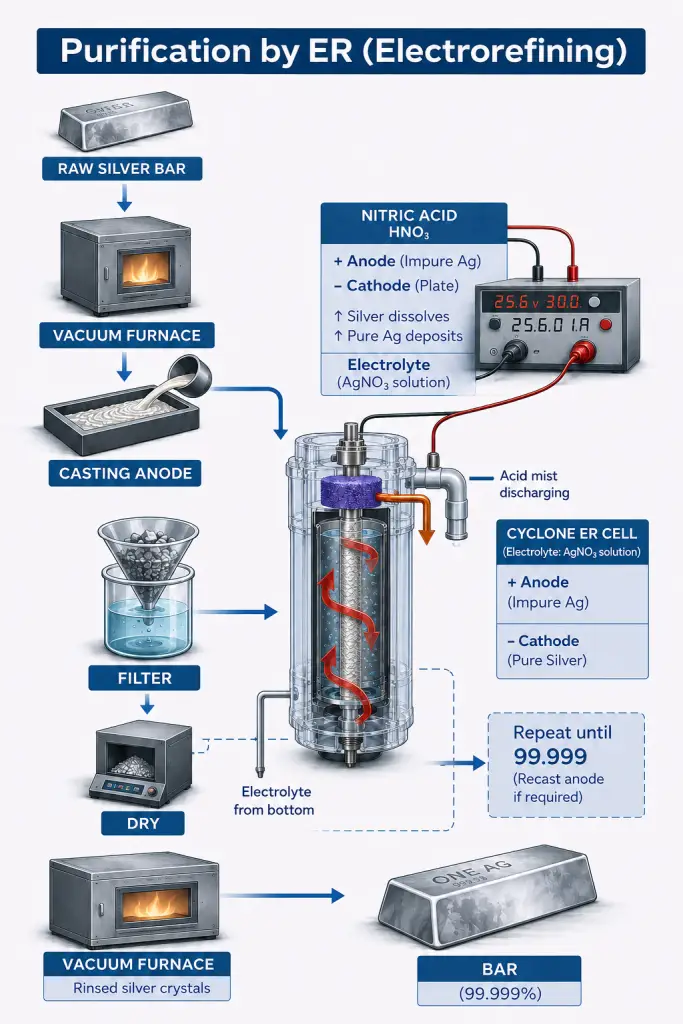
First, the raw silver is melted in a vacuum furnace and granulated in cold water. This granulation process dramatically increases the material’s surface area, allowing faster and more efficient chemical reaction during dissolution. The granulated silver is then dissolved using nitric acid (HNO₃), producing a controlled silver nitrate electrolyte solution. The solution is filtered, diluted, and conditioned to remove unwanted contaminants before entering the most important stage of purification: electrorefining and electrowinning.
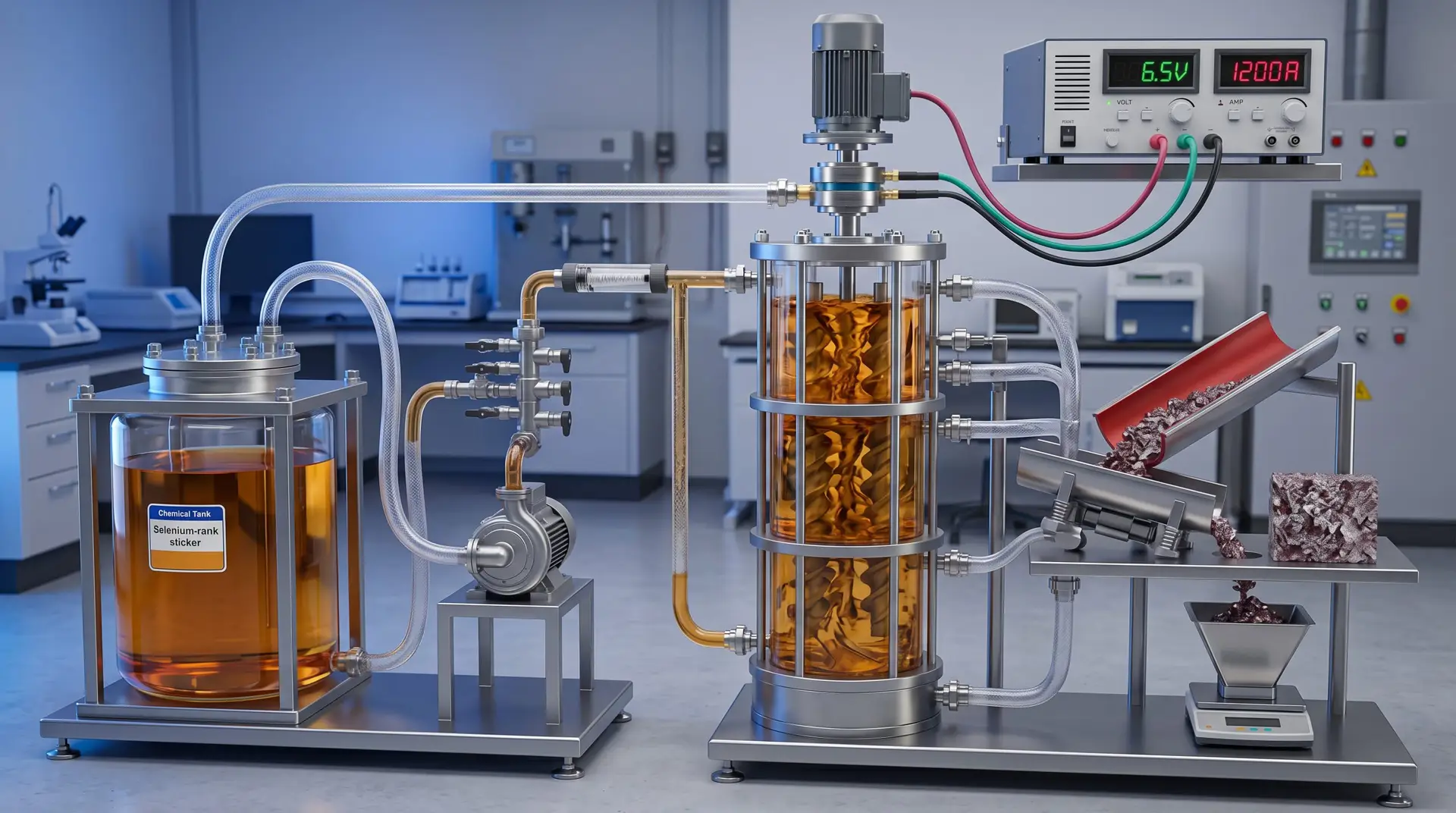
Inside the electrowinning (EW) or electrorefining (ER) cell, impure silver serves as the anode while ultra-pure silver deposits onto the cathode under controlled electrical conditions. During this process, impurities either remain suspended in the electrolyte, settle as sludge, or are separated through filtration and circulation systems. Layer by layer, high-purity silver crystals form on the cathode surface, gradually achieving 5N purity levels required for critical industrial applications.
A major advancement in this field is the use of Cyclone ER/EW Cell technology.
Unlike conventional static electrowinning cells, the cyclone configuration continuously circulates electrolyte in a controlled vortex flow pattern around the electrodes. This high-velocity electrolyte movement significantly improves mass transfer and reduces concentration polarization near the electrode surfaces. As a result, silver ions are delivered more uniformly to the cathode, producing smoother and more consistent crystal deposition.
Cyclone Electrorefining System
The Cyclone ER process offers several important advantages over traditional refining systems:
Higher current efficiency
Faster silver deposition rates
Reduced energy consumption
Improved electrolyte circulation
Lower concentration polarization
More uniform cathode crystal growth
Reduced impurity entrapment
Better purity consistency at 99.999% (5N) levels
Shorter refining cycles
Enhanced scalability for industrial production
The vortex circulation also helps prevent localized overheating and stagnant zones commonly found in standard ER tanks. This improves operational stability and enables continuous high-purity production with lower maintenance requirements.
After deposition, the harvested silver crystals are washed, dried, and remelted in a vacuum furnace to produce final 5N silver bars. At this stage, the material has been transformed from ordinary industrial silver into aerospace-grade metal suitable for high-performance electrical contacts, semiconductor bonding materials, satellite systems, precision defense components, photovoltaic technology, and advanced conductive applications.
This is more than refining.
It is precision engineering at the atomic level.
As global demand for high-purity metals continues to rise, advanced technologies such as Cyclone ER and EW systems are becoming increasingly important for securing domestic supply chains, reducing dependence on imported refined metals, and enabling next-generation manufacturing industries.
Cyclone Electrorefining
Cyclone Electrowinning