In traditional electrorefining, flat plate anodes and cathodes have dominated the industry for decades. While proven, this approach comes with inherent limitations—slow ion transfer, uneven deposition, and inefficient slime management. Today, a new approach is emerging: Cyclone Electrorefining, a system designed to fundamentally improve how metals are refined and recovered.
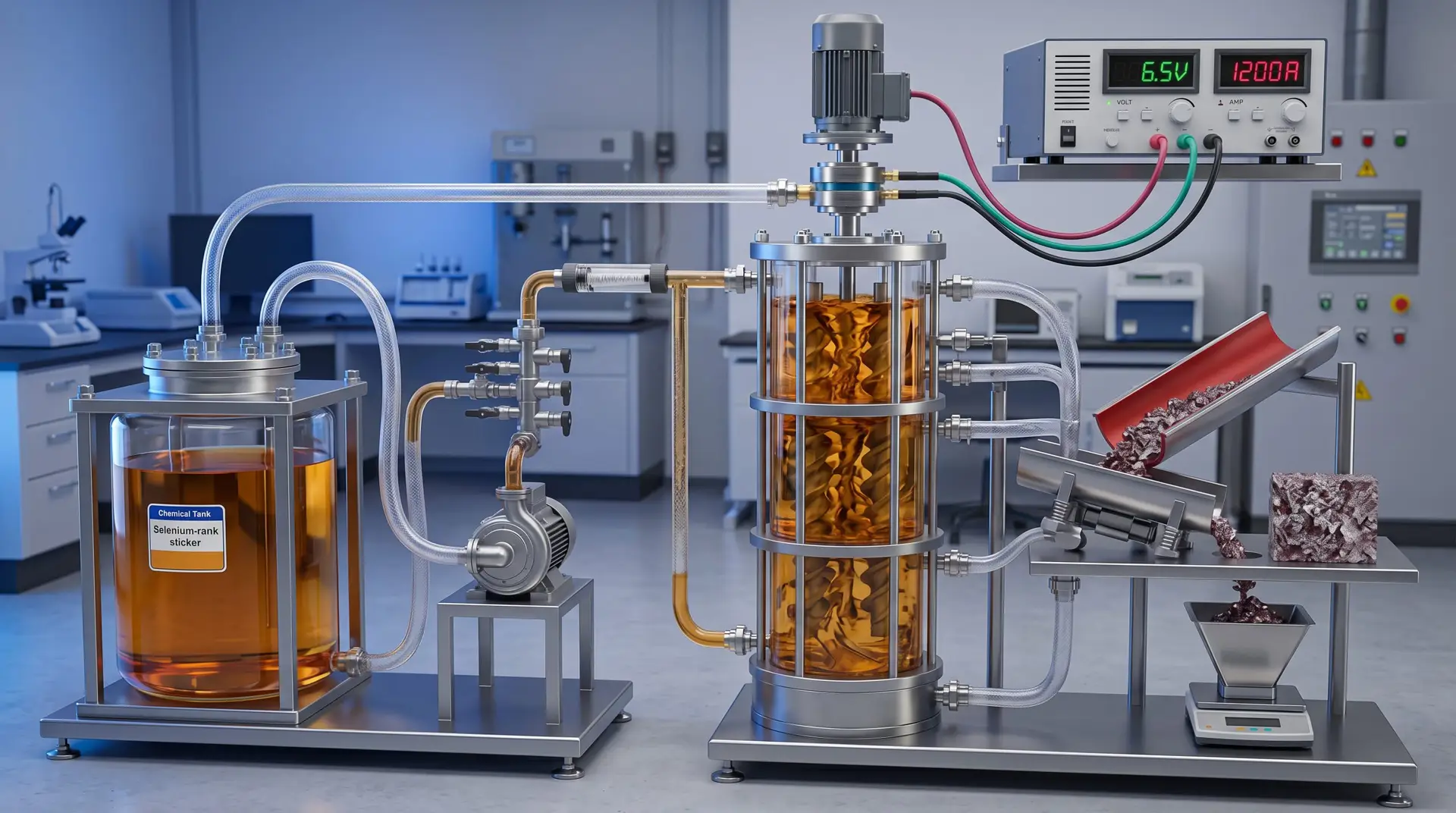
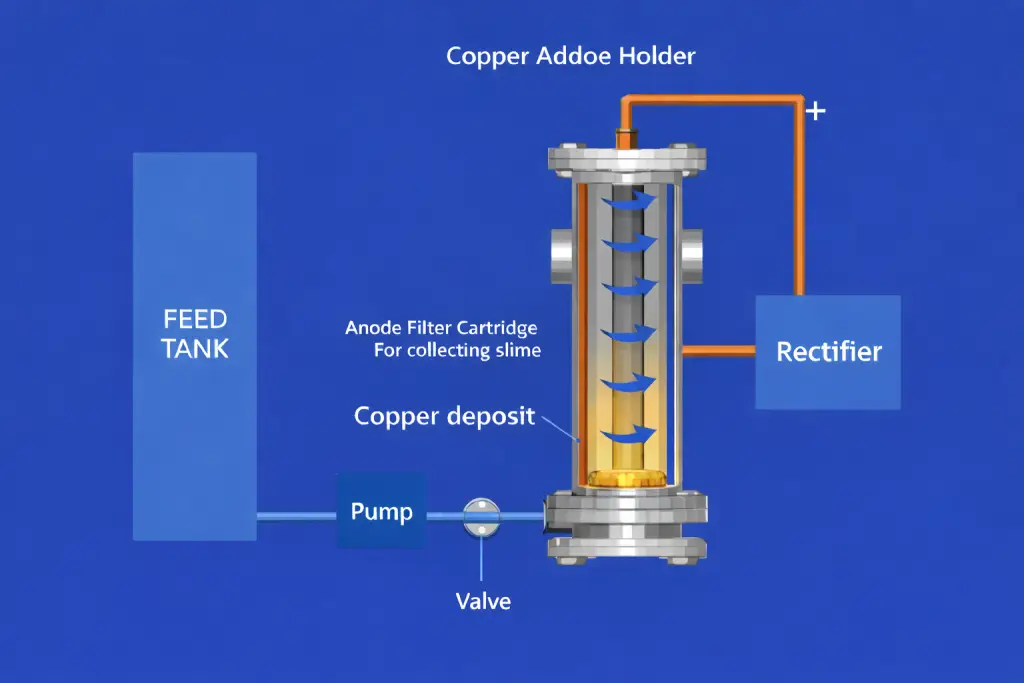
At the core of cyclone electrorefining is a vertical cylindrical cell, where electrolyte flow is actively circulated in a controlled, vortex-like motion. Instead of relying on passive diffusion, the system forces continuous movement of ions, dramatically increasing mass transfer rates. In this configuration, the copper anode (+) is positioned internally, while the outer surface or internal structure acts as the cathode (–), allowing uniform and controlled metal deposition.
This dynamic flow changes everything. Faster ion transport means higher current efficiency, more uniform plating, and significantly reduced processing time compared to conventional systems. At the same time, the design incorporates an anode filter cartridge, enabling continuous collection of “slime”—the valuable residue containing gold, silver, and other noble metals. Instead of dispersing unpredictably, these materials are captured and directed for downstream recovery, improving both yield and process control.
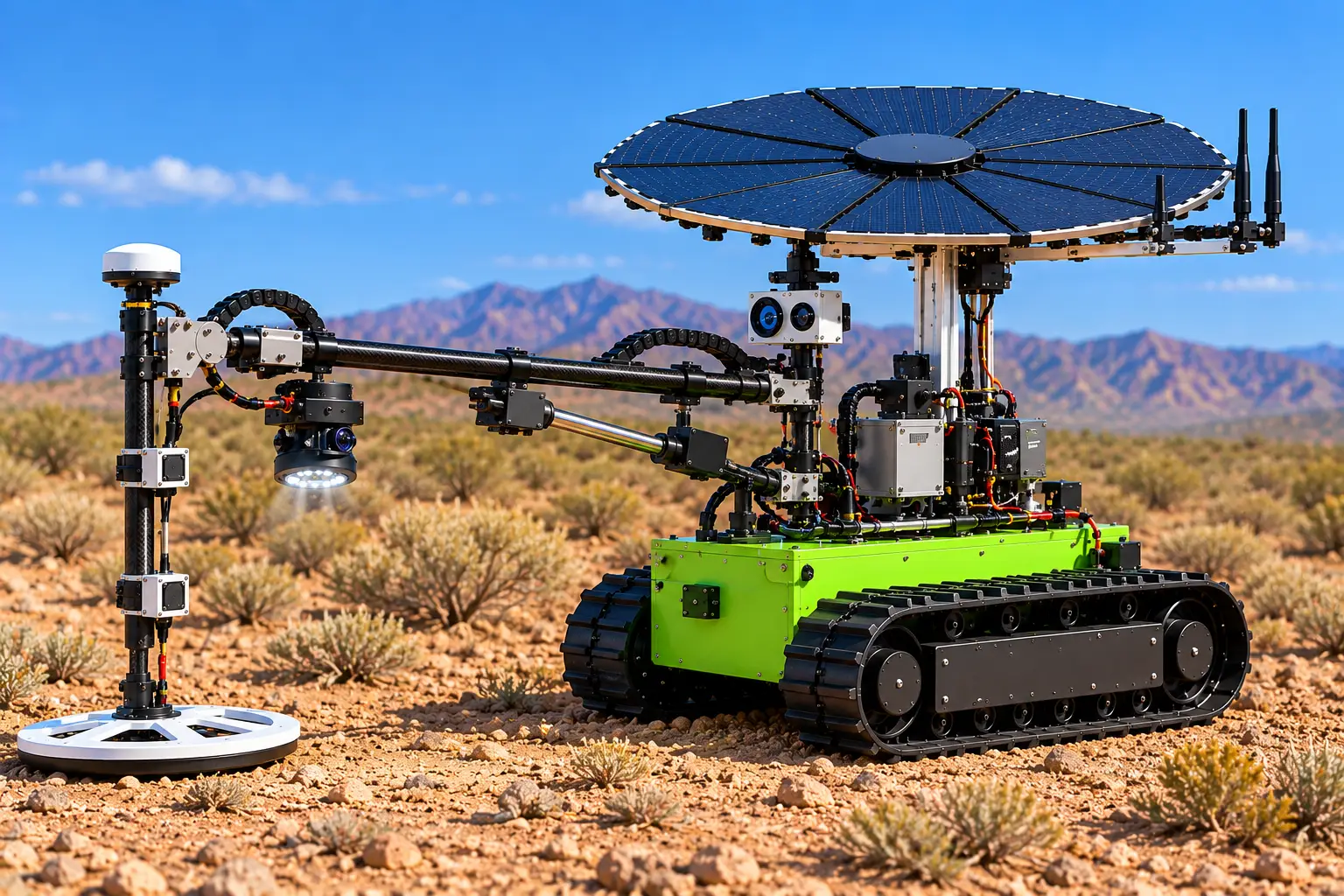
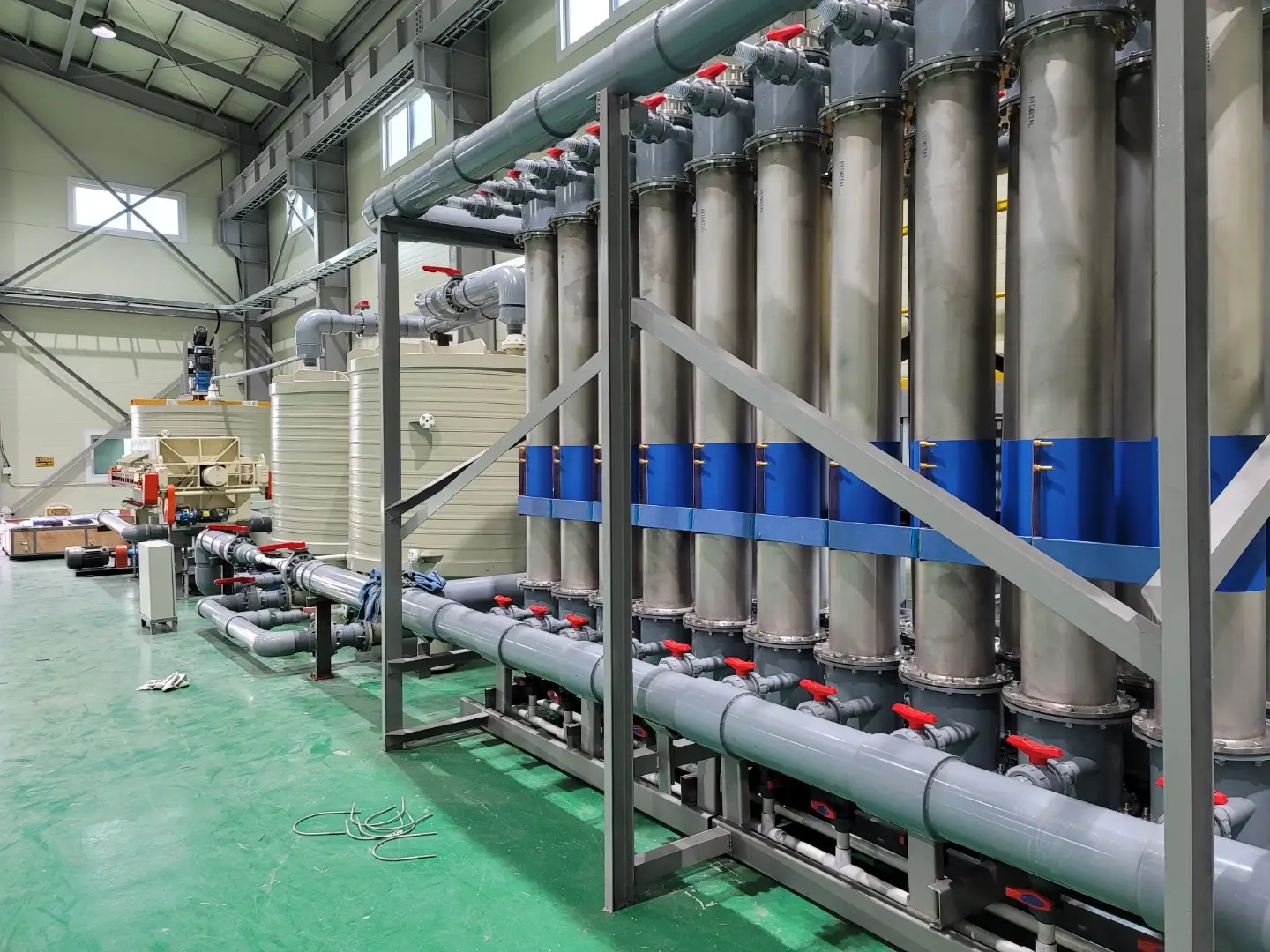
Another major advantage is scalability and compactness. Cyclone electrorefining systems can be designed as modular, enclosed units, making them ideal for containerized or remote operations. Combined with integrated feed tanks, pumps, and rectifiers, the system becomes a self-contained refining module that reduces footprint while increasing productivity.
In a world where ore grades are declining and efficiency matters more than ever, cyclone electrorefining offers a compelling shift—from static to dynamic processing. It is not just an incremental improvement, but a structural change in how we approach metal purification, recovery of precious elements, and overall system design.
The future of electrorefining may not be flat—it may be rotating, circulating, and far more efficient.