How to Reduce Refining Costs
Introduction
Refining costs can quietly eat into your margins even when ore grades look promising and market prices are strong. Many mining companies, plant owners, and industrial buyers focus heavily on extraction, but the real pressure often appears later in the refining stage. High energy use, chemical losses, low recovery, inefficient equipment, and oversized plant designs can all turn a profitable project into a weak one.
If you want to stay competitive, you need to know how to reduce refining costs without sacrificing recovery, product quality, or environmental compliance. This matters whether you operate a small mine in Peru, Bolivia, Mexico, Colombia, Ghana, Tanzania, Indonesia, or the Philippines, or whether you are an investor evaluating a new processing project.
The good news is that refining cost control is not only about buying cheaper equipment. It is about building a smarter system. When you improve feed consistency, plant design, energy efficiency, automation, and maintenance planning, your total refining cost per ton can fall sharply. In many cases, a well-designed refining setup pays for itself faster than expected.
This article explains how to reduce refining costs in a practical, technical, and business-focused way for mining companies, engineers, industrial buyers, and investors.
Table of Contents
| Sr# | Headings |
|---|---|
| 1 | Overview of How to Reduce Refining Costs |
| 2 | Why Refining Costs Become Too High |
| 3 | Step-by-Step Process Explanation |
| 4 | Raw Material Quality and Feed Preparation |
| 5 | Equipment That Helps Lower Refining Costs |
| 6 | Plant Capacity Options from 10 to 1000 TPD |
| 7 | Energy Consumption Details |
| 8 | Chemical and Reagent Cost Control |
| 9 | Labor, Automation, and Maintenance Savings |
| 10 | Cost Estimation: Low, Medium, and High |
| 11 | ROI and Profitability Analysis |
| 12 | Comparison with Traditional Methods |
| 13 | Environmental Benefits of Cost-Efficient Refining |
| 14 | Real-World Use Cases and Applications |
| 15 | How to Choose the Right Refining Strategy |
1. Overview of How to Reduce Refining Costs
At its core, how to reduce refining costs means producing the same or better refined output while spending less money per ton or per kilogram of final product. That reduction can come from lower energy use, fewer reagent losses, better metal recovery, reduced downtime, lower labor demand, or better process control.
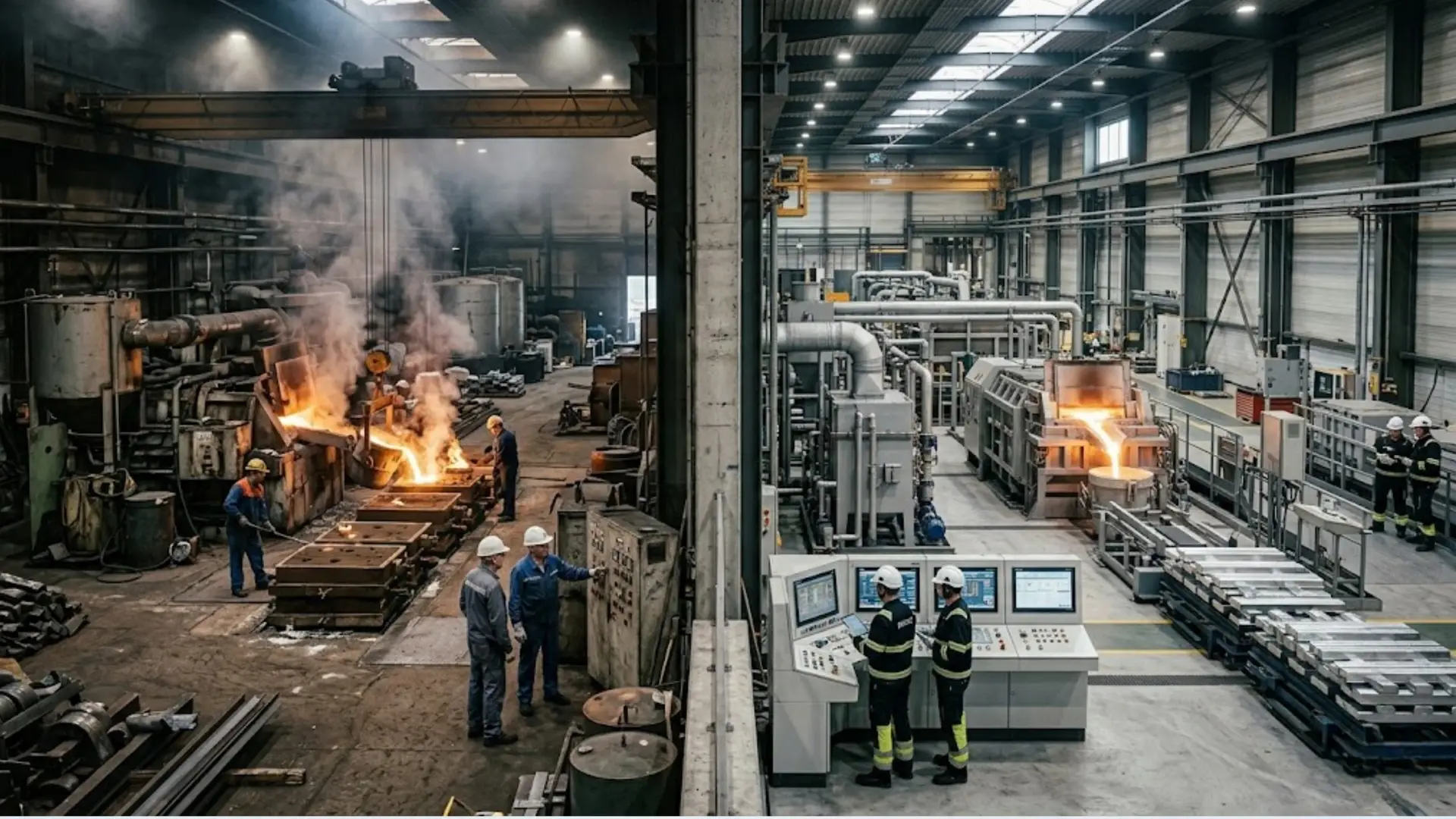
You can think of refining like filtering water through a treatment system. If the filters are dirty, the pressure is wrong, and the pumps are oversized, you spend more money to get poorer results. But if every stage is balanced and clean, the system runs smoothly and waste drops. Refining works in a similar way.
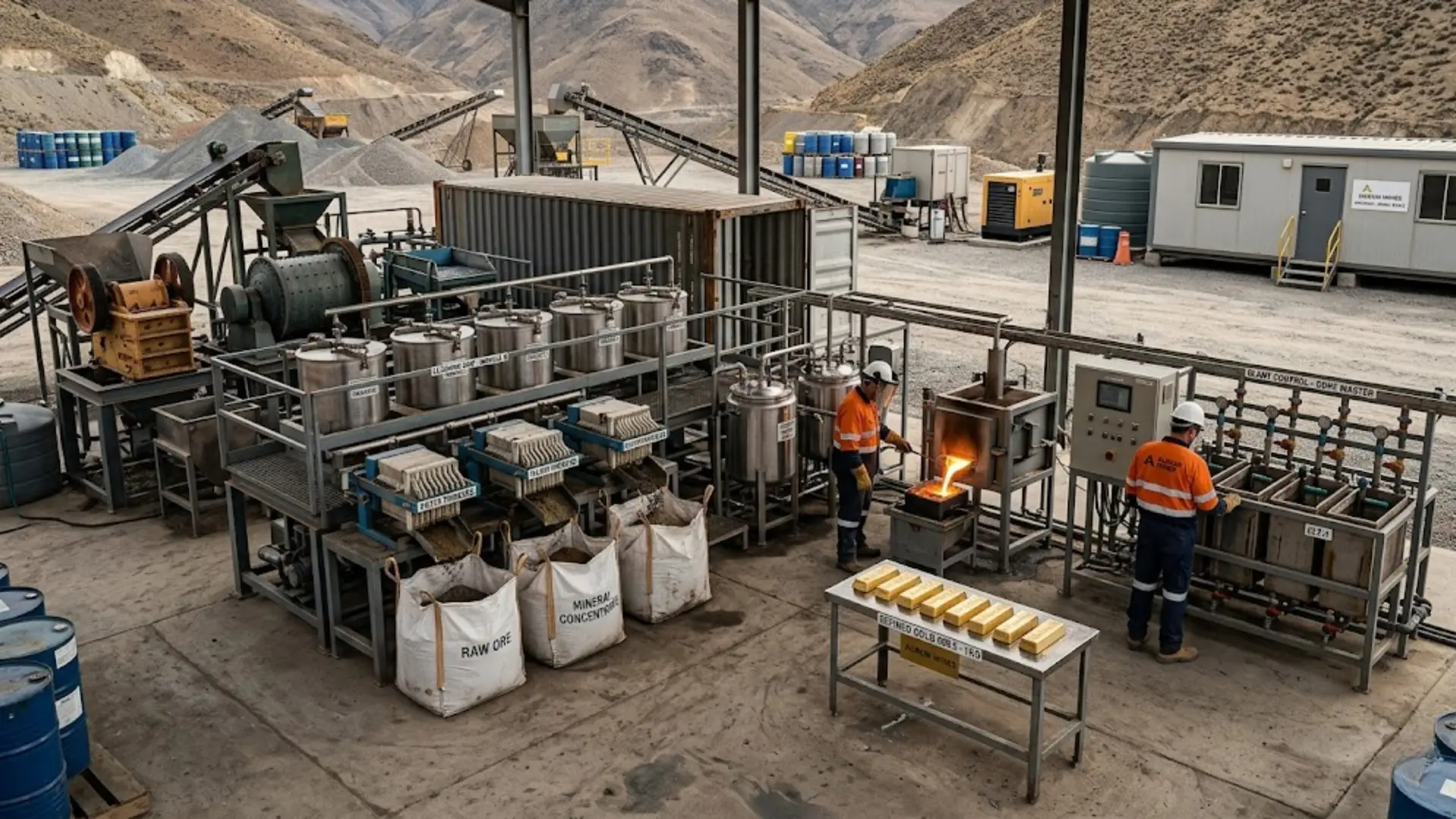
In regions with many small and medium mines, such as Peru, Bolivia, Mexico, Colombia, Ghana, Tanzania, Indonesia, and the Philippines, cost-efficient refining is especially important. These markets often need modular, flexible plants that can work with variable feed material and limited infrastructure.
2. Why Refining Costs Become Too High
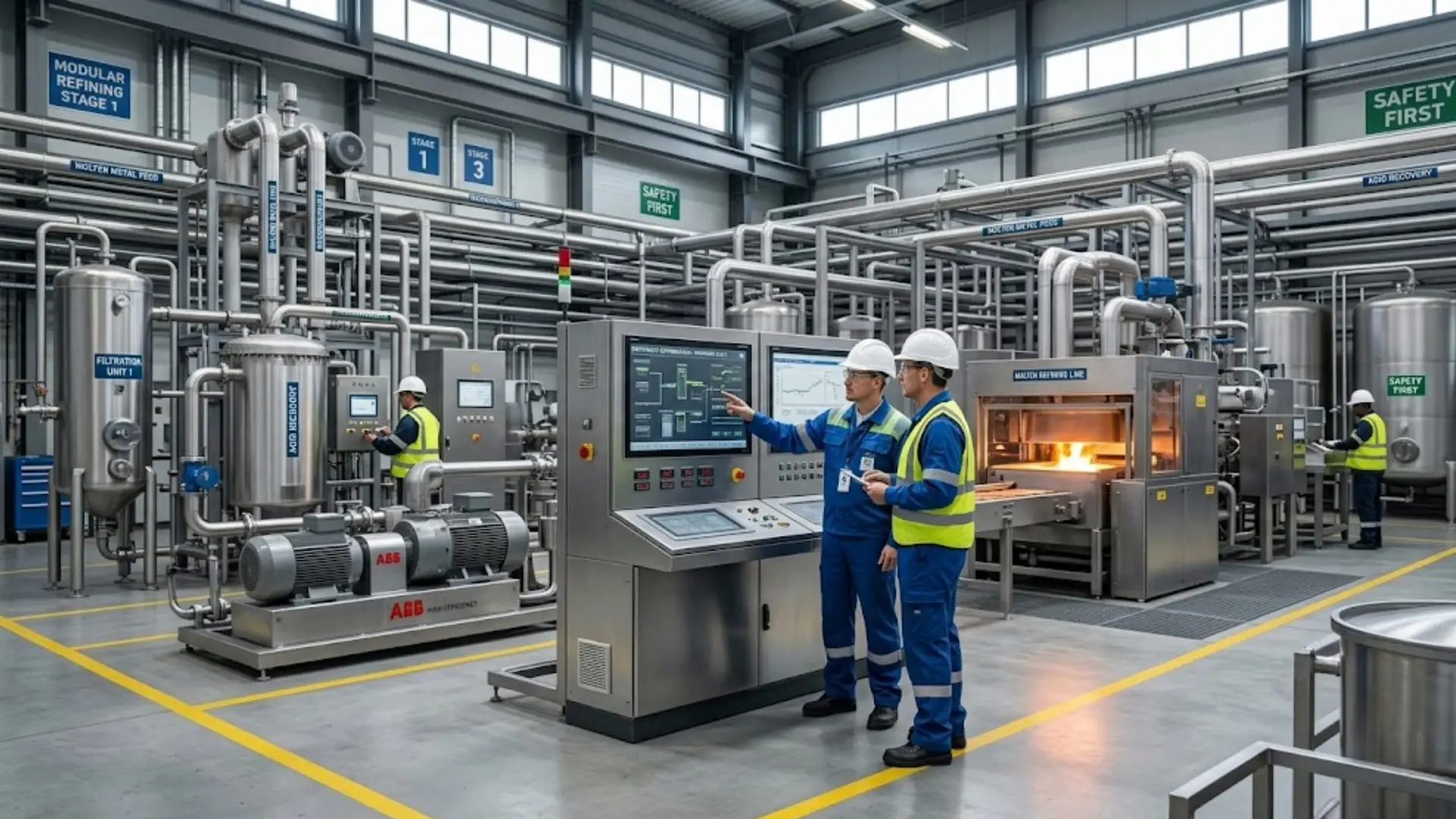
Many operations spend too much because they focus only on output and ignore efficiency. A plant may be producing, but not necessarily producing economically.
Common reasons refining costs rise include:
-
Inconsistent feed material
-
Poor liberation before refining
-
High power consumption
-
Excess chemical use
-
Frequent equipment breakdowns
-
Low recovery rates
-
Manual operation with limited control
-
Improper plant sizing
-
Long transport distance to centralized refining facilities
A mine in Colombia or Ghana, for example, may send semi-processed material to a distant facility. Transport, losses, handling charges, and delays can add major cost. In many cases, a local or modular refining system offers a better long-term answer.
Another major issue is hidden cost. Some operators only track visible expenses such as electricity and chemicals. But the real cost includes metal loss in tailings, maintenance shutdowns, operator error, water treatment, and quality rejection.
So when discussing how to reduce refining costs, you must look at the whole refining chain, not just one machine or one utility bill.
3. Step-by-Step Process Explanation
The best way to understand how to reduce refining costs is to look at the refining process stage by stage. Each step has a cost, and each step also offers an opportunity to save money.
Step 1: Ore or Concentrate Characterization
Before refining begins, you need to understand the feed. This includes metal grade, impurities, moisture, particle size, and mineral composition. If you do not know your feed properly, you cannot design an efficient refining flow.
Step 2: Crushing and Grinding or Pre-Treatment
The material must be prepared so valuable components are accessible. Over-grinding wastes energy. Under-grinding lowers recovery. The goal is the optimal size, not the smallest size.
Step 3: Concentration or Initial Separation
Gravity, flotation, magnetic separation, or other methods may be used to upgrade the feed before final refining. This reduces the load on downstream systems.
Step 4: Chemical or Thermal Refining
This is where purification happens. Depending on the metal and process, this may involve leaching, smelting, electrorefining, precipitation, solvent extraction, or filtration.
Step 5: Recovery and Product Finishing
Metal is recovered in the desired purity and form. Poor finishing control can create losses or off-spec product.
Step 6: Tailings, Water, and Waste Management
This stage is often ignored in cost planning, but it directly affects operating cost and compliance.
Step 7: Monitoring and Optimization
The most efficient plants do not run on fixed assumptions. They adjust based on feed variation, energy demand, and recovery performance.
Every one of these steps affects how to reduce refining costs. Saving 5% in grinding energy, 3% in reagent use, and 2% in recovery loss can have a large combined impact.
4. Raw Material Quality and Feed Preparation
One of the cheapest ways to cut refining cost is to improve feed preparation. A stable feed makes the plant easier to control and more efficient to run.
If your feed grade changes every day, reagent consumption becomes unstable. Power demand shifts. Recovery drops. Product quality may also vary. That means more waste and more rework.
Why feed preparation matters
-
Improves recovery
-
Reduces chemical use
-
Prevents overloading of refining equipment
-
Lowers wear on pumps, tanks, filters, and reactors
-
Improves final product consistency
Practical ways to improve feed quality
-
Install blending systems
-
Use screening before refining
-
Control moisture content
-
Remove obvious gangue before chemical stages
-
Run routine lab tests for grade and impurity trends
In small-mine regions such as Peru or Tanzania, feed variability is often one of the biggest cost drivers. Even a basic blending and testing program can make a major difference.
5. Equipment That Helps Lower Refining Costs
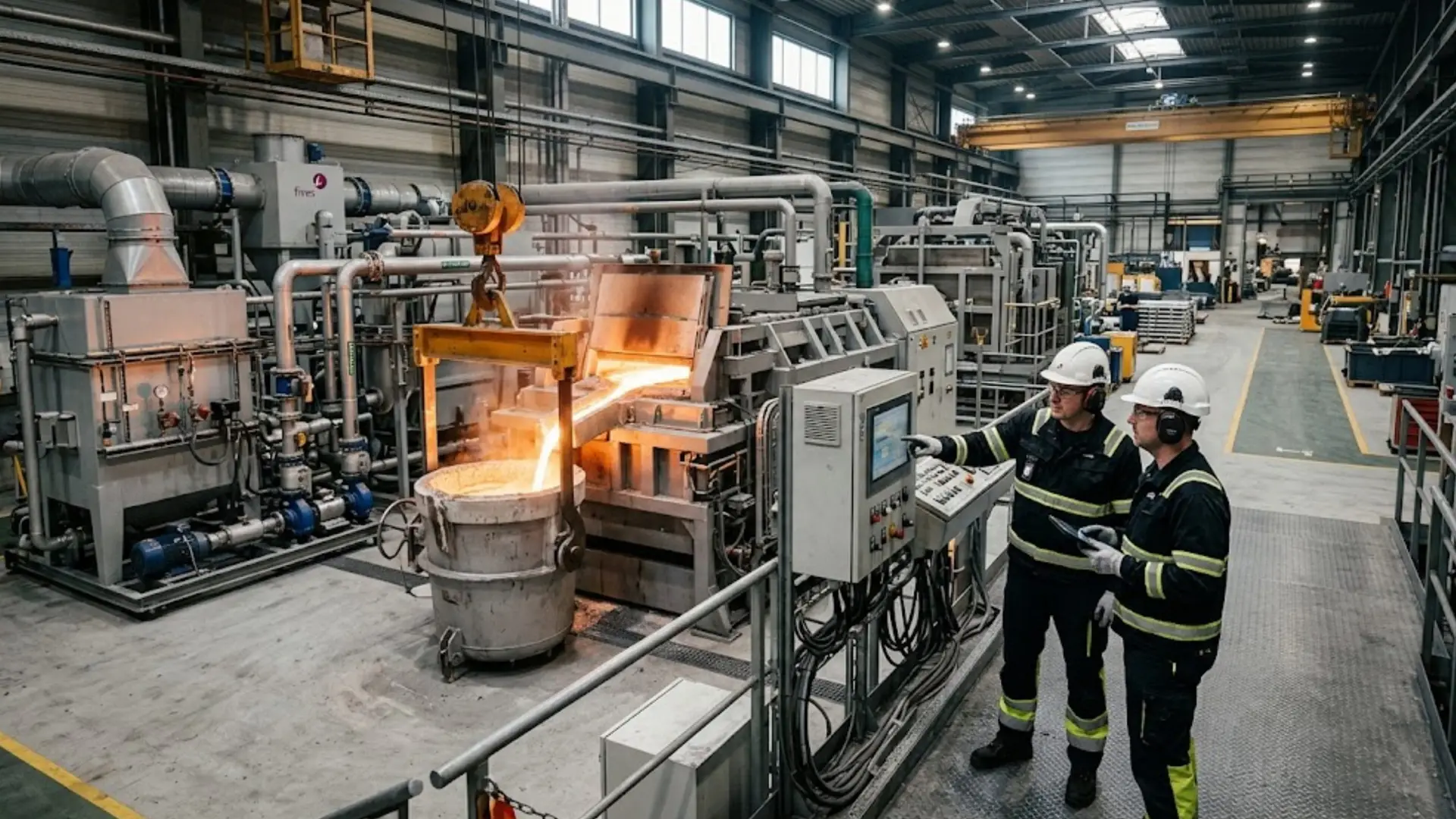
The right equipment reduces energy waste, downtime, and metal loss. The wrong equipment can lock you into high operating costs for years.
Equipment List
-
Crushers
-
Grinding mills
-
Screens and classifiers
-
Gravity concentrators
-
Flotation cells
-
Leaching tanks
-
Agitators and mixers
-
Smelting furnaces
-
Electrorefining cells
-
Filter presses
-
Pumps and slurry handling systems
-
Thickeners
-
Dryers
-
Dust collection units
-
Process control panels
-
Laboratory testing equipment
-
Water treatment units
-
Heat recovery systems
What to look for in equipment
-
Energy-efficient motors
-
Modular design for easy expansion
-
Low-maintenance wear parts
-
Automation compatibility
-
Availability of spare parts
-
Suitability for local feed conditions
-
Compact layout for reduced installation cost
Many buyers make the mistake of choosing the cheapest initial equipment price. But in refining, the true cost is lifetime operating cost. A better pump, better filter press, or better control system can save far more money than its purchase premium.
6. Plant Capacity Options from 10 to 1000 TPD
Plant size has a direct impact on how to reduce refining costs. An undersized plant creates bottlenecks. An oversized plant wastes capital and energy.
10–50 TPD
This range is suitable for small mines, pilot operations, and remote areas. It is common in markets with many artisanal or small-scale operations.
Best for:
-
Small mining groups
-
Demonstration plants
-
Early-stage investors
-
Remote operations with limited infrastructure
50–150 TPD
This is often the sweet spot for growing mining operations. It offers better economies of scale while remaining manageable.
Best for:
-
Mid-size mine operators
-
Regional processors
-
Toll refining businesses
150–500 TPD
This range supports stronger throughput and more stable economics. Automation starts to make even more sense here.
Best for:
-
Established mining companies
-
Industrial buyers processing regular feed
-
Operations serving multiple mining sites
500–1000 TPD
This is for large-scale projects that need high throughput, strong utility planning, and long-term supply security.
Best for:
-
Large mining groups
-
Integrated refining operations
-
Investor-backed industrial plants
The key is not choosing the biggest plant. The key is selecting the capacity that matches ore availability, market demand, power access, and budget.
7. Energy Consumption Details
Energy is one of the largest refining expenses. In some plants, it can be one of the top three operating costs. So any serious discussion of how to reduce refining costs must address energy in detail.
Where energy is consumed
-
Crushing and grinding
-
Agitation and pumping
-
Heating and smelting
-
Electrorefining systems
-
Drying and filtration
-
Air compressors and ventilation
Typical energy cost drivers
-
Over-grinding material
-
Running idle motors
-
Poor insulation in thermal systems
-
Low-efficiency pumps
-
Unoptimized furnace cycles
-
Manual process control
-
Heat losses during refining
Ways to reduce energy consumption
Use variable frequency drives
These help motors run only at the speed required instead of full speed all the time.
Recover waste heat
Smelting and thermal systems often release usable heat that can support drying or pre-heating.
Improve process sequencing
Avoid starting heavy energy equipment at the wrong time or keeping equipment on without load.
Optimize particle size
Too much grinding increases electricity use without adding recovery value.
Upgrade insulation
This is simple but highly effective in thermal refining systems.
For operations in Indonesia, the Philippines, or Tanzania where power cost or reliability can be a challenge, energy-efficient design is not optional. It is a core business decision.
8. Chemical and Reagent Cost Control
Reagents can deliver strong recovery, but they can also become a major cost burden if not managed carefully.
The first rule is simple: more chemical does not always mean better refining. In many plants, overuse happens because operators are trying to compensate for poor feed control or weak monitoring.
How to reduce reagent cost
-
Use proper dosing systems
-
Calibrate addition points
-
Improve feed consistency
-
Test different reagent programs
-
Recycle process water where possible
-
Monitor pH, temperature, and reaction time
-
Prevent losses due to leakage or poor storage
Simple example
If a plant in Mexico or Bolivia reduces reagent use by even a small percentage while keeping recovery stable, the annual savings can be significant. Reagent waste is often a silent cost because it happens little by little, every day.
This is why lab support and process testing are so important. They help turn guesswork into controlled decision-making.
9. Labor, Automation, and Maintenance Savings
Labor is essential, but an inefficient labor structure raises cost fast. The goal is not replacing people blindly. The goal is helping your team run the plant better, safer, and with less downtime.
Where labor cost increases
-
Too many manual adjustments
-
Lack of instrumentation
-
Unplanned maintenance
-
Repeated product rework
-
Operator error due to weak training
How automation helps
-
Stabilizes dosing
-
Tracks energy use
-
Reduces human error
-
Improves recovery consistency
-
Creates performance data for decision-making
Maintenance savings strategies
Preventive maintenance
Scheduled maintenance costs less than emergency shutdowns.
Spare parts planning
Critical spare parts should be available before failure happens.
Condition monitoring
Tracking vibration, heat, pressure, or wear can prevent major breakdowns.
A refining plant that stops frequently becomes expensive very quickly. Downtime is not just repair cost. It also means lost production, wasted labor, unstable process conditions, and possible product loss.
10. Cost Estimation: Low, Medium, and High
The actual cost depends on metal type, feed quality, local labor rate, power cost, and technology choice. Still, a basic structure helps buyers and investors plan.
Low Cost Setup
Typical profile:
-
Small modular plant
-
10–50 TPD
-
Basic automation
-
Simple refining route
-
Lower capital requirement
Suitable for:
-
Small mines
-
Pilot operations
-
Remote projects
Medium Cost Setup
Typical profile:
-
50–200 TPD
-
Balanced automation
-
Stronger recovery systems
-
Better process monitoring
-
Improved environmental control
Suitable for:
-
Growth-stage operators
-
Regional toll refiners
-
Industrial buyers
High Cost Setup
Typical profile:
-
200–1000 TPD
-
Advanced automation
-
Integrated refining and waste treatment
-
Higher purity targets
-
More complex utility systems
Suitable for:
-
Large industrial projects
-
Multi-source feed operations
-
Investor-backed expansion
When calculating cost, always separate:
-
Capital expenditure
-
Operating expenditure
-
Maintenance cost
-
Energy cost
-
Reagent cost
-
Labor cost
-
Environmental compliance cost
-
Transport and logistics cost
This full view is essential if you want to truly understand how to reduce refining costs.
11. ROI and Profitability Analysis
A lower refining cost improves profitability in two ways. First, it raises margin on current production. Second, it makes the project more resilient when market prices soften.
Main profitability drivers
-
Higher metal recovery
-
Lower cost per ton
-
Reduced losses in tailings
-
Lower downtime
-
Lower transport cost
-
Better product purity
-
Faster plant payback
Simple ROI logic
If a new refining system lowers operating cost and increases recovery, the value comes from both savings and extra output. That combination can shorten payback considerably.
Example scenario
Imagine a mid-size plant processing 100 TPD. If improved control reduces metal loss, lowers power use, and cuts chemical waste, the annual savings may be strong enough to justify upgraded equipment quickly. For investors, that means better internal returns and lower operating risk.
Questions investors should ask
-
What is the refining cost per ton today?
-
How much metal is being lost in current operations?
-
How much does downtime cost per month?
-
Can local refining reduce transport and treatment charges?
-
Is the plant scalable as feed volume grows?
For many projects, the answer to how to reduce refining costs is not simply spending less. It is investing smarter so the operation becomes more profitable over time.
12. Comparison with Traditional Methods
Traditional refining methods are often labor-heavy, less controlled, and more wasteful. They may still work in basic operations, but they usually struggle when buyers demand higher purity, better recovery, and environmental compliance.
Traditional methods often involve
-
Manual chemical dosing
-
Basic furnace control
-
Limited testing
-
Weak recovery tracking
-
Higher losses
-
More environmental risk
Modern cost-efficient refining offers
-
Better recovery control
-
Lower unit operating cost
-
Cleaner outputs
-
Lower energy waste
-
Easier expansion
-
Improved worker safety
-
More reliable reporting for investors
In countries with many small mines, traditional systems remain common because they are familiar. But that familiarity can hide large long-term cost penalties. A modular, engineered refining setup often delivers much better economics.
13. Environmental Benefits of Cost-Efficient Refining
Environmental performance and cost reduction often work together. When a plant uses less energy, fewer chemicals, and better recovery systems, it usually also reduces emissions and waste.
Environmental benefits
-
Lower energy demand
-
Reduced waste generation
-
Better water recycling
-
Lower chemical discharge
-
Lower metal loss to tailings
-
Improved dust and fume control
-
Easier regulatory compliance
This matters especially in export-focused and investor-backed projects where environmental performance affects financing, licensing, and customer trust.
A cleaner process is not only about compliance. It is often a more efficient process. Waste is simply money leaving the plant in another form.
14. Real-World Use Cases and Applications
The need to understand how to reduce refining costs is growing across multiple mining and industrial markets.
Small gold and polymetallic mines in Peru and Bolivia
These operations often face feed variability, limited grid power, and long transport routes. Compact modular refining units can reduce off-site treatment dependence and improve control.
Mid-size operations in Mexico and Colombia
These projects often need stronger recovery, better automation, and lower chemical waste. Upgraded dosing, filtration, and process monitoring can improve margins significantly.
Growing mining sectors in Ghana and Tanzania
Here, scalable refining solutions are valuable because operators may start smaller and expand later. Capacity planning from 10 to 1000 TPD helps match investment to actual supply.
Remote island and regional operations in Indonesia and the Philippines
Energy efficiency and maintenance simplicity are critical in these markets. Plants that are easier to service and operate can reduce both direct and hidden refining costs.
Industrial toll refining businesses
A well-designed plant that accepts variable feed from multiple suppliers can build strong profitability if recovery, quality control, and operating cost are tightly managed.
15. How to Choose the Right Refining Strategy
There is no single answer for every project. The right strategy depends on your ore type, production target, budget, infrastructure, and market goals.
You should evaluate
-
Feed type and impurity profile
-
Required final purity
-
Daily tonnage
-
Power availability and cost
-
Water access
-
Transport distance
-
Labor skill level
-
Environmental rules
-
Expansion plans
-
Investor return expectations
A buyer looking at a small modular plant has different needs from an investor funding a 500 TPD industrial facility. But both want the same thing: a refining solution that lowers cost and improves output.
That is why how to reduce refining costs should be approached as both an engineering challenge and a business strategy.
Conclusion
Reducing refining cost is not about one quick fix. It is about improving the full system, from feed preparation and equipment selection to energy control, reagent efficiency, plant sizing, and maintenance planning. When you approach refining this way, you do not just save money. You improve recovery, increase reliability, strengthen environmental performance, and build a more profitable operation.
If you want lasting results, focus on a refining design that matches your actual ore, your real production goals, and your market conditions. That is the most practical path for mining companies, industrial buyers, engineers, and investors who want stronger returns from every ton processed.
FAQs
1. What is the best way to reduce refining costs?
The best way to reduce refining costs is to improve the full refining system rather than focusing on one expense only. Better feed preparation, efficient equipment, optimized energy use, controlled reagent dosing, and preventive maintenance usually provide the biggest savings.
2. How much plant capacity is suitable for small mining operations?
For small mining operations, a 10 to 50 TPD refining plant is often a practical starting point. It offers manageable capital cost, easier installation, and room for future expansion if feed supply grows.
3. Does automation really improve refining profitability?
Yes, automation often improves profitability because it reduces operator error, stabilizes dosing, lowers downtime, and improves recovery consistency. Even partial automation can create strong operating savings over time.
4. What are the biggest operating costs in refining plants?
The biggest operating costs are usually energy, chemicals, labor, maintenance, and recovery loss. In some projects, transport and environmental treatment also become major cost factors.
5. How fast can a cost-efficient refining plant deliver ROI?
ROI depends on feed grade, throughput, energy price, recovery improvement, and plant design. A well-matched refining plant can often achieve attractive payback by lowering cost per ton while increasing final metal recovery and product quality.
Read more: https://avimetal.com/blogs/