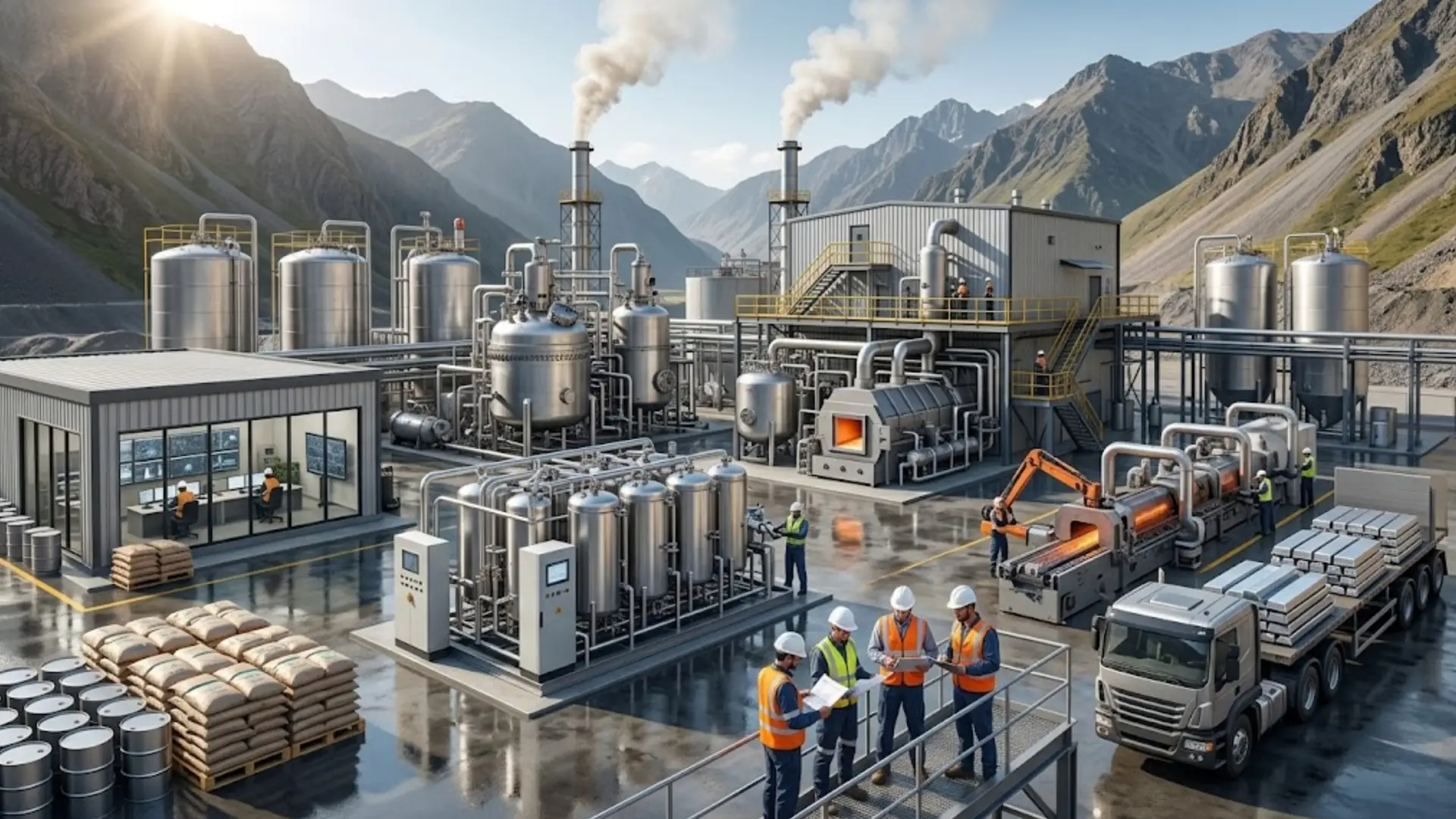
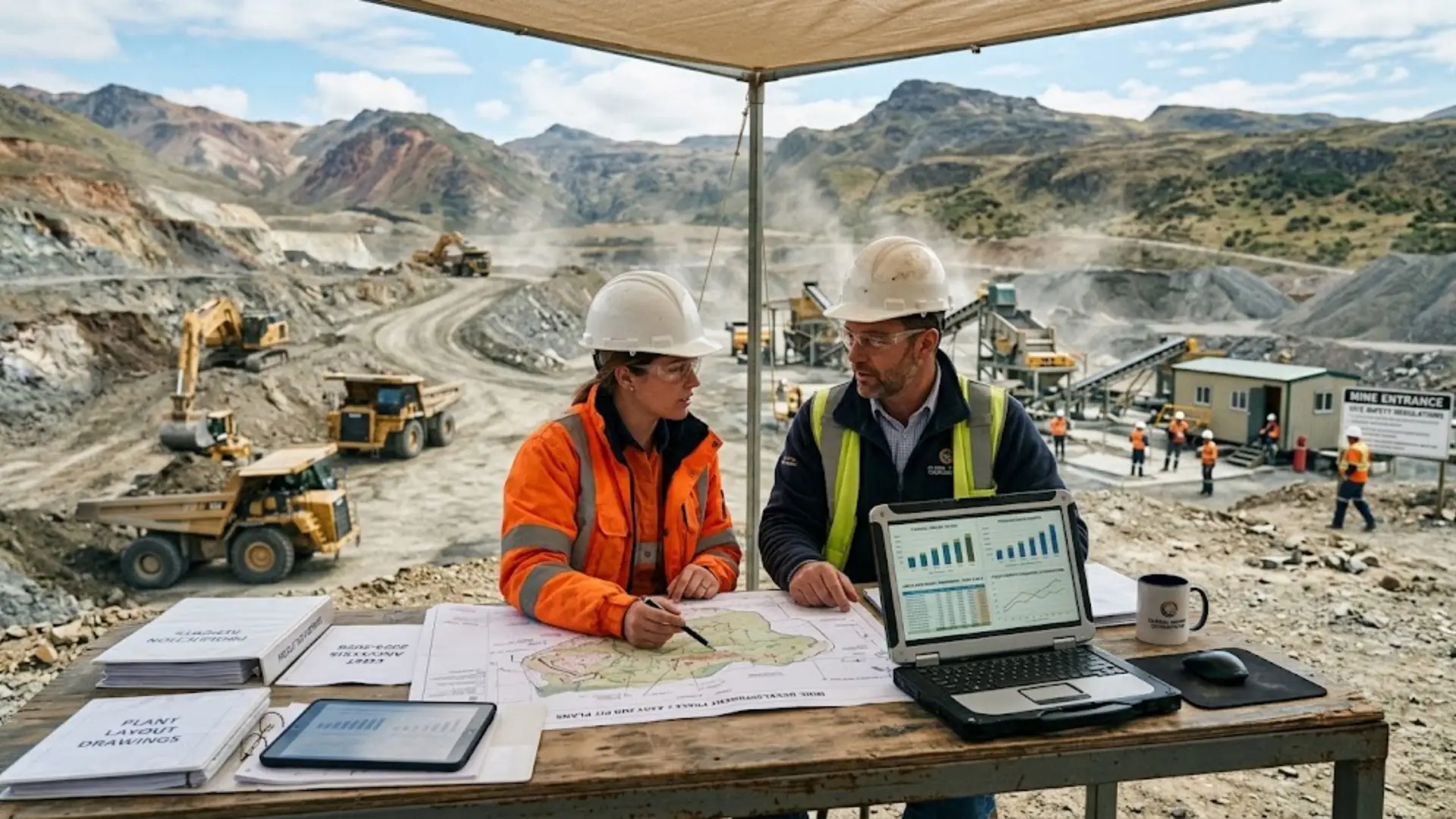
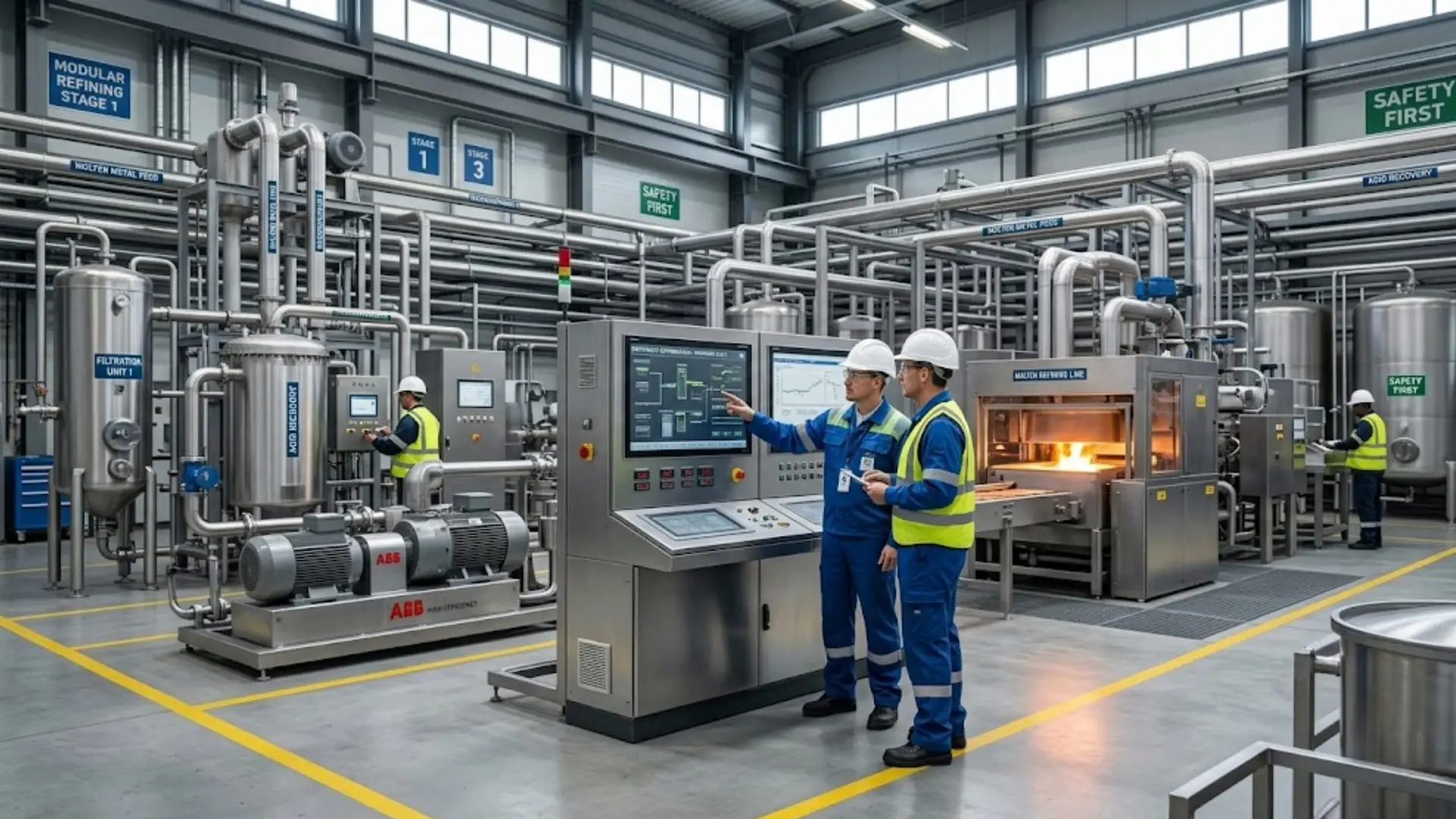
Profitability of Gold Refining Business
Introduction
If you are planning to enter the precious metals sector, one question matters more than any other: is gold refining actually profitable? The short answer is yes, but only when your business is built on the right process, the right plant size, and the right target market.
Many mining companies, industrial buyers, and investors lose money not because gold refining is weak, but because they choose the wrong setup, underestimate operating costs, or fail to align their plant with regional ore and scrap supply. In high-demand markets such as Peru, Bolivia, Mexico, Colombia, Ghana, Tanzania, Indonesia, and the Philippines, there is strong commercial potential for efficient, modular, and scalable refining solutions.
This article explains the Profitability of Gold Refining Business in a practical way. You will learn how the process works, what equipment is needed, how much energy it consumes, what plant capacities are available, how costs and margins behave, and how to judge return on investment before you commit capital.
Table of Contents
| Sr# | Headings |
|---|---|
| 1 | Overview of Gold Refining Profitability |
| 2 | Why Demand for Gold Refining Is Rising |
| 3 | Raw Material Sources and Feed Value |
| 4 | Step-by-Step Gold Refining Process |
| 5 | Equipment Required for a Gold Refining Plant |
| 6 | Plant Capacity Options from 10 to 1000 TPD |
| 7 | Energy Consumption Details |
| 8 | Cost Estimation for Different Project Sizes |
| 9 | Revenue Drivers in Gold Refining |
| 10 | ROI and Profitability Analysis |
| 11 | Comparison with Traditional Refining Methods |
| 12 | Environmental Benefits of Modern Refining Plants |
| 13 | Real-World Use Cases and Industry Applications |
| 14 | Country-Specific Market Opportunity |
| 15 | Choosing the Right Supplier and Plant Model |
| 16 | Conclusion |
| 17 | FAQs |
1. Overview of Gold Refining Profitability
The Profitability of Gold Refining Business depends on one simple principle: your refining margin must stay higher than your total processing cost. That margin comes from recovering valuable gold efficiently while keeping chemicals, energy, labor, and losses under control.
A gold refinery earns money by processing dore bars, concentrates, jewelry scrap, electronic scrap, or mining output into higher-purity gold products. The value increase comes from purification. A low-purity feed becomes a high-purity product that commands better pricing, wider market acceptance, and easier resale.
Think of refining like filtering muddy water into drinking water. The water was always there, but until you remove the unwanted material, its real value stays limited. Gold refining works in a similar way. The cleaner and more reliable your final output, the stronger your market value.
For industrial buyers and investors, profitability is not only about recovery percentage. It is also about plant uptime, operating discipline, compliance, and feedstock quality consistency.
2. Why Demand for Gold Refining Is Rising
Gold refining demand is increasing because more small and mid-scale mining operations now want localized processing rather than sending material far away for third-party treatment. This creates a major opportunity for regional refining businesses.
In countries such as Peru, Bolivia, Mexico, Colombia, Ghana, Tanzania, Indonesia, and the Philippines, many small mines operate with limited downstream infrastructure. They often need faster settlement, lower transport risk, and reliable refining services close to the source.
Several other factors are also driving growth:
Higher gold prices improve the economics of recovering every gram.
Artisanal and small-scale mining expansion increases demand for practical refining solutions.
Demand for cleaner processing pushes operators toward modern refining plants.
Export and compliance requirements make higher-purity gold more attractive.
This means the Profitability of Gold Refining Business is closely linked to market access. If you can position your plant where feedstock is available and local refining capacity is limited, your commercial advantage becomes much stronger.
3. Raw Material Sources and Feed Value
Your profit starts with your feedstock. A refinery can only perform well if the incoming material has enough recoverable value and predictable composition.
Common Gold-Bearing Feed Sources
Mining dore bars
Gold concentrates
Jewelry scrap
Electronic scrap with precious metal content
Recovered by-products from smelting or other metallurgical circuits
Mining-linked refining plants usually prefer dore bars and concentrates because volumes are larger and supply is more stable. Scrap-based refineries can also be profitable, but feed quality tends to vary more.
Why Feed Quality Matters
If your feed contains high impurities, your refining cost rises. More chemicals, more treatment stages, and more handling are needed. If the feed grade is low, then the recovered gold value may not justify the same operating expense.
This is why serious investors always study three things first:
Average gold grade
Impurity profile
Monthly feed availability
Without these three numbers, any profitability model is incomplete.
4. Step-by-Step Gold Refining Process
A clear process design directly affects cost control and metal recovery. While exact systems vary by plant type, the general refining workflow follows a predictable sequence.
Step 1: Feed Reception and Sampling
Incoming material is weighed, documented, and sampled. Accurate sampling is critical because it determines payment, recovery targets, and process planning.
Step 2: Crushing, Preparation, or Melting
Depending on the feed type, the material may be crushed, blended, dried, or melted. This creates a more uniform feed for the next stage.
Step 3: Smelting or Dissolution
The material is processed using thermal or chemical methods to separate gold from gangue and base metals. In some systems, fluxes are used in smelting. In chemical refining, acids and reagents help dissolve impurities or isolate gold-bearing fractions.
Step 4: Separation and Purification
Gold is separated from silver, copper, lead, zinc, and other unwanted elements. This may involve precipitation, filtration, electrorefining, or selective chemical treatment.
Step 5: Final Refining
The gold is refined to the target purity, often 99.5% to 99.99%, depending on market requirements.
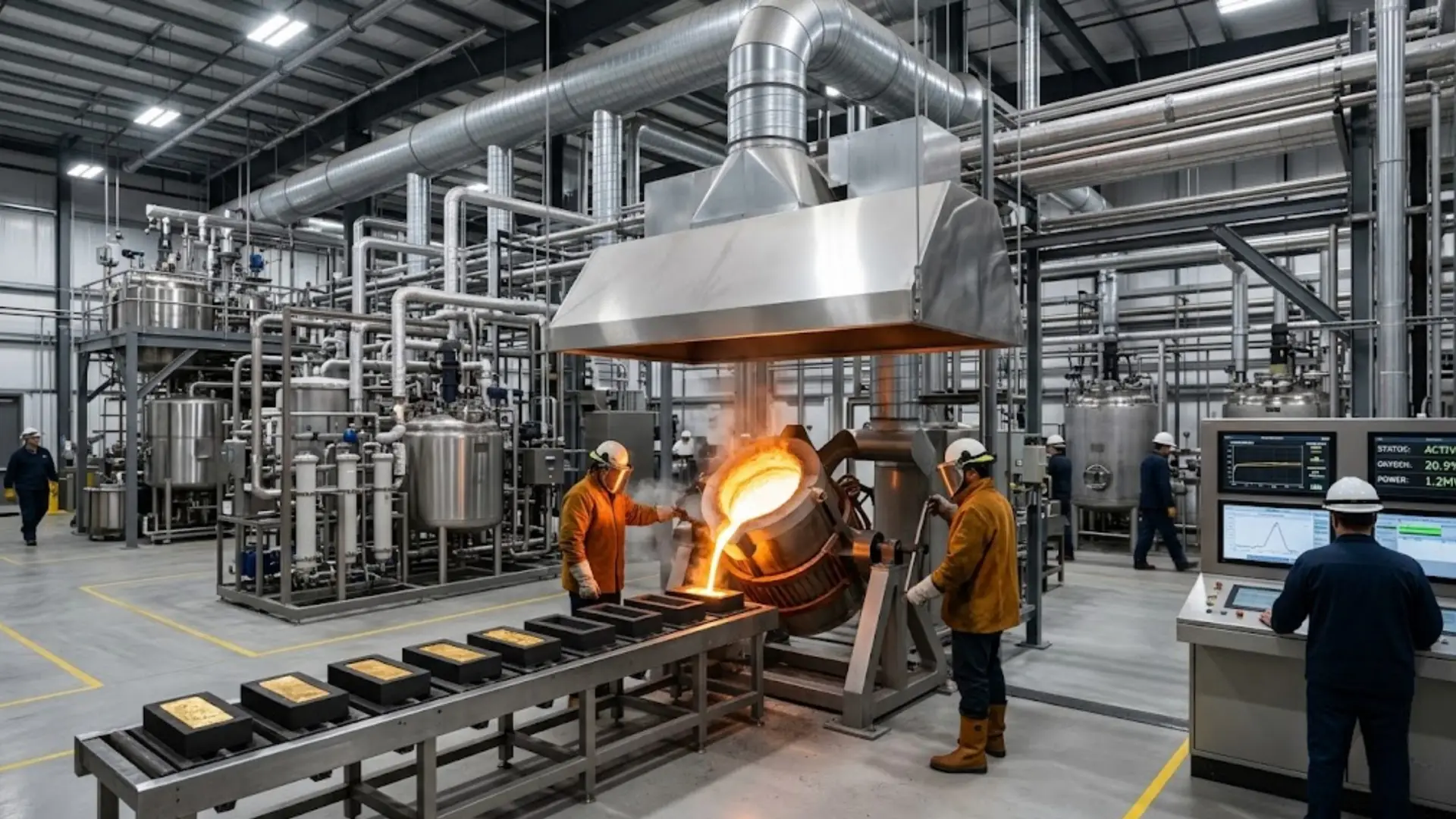
Step 6: Casting and Product Formation
The final metal is cast into bars, grains, or other forms for sale, trading, or industrial use.
Step 7: Waste Treatment and Recovery
Modern plants also treat effluents and recover any remaining metal from residues, sludges, and dust. This is often where hidden profit is found.
The Profitability of Gold Refining Business improves significantly when these steps are integrated into a consistent, low-loss workflow.
5. Equipment Required for a Gold Refining Plant
The equipment list depends on plant capacity and refining route, but most serious operations require a core set of systems.
Essential Equipment List
-
Feed storage and handling system
-
Crushing and grinding unit
-
Drying system
-
Smelting furnace
-
Chemical leaching or dissolution tanks
-
Reaction vessels
-
Filtration unit
-
Precipitation tanks
-
Electrorefining cells
-
Dust collection system
-
Fume extraction and scrubbing system
-
Effluent treatment plant
-
Melting and casting furnace
-
Analytical laboratory equipment
-
Weighing, sampling, and assay tools
-
Control panel and plant automation system
A modular setup can be especially useful in emerging mining regions. Many buyers searching for a modular refining plant want lower installation time, easier transport, and faster commissioning.
If your business model includes downstream expansion, related content such as a gold refining plant guide or a broader mining setup guide can support technical decision-making across the project lifecycle.
6. Plant Capacity Options from 10 to 1000 TPD
Plant size has a direct impact on capital cost, labor intensity, energy use, and profitability. Choosing the wrong size is one of the most common investment mistakes.
10–50 TPD
This range is suitable for pilot-scale, small mines, regional aggregators, and early-stage investors. It offers lower capital exposure but limited economies of scale.
50–150 TPD
This is often the most practical range for small and medium mining regions. It balances throughput, manageable staffing, and acceptable operating efficiency.
150–500 TPD
This capacity is better for established mining districts with stable concentrate or dore supply. It supports stronger margins through higher throughput and improved equipment utilization.
500–1000 TPD
Large-scale projects in this range are usually backed by strong feed contracts, mining integration, or export-oriented refining strategies. Capital cost is higher, but per-unit processing cost is usually lower.
The Profitability of Gold Refining Business usually improves as capacity grows, but only if feed availability grows with it. An oversized plant running half-empty destroys margins.
7. Energy Consumption Details
Energy is one of the most important operating cost categories in refining. It affects every stage, from drying and smelting to pumping, filtration, electrorefining, and environmental controls.
Main Energy Consumers
Furnaces and melting systems are often the largest power or fuel users.
Pumps and agitators run continuously in wet processing circuits.
Electrorefining systems consume stable electrical power over long cycles.
Dust, fume, and scrubber systems add a hidden but necessary energy load.
Indicative Consumption Pattern
A small plant may consume modest electricity but face high per-ton costs because fixed energy demand is spread across fewer tons.
A medium plant often performs best because it uses energy more efficiently across larger volumes.
A large plant may consume significantly more total energy, but its energy cost per processed ton can be lower if utilization is strong.
Investors should review energy in two ways:
Energy per ton of feed
Energy per gram or ounce of recovered gold
That gives a more realistic profitability picture than total power cost alone.
8. Cost Estimation for Different Project Sizes
No refinery should be evaluated without a realistic cost model. Capital and operating costs vary widely based on automation level, environmental systems, purity targets, and country-specific installation conditions.
Low-Cost Project
Usually applies to small modular systems, lower throughput, and basic refining scope.
Best for: pilot plants, small mining clusters, early-stage investors
Risk: lower upfront cost, but higher unit processing cost
Medium-Cost Project
The most balanced option for regional mining markets.
Best for: commercial refining businesses serving multiple suppliers
Advantage: stronger process control and better long-term economics
High-Cost Project
Large, integrated, compliance-driven plants with advanced treatment and high recovery design.
Best for: established mining groups and serious industrial investors
Advantage: better scalability, stronger product quality, and lower long-term cost per unit
Main Cost Categories
Plant and machinery
Civil works and installation
Power infrastructure
Chemical storage and safety systems
Labor and training
Environmental treatment
Laboratory and assay systems
Commissioning and working capital
The Profitability of Gold Refining Business becomes more attractive when capex is matched to real feed volume, not just future optimism.
9. Revenue Drivers in Gold Refining
Profit is not created by refining alone. It is created by the combination of recovery, purity, throughput, and commercial discipline.
Primary Revenue Drivers
Higher gold recovery rate
Even a small improvement in recovery can produce a major revenue gain over time.
Premium pricing for higher purity
Refined gold with trusted purity is easier to sell and may achieve better market terms.
Processing fees
A refinery can earn fixed or variable fees for toll refining.
Recovery of by-products
Silver and certain other metals can add extra revenue.
Residue reprocessing
Residual sludges and dust can still contain valuable metal.
For industrial buyers, the best refineries are the ones that treat waste streams as secondary profit centers, not disposal problems.
10. ROI and Profitability Analysis
This is where investors focus most closely. A refinery may look attractive on paper, but true return depends on throughput, recovery, feed cost, selling terms, and operating discipline.
How ROI Is Commonly Measured
Gross margin per ton
Operating margin per month
Payback period on capital investment
Return on invested capital over 3 to 5 years
Simple Profitability Logic
If your plant processes enough feed at good recovery, and your refining spread remains healthy, payback can be relatively fast. If supply is unstable or operating losses are high, even a technically sound plant can underperform.
What Improves ROI
Stable feed contracts
Higher plant utilization
Lower chemical and energy waste
Local market access
Efficient environmental compliance
The Profitability of Gold Refining Business becomes strongest when the refinery is integrated with mining supply or operates in regions where third-party refining options are limited.
11. Comparison with Traditional Refining Methods
Traditional methods are still used in many mining regions, especially where small operators rely on older systems or informal processing routes. But these methods often come with lower recovery, higher risk, and weaker compliance.
Traditional Methods
Often lower in initial cost
Can be easier to start
Usually less efficient and less consistent
Often linked to lower purity and higher losses
Modern Refining Systems
Better recovery control
Higher final purity
Improved worker safety
Easier environmental management
Better documentation and traceability
For businesses targeting export markets and professional buyers, modern plants are usually the better long-term choice. Lower operating loss often outweighs higher initial capital cost.
12. Environmental Benefits of Modern Refining Plants
Environmental performance is no longer optional. Buyers, regulators, and investors increasingly expect clean, controlled processing.
Modern refining plants can deliver important environmental benefits:
Lower emissions through fume extraction and scrubbing
Better wastewater treatment
Safer handling of chemicals and residues
Improved recovery from waste streams
Reduced uncontrolled metal losses
This is especially important in countries where informal refining has created local pollution concerns. A cleaner plant can become both a compliance asset and a marketing asset.
For many industrial buyers, environmental control is now part of profitability. A plant that avoids shutdowns, penalties, and community conflict protects long-term returns.
13. Real-World Use Cases and Industry Applications
Gold refining is not limited to one customer type. Different business models can all be profitable when designed correctly.
Mining Companies
A mining company may install an in-house refinery to reduce transport delays and capture more downstream value.
Regional Toll Refiners
A private operator may build a refining plant that serves multiple small mines in one district. This works well in fragmented mining markets.
Jewelry and Precious Metal Recyclers
These businesses refine scrap into high-purity gold for resale or reuse.
Export-Focused Precious Metals Traders
Some operators refine to meet purity and compliance requirements before export.
In practical terms, the Profitability of Gold Refining Business rises when the plant solves a real bottleneck for the market around it.
14. Country-Specific Market Opportunity
For your SEO and commercial targeting, the strongest demand focus should stay on regions with many small and mid-scale mines.
Peru and Bolivia
Both countries have active mining communities and strong need for efficient regional processing. Buyers often value modular systems and practical plant designs.
Mexico and Colombia
These markets offer solid mining activity and opportunities for compliant, modern refining solutions that improve product quality and traceability.
Ghana and Tanzania
West and East Africa remain attractive for scalable refining plants, especially where mining output is growing but refining infrastructure is still developing.
Indonesia and the Philippines
These countries present strong potential where local refining, precious metal recovery, and modular deployment can support remote or distributed mining operations.
For your business positioning, content and marketing should speak directly to operators in these countries. Focus on reliability, recovery, compliance, scalability, and fast deployment.
15. Choosing the Right Supplier and Plant Model
A profitable refinery starts with the right technical partner. Buyers should not only ask for price. They should also ask about metallurgy, process design, environmental systems, and after-sales support.
What to Evaluate in a Supplier
Experience with mining and refining applications
Ability to customize plant capacity
Recovery-focused process design
Safety and environmental integration
Installation and training support
Availability of spare parts and technical service
If you are evaluating suppliers for a project in Latin America, Africa, or Southeast Asia, a modular and well-supported plant model can reduce construction risk and help you start commercial operations faster.
For companies looking for professional support, Avimetal positions itself around industrial processing solutions for mining and refining applications.
Website: avimetal.com
Address: C/O AINFOX, 2060 Faith Industrial Dr., Buford, GA 30518
Email: jgim@avimetal.com
Text Message / WhatsApp / Telegram: +1 470 5648883
Conclusion
The Profitability of Gold Refining Business is strong when your plant is matched to the right feedstock, capacity, market, and process design. Gold refining is not just a metallurgical activity. It is a margin business built on recovery, purity, efficiency, and commercial discipline.
If you target mining-heavy regions such as Peru, Bolivia, Mexico, Colombia, Ghana, Tanzania, Indonesia, and the Philippines, and you build around modern, scalable refining technology, your project can become both technically sound and commercially attractive.
FAQs
1. What affects the profitability of a gold refining business the most?
The biggest factors are feed quality, recovery rate, plant utilization, energy cost, and final product purity. A refinery with stable feed and strong recovery usually performs much better than a larger plant with inconsistent supply.
2. What plant capacity is best for starting a gold refining project?
For many regional mining markets, a 50 to 150 TPD plant offers a strong balance between manageable investment and commercial throughput. Smaller plants reduce risk, while medium plants often improve cost efficiency.
3. Is a gold refining business profitable for small mining regions?
Yes, especially in areas with many small mines and limited local refining capacity. In such markets, a refinery can earn through processing fees, improved recovery, and better-value gold output.
4. How much does it cost to start a gold refining plant?
The cost depends on plant size, technology, environmental controls, automation, and local installation conditions. Small modular systems fall into a lower investment range, while larger integrated plants require significantly higher capital.
5. How long does it take to recover investment in a gold refining business?
Payback depends on throughput, feed availability, operating cost, and refining margin. Projects with secure supply contracts and good recovery efficiency generally achieve faster return on investment than plants relying on irregular third-party feed.
Read more: https://avimetal.com/blogs/