ROI of Small Scale Mining Plants
Introduction
For many mining companies, industrial buyers, engineers, and investors, the biggest question is not whether a plant can run. The real question is whether it can generate stable profits in a practical time frame. That is why understanding the ROI of Small Scale Mining Plants matters so much.
A small-scale mining plant can look attractive because the entry cost is lower than a large industrial operation. But lower capital cost does not automatically mean better returns. Your actual return depends on ore quality, plant efficiency, recovery rate, power use, labor cost, and how well the system fits your deposit and market.
If you are planning a plant for regions such as Peru, Bolivia, Mexico, Colombia, Ghana, Tanzania, Indonesia, or the Philippines, you need an approach that matches the reality of small and medium mining operations. In many of these markets, buyers want modular, efficient, and easy-to-operate systems that can produce faster cash flow without the financial burden of a very large plant.
This guide explains the ROI of Small Scale Mining Plants in simple terms, with practical examples, cost ranges, capacity options, process details, and profitability insights that help you make a better investment decision.
Table of Contents
| Sr# | Headings |
|---|---|
| 1 | What Is ROI of Small Scale Mining Plants |
| 2 | Why ROI Matters in Small Mining Operations |
| 3 | Overview of Small Scale Mining Plants |
| 4 | Step-by-Step Process Explanation |
| 5 | Key Equipment Used in Small Scale Mining Plants |
| 6 | Plant Capacity Options from 10 to 1000 TPD |
| 7 | Energy Consumption Details |
| 8 | Cost Estimation for Small Scale Mining Plants |
| 9 | ROI and Profitability Analysis |
| 10 | Comparison with Traditional Mining Methods |
| 11 | Environmental Benefits of Modern Small Plants |
| 12 | Real-World Use Cases and Industry Applications |
| 13 | How to Improve ROI in High-Demand Mining Regions |
| 14 | Common Risks That Affect Plant Profitability |
| 15 | How to Choose the Right Plant Supplier |
1. What Is ROI of Small Scale Mining Plants
ROI means Return on Investment. In mining, it shows how much profit your plant generates compared to the money you invest in buying, installing, and operating it.
A simple way to understand ROI is to think of a water filter. If you buy a filter that removes more dirt, wastes less water, and lasts longer, you get more value from the same source. A mining plant works in a similar way. If your system recovers more metal from the same ore and keeps costs under control, your return improves.
The ROI of Small Scale Mining Plants is usually measured by looking at:
Initial capital cost
Operating cost per ton
Metal recovery rate
Ore grade
Selling price of the final product
Payback period
Annual net profit
For industrial buyers and investors, ROI is one of the strongest indicators of whether a plant is worth building. A plant that looks cheap at first may actually deliver weak returns if recovery is poor or energy use is too high.
2. Why ROI Matters in Small Mining Operations
Small mining operations often work with tighter budgets, smaller teams, and more sensitive cash flow. That makes ROI even more important than in large-scale projects.
If you are investing in a compact gold, copper, tin, lead, zinc, or polymetallic setup, you need a plant that reaches production quickly and performs reliably. In many small-mine regions, operators cannot afford long shutdowns or expensive redesigns. They need a practical plant that starts generating income as soon as possible.
The ROI of Small Scale Mining Plants matters because it helps you answer key business questions:
How long will it take to recover your capital?
How much profit can the plant produce monthly or yearly?
Can the plant remain profitable if metal prices drop?
Will the plant still work if ore grade changes?
For mining companies in Latin America, Africa, and Southeast Asia, ROI is not just a financial metric. It is a survival metric. A profitable small plant can support expansion, fund exploration, improve worker stability, and create long-term business growth.
3. Overview of Small Scale Mining Plants
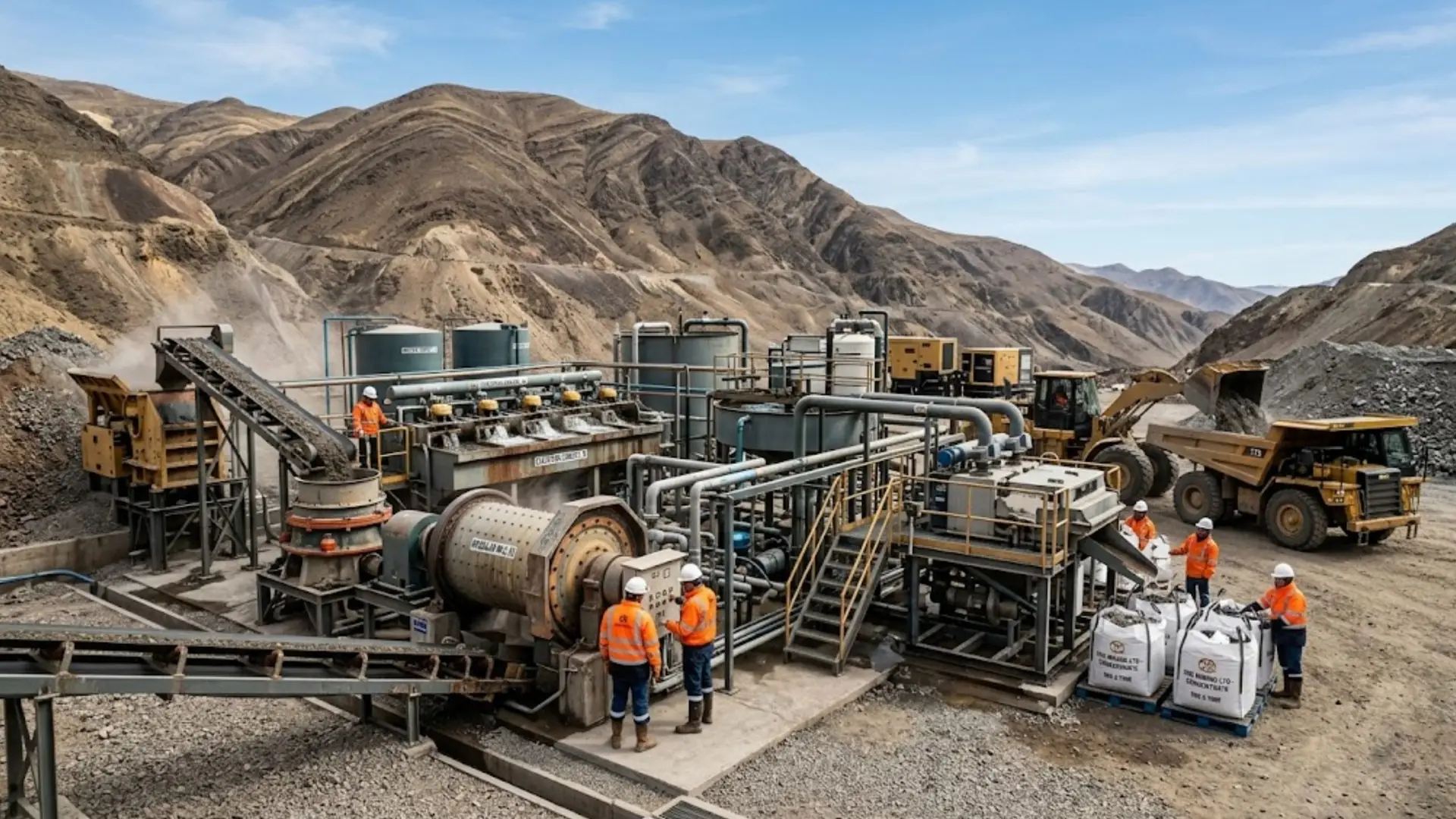
A small-scale mining plant is a compact processing system designed to treat ore at lower capacities than a major industrial refinery or concentrator. These plants are often selected by junior miners, regional processors, pilot operators, toll treatment businesses, and investors entering developing mining areas.
The ROI of Small Scale Mining Plants is often attractive because these plants are:
Faster to install
Easier to transport
More affordable than large plants
Suitable for remote mining zones
Flexible for different ore bodies
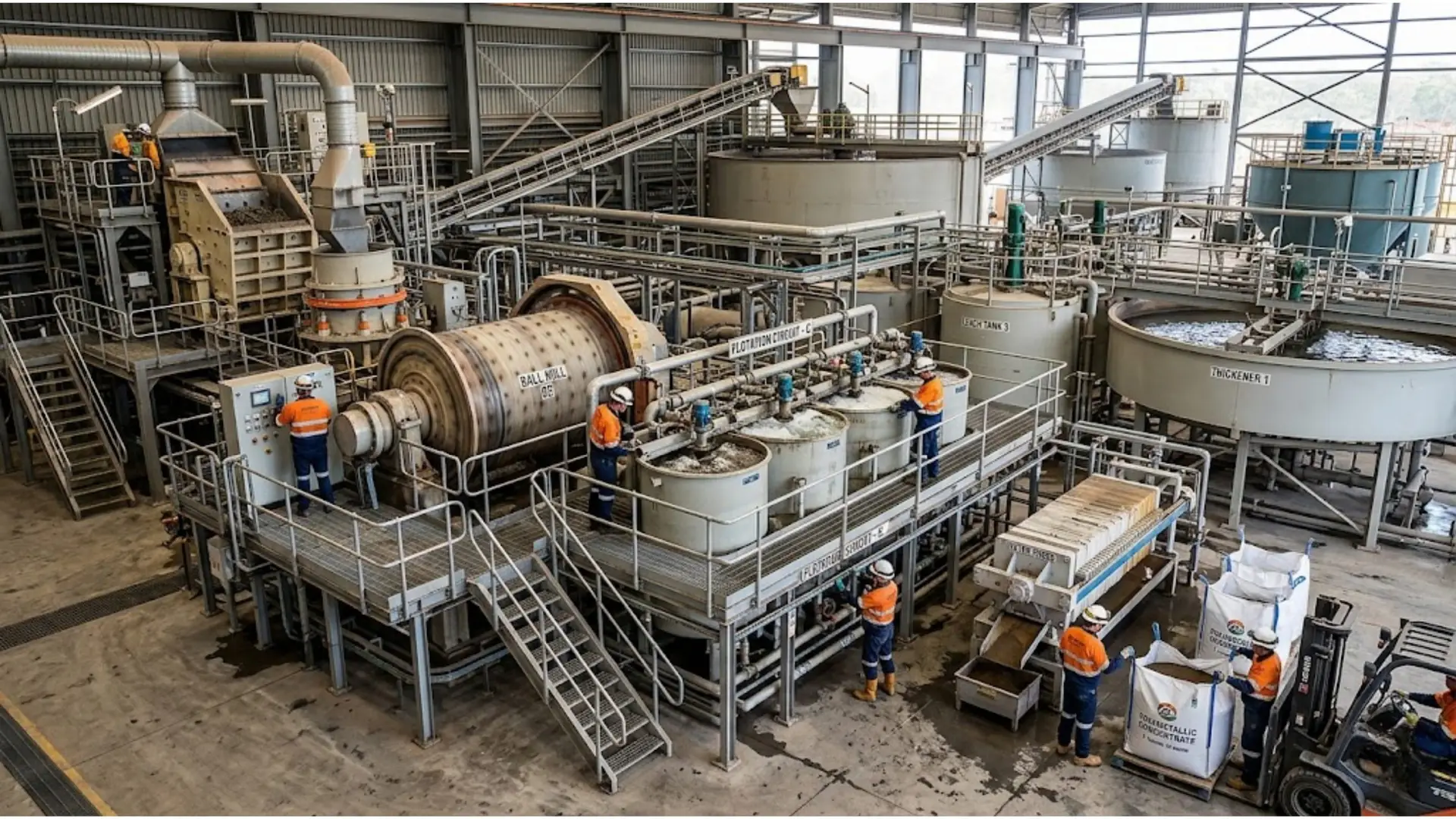
In practical terms, a small-scale plant can include crushing, grinding, gravity separation, flotation, leaching, thickening, filtration, smelting, or refining, depending on the target metal and ore type.
Who typically buys these plants
Small and mid-sized mining companies
Local mineral processing groups
Industrial buyers looking for captive feed processing
Investors developing first-stage mining assets
Contract processors serving multiple mines
For countries like Peru, Bolivia, Colombia, Ghana, Tanzania, Indonesia, and the Philippines, compact plant designs are especially useful because many deposits are smaller, scattered, or located in areas where very large infrastructure is not practical.
4. Step-by-Step Process Explanation
The exact process depends on the ore and metal, but the general flow of a small mining plant is usually straightforward.
Step 1: Ore reception and feeding
Run-of-mine ore is delivered to the plant and fed into a primary crushing section. Good feeding control improves the whole system and reduces wear on equipment.
Step 2: Crushing
The ore is reduced in size using jaw crushers, hammer mills, or cone crushers. The goal is to prepare a manageable feed for grinding or direct concentration.
Step 3: Grinding
Grinding releases valuable minerals from the waste rock. This is one of the most critical stages because poor liberation reduces recovery and hurts the ROI of Small Scale Mining Plants.
Step 4: Concentration or extraction
Depending on the material, the plant may use:
Gravity concentration for free gold or heavy minerals
Flotation for sulfide ores
Leaching for oxide or fine precious metal ores
Magnetic or electrostatic separation for specific minerals
Step 5: Thickening and filtration
Water is removed from slurry to produce concentrate or prepare residue for disposal. Efficient dewatering lowers transport cost and improves downstream handling.
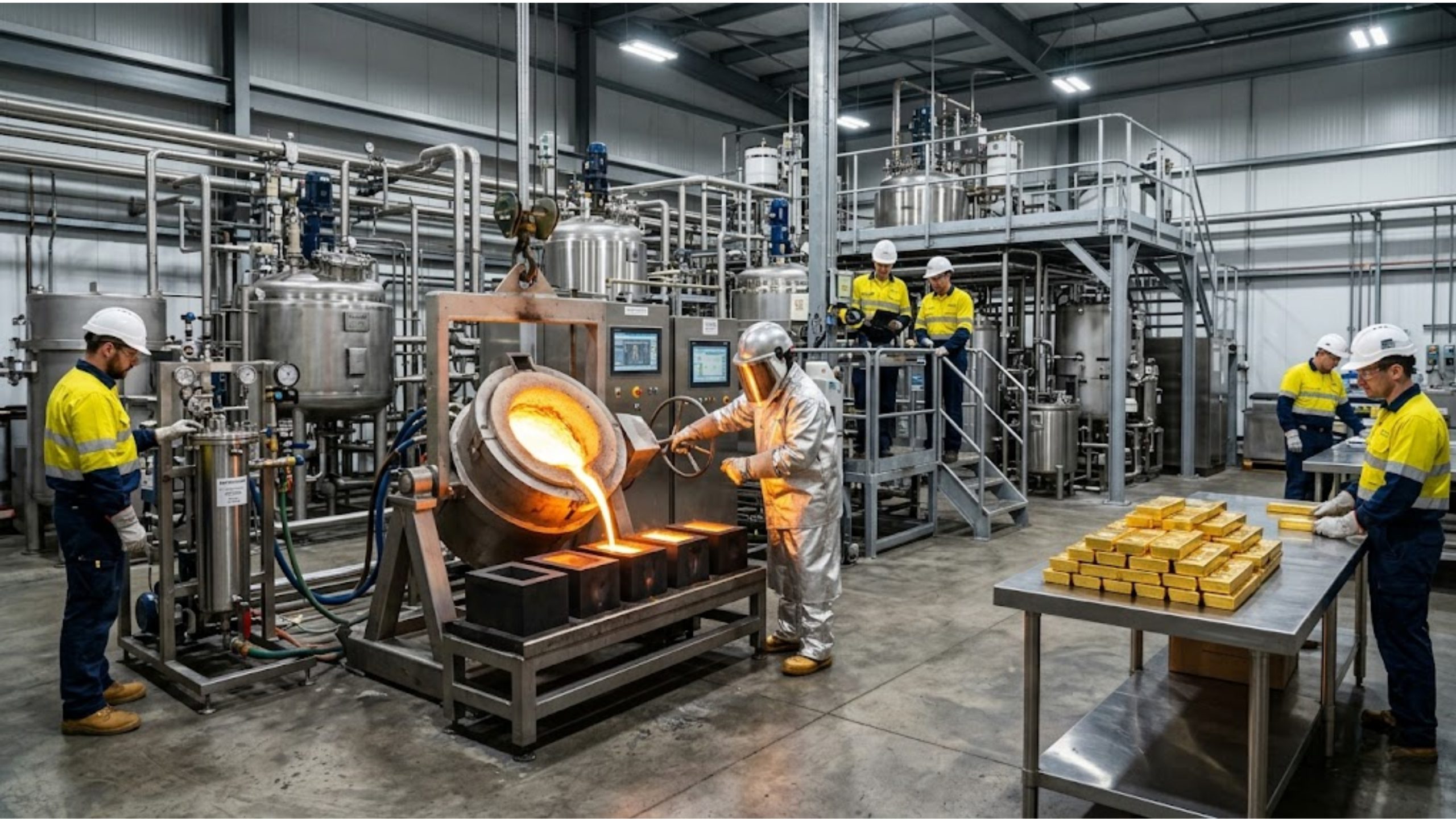
Step 6: Smelting or refining
In some cases, the concentrate moves to a smelting or refining stage to produce a final saleable product. In other cases, concentrate is sold to a third party.
Step 7: Tailings management
Waste material is stored or treated. Modern systems focus on cleaner water handling and better environmental control.
Step 8: Product sale and revenue generation
Recovered metal or concentrate is sold into the market. At this stage, the actual ROI of Small Scale Mining Plants becomes visible through production reports, recovery results, and net margins.
5. Key Equipment Used in Small Scale Mining Plants
The equipment mix depends on metal type, ore characteristics, and plant design. A properly selected equipment package can strongly improve uptime and recovery.
Equipment List
-
Ore feeder
-
Jaw crusher
-
Hammer mill or ball mill
-
Vibrating screen
-
Gravity concentrator
-
Flotation cells
-
Leaching tanks
-
Thickener
-
Filter press
-
Pumps and pipelines
-
Conveyor systems
-
Smelting furnace or refining unit
-
Control panel and automation system
-
Water recycling system
-
Tailings handling equipment
Why equipment selection matters
This is why plant design should always be based on ore testing and production targets.
A well-matched equipment setup improves the ROI of Small Scale Mining Plants by increasing recovery, reducing downtime, and controlling maintenance costs.
6. Plant Capacity Options from 10 to 1000 TPD
Plant size has a direct impact on capital cost, operating cost, and payback period. Small plants are usually planned in TPD, or tons per day.
10–50 TPD plants
These are common for pilot mining, small remote operations, and early-stage investors. They require lower capital and can be deployed faster. ROI can be good if ore grade is high.
50–100 TPD plants
This range is attractive for commercial small mines that want steady processing without the complexity of a large plant. It often offers a good balance between cost and production.
100–300 TPD plants
These plants suit growing operators who want stronger daily output and more stable margins. They may include more advanced process control and higher automation.
300–500 TPD plants
This size is suitable for established mining groups with a reliable ore supply. Capital cost is higher, but per-ton processing cost often improves.
500–1000 TPD plants
These are still considered compact compared with major industrial plants, but they require stronger infrastructure, more energy, and larger working capital. They can offer strong returns when ore supply and logistics are reliable.
The best ROI of Small Scale Mining Plants often comes from choosing the right size for your ore reserve, not simply the biggest possible capacity.
7. Energy Consumption Details
Energy is one of the largest operating costs in any mining plant. If you ignore this factor, your ROI calculation will be incomplete.
Where energy is consumed
Crushing motors
Grinding mills
Pumps
Compressors
Flotation blowers
Leaching agitators
Drying and smelting equipment
Grinding usually consumes the most power because reducing ore to fine particle size takes significant mechanical energy.
Typical energy impact on costs
For small plants, energy cost can represent a major share of operating expense, especially in remote regions where grid power is weak or diesel generation is common.
A plant in Ghana or Tanzania may face different power challenges than one in Mexico or Peru. In Indonesia and the Philippines, site logistics can also influence fuel and spare parts cost. That is why energy planning should be localized for the target country.
How to reduce energy cost
Use efficient motors
Avoid over-grinding
Recycle water properly
Optimize feed size before milling
Use automation for load control
Better energy efficiency improves the ROI of Small Scale Mining Plants because every saved kilowatt lowers your cost per ton.
8. Cost Estimation for Small Scale Mining Plants
A realistic cost estimate should include far more than just machinery purchase. Many first-time buyers make the mistake of only looking at equipment price.
Low-cost range
A low-cost plant usually includes basic crushing, grinding, and simple recovery equipment with limited automation. This suits very small or early-stage operations.
Medium-cost range
A medium-cost plant often includes better recovery systems, stronger structural design, improved controls, and more reliable water handling. This is the most common category for serious industrial buyers.
High-cost range
A high-cost setup may include modular engineering, advanced automation, stronger environmental systems, and refining capability. The upfront cost is higher, but lifecycle value may also be better.
Main cost categories
Plant equipment
Civil works and foundations
Installation and commissioning
Power system
Water system
Labor and training
Spare parts
Transport and import duties
Environmental protection systems
The ROI of Small Scale Mining Plants becomes more accurate when you separate capital cost from operating cost and build your model around real site conditions.
9. ROI and Profitability Analysis
This is the section most buyers care about. Profitability depends on the relationship between recovery and cost.
Key profitability drivers
Ore grade
Metal price
Recovery efficiency
Daily throughput
Operating cost per ton
Downtime frequency
A plant with modest capacity can still generate strong returns if ore grade is good and recovery is efficient. On the other hand, a larger plant with poor recovery can underperform badly.
Example of a simple ROI logic
If your plant processes 100 tons per day and your ore contains enough recoverable value to generate solid revenue per ton, then your payback period may be relatively short. If recovery improves from 70 percent to 85 percent, the extra metal recovered can make a major difference to annual profit.
That is why the ROI of Small Scale Mining Plants should never be judged only by plant size. Recovery performance matters just as much as throughput.
Payback period
Many industrial buyers target the shortest practical payback period. A compact plant with fast installation and stable daily production can often outperform a larger project that takes too long to become operational.
Profit margin stability
A healthy mining project should remain profitable even when the metal market softens. If your plant only works under peak price conditions, the investment is riskier.
10. Comparison with Traditional Mining Methods
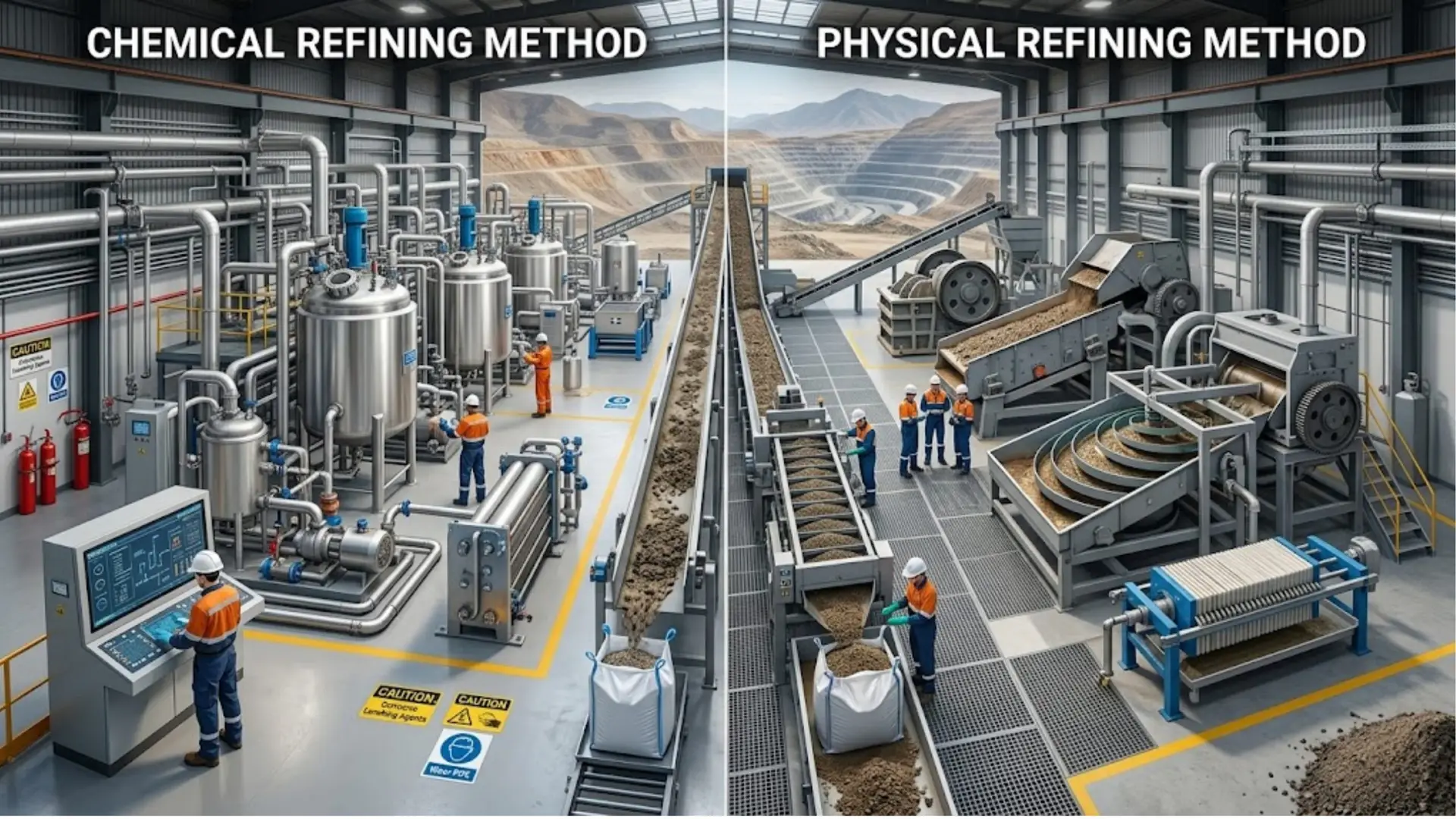
Traditional small mining methods often rely on manual handling, inefficient recovery, and inconsistent product quality. These methods may appear cheap at first, but they usually reduce long-term profitability.
Traditional approach
Low recovery
High material loss
Poor process control
Greater labor dependence
Weak environmental performance
Modern plant approach
Higher recovery rate
More stable output
Better safety
Lower per-ton loss
Stronger compliance potential
When you compare both models, the ROI of Small Scale Mining Plants is usually better with modern modular processing because it captures more value from the same ore.
For example, a manual or loosely organized system may leave valuable metal in tailings. A modern plant can recover much more of that value, which is like collecting money that would otherwise be thrown away.
11. Environmental Benefits of Modern Small Plants
Environmental performance is now a business issue, not just a compliance issue. Investors, regulators, and industrial buyers increasingly look at how a plant manages waste, water, and emissions.
Key environmental benefits
Reduced tailings loss through better recovery
Improved water recycling
Lower chemical waste with optimized dosing
Cleaner site organization
Better control of dust and emissions
Modern plants are often designed with closed-loop or semi-closed-loop water systems. This reduces fresh water demand and helps operators in water-sensitive regions.
The ROI of Small Scale Mining Plants also improves when environmental design is stronger, because cleaner operations can reduce regulatory risk, lower remediation cost, and support long-term business continuity.
12. Real-World Use Cases and Industry Applications
The value of a small mining plant is not limited to one metal or one geography. These systems serve many practical commercial needs.
Use case 1: Small gold mines in Latin America
In Peru, Bolivia, Colombia, and Mexico, many operators need compact plants that can be installed near deposits and process ore without waiting for major infrastructure.
Use case 2: Remote mining areas in Africa
In Ghana and Tanzania, small and mid-sized miners often benefit from modular plants because transport, labor, and site conditions demand simpler systems with reliable output.
Use case 3: Island and remote-zone operations in Asia
In Indonesia and the Philippines, modular setups can support remote projects where a large plant is too expensive or difficult to build.
Use case 4: Toll processing businesses
Some buyers install a plant not only for their own ore but also to process third-party feed. This can increase utilization and improve the ROI of Small Scale Mining Plants.
Use case 5: Pilot-to-commercial expansion
A 30 TPD or 50 TPD plant can act as a pilot stage, allowing investors to verify ore behavior and revenue potential before expanding to 100 TPD or more.
13. How to Improve ROI in High-Demand Mining Regions
If your target market includes Peru, Bolivia, Mexico, Colombia, Ghana, Tanzania, Indonesia, and the Philippines, your marketing and technical positioning should reflect the needs of these regions.
What buyers in these markets usually want
Affordable modular design
Fast shipping and installation
Simple maintenance
Good recovery with lower operating complexity
Support for remote conditions
Training and after-sales service
To improve the ROI of Small Scale Mining Plants, buyers in these countries should focus on ore testing first, then choose a plant that matches local labor skill level, power availability, and logistics conditions.
A supplier that understands real small-mine conditions can often create better financial outcomes than a seller offering generic equipment without process customization.
14. Common Risks That Affect Plant Profitability
Even a well-designed plant can underperform if key risks are ignored.
Main risks
Inconsistent ore grade
Poor metallurgical testing
Undersized or oversized equipment
Weak operator training
High unplanned downtime
Power instability
Poor spare parts planning
Low-quality tailings or water management
Each of these can damage the ROI of Small Scale Mining Plants by lowering recovery or increasing costs.
How to reduce risk
Run lab and pilot tests before final design
Build realistic operating budgets
Train local teams properly
Choose durable components
Plan for maintenance and spare inventory
Good risk control is one of the fastest ways to protect profitability.
15. How to Choose the Right Plant Supplier
Your supplier is not just selling machines. They are shaping your production outcome.
A good supplier should understand metallurgy, plant integration, commissioning, and operating economics. They should be able to explain how the system affects recovery, energy use, maintenance, and payback.
What to look for in a supplier
Experience with small and medium mining projects
Ability to customize plant design
Clear equipment specification
Commissioning and training support
Realistic production expectations
Strong communication for export markets
If your business is targeting international markets, your website and sales content should also speak directly to industrial buyers in the right regions.
For example, if you are promoting solutions for small miners in Peru, Bolivia, Mexico, Colombia, Ghana, Tanzania, Indonesia, and the Philippines, your content should focus on practical ROI, modularity, shipping ease, and rapid installation. That regional focus makes your message more relevant and more likely to convert.
For direct industrial inquiries, your business details can also be presented clearly:
Website: avimetal.com
Address: C/O AINFOX, 2060 Faith Industrial Dr., Buford, GA 30518
Email: jgim@avimetal.com
Text Message / WhatsApp / Telegram: +1 470 5648883
Conclusion
The ROI of Small Scale Mining Plants depends on one core principle: recovering the highest possible value from your ore with the lowest practical operating cost. A small plant can deliver excellent returns when the design matches the ore, the equipment is selected correctly, and the process is optimized for local operating conditions.
For mining companies, industrial buyers, engineers, and investors, the best opportunity is not always the largest plant. It is the plant that reaches production faster, performs consistently, and creates reliable profit in real field conditions. If you choose the right process, capacity, and supplier, a small-scale mining plant can become a strong and scalable investment.
FAQs
1. What is the average ROI of Small Scale Mining Plants?
The average ROI of Small Scale Mining Plants varies based on ore grade, recovery rate, plant capacity, operating cost, and metal price. In strong projects, the payback period can be attractive, especially when the plant is modular and designed around tested ore data.
2. How much does a small scale mining plant cost?
The cost can fall into low, medium, or high ranges depending on capacity, automation, environmental systems, and refining capability. Total project cost should include equipment, installation, power, water systems, labor training, and logistics, not just the plant price alone.
3. What plant capacity is best for small mining companies?
The best capacity depends on ore reserve, daily feed availability, and investment level. Many buyers start with 10 to 100 TPD, while more established operators may choose 100 to 1000 TPD if ore supply and infrastructure are secure.
4. How can I improve the profitability of a small mining plant?
You can improve profitability by increasing recovery, reducing downtime, optimizing energy use, selecting the right equipment, and testing ore before final plant design. These steps directly improve the ROI of Small Scale Mining Plants.
5. Are small scale mining plants more profitable than traditional methods?
In many cases, yes. Modern plants usually provide better recovery, stronger process control, lower losses, and improved environmental performance compared with traditional manual or low-efficiency systems. That often results in better long-term profitability
Read more: https://avimetal.com/blogs/.