Energy Consumption in Refining Plants
Introduction
For mining companies, refiners, plant owners, and investors, energy is not just a utility bill. It is one of the biggest factors that shapes plant performance, operating cost, product quality, and long-term profitability. If your refining plant uses too much power or fuel, your margins shrink fast. If your energy system is optimized, you gain a strong advantage in production cost and plant efficiency.
That is why Energy Consumption in Refining Plants has become a major decision point for industrial buyers across Peru, Bolivia, Mexico, Colombia, Ghana, Tanzania, Indonesia, and the Philippines. Many of these markets have growing small and medium mining operations that need practical, cost-controlled refining solutions. In these regions, energy efficiency can decide whether a refining project remains profitable or struggles with high operating expenses.
Whether you are planning a new plant, expanding capacity, or comparing modern systems with older methods, understanding Energy Consumption in Refining Plants helps you make smarter technical and commercial decisions.
Table of Contents
| Sr# | Headings |
|---|---|
| 1 | Overview of Energy Consumption in Refining Plants |
| 2 | Why Energy Use Matters for Mining Companies and Buyers |
| 3 | Main Sources of Energy Consumption in Refining Plants |
| 4 | Step-by-Step Process Explanation |
| 5 | Equipment That Affects Plant Energy Demand |
| 6 | Plant Capacity Options from 10 to 1000 TPD |
| 7 | Energy Consumption Details by Process Stage |
| 8 | Cost Estimation: Low, Medium, and High Scenarios |
| 9 | ROI and Profitability Analysis |
| 10 | Comparison with Traditional Methods |
| 11 | Environmental Benefits of Efficient Refining Plants |
| 12 | Real-World Use Cases and Applications |
| 13 | How to Reduce Energy Consumption in Refining Plants |
| 14 | What Buyers Should Check Before Investing |
| 15 | Conclusion |
| 16 | FAQs |
1. Overview of Energy Consumption in Refining Plants
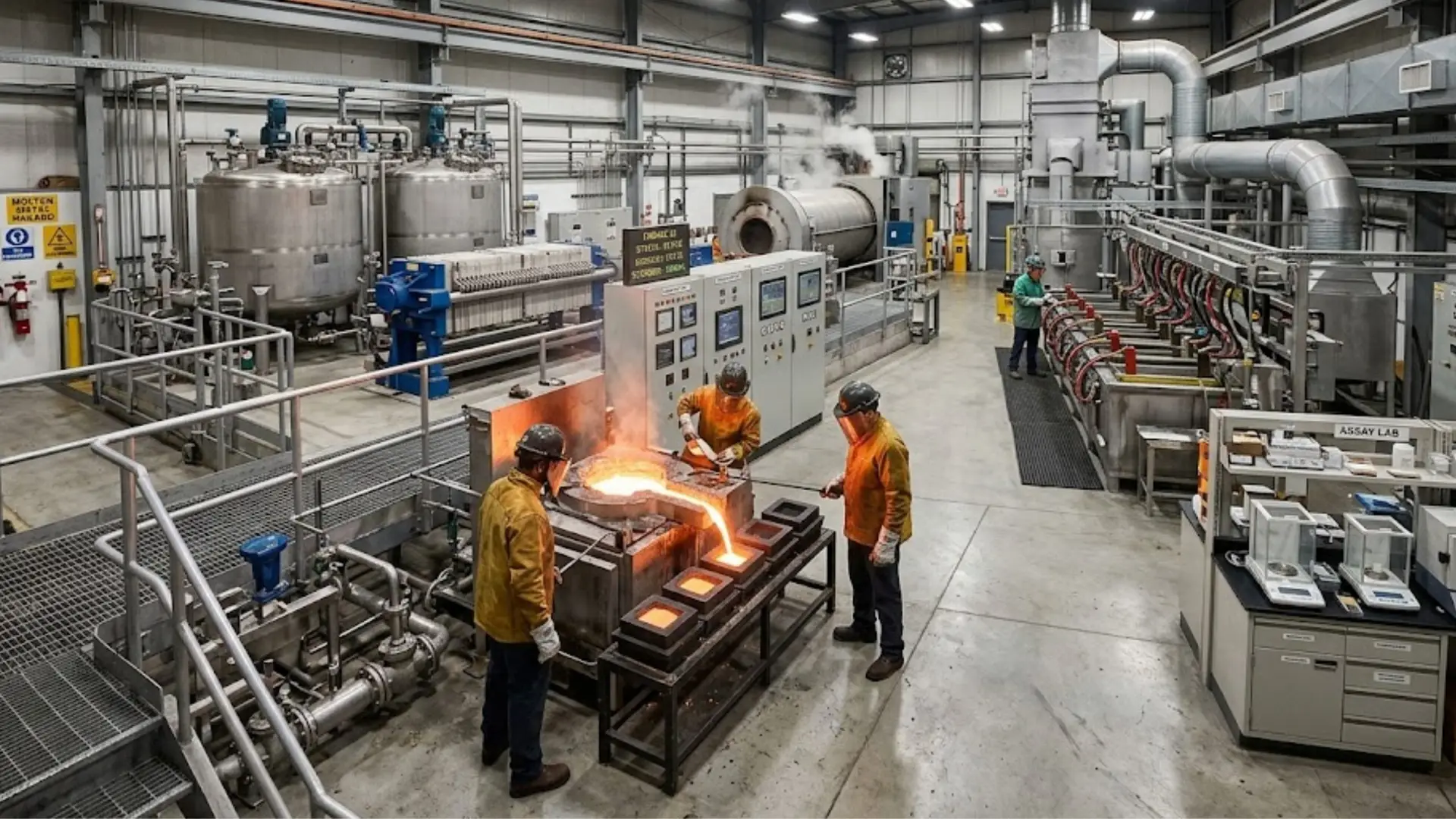
Energy Consumption in Refining Plants refers to the total electricity, fuel, steam, compressed air, and thermal energy used to transform raw or semi-processed material into higher-purity metal products. In metal refining, this includes heating, melting, chemical treatment, pumping, drying, filtration, and final finishing.
In simple terms, energy is the force that keeps the plant moving. Without it, furnaces cannot melt, pumps cannot circulate slurry, filters cannot separate impurities, and control systems cannot run. A refining plant may look like a materials business, but in many ways, it is also an energy management business.
A good analogy is water filtration. If you want clean water, you need the right filters, pressure, and flow control. Refining works in a similar way. You are removing impurities step by step, and every step needs energy to push the process forward. If the system is poorly designed, you waste power the same way a leaking filter system wastes water and pressure.
For industrial buyers, this means plant efficiency is not only about output. It is about how much energy you spend to produce each ton of refined material.
2. Why Energy Use Matters for Mining Companies and Buyers
When you evaluate a refining plant, equipment price is only one part of the decision. Operating cost often has a bigger long-term impact. In many cases, a cheaper plant becomes more expensive over time because of poor energy efficiency.
Energy Consumption in Refining Plants matters because it directly affects:
Operating cost per ton
Production stability
Equipment life
Carbon footprint
Project bankability
Return on investment
This is especially important in countries with small mines and remote sites. In parts of Ghana, Tanzania, Bolivia, and Indonesia, energy supply may be unstable, costly, or dependent on diesel generation. In such cases, plant design must match local infrastructure. A system that performs well in a grid-connected industrial zone may not be the best option for an off-grid mining area.
For investors, energy-efficient refining plants are also more attractive because they reduce risk. Lower energy consumption often means more predictable cash flow and better profitability over the life of the plant.
3. Main Sources of Energy Consumption in Refining Plants
To understand Energy Consumption in Refining Plants, you first need to know where the energy goes. Most refining plants consume energy in several major areas.
Thermal Energy
This includes fuel or electric heat used in furnaces, dryers, reactors, and smelting units. Thermal processes are often the largest energy consumers in metal refining.
Electrical Energy
Electricity powers motors, agitators, pumps, blowers, instrumentation, crushers, grinders, conveyors, and automation systems.
Compressed Air
Many plants use compressed air for valve control, pneumatic systems, cleaning, and material transfer. It is useful, but inefficient air systems can become hidden energy drains.
Steam and Heat Transfer Systems
Some plants rely on steam or thermal oil for indirect heating. These systems improve control but add energy complexity.
Water Circulation and Pumping
Refining often needs pumping for leaching, chemical dosing, slurry movement, and cooling. Poor pumping design can sharply increase energy use.
A plant may not seem energy-heavy when you look at each machine alone. But when all systems run together for long hours, total demand rises quickly.
4. Step-by-Step Process Explanation
The exact process depends on the metal and refining method, but the general structure is similar across many refining operations. Understanding each step helps you see where Energy Consumption in Refining Plants builds up.
Step 1: Feed Preparation
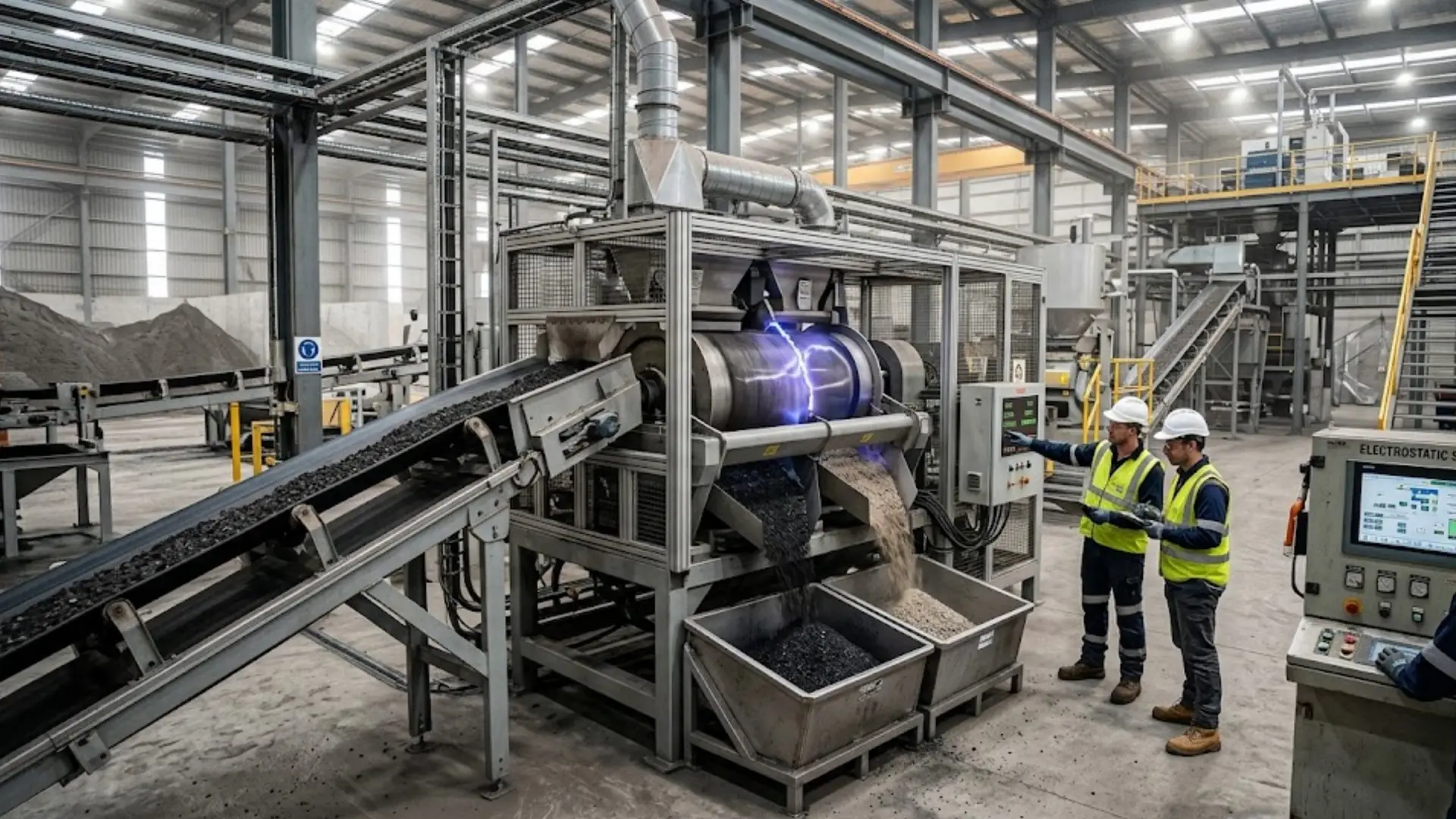
Raw material is received, sorted, crushed, screened, or blended. This stage uses motors, conveyors, crushers, and feeders.
Step 2: Drying or Moisture Control
Some feed materials must be dried before smelting or chemical treatment. Dryers can consume significant thermal energy.
Step 3: Heating or Melting
The material enters a furnace, reactor, or thermal unit. This is often the highest-energy stage because it requires sustained heat at controlled temperatures.
Step 4: Chemical Treatment or Separation
The plant removes unwanted impurities through fluxing, leaching, oxidation, reduction, electrochemical treatment, or precipitation. Agitators, pumps, dosing systems, and heaters consume power here.
Step 5: Filtration and Solid-Liquid Separation
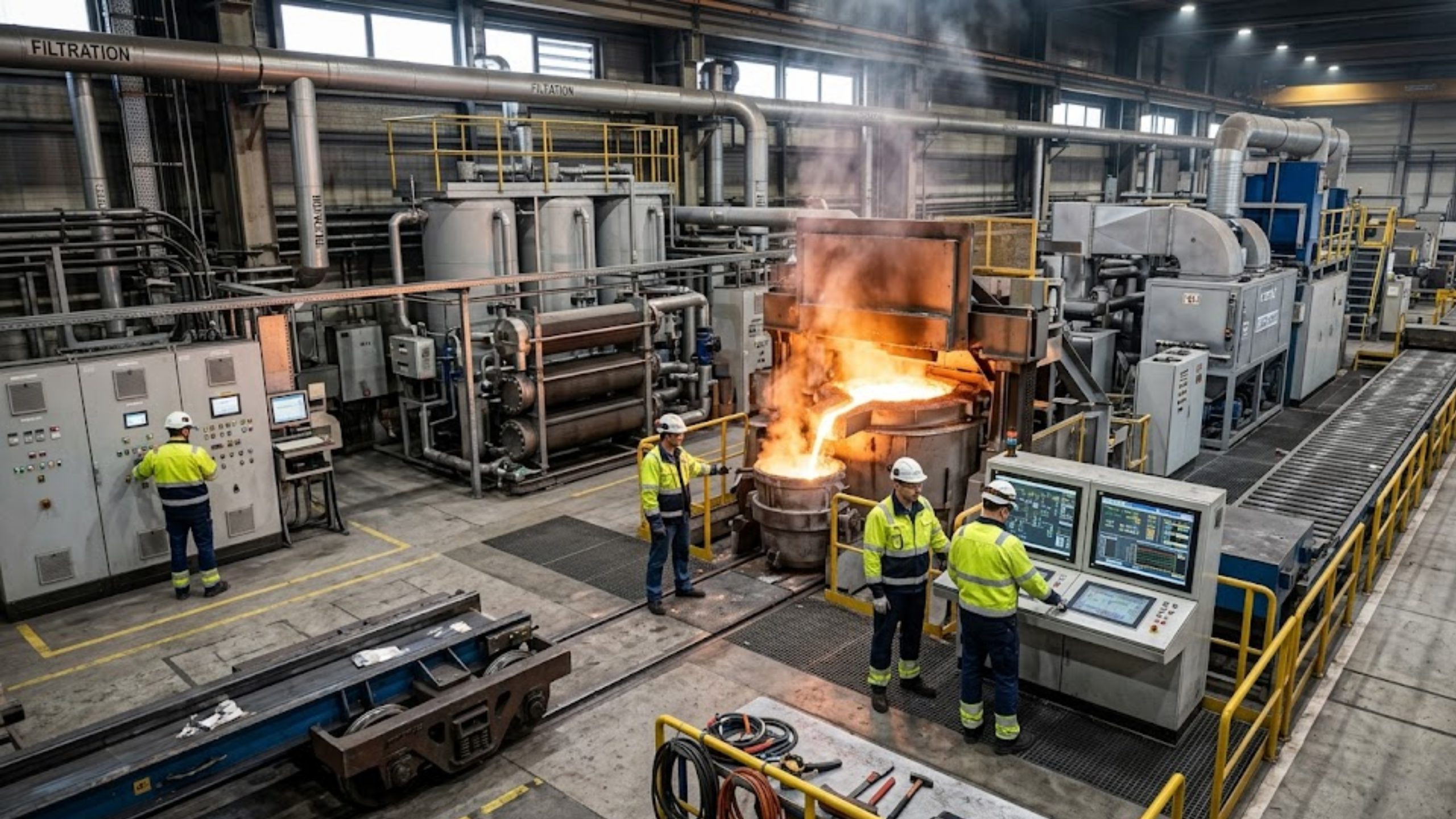
Filters, thickeners, presses, and vacuum systems separate solids from liquids. These systems use electrical and mechanical energy.
Step 6: Purification and Final Refining
The material moves through additional purification stages to improve final metal grade. This may include electrorefining, washing, drying, or secondary treatment.
Step 7: Casting, Granulation, or Product Finishing
The refined metal is poured into bars, ingots, grains, or other forms. Heating, molds, cooling, and handling all require controlled energy input.
Step 8: Emission Control and Waste Treatment
Modern plants must also power scrubbers, fans, wastewater systems, and dust collection units. These support systems are essential and must be included in total energy calculations.
5. Equipment That Affects Plant Energy Demand
The following equipment has a major effect on Energy Consumption in Refining Plants:
-
Crushers and grinders
-
Rotary dryers
-
Melting furnaces
-
Induction furnaces
-
Reverberatory furnaces
-
Leaching tanks
-
Agitators and mixers
-
Pumps and slurry transfer systems
-
Filter presses
-
Vacuum filters
-
Electrorefining cells
-
Heat exchangers
-
Dust collectors
-
Scrubbers and emission control units
-
Cooling towers
-
Air compressors
-
Casting machines
-
PLC and automation systems
Buyers should always ask which machines are the biggest energy users and how the supplier has optimized them. A well-selected furnace and pump system can save more money over time than a small discount on initial equipment price.
6. Plant Capacity Options from 10 to 1000 TPD
Plant size has a major impact on energy profile. Energy Consumption in Refining Plants does not rise in a perfectly straight line with capacity. Larger plants often gain better energy efficiency per ton because fixed energy loads are spread over more production.
10–50 TPD
These are small plants often suited for pilot operations, artisanal mining upgrades, or local refining hubs. They are easier to install and manage, but energy cost per ton may be higher if equipment is not optimized.
50–150 TPD
This range is common for growing mining businesses in Latin America, Africa, and Southeast Asia. It balances manageable capital cost with better operating efficiency.
150–500 TPD
These plants usually justify stronger automation, heat recovery, and better process control. Energy performance per ton often improves in this range.
500–1000 TPD
Large industrial plants can achieve strong economies of scale, but only if design, maintenance, and feed consistency are well managed. At this size, energy management becomes a strategic priority, not just a technical detail.
For many small-mine regions such as Peru, Bolivia, Colombia, Ghana, Tanzania, Indonesia, and the Philippines, modular systems in the 10 to 150 TPD range are often practical starting points before scaling up.
7. Energy Consumption Details by Process Stage
It is difficult to give one fixed number because every metal, feed grade, moisture level, and technology route is different. Still, buyers need a practical view of where the energy is consumed.
Preparation Stage
This stage usually has moderate electricity demand. Crushing, grinding, conveying, and feed handling depend on motor size and material hardness.
Drying Stage
Drying can become one of the largest thermal loads if the feed has high moisture. Wet feed means more fuel or electricity is needed before refining even begins.
Smelting or Melting Stage
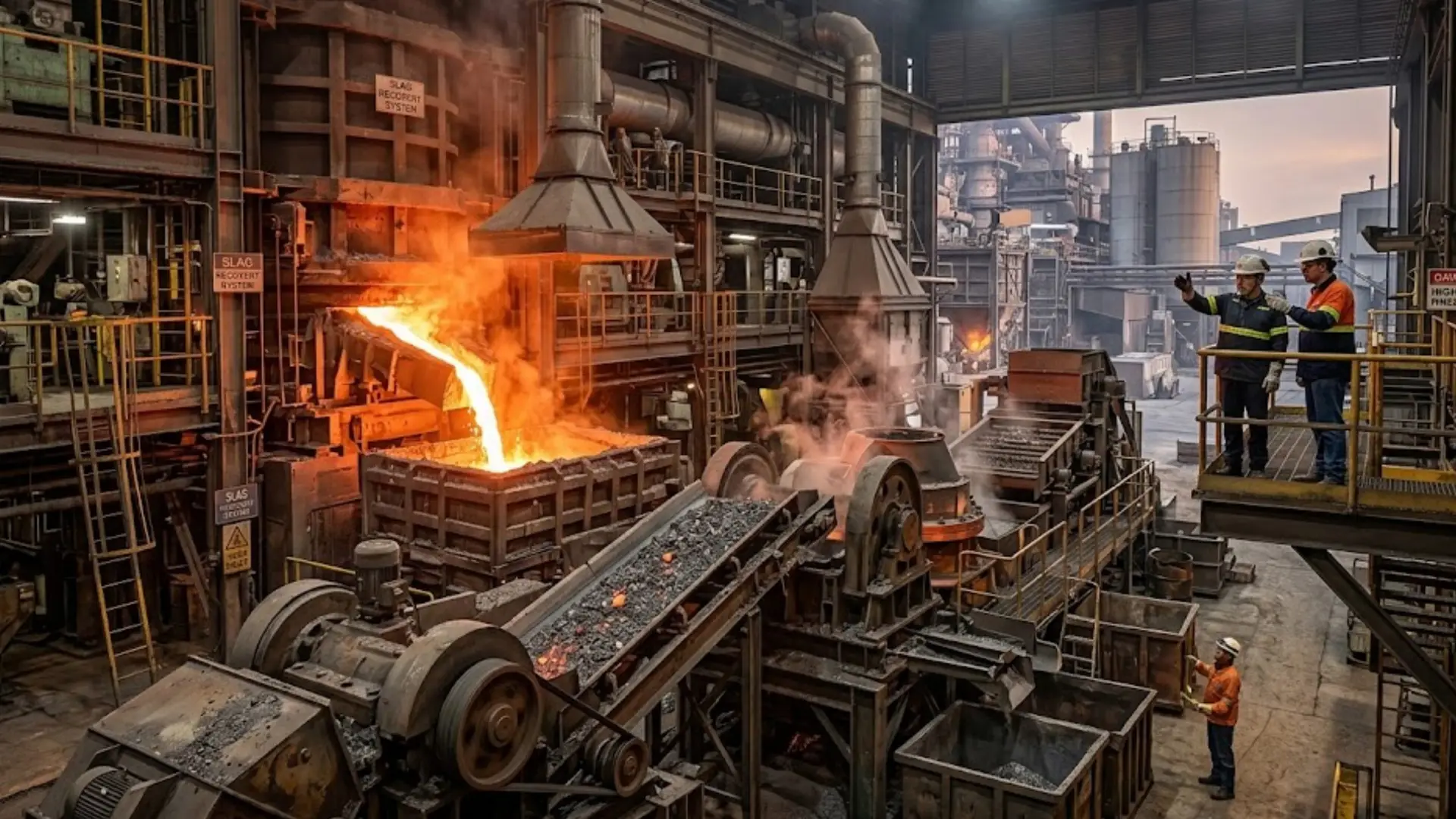
This is often the highest energy stage. Furnace efficiency, insulation quality, burner design, and feed consistency strongly affect total consumption.
Chemical Refining Stage
Leaching, agitation, circulation, and chemical dosing may not look dramatic, but they can run continuously. Over time, these systems contribute a large share of electrical load.
Filtration and Drying of Final Product
Filter presses, vacuum units, and finishing dryers also add to the total energy picture.
Auxiliary Systems
Lighting, ventilation, dust control, emission treatment, and cooling utilities are often underestimated. In some plants, support systems account for a surprisingly large percentage of total energy use.
As a practical benchmark, many buyers review energy in terms of kWh per ton processed, fuel per ton, and total utility cost per ton of refined output. This makes comparison easier across plant options.
8. Cost Estimation: Low, Medium, and High Scenarios
Cost depends on energy price, plant scale, feed type, local labor, and process route. Still, for decision-making, it helps to group Energy Consumption in Refining Plants into three commercial scenarios.
Low-Cost Scenario
This usually applies to smaller or medium plants with efficient modern equipment, stable feed quality, and access to affordable grid power or optimized fuel supply.
In this case, energy cost remains controlled, and the plant can maintain strong margins even when metal prices fluctuate.
Medium-Cost Scenario
This is the most common case. The plant is reasonably efficient but still has some losses in furnace performance, pumping systems, or heat management. Energy cost is manageable but becomes a major KPI.
High-Cost Scenario
This happens when the plant uses outdated equipment, handles inconsistent feed, depends on expensive diesel power, or operates in remote mining areas without strong utility infrastructure.
In high-cost cases, even a technically working plant can become commercially weak. Buyers should be careful because poor energy performance can silently damage profitability month after month.
A supplier should provide projected utility consumption, expected cost per ton, and assumptions used in the estimate. Without that, capital pricing alone is not enough to judge the project.
9. ROI and Profitability Analysis
For investors and industrial buyers, Energy Consumption in Refining Plants plays a direct role in ROI. Lower energy use improves margins, shortens payback period, and reduces exposure to rising power or fuel prices.
How Energy Affects ROI
If two plants produce the same refined output, the one with lower utility consumption usually wins over time. Even a modest saving per ton becomes large when multiplied across months and years of production.
Example of Profit Impact
Imagine a medium-scale refining plant processing 100 TPD. If energy optimization reduces operating cost by only a small amount per ton, the annual savings can become significant. That improvement can help cover maintenance, improve cash flow, or shorten capital recovery.
What Investors Should Review
Energy cost per ton
Expected annual operating hours
Feed consistency
Local electricity and fuel pricing
Maintenance demand
Downtime risk
A strong profitability study should compare both capital cost and lifecycle energy cost. This is where modern engineering provides real value.
10. Comparison with Traditional Methods
Traditional refining methods often rely on older furnaces, weak insulation, manual controls, and limited process monitoring. These plants may still operate, but they often consume more energy per ton and produce less consistent results.
Traditional Methods
Older systems may have:
Higher heat loss
Poor combustion control
More manual handling
Less precise temperature management
Higher waste generation
Lower recovery consistency
Modern Refining Systems
Modern plants often offer:
Better thermal insulation
Improved automation
Heat recovery options
Efficient motors and drives
Better chemical dosing control
Lower emissions
The difference can be substantial. A traditional plant is like driving an old truck uphill with poor fuel control. It may reach the destination, but it burns more fuel and costs more to maintain. A modern refining plant is more like a well-tuned industrial engine that delivers output with less waste.
For buyers in growth markets, this comparison matters because older methods may appear cheaper upfront but cost more in operation.
11. Environmental Benefits of Efficient Refining Plants
Energy efficiency is not only about cost. It also improves environmental performance. Lower Energy Consumption in Refining Plants usually means lower emissions, lower fuel use, and better compliance with modern environmental standards.
Key Environmental Benefits
Reduced greenhouse gas emissions
Lower fuel consumption
Improved air quality control
Reduced thermal waste
Better water and utility balance
Easier compliance with environmental regulations
This matters more than ever in export-focused markets. Buyers, investors, and regulators increasingly expect cleaner industrial operations. Plants with better energy performance are often better positioned for licensing, financing, and market trust.
For mining companies operating near communities, efficient refining can also improve social acceptance by reducing smoke, noise, and unnecessary waste.
12. Real-World Use Cases and Applications
Energy Consumption in Refining Plants is a practical issue across different project types.
Small-Mine Upgrading in Peru and Bolivia
Many operators need compact refining systems that can handle modest throughput without excessive energy bills. In these cases, modular layouts and efficient furnaces are critical.
Regional Processing Hubs in Ghana and Tanzania
In growing mining regions, centralized refining plants can serve multiple suppliers. Energy-efficient equipment helps maintain better commercial performance where power prices can be sensitive.
Industrial Expansion in Mexico and Colombia
Medium-scale refiners often look for process upgrades that reduce cost per ton while improving metal purity and compliance.
Island and Remote Operations in Indonesia and the Philippines
Where diesel or hybrid power is common, even small improvements in efficiency can dramatically improve project economics.
These examples show that the best plant is not always the biggest one. It is the one that matches local energy conditions, feed characteristics, and business goals.
13. How to Reduce Energy Consumption in Refining Plants
If you want better performance, the goal is not simply to use less energy. The goal is to use energy more intelligently.
Practical Improvement Areas
Use high-efficiency furnaces
Improve insulation and heat retention
Control feed moisture before thermal stages
Select efficient motors and variable frequency drives
Optimize pumps and piping design
Reduce compressed air leaks
Use automation for temperature and dosing control
Install heat recovery where practical
Schedule preventive maintenance
Monitor kWh per ton and fuel per ton regularly
Even simple improvements can create strong savings. A plant does not have to be fully rebuilt to improve. In many cases, the first step is better measurement and process control.
Businesses looking at long-term plant performance often also review related solutions such as modular refining plant, gold refining plant, and mining setup guide topics as part of broader operational planning and expansion strategy.
14. What Buyers Should Check Before Investing
Before selecting a plant supplier or finalizing a refining project, you should review the following:
Technical Checks
Is the design suitable for local utility conditions?
What level of automation is included?</span>
nd=”18970″>Commercial Checks
<p data-start=”18971″ data-end=”19012″>What is the projected operating cost?
What is the expected payback period?
How does the plant perform at partial load?
What maintenance support is available?
Site-Specific Checks
Is grid power stable?
Will you use diesel backup?
Are local fuel costs high?
Is expansion planned later?
A serious supplier should be able to explain not only the plant layout, but also how Energy Consumption in Refining Plants will affect your business over time.
For industrial projects, you can contact:
AVIMETAL
C/O AINFOX, 2060 Faith Industrial Dr., Buford, GA 30518
Email: jgim@avimetal.com
Text Message / WhatsApp / Telegrams: +1 470 5648883
Website: avimetal.com
15. Conclusion
Energy Consumption in Refining Plants is one of the most important factors in refining plant design, operating cost, and profitability. For mining companies, engineers, industrial buyers, and investors, energy is not a background issue. It is a core business driver.
If you want a plant that performs well in Peru, Bolivia, Mexico, Colombia, Ghana, Tanzania, Indonesia, or the Philippines, you need more than output capacity. You need the right balance of process design, equipment selection, energy control, and local market fit.
The right refining solution helps you reduce cost, improve recovery, strengthen ROI, and build a more competitive operation for the future.
FAQs
1. What affects energy consumption in refining plants the most?
The biggest factors are furnace type, feed moisture, plant capacity, process route, equipment efficiency, and local operating conditions. Heating and melting stages usually consume the most energy.
2. How do you calculate energy consumption in refining plants?
It is commonly measured as electricity or fuel used per ton of material processed or per ton of refined output. Buyers usually review kWh per ton, fuel per ton, and total utility cost per ton.
3. Are small refining plants less efficient than large plants?
Not always, but larger plants often achieve better energy efficiency per ton because fixed utility loads are spread over greater output. Small plants can still perform well if they use modern, well-matched equipment.
4. Can lower energy consumption improve refining plant profitability?
Yes. Lower energy cost directly improves operating margin, supports better cash flow, and can shorten project payback time. Over the life of the plant, this has a major impact on ROI.
5. What plant capacity is best for small mining regions?
That depends on feed availability, power access, and business goals. In many small-mine markets, 10 to 150 TPD systems are practical because they balance investment cost, manageable operations, and future expansion potential.
Read more: https://avimetal.com/blogs/