Slag Recovery Technology in Metal Refining
Introduction
In many metal plants, valuable material is lost in slag without getting enough attention. That loss looks small on paper, but across weeks and months, it can quietly reduce your profit, lower plant efficiency, and increase waste handling costs. For mining companies, refiners, and industrial buyers, this is not just a technical issue. It is a business issue.
That is why Slag Recovery Technology in Metal Refining is getting more attention in markets with many small and mid-sized mines such as Peru, Bolivia, Mexico, Colombia, Ghana, Tanzania, Indonesia, and the Philippines. These regions often need practical systems that can recover more metal, control operating cost, and fit into flexible plant layouts.
If you want to improve recovery, reduce losses, and make your refining operation more competitive, understanding this technology can help you make a smarter investment decision.
Table of Contents
| Sr# | Headings |
|---|---|
| 1 | Overview of Slag Recovery Technology in Metal Refining |
| 2 | Why Slag Recovery Matters for Modern Metal Plants |
| 3 | How Slag Forms During Metal Refining |
| 4 | Step-by-Step Process Explanation |
| 5 | Equipment List for a Slag Recovery Plant |
| 6 | Plant Capacity Options from 10 to 1000 TPD |
| 7 | Energy Consumption Details |
| 8 | Cost Estimation: Low, Medium, High |
| 9 | ROI and Profitability Analysis |
| 10 | Comparison with Traditional Methods |
| 11 | Environmental Benefits |
| 12 | Real-World Use Cases and Applications |
| 13 | Why This Technology Fits High-Demand Mining Countries |
| 14 | Key Buying Factors Before You Invest |
| 15 | Conclusion |
| 16 | FAQs |
1. Overview of Topic Name
Slag Recovery Technology in Metal Refining is a process used to recover valuable metals trapped inside slag produced during smelting, refining, and metallurgical operations. Slag is often treated as waste, but in many cases it still contains recoverable metal units such as gold, silver, copper, lead, zinc, tin, nickel, or iron depending on the feed material and refining method.
In simple terms, slag recovery works like checking the dust bag after cleaning a room and finding out you accidentally threw away coins with the dirt. The slag may look like waste, but it can still hold value.
For plant owners, this technology helps in three major ways. First, it improves total metal recovery. Second, it reduces waste volume. Third, it turns a hidden loss area into a revenue stream.
In today’s competitive market, buyers and investors are no longer looking only at production volume. They also want to know how efficiently a plant uses raw material. That is where Slag Recovery Technology in Metal Refining becomes important. It supports better yield, stronger margins, and more sustainable operations.
2. Why Slag Recovery Matters for Modern Metal Plants
Every refining plant focuses on metal output, but many operations still underestimate the value left behind in slag. Even a small percentage of unrecovered metal can become a large financial loss when production runs daily.
For example, if a plant processes material continuously and loses only a small metal fraction in slag, that loss adds up over time. What seems like minor inefficiency can become a major profit leak by the end of the year.
Key business reasons to use slag recovery include:
-
Higher metal yield from the same feed
-
Lower raw material loss
-
Reduced disposal and landfill burden
-
Better return from low-grade or mixed feed
-
Improved plant economics for small and mid-sized mines
This is especially relevant in countries with many smaller mining operations. In Peru, Bolivia, Ghana, Tanzania, Indonesia, and the Philippines, many producers need systems that can capture more value from each ton without building a massive new refinery.
3. How Slag Forms During Metal Refining
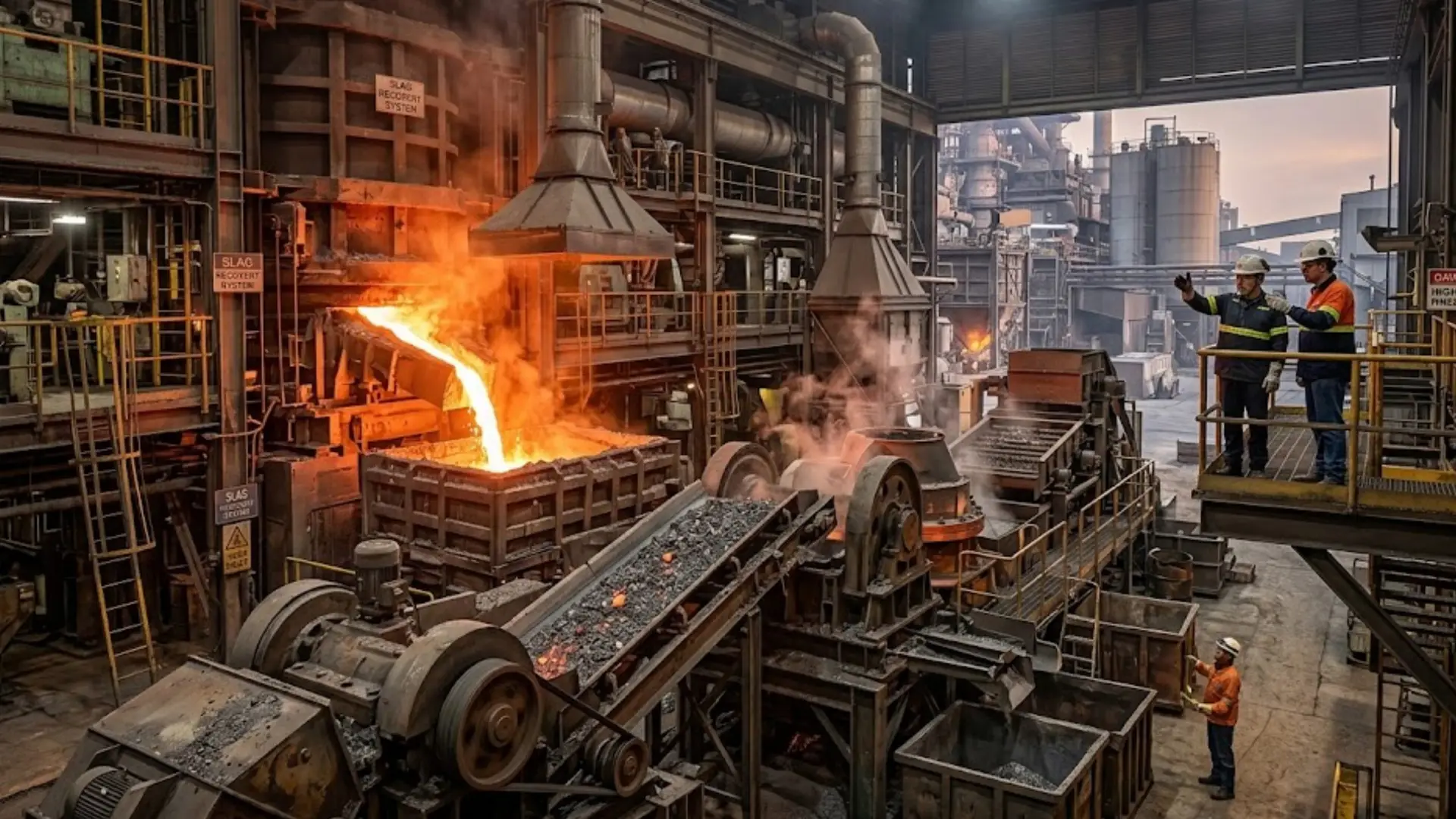
Slag forms during smelting and refining when fluxes, gangue, oxides, impurities, and non-metallic compounds separate from the molten metal. It helps remove unwanted material, but during this separation, some valuable metal can become trapped physically or chemically inside the slag phase.
This happens for several reasons:
-
Metal droplets remain mechanically locked inside cooled slag
-
Fine metal particles do not fully settle
-
Chemical reactions keep some metal tied up as oxides or compounds
-
Furnace conditions are not fully optimized
-
Slag viscosity prevents proper separation
You can think of it like filtering muddy water through a cloth. Most solids get separated, but some fine particles still stay mixed unless you use the right follow-up process. In the same way, refining removes much of the waste, but some metal still stays inside slag unless you recover it with the correct downstream system.
That is why Slag Recovery Technology in Metal Refining is not just an add-on. In many plants, it is the second chance to capture value that the first refining step did not fully recover.
4. Step-by-Step Process Explanation
The exact process depends on the metal, slag chemistry, particle size, and plant design, but a common slag recovery flow usually follows these stages.
Step 1: Slag Collection
Fresh or cooled slag is collected from the furnace, converter, or refining unit. The material may be handled hot or after cooling, depending on plant setup.
Step 2: Crushing and Size Reduction
Large slag lumps are broken into smaller sizes using crushers. This helps expose trapped metal particles and prepares the material for further separation.
Step 3: Grinding or Milling
If needed, the slag is ground more finely to liberate metal from the slag matrix. Liberation is important because locked metal cannot be recovered efficiently.
Step 4: Screening and Classification
The material is separated by size. Different particle ranges often behave differently in recovery circuits, so classification improves control and efficiency.
Step 5: Physical Separation
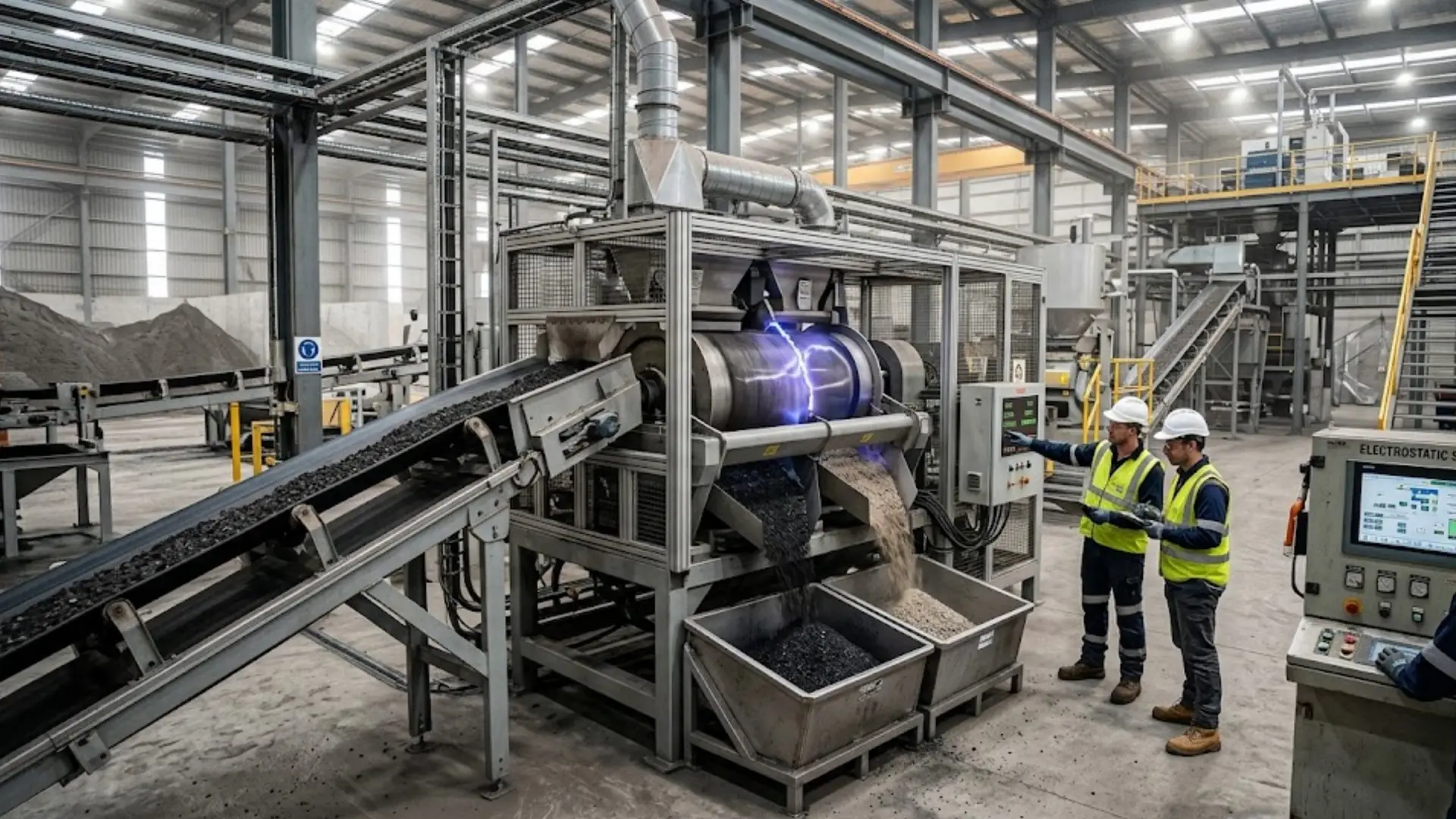
Depending on the material, the plant may use magnetic separation, gravity separation, flotation, or dense media systems. This stage removes recoverable metallic portions from lower-value slag fractions.
Step 6: Thermal or Chemical Treatment
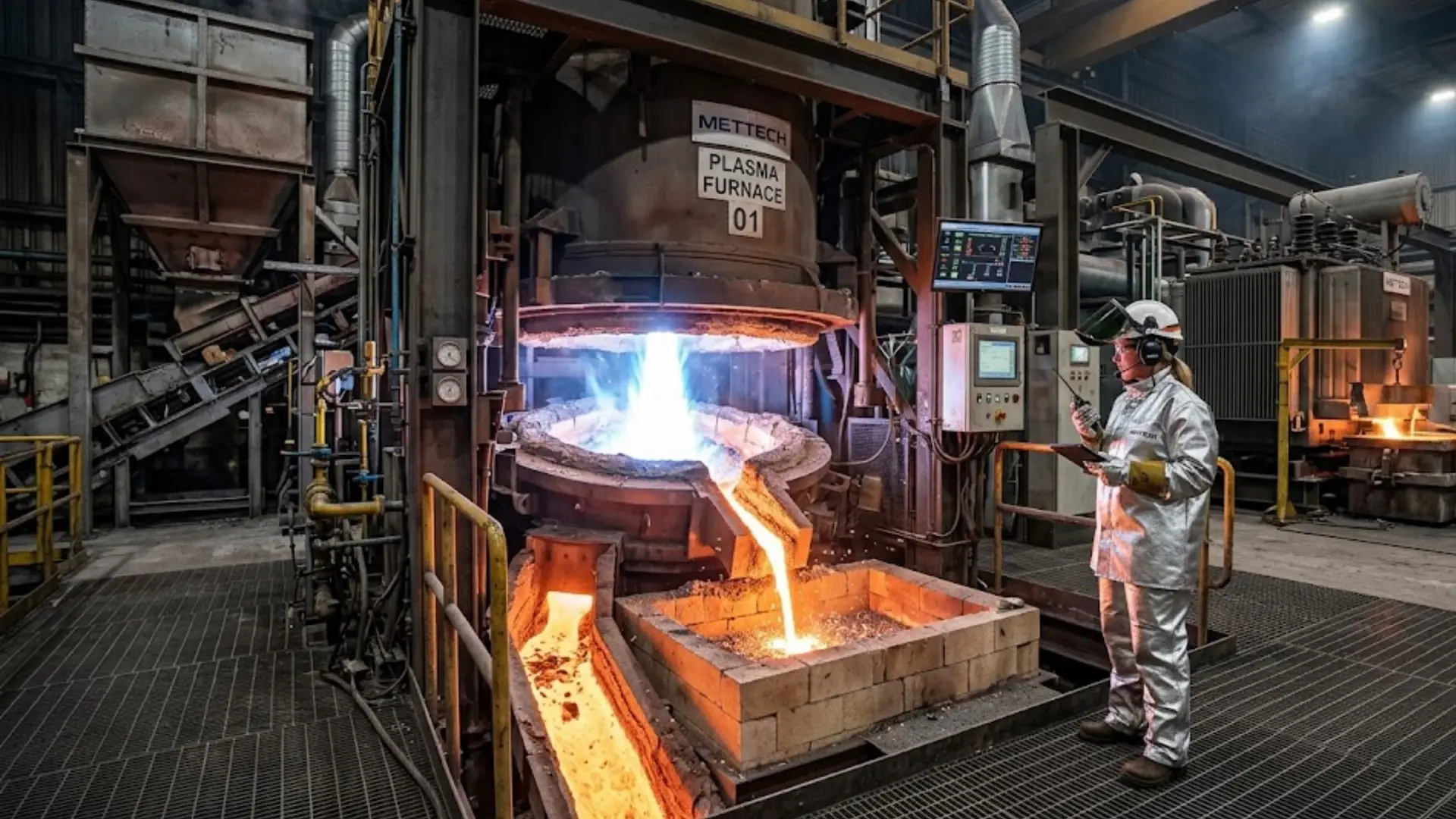
Some slags require re-smelting, reduction, or chemical leaching to extract metals that cannot be recovered by physical methods alone.
Step 7: Concentrate Collection
Recovered metal-rich fraction is collected as concentrate, metallic alloy, or reusable feed for another refining stage.
Step 8: Final Waste Handling
The remaining low-value slag is stabilized, reused, or disposed of with lower environmental burden than untreated slag.
Step 9: Quality Control and Assay
Recovered material and final tailings are tested to confirm metal content, recovery efficiency, and process performance.
Step 10: Return to Main Refining Circuit
In many plants, recovered metallic material goes back into the furnace or downstream refining system for final purification and sale.
This practical workflow makes Slag Recovery Technology in Metal Refining suitable for modular plants, expansion projects, and brownfield upgrades.
5. Equipment List for a Slag Recovery Plant
A standard slag recovery setup may include the following equipment, depending on plant size and metal type:
-
Slag cooling and handling system
-
Feed hopper
-
Jaw crusher or hammer crusher
-
Ball mill or rod mill
-
Vibrating screen
-
Magnetic separator
-
Gravity concentrator
-
Flotation cells
-
Conveyors
-
Slurry pump system
-
Thickener
-
Filter press
-
Re-smelting furnace or reduction furnace
-
Dust collection system
-
Control panel and automation system
-
Sampling and assay unit
-
Water recycling system
Equipment Selection Tip
If your feed changes often, modular and flexible equipment is usually better than a fixed single-purpose design. This matters a lot for industrial buyers working with mixed slag from different ores or refining campaigns.
6. Plant Capacity Options from 10 to 1000 TPD
One strong advantage of Slag Recovery Technology in Metal Refining is scalability. Plants can be built for small mines, mid-size refiners, or larger integrated metal operations.
10–30 TPD
This range is suitable for pilot projects, small mines, artisanal consolidation centers, and test operations. It helps verify recovery results before a larger investment.
50–100 TPD
This is a common range for growing operations that want a commercial recovery unit without a huge footprint. It fits many regional refining businesses in Latin America, Africa, and Southeast Asia.
150–300 TPD
This capacity is often used for established refiners processing regular slag streams. It offers a stronger balance between output, automation, and operating efficiency.
500–1000 TPD
This range is suited for industrial-scale plants attached to large smelters, integrated refineries, or multi-source slag processing centers. It requires stronger infrastructure, power stability, and process control.
Choosing the Right Size
The right capacity depends on:
-
Daily slag generation
-
Metal value in slag
-
Available capital
-
Energy cost
-
Labor cost
-
Expansion plans
-
Target payback period
A smart buyer does not always choose the biggest plant. The right plant is the one that gives stable recovery and healthy ROI under real operating conditions.
7. Energy Consumption Details
Energy use depends on slag hardness, moisture, required particle size, separation method, and whether thermal reprocessing is included.
In general, energy is consumed in four main areas:
Crushing and Grinding
This is often one of the biggest electrical loads, especially when slag is hard and abrasive.
Separation Systems
Magnetic separators, pumps, flotation blowers, and classification units use moderate power but run continuously.
Thermal Recovery
If the process includes re-smelting or reduction, fuel or electrical demand rises significantly.
Auxiliary Systems
Water circulation, dust control, conveyors, lighting, and automation also add to total consumption.
Typical Energy Pattern
For a small physical separation plant, energy demand may remain relatively moderate. For a larger plant with fine grinding and thermal recovery, energy demand can become one of the main operating cost drivers.
That is why plant design should focus on metal value per ton recovered, not only tons processed. If the energy required to recover the last small fraction of metal is too high, profitability can drop.
8. Cost Estimation: Low, Medium, High
The cost of installing Slag Recovery Technology in Metal Refining varies widely by capacity, automation level, metallurgy, and local infrastructure.
Low-Cost Range
A basic small-capacity unit with simple crushing, screening, and basic physical separation may suit early-stage projects or smaller operators. This is typically the entry point for plants in developing mining regions.
Medium-Cost Range
A mid-level system includes better liberation, multiple separation stages, stronger controls, and improved water handling. This is often the best fit for serious commercial buyers.
High-Cost Range
A high-end plant includes large throughput, advanced automation, furnace integration, environmental systems, and possibly chemical or thermal recovery stages. This suits industrial-scale operations focused on maximum extraction.
Main Cost Factors
-
Plant capacity
-
Type of metal in slag
-
Recovery method
-
Imported vs local equipment
-
Automation level
-
Power infrastructure
-
Civil works
-
Environmental compliance requirements
Instead of chasing the lowest capex, buyers should calculate cost against recovery value, uptime, and long-term operating efficiency.
9. ROI and Profitability Analysis
For investors and plant owners, the key question is simple: will the recovered metal justify the capital and operating cost?
The answer depends on five core factors:
Metal Content in Slag
Higher residual metal grades usually improve project economics quickly.
Recovery Efficiency
A plant that recovers more sellable metal creates stronger monthly cash flow.
Operating Cost
Power, wear parts, labor, and maintenance must stay under control.
Metal Price
Profitability improves when the target metal has strong market value.
Plant Utilization
A well-designed system running steadily often performs better than a bigger plant with poor uptime.
Practical ROI View
In many cases, slag recovery projects can show attractive payback because the feed is already available as a by-product or waste stream. You are not always buying new ore. You are extracting extra value from material already produced by your plant.
That makes Slag Recovery Technology in Metal Refining especially attractive for refiners who want better margins without depending only on new feed supply.
10. Comparison with Traditional Methods
Traditional handling of slag often follows one of three paths: disposal, stockpiling, or simple manual rework. These methods are familiar, but they usually leave value behind.
Traditional Approach
-
Slag treated as waste
-
Low recovery of trapped metal
-
Poor process data
-
Higher long-term disposal cost
-
Limited control over hidden value losses
Modern Slag Recovery Approach
-
Slag treated as secondary resource
-
Better metal recovery
-
Controlled process flow
-
Lower waste burden
-
Improved economic visibility
The difference is important. Traditional methods may look cheaper at first, but modern recovery systems often win over time because they transform a loss stream into a profit stream.
For serious industrial buyers, this shift is not just about technology. It is about mindset.
11. Environmental Benefits
Environmental performance is becoming a major buying and investment factor across the mining and refining sector. A plant that recovers more value from slag also reduces the burden on waste storage and disposal systems.
Main environmental benefits include:
-
Lower slag disposal volume
-
Reduced metal loss to waste
-
Better reuse potential for treated slag
-
Lower need for fresh raw material in some cases
-
Improved site sustainability profile
In some applications, treated slag can even be reused in construction or industrial fill, depending on chemistry and local regulations. That creates another layer of value.
For companies operating in export-focused or compliance-sensitive markets, environmental improvement can also support financing, permitting, and buyer confidence.
12. Real-World Use Cases and Applications
Slag Recovery Technology in Metal Refining can be used across several metallurgical sectors.
Copper Smelters
Copper slags often contain recoverable copper units, sometimes along with iron and trace precious metals. Recovery systems help reduce metal loss and improve smelter efficiency.
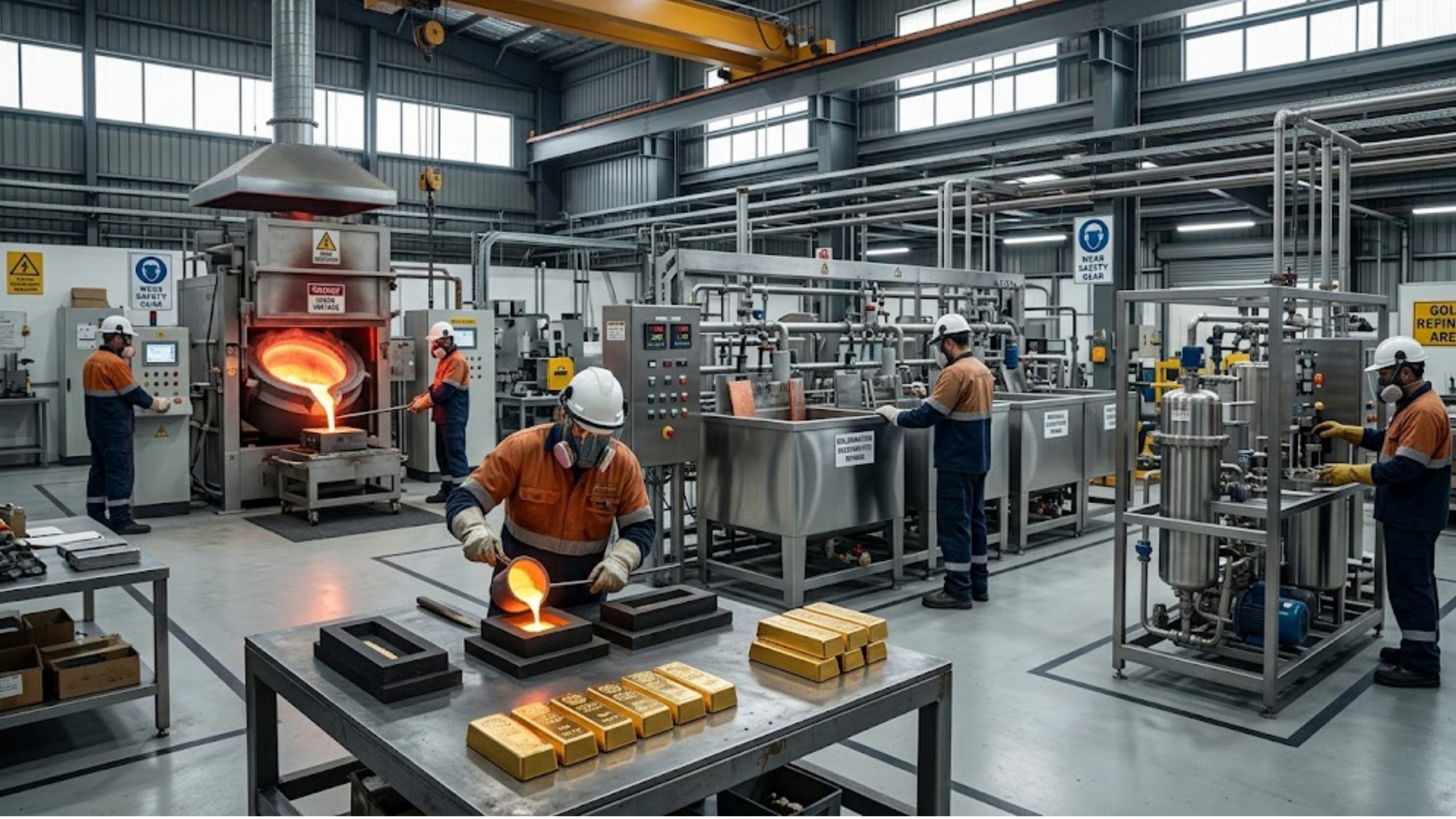
Gold and Precious Metal Refining
In precious metal circuits, even small losses matter because of the high metal value. Recovering trapped values from slag can produce a strong economic return.
Lead and Zinc Plants
Lead and zinc slags may contain payable metals that justify reprocessing through physical or thermal recovery.
Steel and Ferroalloy Operations
Some slags contain metallic iron or alloy values that can be recovered and returned to production.
Electronic Scrap and Secondary Metal Refining
Plants handling recycled feed often generate complex slags with trapped metallic fractions. Recovery helps improve total metal yield from secondary sources.
These use cases show why the technology is attractive for operations that want more complete value extraction.
13. Why This Technology Fits High-Demand Mining Countries
Markets such as Peru, Bolivia, Mexico, Colombia, Ghana, Tanzania, Indonesia, and the Philippines have many small and medium mining operations. These businesses often need equipment that is practical, modular, and able to improve return without requiring massive infrastructure.
In such regions, the following factors increase demand:
-
Existing metal loss in slag
-
Rising focus on recovery efficiency
-
Pressure to reduce waste
-
Need for compact plant solutions
-
Strong interest in faster payback investments
For suppliers targeting these countries, the best positioning is clear. Focus on recovery, modularity, cost control, and real operating economics. Buyers in these markets usually respond better to practical performance than to overly theoretical claims.
14. Key Buying Factors Before You Invest
Before selecting a plant, ask these questions:
What metal is actually present in the slag?
A proper assay program is essential. Do not buy a system based only on assumptions.
Is the metal free, locked, magnetic, or chemically bound?
This determines which recovery route will work.
What is the daily slag volume?
Capacity planning should match real feed availability.
How stable is your power and water supply?
Utility conditions affect both equipment choice and operating cost.
Do you need a modular refining plant layout?
Modular systems can reduce installation time and simplify expansion.
Can recovered material be returned to a gold refining plant or other refining circuit?
Integration matters for overall plant economics.
Do you have a wider mining setup guide for future expansion?
Many buyers should think beyond one machine and plan the whole processing chain.
A strong supplier should help you evaluate feed, process route, plant size, and commercial feasibility before finalizing the order.
15. Conclusion
Slag Recovery Technology in Metal Refining is no longer a niche idea. It is a practical solution for plants that want higher metal recovery, lower waste, and better profitability. For mining companies, industrial buyers, engineers, and investors, it offers a direct way to unlock hidden value from material that was often ignored in the past.
If your operation is losing metal to slag, the real question is not whether recovery matters. The real question is how much value you are leaving behind every day by not addressing it.
For project discussions, technical consultation, and plant solutions, you can connect with Avimetal at avimetal.com, C/O AINFOX, 2060 Faith Industrial Dr., Buford, GA 30518, email jgim@avimetal.com, or message +1 470 5648883 on WhatsApp, Telegram, or text.
FAQs
What is the main benefit of Slag Recovery Technology in Metal Refining?
The main benefit is improved metal recovery from slag that would otherwise be treated as waste. This helps increase total plant yield, reduce losses, and improve overall profitability.
How much does a slag recovery plant cost?
Cost depends on capacity, metallurgy, recovery method, and automation level. Small systems are more affordable, while larger integrated plants with thermal or chemical treatment require higher capital investment.
What plant capacity is suitable for small mines?
For small mines or pilot operations, a 10 to 30 TPD setup is often a practical starting point. It allows you to test recovery performance without committing to a very large installation.
Is Slag Recovery Technology in Metal Refining profitable?
Yes, it can be highly profitable when the slag contains enough recoverable metal and the plant is designed correctly. Profitability depends on metal grade, recovery efficiency, energy use, and operating cost.
How is slag recovery better than traditional slag disposal?
Traditional disposal often ignores remaining metal value. Slag recovery treats slag as a secondary resource, helping you recover more metal, reduce waste volume, and improve environmental performance.
Read more: https://avimetal.com/blogs/