How to Build a Small Gold Refinery
Introduction
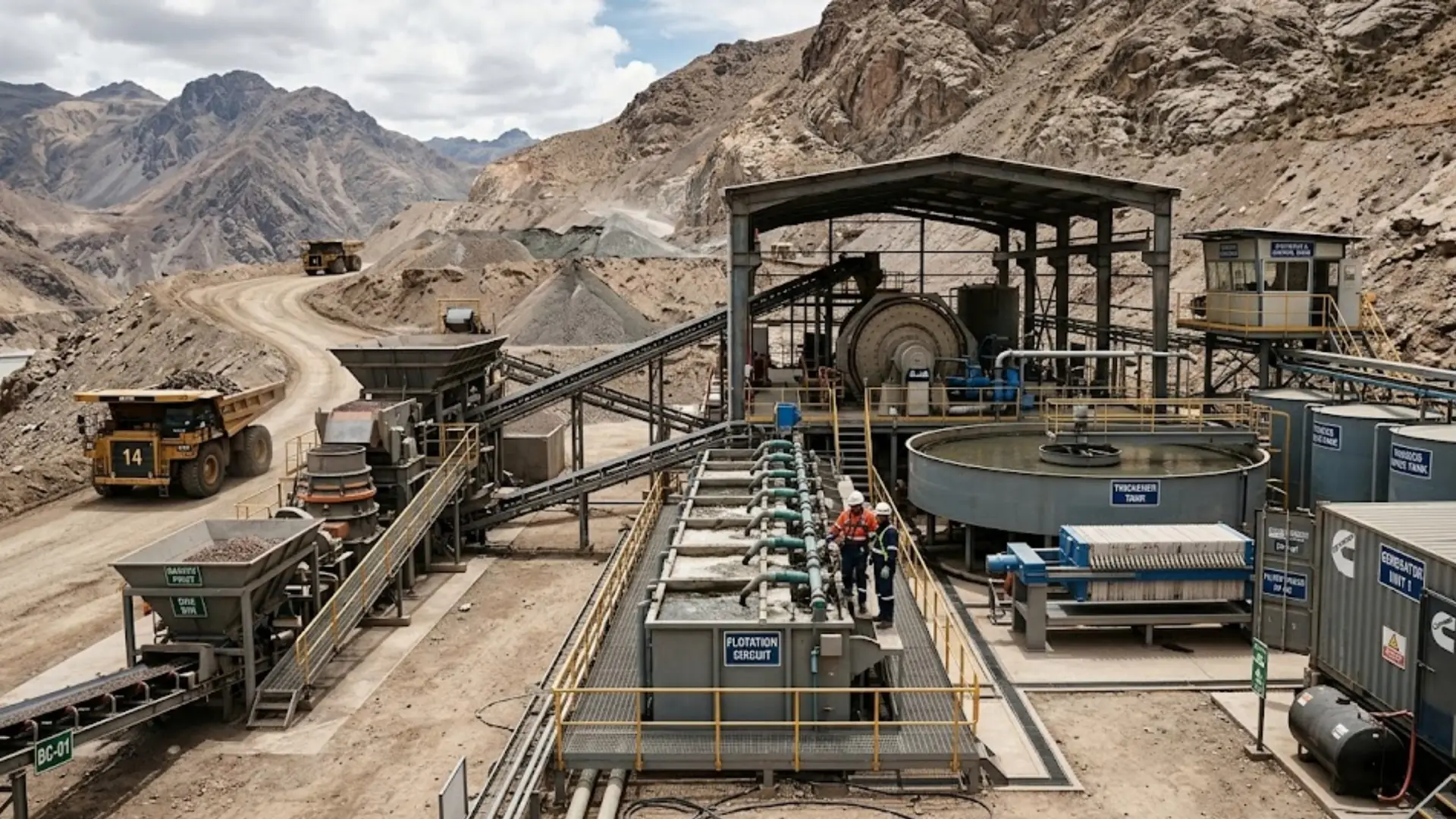
Many mining companies and gold operators reach a point where selling raw dore, concentrate, or semi-processed material stops making business sense. Margins are squeezed, transport costs rise, third-party refining charges eat into profits, and quality control remains in someone else’s hands.
That is why more investors, engineers, and mine owners are now asking a practical question: How to Build a Small Gold Refinery that is efficient, scalable, and commercially viable.
If you are planning a small refinery, you need more than a basic plant layout. You need to understand feed material, refining steps, equipment selection, environmental controls, power demand, plant capacity, operating cost, and expected return on investment. This guide breaks the whole topic down in simple language so you can make informed decisions and move faster with less risk.
Table of Contents
| Sr# | Headings |
|---|---|
| 1 | Overview of How to Build a Small Gold Refinery |
| 2 | Why Small Gold Refineries Are in High Demand |
| 3 | Understanding the Feed Material Before You Build |
| 4 | Step-by-Step Process Explanation |
| 5 | Equipment List for a Small Gold Refinery |
| 6 | Plant Capacity Options: 10–1000 TPD |
| 7 | Energy Consumption Details |
| 8 | Cost Estimation: Low, Medium, and High Budget |
| 9 | ROI and Profitability Analysis |
| 10 | Comparison with Traditional Methods |
| 11 | Environmental Benefits and Compliance Advantages |
| 12 | Real-World Use Cases and Applications |
| 13 | Country-Level Demand and SEO Market Focus |
| 14 | Internal Linking Suggestions |
| 15 | Conclusion |
| 16 | FAQs |
1. Overview of How to Build a Small Gold Refinery
When people search for How to Build a Small Gold Refinery, they are usually looking for a compact facility that can refine gold from dore bars, gold concentrate, jewelry scrap, electronic scrap, or precipitated sludge into higher-purity gold.
A small refinery does not mean a low-quality refinery. It means a plant designed around practical output, lower capital cost, and faster deployment. In many cases, a small plant is the smartest way to start because it reduces financial exposure while still allowing you to control refining quality and revenue.
Think of refining like filtering dirty water into drinking water. At first, the material may look valuable, but it still contains unwanted elements. A refinery removes those impurities step by step until the final gold reaches the purity you need, often 99.5% to 99.99% depending on the process and product target.
2. Why Small Gold Refineries Are in High Demand
Small gold refineries are growing in demand because many operators want to process closer to the source. Transporting semi-refined material to distant refiners adds cost, delay, and security concerns.
A local or regional refinery can solve several commercial problems:
-
Lower third-party refining charges
-
Better control over assay and recovery
-
Faster settlement cycles
-
Improved product quality
-
Higher margins on final gold sales
This is especially relevant in regions with strong artisanal and small-scale mining activity. Countries such as Peru, Bolivia, Mexico, Colombia, Ghana, Tanzania, Indonesia, and the Philippines show strong demand because many small miners need nearby refining options that are professional, compliant, and scalable.
From an SEO and industrial marketing perspective, these countries should be targeted with country-specific landing pages, local search intent keywords, and region-focused case studies. In simple terms, seo in countries ke hisaab se karni chahiye. That means your content, service pages, and ads should be localized by country, language, mining style, and buyer need.
3. Understanding the Feed Material Before You Build
Before you decide How to Build a Small Gold Refinery, you must define what kind of material the plant will handle. This choice affects almost everything: process route, equipment design, reagent storage, emissions control, and operating cost.
Common Gold Refinery Feed Types
Gold dore bars
These are semi-pure bars produced at mines or smelters. They usually contain gold, silver, and trace base metals.
Gold concentrate
This comes from mineral processing plants and may require pre-treatment before refining.
Jewelry scrap
This often contains gold mixed with copper, silver, nickel, zinc, and soldering materials.
Electronic scrap
This can contain gold in small quantities, but recovery requires more complex separation steps.
Sludge and precipitates
These may come from cyanidation, electrowinning, or chemical recovery circuits.
Your plant design must match the feed. A refinery built for dore bars will not perform the same way on e-waste or low-grade concentrates. That is a common mistake in early-stage projects.
4. Step-by-Step Process Explanation
This section is essential for anyone researching How to Build a Small Gold Refinery from a technical and commercial perspective.
Step 1: Sampling and Assay
Incoming material is weighed, sampled, and analyzed. This tells you the gold content and impurity profile.
Step 2: Crushing or Melting Preparation
If the feed is solid scrap or concentrate, it may require crushing, drying, or blending. Dore bars are usually melted directly.
Step 3: Smelting
The material is heated with fluxes to separate metal from slag. This step concentrates precious metals and removes some unwanted components.
Step 4: Chemical Refining
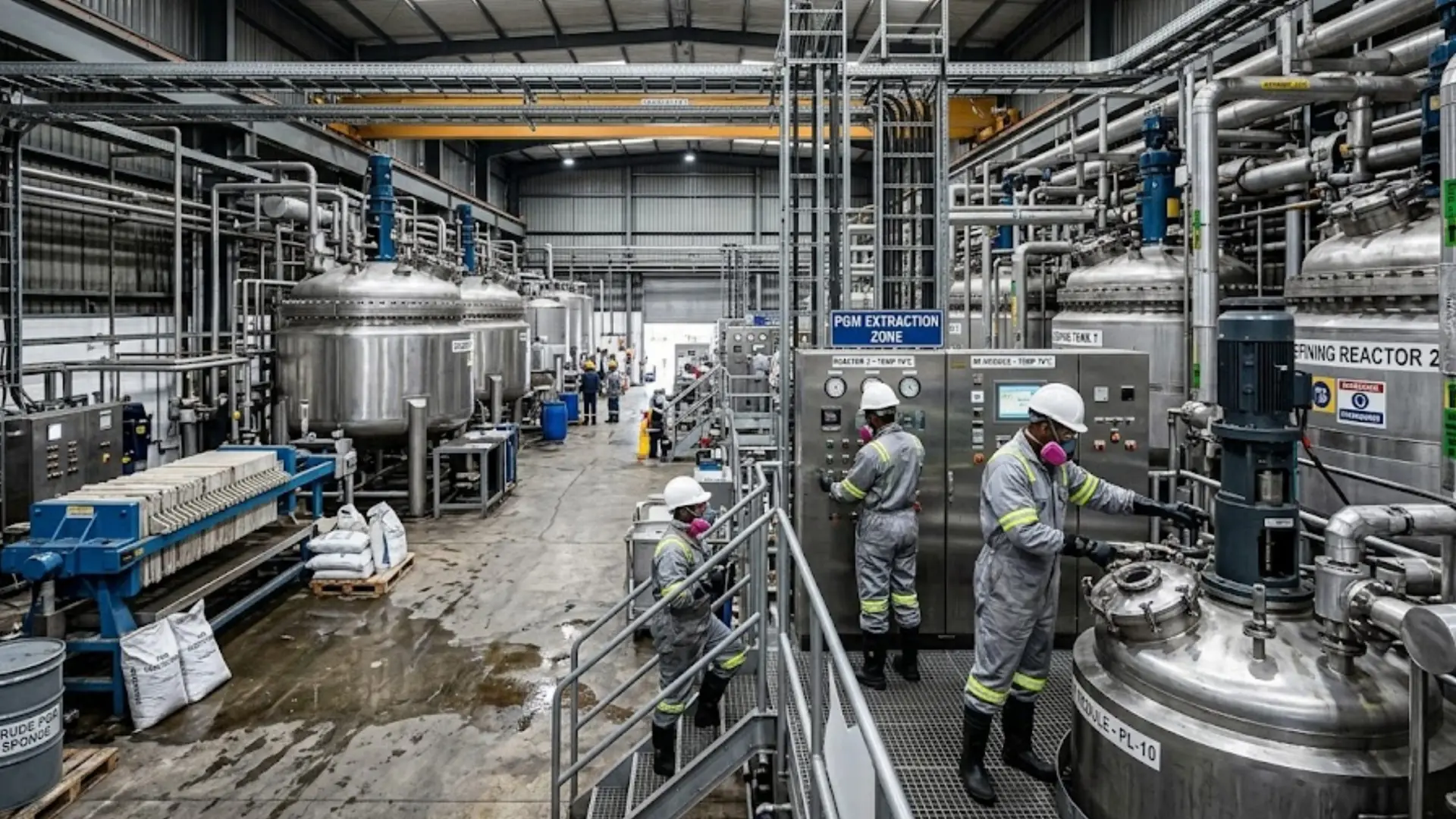
Depending on the plant design, this may involve aqua regia, chlorination, electrorefining, or another refining route. The goal is to dissolve impurities or isolate gold to a high purity level.
Step 5: Precipitation or Electrolytic Recovery
Gold is recovered from solution using a reducing agent or an electrolytic cell.
Step 6: Washing and Drying
Recovered gold powder or sponge is cleaned to remove acid residues and contaminants.
Step 7: Final Melting and Casting
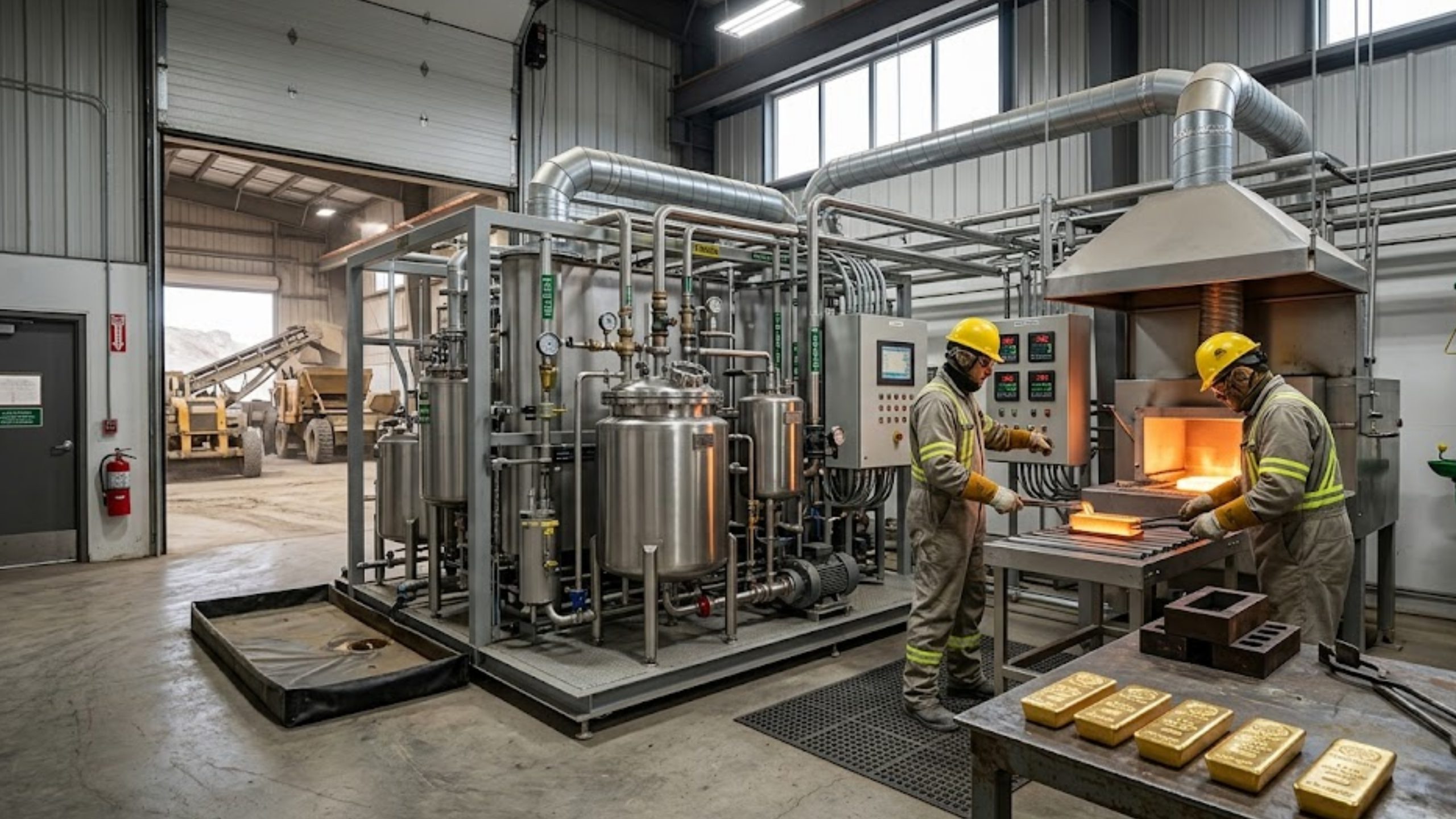
The purified gold is melted and cast into bars, grains, or other saleable forms.
Step 8: Quality Check and Packaging
Final bars are tested for purity, stamped, recorded, and prepared for storage or sale.
Step 9: Waste Treatment
Spent acids, wastewater, fumes, and solid residues must be neutralized, filtered, and managed according to environmental standards.
Step 10: Documentation and Traceability
A professional refinery needs batch records, assay reports, product logs, and compliance documentation.
This process may sound complex, but when properly engineered it becomes a repeatable industrial workflow.
5. Equipment List for a Small Gold Refinery
The right equipment is central to How to Build a Small Gold Refinery that is reliable and bankable.
Core Equipment List
-
Melting furnace
-
Crucibles and flux handling tools
-
Dore bar molds or granulation unit
-
Reaction tanks
-
Acid-resistant piping
-
Chemical dosing system
-
Filtration unit
-
Settling tanks
-
Drying oven
-
Electrolytic refining cell or chemical precipitation system
-
Fume scrubber
-
Dust collector
-
Neutralization tank
-
Effluent treatment unit
-
Assay laboratory equipment
-
Precision weighing scales
-
Ventilation system
-
Safety showers and PPE station
-
Control panel and instrumentation
-
Security and surveillance systems
Supporting Systems
Laboratory setup
A refinery without a basic lab is risky. You need fast assay feedback for process control and commercial trust.
Utilities
Water supply, compressed air, backup power, and chemical storage are often underestimated in project budgets.
Safety infrastructure
This includes emergency response gear, gas detection, spill containment, and operator protection.
6. Plant Capacity Options: 10–1000 TPD
Capacity planning is one of the most important decisions in How to Build a Small Gold Refinery.
Here, TPD can refer to overall feed handling design, especially when integrated with pre-treatment or concentrate handling. In many gold projects, actual refined gold output will depend heavily on feed grade.
Typical Capacity Bands
10–50 TPD
Best for pilot plants, small mine sites, regional collection centers, and modular setups. Lower capital cost and easier permitting.
50–200 TPD
Suitable for growing mining businesses, toll refining operations, and multi-source feed supply.
200–500 TPD
Works for industrial buyers serving multiple mines or processing hubs. Requires stronger utility systems and more automation.
500–1000 TPD
Appropriate for serious commercial operations with stable feed supply, dedicated environmental systems, and higher security standards.
How to Choose the Right Capacity
Choose capacity based on:
-
Feed availability
-
Expected gold grade
-
Working capital
-
Utility access
-
Environmental permit level
-
Expansion strategy
A common smart move is to start with a modular 20–50 TPD plant and expand later. This gives you commercial proof before large-scale capex.
7. Energy Consumption Details
Energy is a major operating cost, so it must be included in any guide on How to Build a Small Gold Refinery.
Main Energy Consumers
-
Melting furnaces
-
Drying ovens
-
Pumps and agitators
-
Ventilation and fume extraction
-
Electrolytic cells
-
Water treatment systems
-
Laboratory equipment
Indicative Energy Pattern
A small refinery may consume energy in the range of:
-
Low-scale setup: 50–150 kWh per day
-
Medium-scale setup: 150–500 kWh per day
-
Larger compact setup: 500–1500+ kWh per day
Actual usage depends on feed type, furnace duty cycle, refining method, automation level, and operating hours.
How to Reduce Energy Cost
Use insulation properly
Well-insulated furnaces reduce heat loss and improve cycle efficiency.
Recover heat where possible
Some plants reuse waste heat for drying or pre-heating.
Automate batch timing
Overheating and idle running waste power.
Match equipment size to actual throughput
Oversized equipment often creates unnecessary energy losses.
In areas with unstable electricity, hybrid systems using grid plus generator backup are common. In remote mining zones, solar support for non-thermal loads can also help.
8. Cost Estimation: Low, Medium, and High Budget
One of the first questions behind How to Build a Small Gold Refinery is cost.
Low Budget Setup
Estimated range: USD 80,000 to USD 250,000
Suitable for very small refining lines, semi-manual operation, basic lab support, and limited automation. Best for pilot or entry-level operations.
Medium Budget Setup
Estimated range: USD 250,000 to USD 900,000
This is often the sweet spot for mining companies and industrial buyers. It can include better process control, improved safety systems, modest automation, and a more professional assay lab.
High Budget Setup
Estimated range: USD 900,000 to USD 3 million+
Designed for larger throughput, stronger compliance, advanced environmental systems, higher purity targets, and commercial expansion.
What Drives Cost Up or Down
-
Capacity
-
Process route
-
Civil works
-
Local labor rates
-
Import duties
-
Environmental compliance
-
Security requirements
-
Lab sophistication
-
Automation level
A buyer should always separate equipment cost, installation cost, civil cost, and working capital. Too many projects fail because only equipment price was considered.
9. ROI and Profitability Analysis
If you want investors or owners to support your plan, you must show profitability clearly. That is a key part of How to Build a Small Gold Refinery successfully.
Main Revenue Drivers
-
Refining margin
-
Higher recovery
-
Better final gold price
-
Toll refining fees from third parties
-
Silver and by-product recovery
Main Operating Costs
-
Chemicals
-
Power
-
Labor
-
Maintenance
-
Consumables
-
Waste treatment
-
Security
-
Insurance
Simple ROI Logic
If your refinery reduces third-party charges, shortens settlement time, and improves recoverable value, the payback can be strong.
Example
A small operator processing gold-bearing material worth USD 500,000 per month may improve net retained value by 2% to 5% through in-house refining and better process control.
That means:
-
2% gain = USD 10,000/month
-
5% gain = USD 25,000/month
At that rate, a medium-budget refinery could recover capex within 12 to 36 months, depending on utilization and feed consistency.
Profitability Factors
-
Stable feed supply
-
Reliable assay control
-
Low downtime
-
Good recovery rate
-
Strong compliance
-
Efficient reagent use
The most profitable plants are not always the biggest. They are the ones that run consistently and sell trusted high-purity product.
10. Comparison with Traditional Methods
To understand How to Build a Small Gold Refinery, it helps to compare it with older or traditional approaches.
Traditional Method: Sell Raw or Semi-Processed Material
This is easier in the short term, but you lose control over final purity, payout timing, and sometimes true recoverable value.
Traditional Method: Basic Smelting Only
Basic smelting can produce dore, but it may not deliver the purity required for premium sale or industrial use.
Small Refinery Approach
A dedicated small refinery offers:
-
Higher purity output
-
More control over recovery
-
Better traceability
-
Lower long-term dependence on external refiners
-
Improved customer confidence
Which Is Better?
If your feed volume is small and irregular, outsourcing may still work.
But if you have regular material flow, commercial ambition, or a plan to serve nearby miners, a refinery often creates more value over time.
11. Environmental Benefits and Compliance Advantages
Modern buyers care about environmental performance, and regulators certainly do. That is why environmental planning is a core part of How to Build a Small Gold Refinery.
Environmental Benefits of a Modern Small Refinery
-
Controlled emissions instead of open burning
-
Acid capture through scrubbers
-
Safer wastewater treatment
-
Reduced metal loss to waste
-
Improved residue handling
-
Better worker safety
Why This Matters Commercially
A cleaner refinery is easier to finance, easier to insure, and easier to market. Industrial buyers and investors prefer operations with visible compliance systems.
Best Practices
Install fume scrubbers
These reduce harmful gas release from chemical refining.
Use neutralization tanks
These help treat spent solutions safely.
Design proper residue storage
Residues may still contain recoverable value and hazardous elements.
Document everything
Permits, emissions logs, chemical records, and batch reports strengthen your business case.
A well-designed plant is not only cleaner. It is also easier to scale.
12. Real-World Use Cases and Applications
A guide on How to Build a Small Gold Refinery should always connect the process to real market use.
Use Case 1: Mine-Site Dore Refining
A gold mine produces dore bars and wants better final purity before sale. A small refinery cuts transport risk and improves margins.
Use Case 2: Regional Toll Refining Hub
A business sets up a refinery near several small mines and charges service fees. This model works well in mining districts with fragmented production.
Use Case 3: Jewelry Scrap Recovery
A refinery handles old jewelry, production scrap, and returned material, recovering gold for resale or reuse.
Use Case 4: Investor-Backed Modular Plant
An investor funds a containerized or modular unit that starts small and expands once feed contracts are secured.
Use Case 5: Government or Formalization Program
In some markets, small refineries support cleaner gold supply chains and help formalize artisanal mining.
13. Country-Level Demand and SEO Market Focus
If you want to market services or plants around How to Build a Small Gold Refinery, country targeting matters.
High-Demand Countries
-
Peru
-
Bolivia
-
Mexico
-
Colombia
-
Ghana
-
Tanzania
-
Indonesia
-
Philippines
These countries often have:
-
Strong small-scale mining activity
-
Growing demand for cleaner refining
-
Need for local processing
-
Interest in modular and lower-capex plants
How to Do SEO by Country
Create separate pages and content clusters such as:
-
How to Build a Small Gold Refinery in Ghana
-
Small gold refinery plant cost in Tanzania
-
Modular gold refining solution for Peru
-
Gold refinery setup for small miners in Indonesia
Use local terms, country examples, capacity ranges, regulations, and business pain points. This improves both Google ranking and visibility in AI search tools.
14. Internal Linking Suggestions
To strengthen SEO authority and support conversion, link this article internally to:
-
modular refining plant
-
gold refining plant
-
mining setup guide
You can also create supporting articles around:
-
gold dore refining process
-
gold refinery cost breakdown
-
small mine processing plant
-
refining plant safety system
-
assay laboratory for gold plants
15. Conclusion
Building a refinery is not just about buying a furnace and a few tanks. How to Build a Small Gold Refinery is really about designing a complete business system: feed control, refining process, equipment, utilities, environmental safety, and profitability.
If you get the design right, a small refinery can increase margins, improve control, attract industrial buyers, and create long-term value. Start with the right feed strategy, choose practical capacity, invest in environmental controls, and build for expansion. In this business, smart design beats oversized ambition.
16. FAQs
1. How much does it cost to build a small gold refinery?
The cost depends on capacity, automation, refining method, and environmental systems. A small setup may start around USD 80,000, while a more advanced commercial plant can reach USD 900,000 to USD 3 million or more.
2. What is the basic process in How to Build a Small Gold Refinery?
The basic process includes sampling, smelting, chemical or electrolytic refining, recovery, washing, drying, final melting, casting, and waste treatment. The exact route depends on whether you are processing dore, concentrate, or scrap.
3. What plant capacity is best for a new gold refinery?
For many new operators, 10–50 TPD is a practical starting point. It keeps capex lower and allows you to prove the business model before expanding to 100 TPD, 200 TPD, or higher.
4. Is a small gold refinery profitable?
Yes, it can be profitable if you have stable feed supply, strong recovery, good assay control, and efficient operations. Many projects improve margins by reducing third-party refining charges and keeping more value in-house.
5. How long does it take to achieve ROI on a small gold refinery?
A well-run refinery may reach payback in 12 to 36 months, depending on capital cost, throughput, feed quality, refining margin, and plant utilization.
Read more: https://avimetal.com/2026/03/17/modular-gold-refining-plant-for-small-scale-mining/