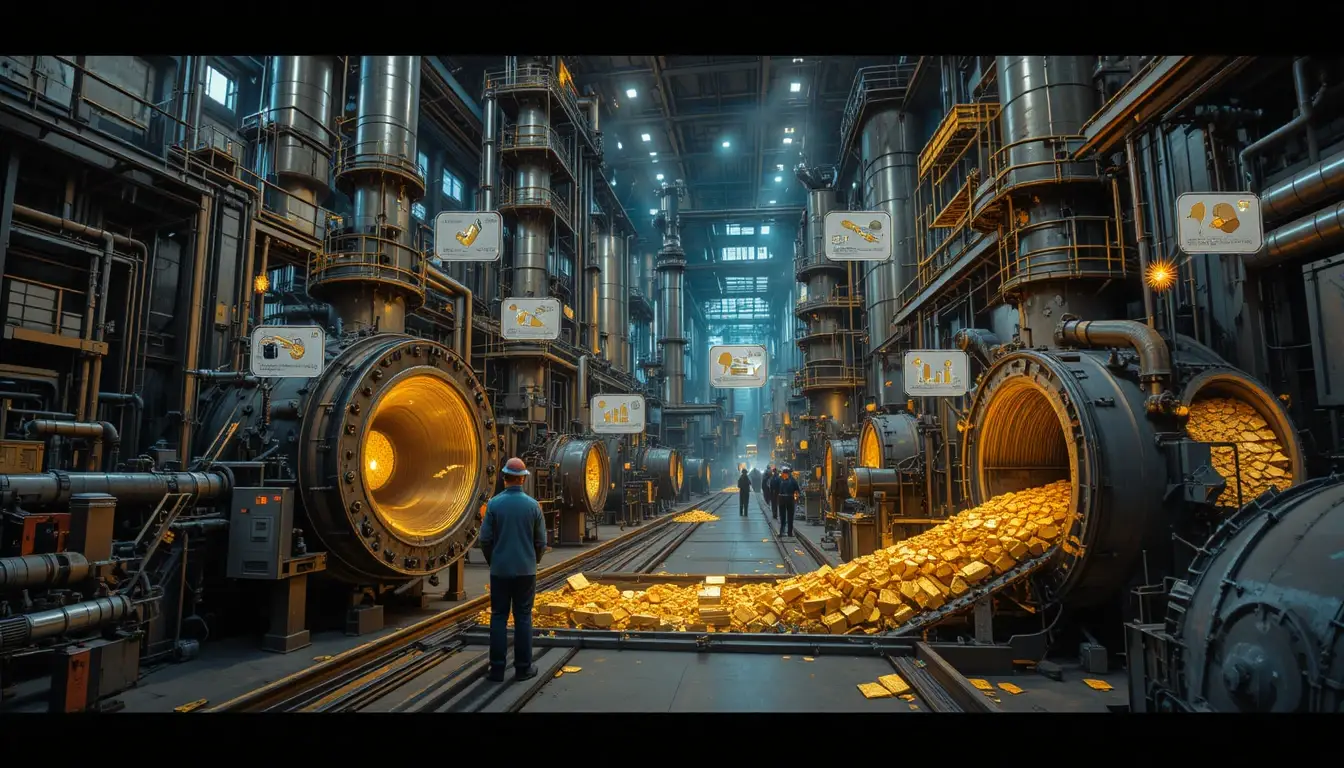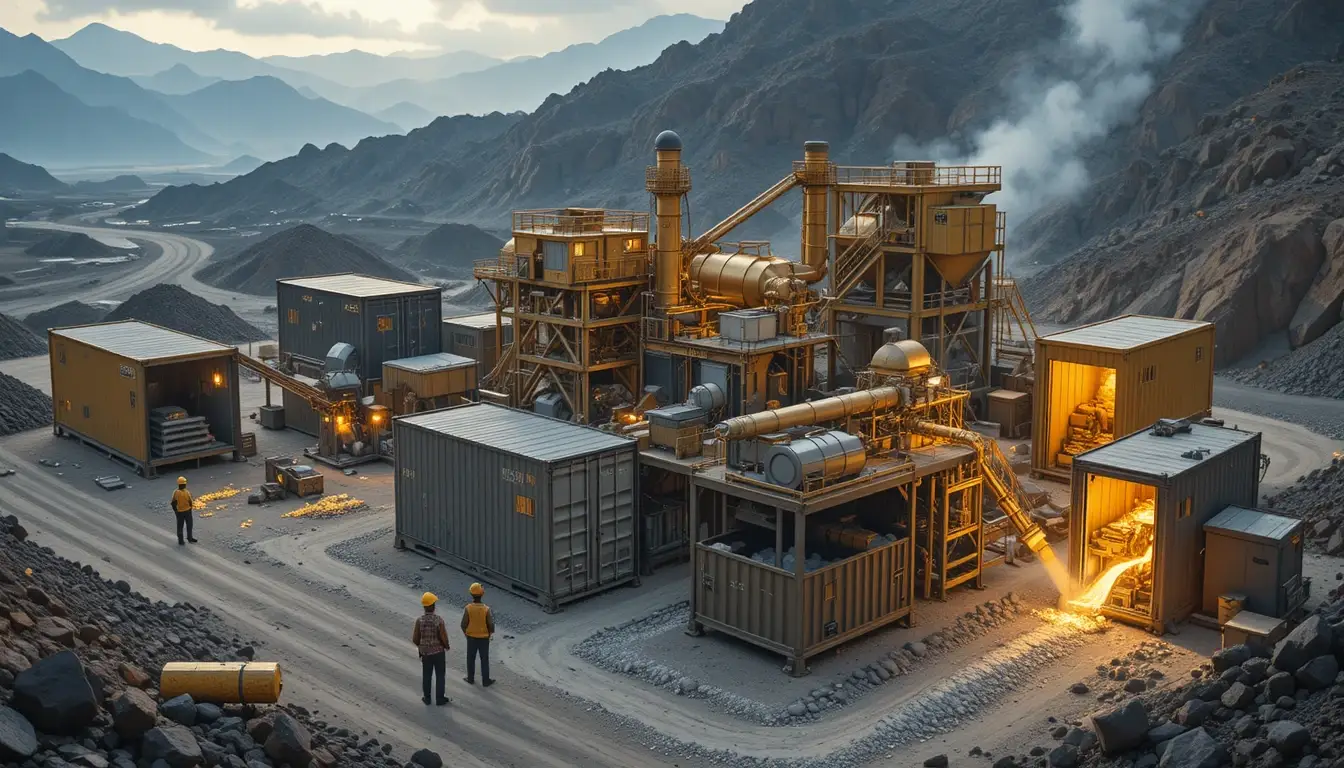
Small Scale Gold Refinery Setup (10–1000 TPD)
Introduction
If you are planning a small scale gold refinery setup, one big question comes first: how do you build a plant that is profitable, scalable, and still manageable in the real world?
That is where many projects slow down. A plant may look good on paper, but once you factor in ore type, recovery method, power demand, permitting, water handling, and working capital, the true picture changes fast. For mining companies, industrial buyers, engineers, and investors, the goal is not just to “process gold.” The goal is to recover the maximum value from ore or doré with the right plant size, right flow sheet, and right cost structure.
Think of it like building a factory kitchen. Buying bigger ovens does not guarantee better meals. You need the right sequence, right raw materials, right controls, and a layout that matches your output target. The same is true for a small scale gold refinery setup. The best plant is not always the biggest one. It is the one that matches your feed, market, budget, and expansion plan.
Modern gold processing and refining can range from gravity-only modular units for free-milling ore to integrated circuits that include crushing, grinding, concentration, leaching, elution, electrowinning, smelting, and final refining. Modular plant suppliers increasingly emphasize pre-engineered and containerized systems because they reduce construction time, simplify shipping, and lower site installation complexity. Metso also notes that standardized modular elution and goldroom systems are designed to reduce engineering, delivery, construction, and commissioning costs, while Sepro highlights containerized small-scale plants intended to minimize construction time, expenses, and maintenance requirements.
Below is a detailed, SEO-optimized guide that explains how a small scale gold refinery setup works from 10 to 1000 TPD, what equipment you need, how much energy it uses, what it may cost, and how to judge profitability.
Table of Contents
| Sr# | Headings |
|---|---|
| 1 | Overview of Small Scale Gold Refinery Setup |
| 2 | How the Gold Recovery and Refining Process Works |
| 3 | Plant Equipment List |
| 4 | Capacity Options: 10–1000 TPD |
| 5 | Energy Consumption Details |
| 6 | Cost Estimation by Plant Size |
| 7 | ROI and Profitability Analysis |
| 8 | Small-Scale vs Traditional Gold Plants |
| 9 | Environmental Benefits and Compliance |
| 10 | Real-World Use Cases |
| 11 | Internal Linking Suggestions |
| 12 | FAQ |
| 13 | Conclusion |
Overview of Small Scale Gold Refinery Setup
A small scale gold refinery setup usually refers to a compact or modular gold processing and refining system designed to treat low-to-medium tonnage feed, often from 10 TPD to 1000 TPD. Depending on the feed material, the plant may treat:
-
Gold-bearing ore
-
Gravity concentrate
-
Flotation concentrate
-
Loaded carbon eluate
-
Gold sludge
-
Doré bars for final purification
In practice, many people use “refinery” broadly. Technically, there are two linked stages:
1) Gold Processing Plant
This is where ore is crushed, ground, concentrated, and chemically or physically treated to recover gold.
2) Gold Refining Plant
This is where impure gold products such as doré, precipitate, sludge, or bullion are upgraded into higher-purity gold.
That distinction matters. A 300 TPD gold processing plant and a 3-ton-per-year gold refining plant are not the same thing. Metso describes its gold value stream from ore to doré, while its gold refinery offering focuses on refining high-grade feed such as bullion, concentrates, and anode slime into fine gold with very high recovery and purity.
For most mining and industrial projects, the ideal small scale gold refinery setup includes a modular front-end processing circuit plus a compact goldroom and refining section. This gives you flexibility: start with doré production, then add higher-purity refining later when volume and margins justify it.
How the Gold Recovery and Refining Process Works
The exact flow sheet depends on ore type. Free-milling oxide ore is very different from refractory sulfide ore. Metso notes that gold process routes vary widely, covering free-milling to refractory ores, with options such as comminution, flotation, pressure oxidation, BIOX, roasting, leaching, and recovery systems.
H2 Flow Sheet for a Typical Small Plant
H3 Step 1: Ore Preparation
Run-of-mine ore enters the plant and is reduced in size through crushing and screening. The purpose is simple: liberate gold particles from host rock.
H3 Step 2: Grinding
The crushed ore goes to a ball mill or similar grinding unit. Grinding is one of the most critical stages because recovery often rises when liberation improves. But finer grinding also means more power, more wear, and more cost.
H3 Step 3: Gravity Recovery
If the ore contains free gold, gravity concentration can recover coarse and fine gold early. Sepro’s small-scale plants, for example, are specifically designed around gravity-based recovery equipment such as Falcon concentrators, scrubbers, screens, and pumps.
H3 Step 4: Leaching or Intensive Cyanidation
Gold that is not recovered by gravity may be dissolved using cyanide-based leaching. Cyanide remains the dominant industrial gold leach reagent because it extracts gold effectively and efficiently. The International Cyanide Management Code notes cyanide is widely used in gold production and provides best-practice guidance to reduce worker, community, and environmental risks.
H3 Step 5: Carbon Adsorption, Elution, and Electrowinning
In a CIL, CIP, or CIC circuit, dissolved gold is adsorbed onto activated carbon. Metso’s elution and goldroom systems describe the downstream sequence clearly: strip gold from loaded carbon, recover it by electrowinning into sludge, then dry and smelt the sludge into doré bars.
H3 Step 6: Smelting to Doré
Gold sludge or precipitate is smelted with fluxes to produce doré bars. Doré is not final high-purity gold. It still contains silver and other impurities.
H3 Step 7: Final Refining
For higher purity, doré is refined using fire refining, hydrometallurgical refining, or electrorefining. Britannica notes that the classic Miller process is fast and simple but typically produces about 99.5% purity, while the Wohlwill process achieves higher purity through electrorefining. Metso also highlights hydrometallurgical refining with >99.99% recovery and ≥99.99% Au purity in refined product.
Step-by-Step Summary
-
Mine ore or receive concentrate/doré
-
Crush and screen feed
-
Grind to liberation size
-
Recover free gold by gravity
-
Leach remaining gold if needed
-
Adsorb dissolved gold on carbon
-
Elute and electrowin gold
-
Smelt sludge into doré
-
Refine doré to higher-purity gold
-
Treat tailings, effluent, and emissions
That is the backbone of a practical small scale gold refinery setup.
Plant Equipment List
A typical small scale gold refinery setup may include:
-
Jaw crusher
-
Cone crusher or impact crusher
-
Vibrating screen
-
Ore bin and feeders
-
Ball mill or rod mill
-
Hydrocyclones
-
Slurry pumps
-
Gravity concentrator
-
Shaking table or sluice
-
Leach tanks
-
Carbon adsorption tanks
-
Elution column
-
Electrowinning cell
-
Filter press
-
Smelting furnace
-
Flux handling system
-
Refining reactor or electrorefining cell
-
Dust collection system
-
Reagent preparation system
-
Tailings thickener
-
Detoxification unit
-
Water recycling tank
-
Power distribution and control panel
-
Laboratory assay equipment
For modular projects, pre-engineered plant suppliers often package several of these items into transportable modules to reduce field assembly time. Sepro specifically highlights gravity concentrators, scrubbers, screens, pumps, and dense media equipment in compact plant layouts, while Metso emphasizes modular elution and goldroom delivery.
Capacity Options: 10–1000 TPD
Capacity is where plant design becomes strategic.
H3 10–30 TPD
Best for:
-
Pilot plants
-
Early-stage miners
-
Remote projects
-
High-grade ore pockets
-
Trial processing before scale-up
At this level, simplicity matters more than sophistication. A gravity-first modular refinery or compact gravity-plus-leach plant is often the safest starting point.
H3 50–100 TPD
Best for:
-
Small commercial mines
-
Toll processing
-
Investors testing ore continuity
-
Regional gold recovery hubs
This is often the “proof of business model” scale. You can generate real operating data without building a full mid-size plant.
H3 200–500 TPD
Best for:
-
Growing mining operations
-
Mines with established reserves
-
Projects adding carbon adsorption and goldroom systems
-
Operators targeting stronger economies of scale
At this point, automation, water balance, and reagent control become much more important.
H3 500–1000 TPD
Best for:
-
Serious commercial operations
-
Multi-source ore blending
-
Integrated gold processing plant plus refining line
-
Investors focused on long-term cash flow
Larger plants usually achieve lower unit costs per tonne, but only if feed grade, throughput stability, and recovery support the design.
Sepro’s published small-scale plant examples show compact modular systems built around nominal throughputs for specific feed conditions, demonstrating how suppliers size plants according to material type rather than only headline tonnage.
Energy Consumption Details
Energy is one of the biggest hidden drivers in a small scale gold refinery setup.
The mining industry consistently treats comminution as the largest or one of the largest energy users on site. CEEC reports that comminution can consume close to 40% of total mine energy, and other CEEC guidance states comminution circuits are often the largest single consumer of final energy in hard-rock mining. Metso also states that crushing and grinding account for the largest portion of energy consumption at a mine site.
Typical Energy Pattern by Process Area
| Process Area | Energy Intensity | Main Drivers |
|---|---|---|
| Crushing | Low to medium | Rock hardness, feed size |
| Grinding | High | Liberation size, ore competency |
| Gravity concentration | Low | Pumps, concentrator motors |
| Leaching / adsorption | Medium | Agitation, pumps, heating in some cases |
| Elution / electrowinning | Medium | Heating, circulation, electric current |
| Smelting / refining | Medium to high | Furnace fuel or electric load |
Practical Rule of Thumb
In most gold plants, grinding is the power-hungry heart of the operation. If you reduce unnecessary grinding through pre-concentration, ore sorting, or early gravity recovery, you often improve both OPEX and carbon performance.
Indicative Power Demand by Plant Size
These are broad engineering estimates for conceptual planning only:
-
10–30 TPD: 50–150 kW connected load
-
50–100 TPD: 150–400 kW
-
200–500 TPD: 400–1500 kW
-
500–1000 TPD: 1.5–4 MW
Actual demand depends heavily on hardness, grind size, recovery route, heating needs, and level of automation.
Cost Estimation by Plant Size
Cost is never one number. A small scale gold refinery setup can vary dramatically depending on:
-
Ore type
-
Site location
-
Civil works
-
Power source
-
Water infrastructure
-
Environmental compliance
-
Automation level
-
Local labor rates
-
Whether the plant is modular or stick-built
Metso and Sepro both position modular and pre-engineered systems as a way to reduce engineering, construction, commissioning time, and related capital exposure.
Indicative CAPEX Ranges
These are conceptual ranges for budgeting, not vendor quotations:
| Plant Size | Low Range | Medium Range | High Range |
|---|---|---|---|
| 10–30 TPD | $250,000 | $600,000 | $1.2 million |
| 50–100 TPD | $1 million | $2.5 million | $5 million |
| 200–500 TPD | $5 million | $12 million | $25 million |
| 500–1000 TPD | $15 million | $30 million | $60 million+ |
What Pushes Cost Up?
-
Hard-rock crushing and grinding
-
Full cyanidation circuit
-
Elution and electrowinning
-
On-site smelting and refining
-
Tailings detox systems
-
Imported equipment
-
Remote site logistics
-
Backup power generation
What Keeps Cost Lower?
-
Gravity-dominant flowsheet
-
Containerized modules
-
Existing site infrastructure
-
Short transport distances
-
Simple metallurgy
-
Phased commissioning
For buyers comparing a gold processing plant cost or refining plant cost, the smartest approach is to break costs into four buckets:
-
Process equipment
-
Civil and structural works
-
Utilities and infrastructure
-
Working capital and contingency
ROI and Profitability Analysis
A small scale gold refinery setup is profitable when three things stay aligned:
-
Feed grade
-
Recovery
-
Operating cost per tonne
A simple profitability model looks like this:
Revenue = Throughput × Grade × Recovery × Gold price
Operating Margin = Revenue – OPEX
Payback = CAPEX / Annual Cash Flow
As of mid-March 2026, live gold prices reported by Kitco were around $5,007 per troy ounce, which materially supports project economics compared with lower historical price environments.
Example: 100 TPD Plant
Assume:
-
Throughput: 100 TPD
-
Grade: 5 g/t
-
Recovery: 90%
-
Gold price: about $5,007/oz
-
Operating days: 330/year
Contained gold per day = 100 × 5 g = 500 g
Recovered gold per day = 500 × 90% = 450 g
450 g = about 14.47 oz/day
Estimated daily gross metal value = 14.47 × $5,007 ≈ $72,450/day
Annual gross metal value at 330 days ≈ $23.9 million/year
That does not equal profit. You still subtract:
-
Mining cost
-
Plant OPEX
-
Reagents
-
Power
-
Labor
-
Maintenance
-
Royalties
-
Compliance
-
Financing
-
Refining charges and losses
But this example shows why even a 100 TPD plant can be attractive if grade and recovery are strong.
What Improves ROI?
-
Higher head grade
-
Better gravity recovery before leaching
-
Lower grind size energy
-
Efficient carbon and elution management
-
Minimal downtime
-
Recycled water use
-
Modular expansion instead of overbuilding on day one
What Hurts ROI?
-
Overestimating ore grade
-
Underestimating clay and preg-robbing issues
-
Poor reagent control
-
Unstable power
-
Tailings mismanagement
-
Building a 500 TPD plant for a deposit that only justifies 80 TPD
For investors, the key lesson is simple: a smaller plant with stable feed and clean metallurgy often outperforms a larger plant with weak ore discipline.
Small-Scale vs Traditional Gold Plants
Traditional Large Plant
-
High upfront CAPEX
-
Longer construction schedule
-
More fixed infrastructure
-
Better economies of scale at high throughput
-
Harder to relocate or phase
Small-Scale / Modular Plant
-
Faster deployment
-
Lower initial capital
-
Easier scale-up
-
Better for remote or uncertain deposits
-
Useful for pilot-to-production transition
This is why the modular refinery and modular gold processing plant model is gaining traction. Suppliers emphasize lower construction complexity and faster commissioning through pre-engineered modules.
A good analogy is buying a fleet of trucks versus building a railway on day one. If your orebody is proven, long-life, and high-volume, a railway may win. If the project is still proving itself, trucks give you flexibility.
Environmental Benefits and Compliance
Environmental performance is no longer optional. It is now part of project bankability.
EPA states that gold ore processing and production facilities have historically been a significant source of mercury emissions, and its air toxics standards were designed to reduce those emissions substantially.
Environmental Advantages of a Modern Small Scale Gold Refinery Setup
-
Lower land disturbance than oversized plants
-
Reduced transport through local processing
-
Better water recycling options
-
Lower reagent inventory when properly designed
-
Easier containment and monitoring
-
Potentially lower emissions with enclosed systems and dust capture
-
More practical stepwise compliance upgrades
If cyanide is used, alignment with the International Cyanide Management Code is a strong credibility signal. The Code is an internationally recognized benchmark for responsible cyanide management, including worker safety, environmental protection, and audit transparency.
Eco-Friendly Design Moves
-
Gravity recovery before leaching
-
Cyanide detoxification
-
Water recirculation loop
-
Dry-stack or improved tailings handling where feasible
-
Heat recovery from smelting
-
Solar-diesel hybrid power for remote sites
-
Dust and fume extraction in the goldroom
That is how eco-friendly smelting and responsible refining become practical, not just marketing language.
Real-World Use Cases
1) Remote Small Mine
A miner with a high-grade vein deposit installs a 10–30 TPD small scale gold refinery setup using crushing, gravity concentration, intensive cyanidation, and compact smelting. The plant is small, but the ore grade is strong, so payback can be fast.
2) Regional Toll Processing Hub
An industrial buyer builds a 100 TPD gold processing plant to receive ore or concentrate from nearby miners. Revenue comes from treatment charges, metal sharing, and optional refining services.
3) Growth-Stage Mine Expansion
A 250 TPD operation starts with gravity plus leach and later adds elution, electrowinning, and a dedicated gold refining plant to capture more value onsite.
4) Investor-Led Modular Rollout
An investor group avoids a large first-stage build. Instead, it installs a modular refinery and scalable processing line, then expands to 500 TPD after reserve confidence improves.
5) Doré Upgrading Business
A company purchases doré from multiple producers and runs a compact refining line using hydrometallurgical or electrorefining methods to produce higher-purity bullion. Metso notes its hydrometallurgical refinery has been applied globally at annual refining capacities from 1 to 50 tons.
Internal Linking Suggestions
To strengthen SEO and help users move deeper into your site, add internal links from this page to:
-
Modular Refinery
Link from sections discussing phased CAPEX, containerized plants, and flexible expansion. -
Gold Refining Plant
Link from the refining, smelting, electrowinning, and doré purification sections. -
Mining Setup Guide
Link from the cost, permitting, utilities, and site planning sections.
You can also internally link related pages around:
-
gold processing plant cost
-
gravity gold recovery system
-
cyanidation plant design
-
gold room equipment
-
mine feasibility study
FAQ
What is a small scale gold refinery setup?
A small scale gold refinery setup is a compact processing and refining system designed to recover and purify gold from ore, concentrate, sludge, or doré, typically at capacities from 10 to 1000 TPD on the processing side, or smaller annual tonnage on the final refining side.
How much does a small scale gold refinery setup cost?
Conceptual CAPEX can range from around $250,000 for very small simple plants to $60 million or more for larger 1000 TPD systems with full processing, goldroom, environmental controls, and refining sections. Final cost depends on metallurgy, location, and infrastructure.
What capacity options are available?
Common capacity bands include 10–30 TPD, 50–100 TPD, 200–500 TPD, and 500–1000 TPD. The right choice depends on ore reserves, grade, recovery route, and budget.
Is a small scale gold refinery setup profitable?
Yes, it can be highly profitable if feed grade, recovery, uptime, and operating cost are well controlled. Profitability drops fast when ore variability, energy cost, or downtime are ignored.
Which technology is best for gold recovery?
There is no single best technology. For free-milling ore, gravity recovery plus leaching is often effective. For doré purification, hydrometallurgical refining, Miller, or Wohlwill routes may be appropriate depending on purity targets and scale.
What is the best plant for remote mining sites?
A modular refinery or modular gold processing plant is often the best option because it is faster to ship, easier to install, and simpler to expand later.
Is cyanide still used in modern gold plants?
Yes. Cyanide is still widely used because it remains highly effective for gold extraction, but its use should be governed by strict handling, detoxification, and compliance practices such as those set out in the Cyanide Code.
Conclusion
A successful small scale gold refinery setup is not just about buying equipment. It is about matching ore type, plant capacity, recovery method, power demand, and capital budget into one workable system.
For most operators, the winning strategy is to start with a modular, scalable, and metallurgy-driven design. That lowers upfront risk, shortens time to production, and gives you room to grow. Whether you are a mining company, industrial buyer, engineer, or investor, the best project is the one that turns gold recovery into a repeatable business, not a guessing game.
Read More : https://avimetal.com/2025/06/01/efficient-on-site-processing-the-40-containerized-crushing-milling-plant/