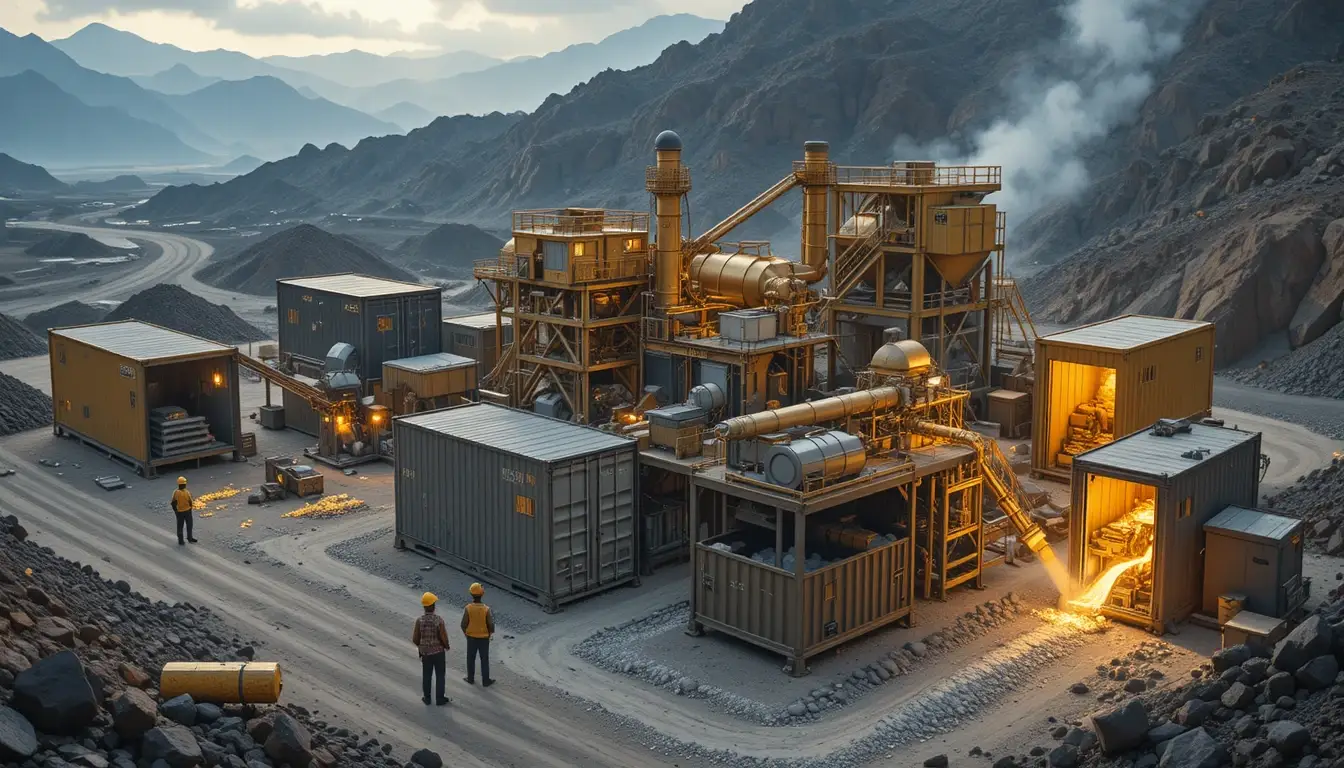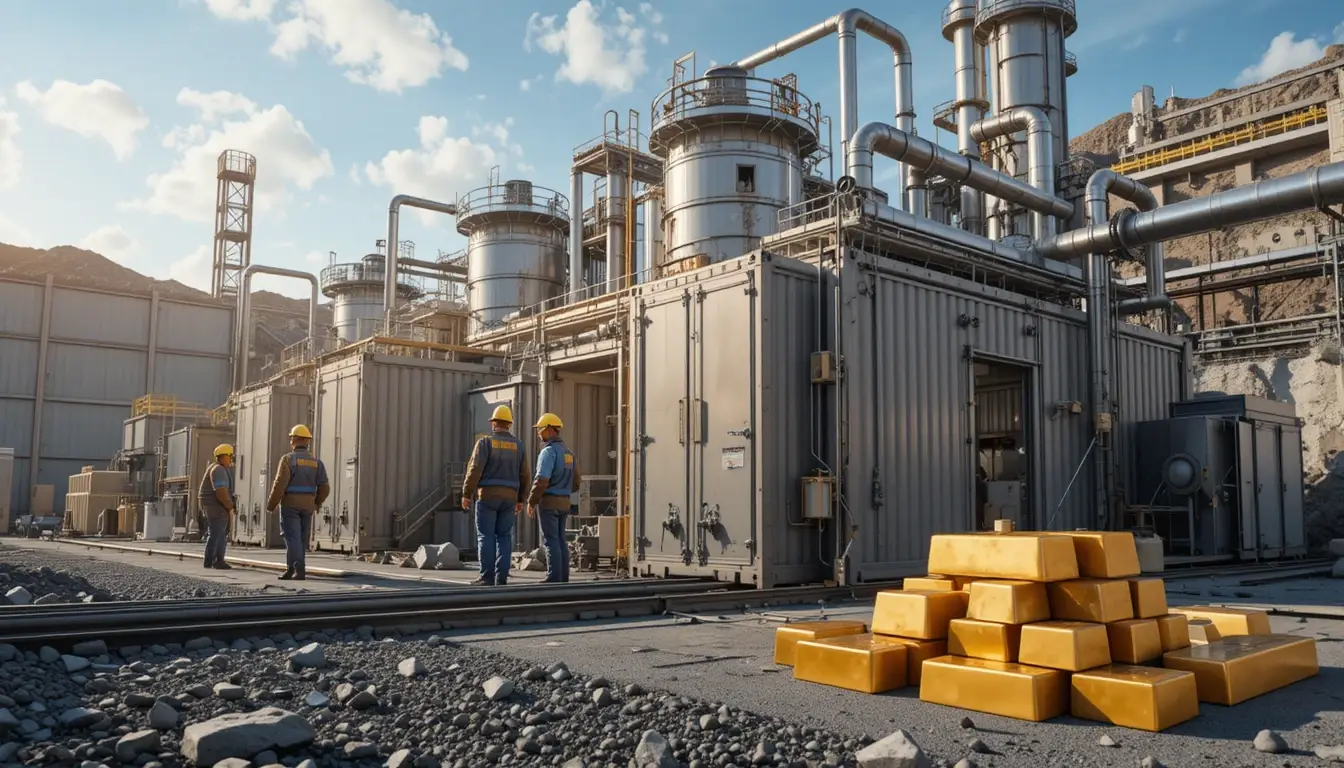
Low Cost Precious Metal Refining Plant Guide– Complete Guide
Introduction
If you are running a mining project, sourcing refining technology, or evaluating a new investment, (Low Cost Precious Metal Refining Plant Guide) one question comes up fast: how do you refine precious metals efficiently without building an expensive traditional plant?
That is where a Low Cost Precious Metal Refining Plant – Complete Guide becomes useful. In today’s mining and metallurgical market, buyers want more than just recovery. They want lower capital cost, lower energy use, faster deployment, modular growth, and cleaner processing.
For mining companies, industrial buyers, engineers, and investors, the challenge is simple. Traditional refining systems can be large, fixed, power-hungry, and slow to scale. A low-cost refining plant gives you another path. It helps you start smaller, control risk, and expand as feed volume grows.
Think of refining like filtering dirty water into drinking water. The goal is not just to collect metal. The goal is to remove unwanted material step by step until the final output reaches the purity your market demands.
For companies like Avimetal, the focus is on modular mineral processing, eco-friendly refining, AI-driven control, and cyclone-based electro systems that can improve recovery while reducing operating burden. Avimetal also presents its solutions as scalable from mobile and pilot setups to larger installations, with support for cleaner, lower-waste processing.
Table of Contents
| Sr# | Headings |
|---|---|
| 1 | Overview of Low Cost Precious Metal Refining Plant – Complete Guide |
| 2 | Why Demand Is Rising for Low-Cost Refining Plants |
| 3 | How a Precious Metal Refining Plant Works |
| 4 | Step-by-Step Process Explanation |
| 5 | Equipment List |
| 6 | Plant Capacity Options (10–1000 TPD) |
| 7 | Energy Consumption Details |
| 8 | Cost Estimation (Low, Medium, High) |
| 9 | ROI / Profitability Analysis |
| 10 | Comparison with Traditional Methods |
| 11 | Environmental Benefits |
| 12 | Real-World Use Cases / Applications |
| 13 | How to Choose the Right Plant for Your Operation |
| 14 | Why Avimetal’s Approach Fits This Market |
| 15 | Conclusion |
| 16 | FAQs |
1. Low Cost Precious Metal Refining Plant Guide – Complete Guide
A low cost precious metal refining plant is a system designed to recover and purify metals such as gold, silver, platinum-group metals, and selected high-value non-ferrous metals using a more affordable, compact, and scalable setup.
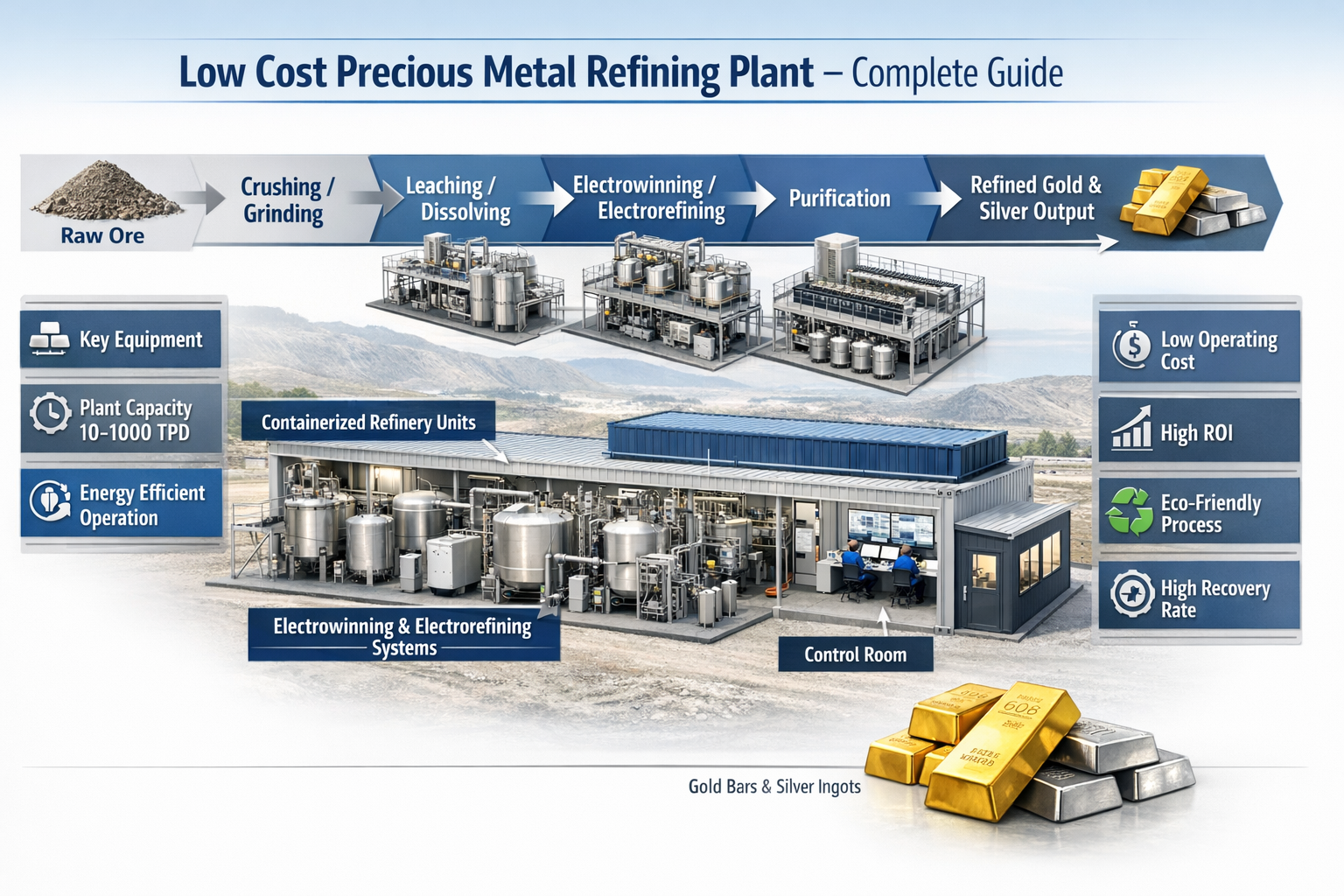
In practical terms, Low Cost Precious Metal Refining Plant – Complete Guide means understanding how to combine the right feed preparation, leaching or dissolution route, electrowinning or electrorefining stage, and final purification step in a way that protects margin.
For most buyers, the real target is not the cheapest machine. It is the lowest total cost per kilogram of refined metal.
Avimetal’s positioning fits this trend well. The company describes its solutions around advanced mineral processing, modular deployment, green refining technology, cyclone electrorefining, and cyclone electrowinning, all aimed at better recovery, lower waste, and reduced operating cost.
2. Why Demand Is Rising for Low-Cost Refining Plants
The market is changing fast. Ore grades are not always improving, financing can be tight, and buyers now expect environmental responsibility from day one.
That is why Low Cost Precious Metal Refining Plant – Complete Guide is becoming a serious search topic for:
-
Mining companies that want on-site or near-site refining
-
Industrial buyers looking for contained, modular systems
-
Engineers seeking efficient process design
-
Investors looking for faster payback and lower capital exposure
A modular strategy helps because you do not need to build a massive refinery all at once. Avimetal explicitly markets modular systems that adapt from mobile setups to high-capacity plants, which aligns with what buyers want today: lower upfront risk and easier scale-up.
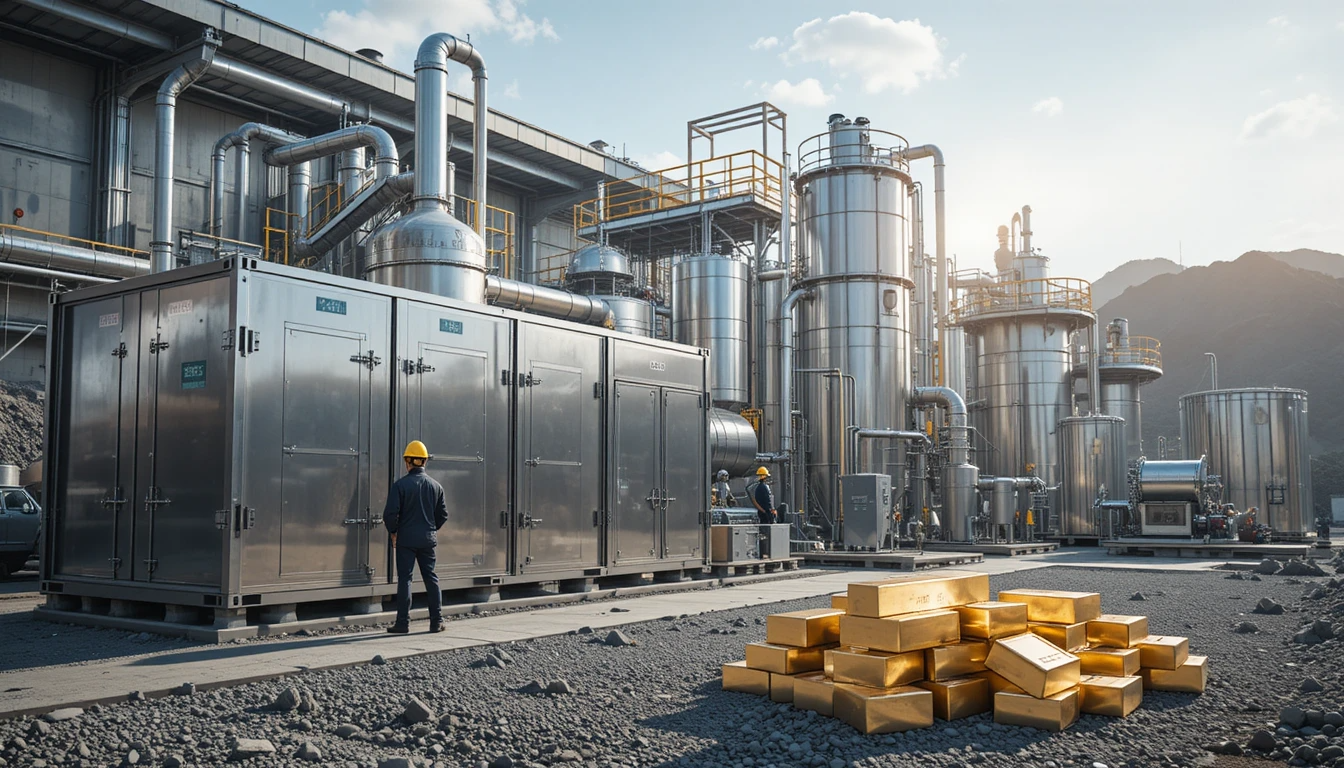
3. How a Precious Metal Refining Plant Works
A precious metal refining plant takes feed material that contains valuable metals and removes the unwanted part in stages.
Typical feed sources
-
Gold-bearing concentrate
-
Doré bars
-
Silver-rich sludge
-
Anode slime
-
Electronic scrap or secondary precious metal feed
-
Leach liquor containing dissolved metal ions
Typical outputs
-
High-purity gold
-
High-purity silver
-
Precious-metal-rich intermediate products
-
Residues for further recovery
Avimetal’s electrorefining page explains the classic principle clearly: an impure anode dissolves into electrolyte, pure metal deposits on the cathode, and impurities remain behind or collect as anode slimes.
Its cyclone electrowinning system is positioned as a high-efficiency metal recovery solution that uses vortex flow to improve mass transfer, increase current efficiency, and lower energy consumption compared with conventional electrowinning cells.
4. Step-by-Step Process Explanation
This is the core of Low Cost Precious Metal Refining Plant – Complete Guide.
Step 1: Feed testing and assay
Before you refine anything, you test the feed. You need to know metal grade, impurities, moisture, particle size, and chemical behavior.
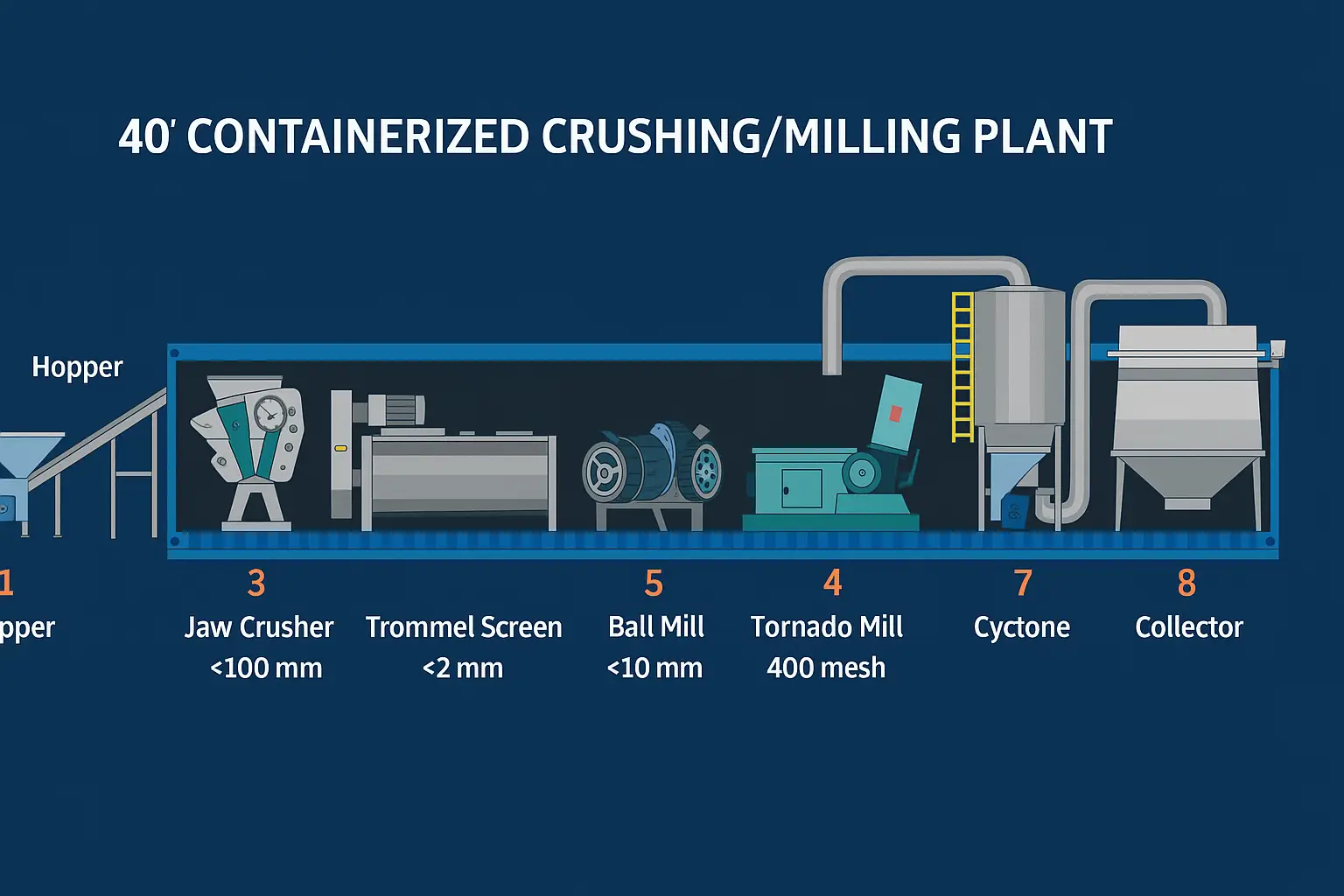
Step 2: Crushing, milling, or melting preparation
If the feed is ore or concentrate, it may need size reduction. If it is doré or scrap, it may need melting, sampling, or dissolution preparation.
Step 3: Concentration or pre-treatment
This stage removes obvious waste before final refining. Depending on feed, this can include gravity concentration, flotation, electrostatic separation, or leaching.
Step 4: Leaching or dissolution
Here the metal moves into solution. This is common in hydrometallurgical systems. Once metal ions are in solution, recovery becomes easier and more controllable.
Step 5: Electrowinning or electrorefining
This is where purification becomes visible. In electrowinning, metal is recovered from solution onto cathodes. In electrorefining, impure metal dissolves and redeposits in purer form.
Avimetal describes its cyclone electrowinning system as using controlled vortex flow to improve contact between electrolyte and ions, which supports faster deposition and compact plant design.
Step 6: Sludge, slime, and residue handling
Precious metals often hide in residues. Good plants are designed to recover value from slimes instead of losing it.
Step 7: Final drying, melting, or casting
Recovered metal is dried, melted if needed, and cast into bars, cathodes, or saleable form.
Step 8: Quality control and dispatch
Assay, purity check, packaging, and documentation complete the cycle.
5. Equipment List
A practical Low Cost Precious Metal Refining Plant – Complete Guide should always include the equipment view.
Core equipment
-
Feed hopper
-
Crushing unit
-
Ball mill or grinding system
-
Screens and classifiers
-
Leach tanks or dissolution reactors
-
Agitators and dosing systems
-
Solution holding tanks
-
Filter press
-
Electrowinning cells
-
Electrorefining cells
-
Rectifier / DC power supply
-
Cathodes and anodes
-
Pumps and piping
-
Slime collection system
-
Drying oven
-
Furnace or melting unit
-
Assay and lab equipment
-
Control panel / PLC / automation system
-
Fume extraction and scrubber
-
Water recycling unit
-
Waste treatment module
Modular add-ons
-
Containerized plant frame
-
AI-based control package
-
Remote monitoring
-
Hybrid plasma unit
-
Environmental processing system
Avimetal’s site repeatedly emphasizes modular containerized plants, AI integration, cyclone electro systems, and green refining technologies, which fits well with this equipment architecture.
6. Plant Capacity Options (10–1000 TPD)
One reason Low Cost Precious Metal Refining Plant – Complete Guide is attractive is that capacity can be matched to budget.
10–50 TPD
Best for pilot projects, artisanal-to-industrial transition, test campaigns, and remote mining sites.
50–150 TPD
Good for early commercial operations or toll refining setups.
150–300 TPD
Suitable for mid-sized mining companies with consistent feed and a clear production plan.
300–500 TPD
Works for established operations that want in-house refining instead of sending material off-site.
500–1000 TPD
For larger industrial projects needing higher throughput and stronger automation.
Avimetal states its modular systems can adapt from mobile setups to high-capacity plants, which supports this staged capacity approach.
7. Energy Consumption Details
Energy is one of the biggest hidden cost drivers.
A low-cost plant does not only reduce capital cost. It should also reduce kWh per kg of refined metal.
Main energy consumers
-
Crushing and grinding
-
Agitation
-
Heating or melting
-
Pumps
-
Air blowers
-
Rectifiers in electrowinning/electrorefining
-
Drying systems
Indicative energy planning ranges
These are planning-level estimates, not official Avimetal guarantees:
-
Small modular plant: around 80–180 kWh per ton of feed
-
Medium plant: around 150–300 kWh per ton
-
Complex refining route with thermal steps: 250–500+ kWh per ton
For electro stages, cell design matters a lot. Avimetal claims its cyclone electrowinning system can deliver higher recovery and lower energy consumption than conventional electrowinning cells, mainly through better mass transfer and current efficiency.
8. Cost Estimation (Low, Medium, High)
This section matters most to buyers.
Low-cost setup
Estimated range: USD 150,000–500,000
Suitable for:
-
10–50 TPD pilot or modular startup plant
-
Basic electrowinning/refining line
-
Limited automation
-
Lower civil work
Medium-cost setup
Estimated range: USD 500,000–2.5 million
Suitable for:
-
50–300 TPD modular commercial plant
-
Better controls
-
Full filtration and residue handling
-
More robust refining loop
High-cost setup
Estimated range: USD 2.5 million–10+ million
Suitable for:
-
300–1000 TPD industrial operation
-
Multiple refining stages
-
Lab, automation, environmental controls
-
Expansion-ready modular infrastructure
These are market-style planning ranges, not Avimetal price quotations. But they reflect why the Low Cost Precious Metal Refining Plant – Complete Guide model is attractive: you can phase investment instead of committing to a large fixed refinery from day one.
9. ROI / Profitability Analysis
A plant is only low-cost if it makes money fast enough.
ROI depends on
-
Feed grade
-
Recovery rate
-
Metal price
-
Energy cost
-
Reagent cost
-
Downtime
-
Labor
-
Residue losses
-
Distance to third-party refinery
Simple profitability logic
If your plant improves recovery by even 2–5%, reduces transport/refining outsourcing fees, and shortens settlement time, the return can change dramatically.
Example
Assume a mine processes feed containing recoverable gold worth USD 100,000 per day.
If a modular refining system:
-
improves net recovery by 3%
-
saves USD 2,000/day in logistics and third-party refining fees
-
reduces reagent or energy costs modestly
Then extra value could exceed USD 5,000/day depending on the metal mix.
That is why investors like modular, staged plants. Lower capex plus faster deployment often means shorter payback.
Avimetal also markets its systems around maximizing ROI, lowering cost, and providing end-to-end support, which fits this buyer decision logic.
10. Comparison with Traditional Methods
A strong Low Cost Precious Metal Refining Plant – Complete Guide should compare new systems with old ones.
Traditional refining
-
Large fixed installations
-
Higher civil and construction cost
-
Longer installation time
-
More difficult to relocate
-
Often less flexible for variable feed
Low-cost modular refining
-
Faster deployment
-
Lower upfront cost
-
Easier scale-up
-
Better for remote sites
-
Stronger fit for pilot-to-commercial growth
Where modern systems win
Avimetal’s pages position their solutions as compact, modular, scalable, and eco-friendly, with cyclone-based electro systems designed for better efficiency and lower waste.
11. Environmental Benefits
Environmental compliance is no longer optional.
A modern Low Cost Precious Metal Refining Plant – Complete Guide must show how cost and sustainability can work together.
Key environmental benefits
-
Lower reagent consumption
-
Lower water usage in selected processing routes
-
Closed-loop solution handling
-
Reduced waste discharge
-
Smaller physical footprint
-
Lower transport emissions if refining is closer to mine site
Avimetal highlights green refining technology, waterless or eco-friendly systems, dry concentration, hybrid plasma, and closed-loop electrowinning operation that minimize waste and environmental impact.
12. Real-World Use Cases / Applications
This section helps convert industrial buyers.
Gold mine in a remote area
A remote operator may choose a modular plant to avoid hauling semi-processed material long distances.
Silver recovery from industrial residues
A compact electrowinning-based circuit can recover silver from solution streams with lower footprint.
Anode slime refining
A refinery can recover additional precious value from residues that would otherwise sit in storage.
Pilot plant before full-scale expansion
Engineers can validate feed behavior before scaling from 20 TPD to 200 TPD.
Containerized project deployment
Avimetal’s modular/containerized approach is especially relevant for remote or staged projects, where quick installation matters.
13. How to Choose the Right Plant for Your Operation
When choosing your system, ask these questions:
What is your feed type?
Ore, concentrate, doré, slime, scrap, or pregnant solution all need different flowsheets.
What purity do you need?
Bullion-grade and ultra-high purity are not the same investment case.
Do you need mobility?
A containerized plant can be a major advantage.
Do you need phased expansion?
Start with a smaller plant and add modules later.
Do you need automation?
If labor skill is limited, AI-assisted or PLC-controlled systems reduce operator dependency.
Avimetal’s positioning around AI, automation, modular deployment, and tailored processing systems speaks directly to these questions.
14. Why Avimetal’s Approach Fits This Market
If your goal is to publish this article on Avimetal’s site, the content should naturally connect with the brand.
Avimetal presents itself as a company focused on:
-
AI-driven mineral processing
-
Modular mineral plants
-
Cyclone electrorefining
-
Cyclone electrowinning
-
Hybrid plasma and eco-friendly systems
-
Scalable solutions from pilot to large operations
-
Client support for integration and ROI improvement
That means Low Cost Precious Metal Refining Plant – Complete Guide should not read like a generic blog. It should position Avimetal as a company that understands how to combine recovery, purity, modular growth, and lower operating burden.
Internal linking suggestions
-
modular refining plant
-
gold refining plant
-
mining setup guide
You can also internally link to pages related to:
-
Cyclone Electrorefining System
-
Cyclone Electrowinning System
-
Modular Containerized Mineral Processing Plant
Conclusion
A low-cost precious metal refining plant is not just about spending less. It is about recovering more value with smarter design.
If you choose the right process, the right capacity, and the right modular layout, you can reduce risk, control costs, and improve profitability from the start. For industrial buyers and mining investors, that is the real advantage.
For Avimetal, this topic fits perfectly because your site already aligns with the market demand for modular, scalable, cleaner, and lower-cost mineral refining solutions.
FAQs
1. What is a low cost precious metal refining plant?
A low cost precious metal refining plant is a refining system designed to recover and purify gold, silver, or other valuable metals with lower upfront investment and lower operating cost than a traditional large refinery.
2. How much does a precious metal refining plant cost?
A small modular plant may start around USD 150,000–500,000, while mid-size systems can range from USD 500,000–2.5 million. Large industrial plants may cost USD 2.5 million to over USD 10 million, depending on capacity and process complexity.
3. What plant capacity is best for a new mining project?
For new or pilot-stage operations, 10–50 TPD is often a smart entry point. It reduces capital risk while giving you process data for future expansion.
4. Is a modular refining plant profitable?
Yes, it can be highly profitable if the plant improves recovery, reduces refining losses, lowers transport costs, and shortens settlement time. Profitability depends on feed grade, recovery rate, and metal prices.
5. What is the difference between electrowinning and electrorefining?
Electrowinning recovers metal directly from a metal-bearing solution, while electrorefining purifies an already impure metal anode by dissolving it and depositing purer metal onto the cathode. Avimetal describes both systems as part of its refining and recovery technology portfolio.
Read More : Articles of Avimetal