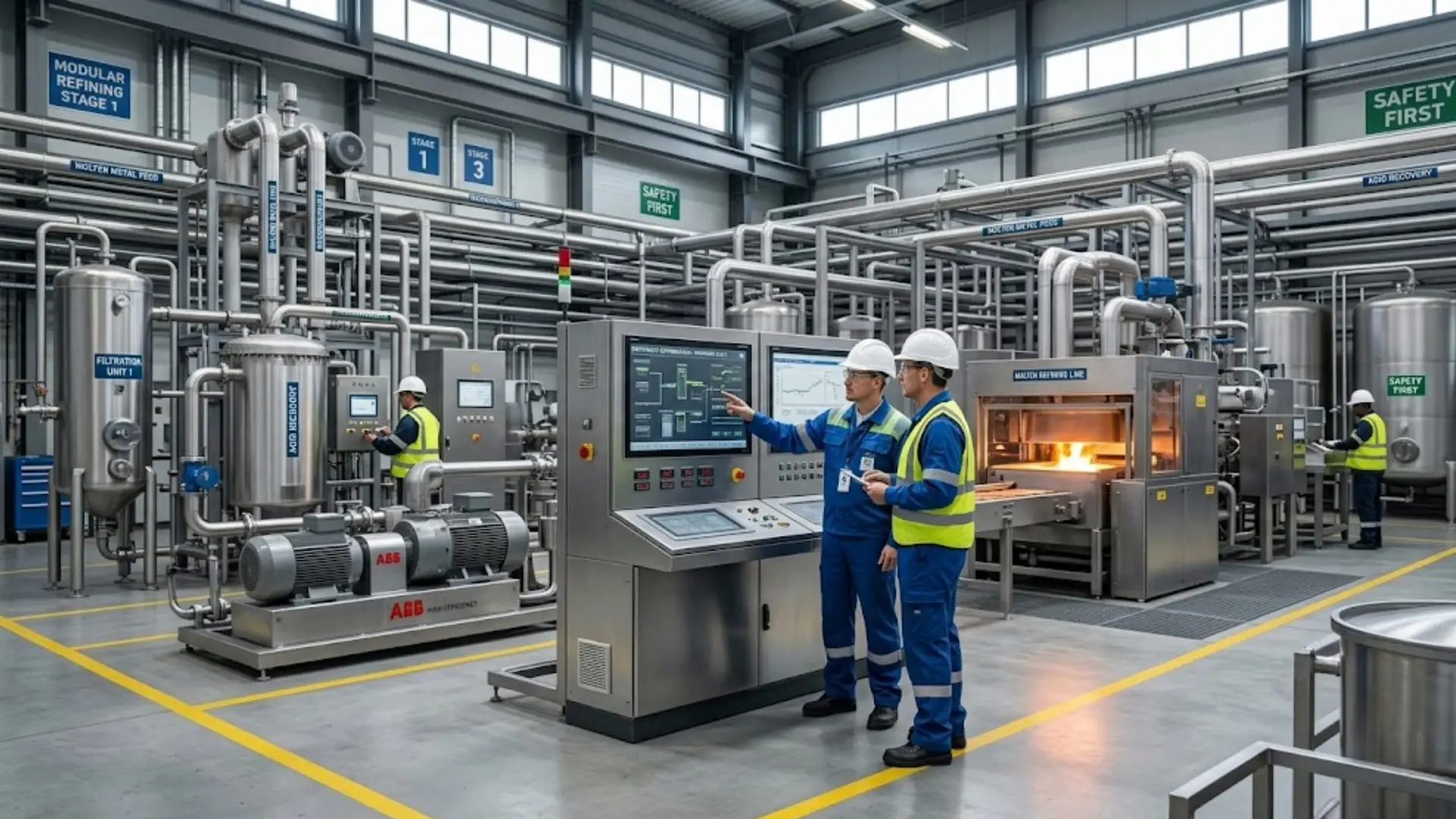
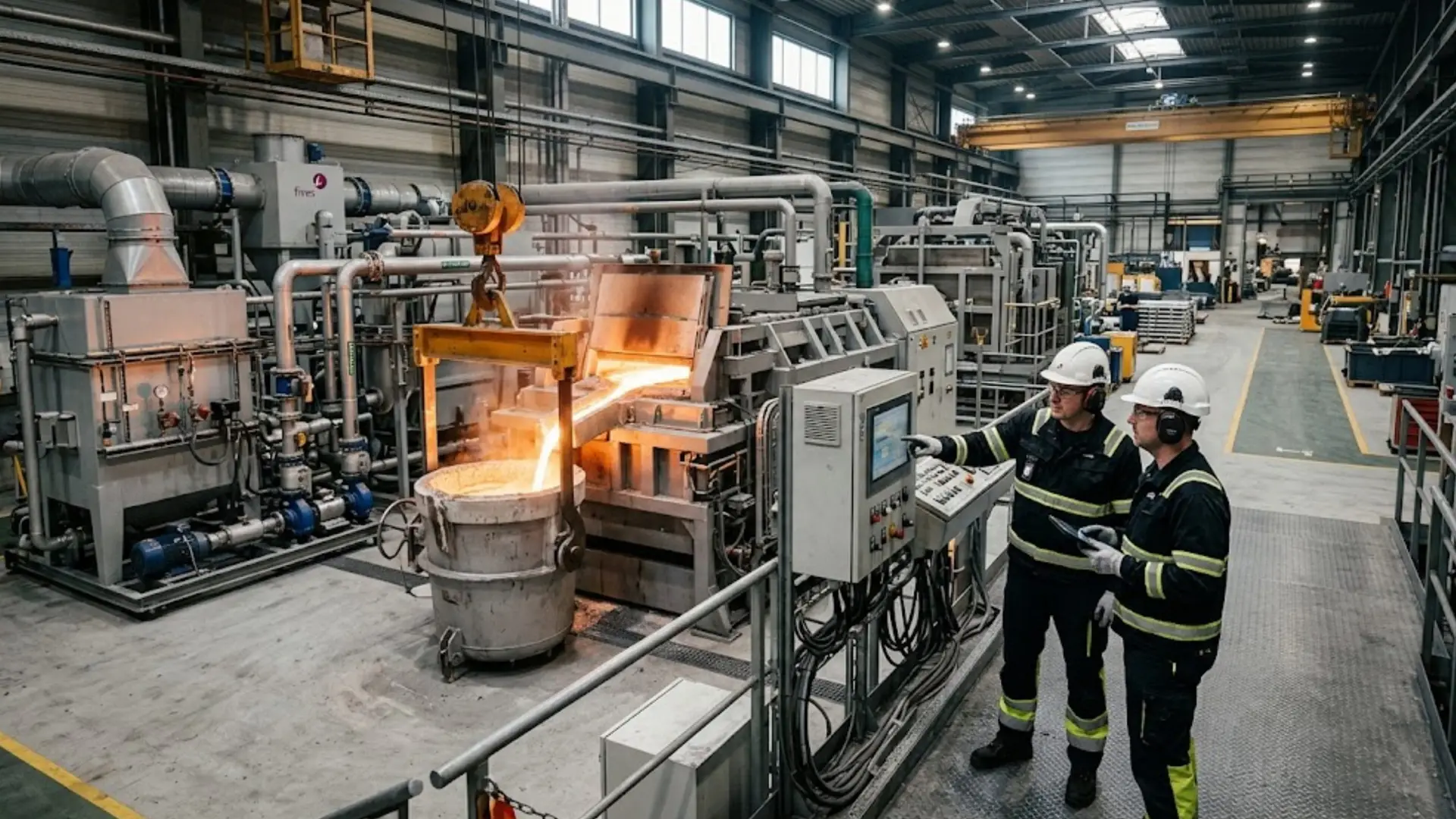
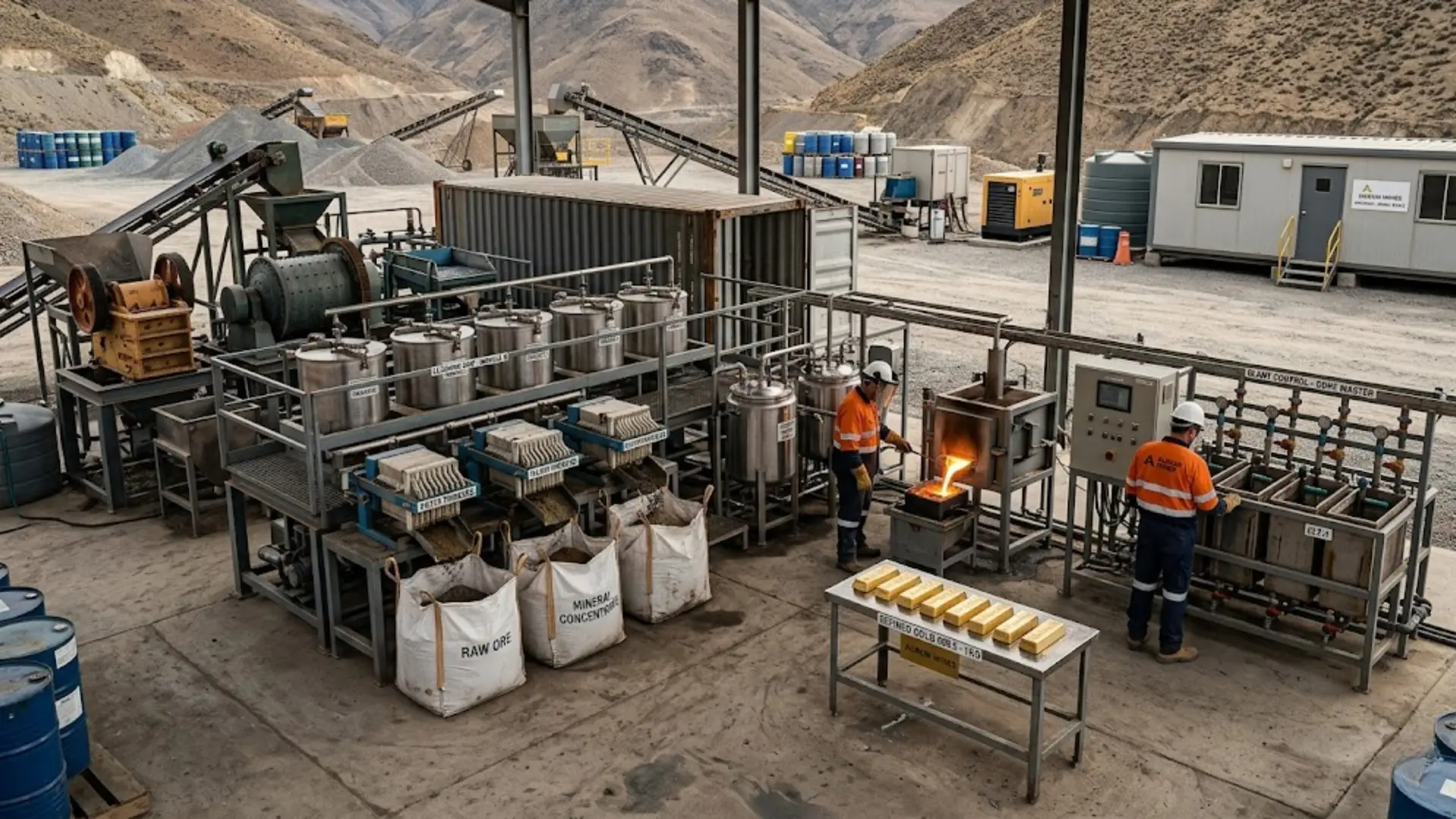
Cost Comparison: Traditional vs Modern Refining
Introduction
If you are running a mine, buying refining equipment, planning a processing plant, or evaluating an investment, one question matters more than almost anything else: which refining method gives you the best return for your money?
That is where Cost Comparison: Traditional vs Modern Refining becomes essential. Many mining operators still depend on older refining systems because they seem cheaper at the start. But once you look at fuel use, recovery rates, labor, downtime, compliance, and product quality, the real picture changes fast.
In many small and mid-sized mining regions such as Peru, Bolivia, Mexico, Colombia, Ghana, Tanzania, Indonesia, and the Philippines, the pressure is growing. Buyers want cleaner metal, governments want better environmental performance, and plant owners want faster payback. Traditional refining can still work in some cases, but modern refining systems are often more efficient, more scalable, and more profitable over time.
This guide explains Cost Comparison: Traditional vs Modern Refining in practical terms. You will see the process differences, equipment requirements, energy demand, plant capacity options, cost ranges, and the profitability impact that matters to industrial buyers and investors.
Table of Contents
| Sr# | Headings |
|---|---|
| 1 | Introduction |
| 2 | Overview of Cost Comparison: Traditional vs Modern Refining |
| 3 | Why Refining Cost Matters for Mining Companies and Buyers |
| 4 | What Is Traditional Refining? |
| 5 | What Is Modern Refining? |
| 6 | Step-by-Step Process Explanation |
| 7 | Equipment List for Traditional and Modern Refining |
| 8 | Plant Capacity Options from 10 to 1000 TPD |
| 9 | Energy Consumption Details |
| 10 | Cost Estimation: Low, Medium, and High |
| 11 | Labor, Maintenance, and Operating Cost Differences |
| 12 | Metal Recovery, Purity, and Product Value |
| 13 | ROI and Profitability Analysis |
| 14 | Comparison with Traditional Methods |
| 15 | Environmental Benefits of Modern Refining |
| 16 | Real-World Use Cases and Applications |
| 17 | How to Choose the Right Refining Route |
| 18 | Conclusion |
| 19 | FAQs |
Overview of Cost Comparison: Traditional vs Modern Refining
Cost Comparison: Traditional vs Modern Refining is not only about initial plant price. It is about total cost across the full operating life of a refinery.
A traditional plant may look affordable because the equipment is simpler and the setup is familiar. But lower upfront cost does not always mean lower total cost. Older systems often consume more fuel, lose more metal in process, need more labor, and create more environmental risk.
Modern refining usually involves better controls, improved reaction management, closed-loop systems, efficient furnaces, automated dosing, cleaner emissions handling, and better recovery of valuable metals. That means higher initial investment in many cases, but lower operating cost per ton and higher value per ton of final product.
Think of it like water filtration. A basic cloth filter removes visible dirt, but a modern filtration system removes fine impurities, works faster, and wastes less water. Refining is similar. Both old and new systems can produce output, but the cleaner, smarter system usually gives better long-term economics.
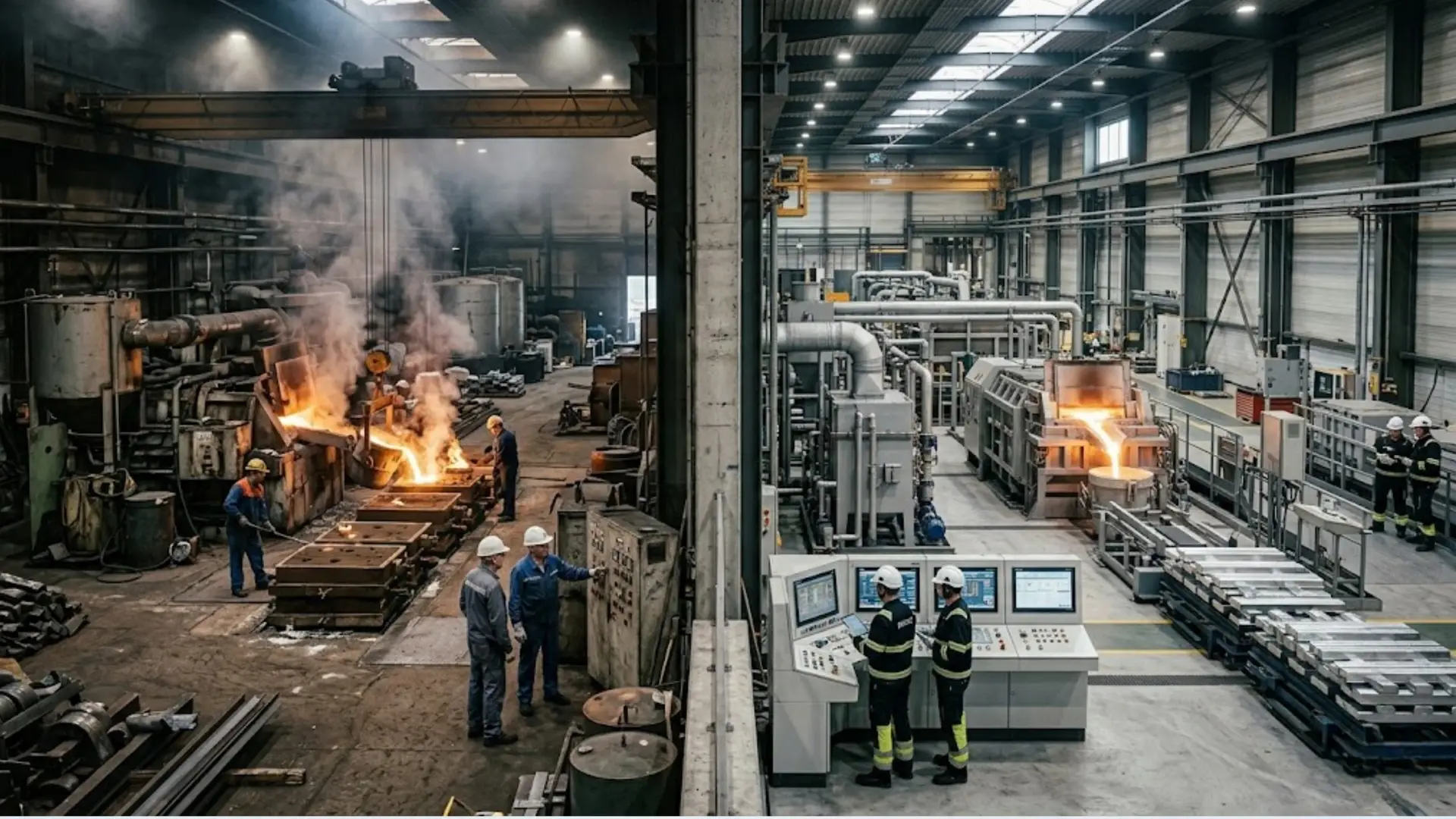
For industrial buyers and investors, this comparison should focus on five major factors:
Capital cost
Operating cost
Recovery rate
Purity level
Compliance and long-term sustainability
Why Refining Cost Matters for Mining Companies and Buyers
Refining cost directly affects your margin. If two plants process the same raw material but one uses more fuel, loses more metal, and needs more manpower, that plant will always struggle to compete.
This is especially important in markets with many small and medium mining operations. In countries such as Ghana, Tanzania, Peru, Bolivia, Colombia, Indonesia, Mexico, and the Philippines, many operators are now looking for refining solutions that are compact, modular, lower-emission, and easier to scale. That is why Cost Comparison: Traditional vs Modern Refining is becoming a top decision factor in plant planning.
What Is Traditional Refining?
Traditional refining usually refers to older, less automated methods that rely on basic smelting, manual flux addition, open furnaces, batch treatment, and limited process control.
These systems are often attractive because they are easier to understand and may require lower starting capital. In small operations, they are sometimes built with locally available components and operated by experienced technicians who have used the same method for years.
Common features of traditional refining
Traditional systems often include:
-
Open or semi-open furnaces
-
Manual feeding and discharge
-
Basic crucibles and refractory units
-
High fuel consumption
-
Limited emissions control
-
Inconsistent temperature control
-
Higher operator dependency
Traditional refining can still be suitable where budgets are tight, throughput is low, and environmental regulation is weak. But the cost disadvantages become more visible as volume increases or purity requirements rise.
What Is Modern Refining?
Modern refining uses improved technology to increase recovery, control impurities, reduce waste, and lower cost per unit of production over time.
This can include induction furnaces, automated dosing systems, digital temperature monitoring, enclosed gas handling, modular reactors, hydrometallurgical systems, electrowinning circuits, advanced filtration, and process automation.
Common features of modern refining
Modern systems often provide:
-
Better metal recovery
-
Lower energy use per ton
-
Improved product purity
-
Lower labor dependency
-
Cleaner emissions profile
-
Better process repeatability
-
Safer working conditions
-
Modular expansion capability
In a practical sense, modern refining gives you more control. And in industrial processing, control usually means less waste, fewer mistakes, and stronger profits.
Step-by-Step Process Explanation
The exact route depends on the metal and feed material, but the core comparison in Cost Comparison: Traditional vs Modern Refining can be explained through a general process flow.
Step 1: Feed Preparation
In both systems, ore concentrate, dore, scrap, or intermediate material is prepared for treatment.
Traditional plants often use manual screening, drying, and batching. Modern plants use controlled sizing, moisture management, and feed blending to improve consistency.
Step 2: Primary Heating or Dissolution
Traditional refining usually depends on direct furnace heating with manual observation.
Modern refining may use induction heating, sealed thermal systems, or controlled chemical dissolution. This improves reaction efficiency and reduces energy waste.
Step 3: Impurity Removal
In traditional systems, impurities are removed with fluxes, slagging, manual decanting, or repeated remelting.
Modern systems use more precise impurity targeting through chemical control, automated reagent addition, filtration, and staged separation.
Step 4: Metal Recovery
Traditional plants often lose valuable metal in slag, dust, off-gas, or residues.
Modern plants reduce these losses by using tighter process control, closed-loop capture, and secondary recovery circuits.
Step 5: Final Purification
Traditional refining may stop at a lower purity level if the market allows it.
Modern refining is designed to reach tighter commercial specifications, which is important for industrial buyers and export markets.
Step 6: Casting, Packaging, and Quality Testing
Older plants may rely on basic sampling and visual inspection.
Modern refining uses laboratory support, assay verification, digital records, and repeatable casting procedures that strengthen buyer trust.
Equipment List for Traditional and Modern Refining
The equipment difference is one of the clearest parts of Cost Comparison: Traditional vs Modern Refining.
Typical traditional refining equipment
-
Fuel-fired furnace
-
Crucibles
-
Basic refractory lining
-
Manual flux charging tools
-
Slag handling tools
-
Cooling trays
-
Simple molds
-
Basic weighing system
-
Small dust collection unit
-
Manual sampling tools
Typical modern refining equipment
-
Induction furnace or efficient thermal unit
-
Reaction vessels or refining reactors
-
Automated dosing system
-
Gas scrubbing unit
-
Dust and fume collection system
-
Filtration unit
-
Pump and circulation system
-
PLC or digital control panel
-
Electrorefining or electrowinning cells where required
-
Laboratory assay equipment
-
Casting line or precision molds
-
Residue recovery system
Modern equipment costs more at the beginning, but it often reduces cost in fuel, labor, downtime, and metal loss.
Plant Capacity Options from 10 to 1000 TPD
Capacity planning changes the economics significantly. A plant that works at 10 TPD has very different cost logic compared with a 500 TPD or 1000 TPD system.
10–50 TPD
This range is common for pilot plants, small mines, remote operations, and early-stage projects. Traditional systems are often chosen here because of low initial capital. However, modern modular systems can still be attractive if fuel is expensive or product purity is critical.
50–150 TPD
This is a common range for growing mining operations. At this level, operating efficiency starts to matter much more. Many buyers shift toward modern refining because labor intensity and metal losses become harder to justify.
150–500 TPD
At mid-scale, traditional systems often become expensive to run. Process inconsistency, maintenance issues, and environmental limits start affecting plant performance. Modern refining shows stronger value in throughput stability and lower unit cost.
500–1000 TPD
At this scale, modern refining is usually the stronger economic choice. Automation, energy efficiency, residue handling, and compliance systems become essential. Investors also prefer systems with predictable operating models and scalable output.
Energy Consumption Details
Energy is one of the most important operating costs in Cost Comparison: Traditional vs Modern Refining.
Traditional systems often consume more energy because heat transfer is less efficient, insulation is weaker, and temperature control is poor. Operators may overheat material to stay safe, but that wastes fuel and shortens furnace life.
Modern systems reduce this through better insulation, tighter thermal control, improved residence time, and reduced reprocessing.
Typical energy cost pattern
Traditional refining
-
Higher fuel or electricity use per ton
-
More reheating cycles
-
Greater thermal loss
-
More downtime during startups and shutdowns
Modern refining
-
Lower energy use per ton
-
Better heat efficiency
-
Faster cycle times
-
Lower rework requirement
In many regions with expensive fuel, unstable power, or remote-site logistics, energy cost can quickly erase the apparent savings of an older plant design.
Cost Estimation: Low, Medium, and High
Any useful article on Cost Comparison: Traditional vs Modern Refining must look beyond theory and talk about budget structure.
Actual costs vary by metal, plant design, local construction cost, environmental standards, and automation level. But you can use these practical categories when evaluating projects.
Low-cost setup
A low-cost setup is usually a small, basic, traditional batch plant.
Best for:
Small operations, local treatment, early-stage projects
Typical features:
Minimal automation, basic furnace, manual handling, simple pollution control
Risk level:
Higher operating risk, lower recovery, weaker compliance position
Medium-cost setup
A medium-cost setup often combines some modern equipment with simplified layout and moderate automation.
Best for:
Growing mines, industrial buyers needing better consistency, regional processors
Typical features:
Improved furnace efficiency, better filtration, partial automation, stronger quality control
Risk level:
Balanced capex and opex
High-cost setup
A high-cost setup is usually a modern refining plant with strong environmental control, automation, residue recovery, and quality systems.
Best for:
Export-focused refiners, high-purity output, mid-to-large operations, investor-backed projects
Typical features:
Advanced thermal or hydromet systems, digital controls, gas treatment, lab integration, modular scalability
Risk level:
Higher initial capital, but often lower long-term cost per ton
Labor, Maintenance, and Operating Cost Differences
Operating cost is where many traditional systems become less attractive.
Traditional refining usually needs more hands-on supervision. Flux addition, temperature observation, slag removal, and batch handling often depend on skilled operators. That increases labor cost and also increases variability from shift to shift.
Modern refining reduces manual dependency. One trained team can monitor more of the process through controls, sensors, and standard operating procedures.
Maintenance differences
Traditional plants may appear easier to repair, but they often suffer more frequent wear, refractory damage, fuel inefficiency, and process interruption.
Modern plants usually have higher-quality components, planned maintenance schedules, and better diagnostic tools. Spare parts may cost more, but downtime is often lower.
Metal Recovery, Purity, and Product Value
A refining plant should not only produce metal. It should maximize valuable metal and minimize loss.
Traditional refining often has higher loss through slag, fumes, dust, and incomplete separation. This may not look serious in daily operations, but over a year it can mean a major loss in recoverable value.
Modern refining improves:
Recovery percentage
Purity consistency
Residue re-treatment
Off-gas capture
Traceable quality control
Higher purity also improves selling options. Industrial buyers usually pay more for predictable, specification-grade output. That means modern refining can improve revenue, not just reduce cost.
ROI and Profitability Analysis
This is the section many industrial buyers and investors focus on first.
A traditional plant may deliver faster startup with lower initial expenditure. But profitability depends on more than startup speed. If a modern plant raises recovery, lowers energy consumption, reduces labor, and improves sale price, the return on investment can be significantly stronger.
Key drivers of ROI
Lower metal loss
Lower unit energy cost
Higher final product value
Reduced environmental penalties
Less downtime
Scalable throughput
Simple profitability logic
If your traditional plant saves money upfront but loses even a small percentage of valuable metal every day, that hidden loss can become larger than the capex savings.
This is why Cost Comparison: Traditional vs Modern Refining should always include lifecycle economics. A buyer should ask not “Which plant is cheaper to buy?” but “Which plant makes more money over five to ten years?”
When modern refining usually wins
-
High feed value
-
Medium to large plant capacity
-
Strict purity requirements
-
Expensive fuel or labor
-
Long project life
-
Need for environmental compliance
Comparison with Traditional Methods
When you compare side by side, the strengths and weaknesses become easier to understand.
Traditional refining advantages
Lower initial capital
Simpler setup
Familiar operation for legacy teams
Suitable for low-volume applications
Traditional refining disadvantages
Higher energy use
More manual labor
Lower recovery in many cases
Higher emissions risk
Less consistency
Harder to scale efficiently
Modern refining advantages
Better process control
Lower cost per ton over time
Higher recovery and purity
Safer operation
Better environmental performance
More attractive for industrial buyers and investors
Modern refining disadvantages
Higher initial cost
Need for trained operators
More technical design planning
In most serious commercial projects, the long-term advantages of modern refining often outweigh the upfront cost difference.
Environmental Benefits of Modern Refining
Environmental performance is no longer optional in many markets. It directly affects licensing, financing, export potential, and buyer confidence.
Traditional refining methods often release more smoke, dust, fumes, and untreated residues. They may also consume more fuel and generate more waste per ton of refined output.
Modern refining can reduce these issues through:
Closed-loop systems
Improved gas scrubbing
Residue recovery
Lower energy intensity
Cleaner thermal control
Better wastewater management
This matters a lot in target countries with growing regulatory pressure. Mines and refiners in Peru, Bolivia, Mexico, Colombia, Ghana, Tanzania, Indonesia, and the Philippines are increasingly expected to improve traceability and environmental performance. A modern refining route can support compliance and strengthen commercial credibility.
Real-World Use Cases and Applications
Different operations use different refining strategies. Here are practical examples that show how Cost Comparison: Traditional vs Modern Refining works in the real world.
Small gold mining region
A small operation may start with a traditional batch refining unit because capital is limited. But as production grows, fuel consumption and metal loss begin to hurt margins. At that stage, shifting to a modular modern system often improves recovery and shortens payback.
Regional custom refining plant
A processor handling material from multiple small mines needs consistency. Modern refining becomes more valuable here because feed quality varies and buyers need dependable output.
Export-focused operation
If the goal is to sell into demanding industrial markets, modern refining is often preferred because purity, assay control, and documentation matter more.
Investor-backed expansion project
Investors usually want systems with measurable efficiency, lower environmental risk, and clear scaling options. That often supports the case for modern refining, especially above small pilot scale.
How to Choose the Right Refining Route
The best choice depends on your feed material, budget, production target, regulatory environment, and market strategy.
Choose basic refining when your throughput is low, your capital budget is tight, your output requirements are simple, and you are still in an early pilot phase.
A good engineering review should compare capex, opex, recovery, utilities, manpower, and residue handling before making the final choice.
Conclusion
Cost Comparison: Traditional vs Modern Refining is not just a technical discussion. It is a business decision that affects margin, growth, compliance, and long-term competitiveness.
Traditional refining may still suit very small or budget-limited operations. But for many mining companies, industrial buyers, engineers, and investors, modern refining offers better control, stronger recovery, lower lifecycle cost, and higher profitability.
If you want a refining solution that supports growth, cleaner output, and stronger commercial value, modern refining is often the smarter long-term investment.
FAQs
What is the main difference in cost between traditional and modern refining?
The biggest difference is that traditional refining usually has lower upfront cost, while modern refining often has lower operating cost over time. Modern systems can save money through better recovery, lower energy use, and reduced labor.
Is modern refining more profitable than traditional refining?
In many cases, yes. Modern refining is often more profitable when you process higher-value material, run medium to large capacity, or need better purity and environmental performance. The higher initial cost is often recovered through stronger long-term margins.
What plant capacity is best for modern refining?
Modern refining can work from 10 TPD to 1000 TPD, but it becomes especially attractive as capacity increases. At larger throughputs, the savings in energy, recovery, and labor have a bigger financial impact.
Does traditional refining use more energy?
Yes, in many cases traditional refining uses more energy per ton because of weaker thermal efficiency, more manual control, and repeated reheating. Modern plants usually reduce these losses with better design and process control.
How do I decide which refining method is right for my project?
You should compare capital cost, operating cost, recovery rate, purity target, labor needs, energy price, environmental requirements, and project scale. A lifecycle financial review is the best way to choose between traditional and modern refining.
Read more: https://avimetal.com/blogs/