Operating Cost of Refining Equipment
Introduction
When you plan to buy refining equipment, the first number you usually ask about is the machine price. But for mining companies, industrial buyers, engineers, and investors, the bigger question is often the long-term one: what is the real operating cost of refining equipment?
That question matters because a plant that looks affordable at purchase can become expensive to run if it consumes too much power, needs frequent maintenance, or depends on high labor input. On the other hand, a well-designed system can reduce losses, improve recovery, and create stronger margins over time.
If you are evaluating a new project in Peru, Bolivia, Mexico, Colombia, Ghana, Tanzania, Indonesia, or the Philippines, this topic becomes even more important. Many operations in these markets are small to medium-sized mines that need practical, efficient, and scalable refining solutions. In these settings, operating cost can directly affect competitiveness, cash flow, and payback period.
This guide explains the Operating Cost of Refining Equipment in a clear and practical way. You will see how costs are built, what affects them most, how modern systems compare with older methods, and how to estimate profitability before you invest.
Table of Contents
| Sr# | Headings |
|---|---|
| 1 | Overview of Operating Cost of Refining Equipment |
| 2 | Why Operating Cost Matters More Than Purchase Price |
| 3 | Main Cost Components in Refining Equipment |
| 4 | Step-by-Step Process Explanation |
| 5 | Equipment List Used in Refining Operations |
| 6 | Plant Capacity Options from 10 to 1000 TPD |
| 7 | Energy Consumption Details |
| 8 | Labor, Maintenance, and Consumable Costs |
| 9 | Cost Estimation: Low, Medium, and High Scenarios |
| 10 | ROI and Profitability Analysis |
| 11 | Comparison with Traditional Methods |
| 12 | Environmental Benefits of Modern Refining Systems |
| 13 | Real-World Use Cases and Applications |
| 14 | How to Reduce Operating Cost Without Hurting Output |
| 15 | How to Choose the Right Supplier and Plant Design |
| 16 | Conclusion |
| 17 | FAQs |
1. Overview of Operating Cost of Refining Equipment
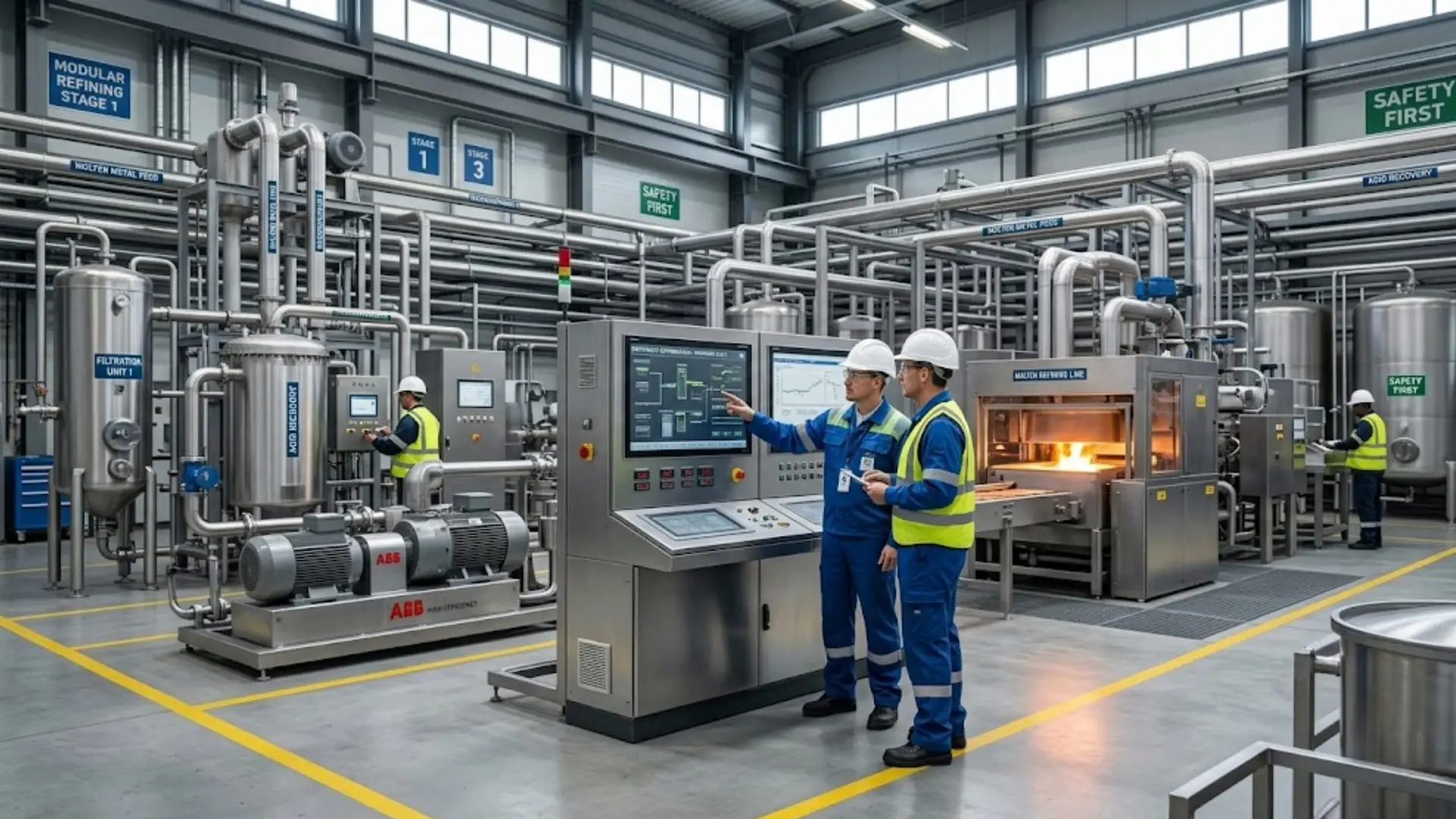
The Operating Cost of Refining Equipment is the total day-to-day cost required to run a refining system efficiently. It includes more than electricity. It also covers labor, chemicals, spare parts, maintenance, water treatment, waste handling, and downtime risk.
For mining and refining businesses, this is not just an accounting issue. It is a strategic issue. A lower operating cost means better margins per ton, faster return on investment, and more pricing flexibility in volatile commodity markets.
Think of refining like water filtration. If your filter is efficient, it removes impurities quickly and cleanly with less waste. If the filter is poor, you use more energy, replace parts more often, and lose valuable output. Refining equipment works in a similar way. The more efficient the system, the lower your cost per unit of refined metal.
That is why Operating Cost of Refining Equipment should be reviewed alongside recovery rate, output purity, uptime, and maintenance needs.
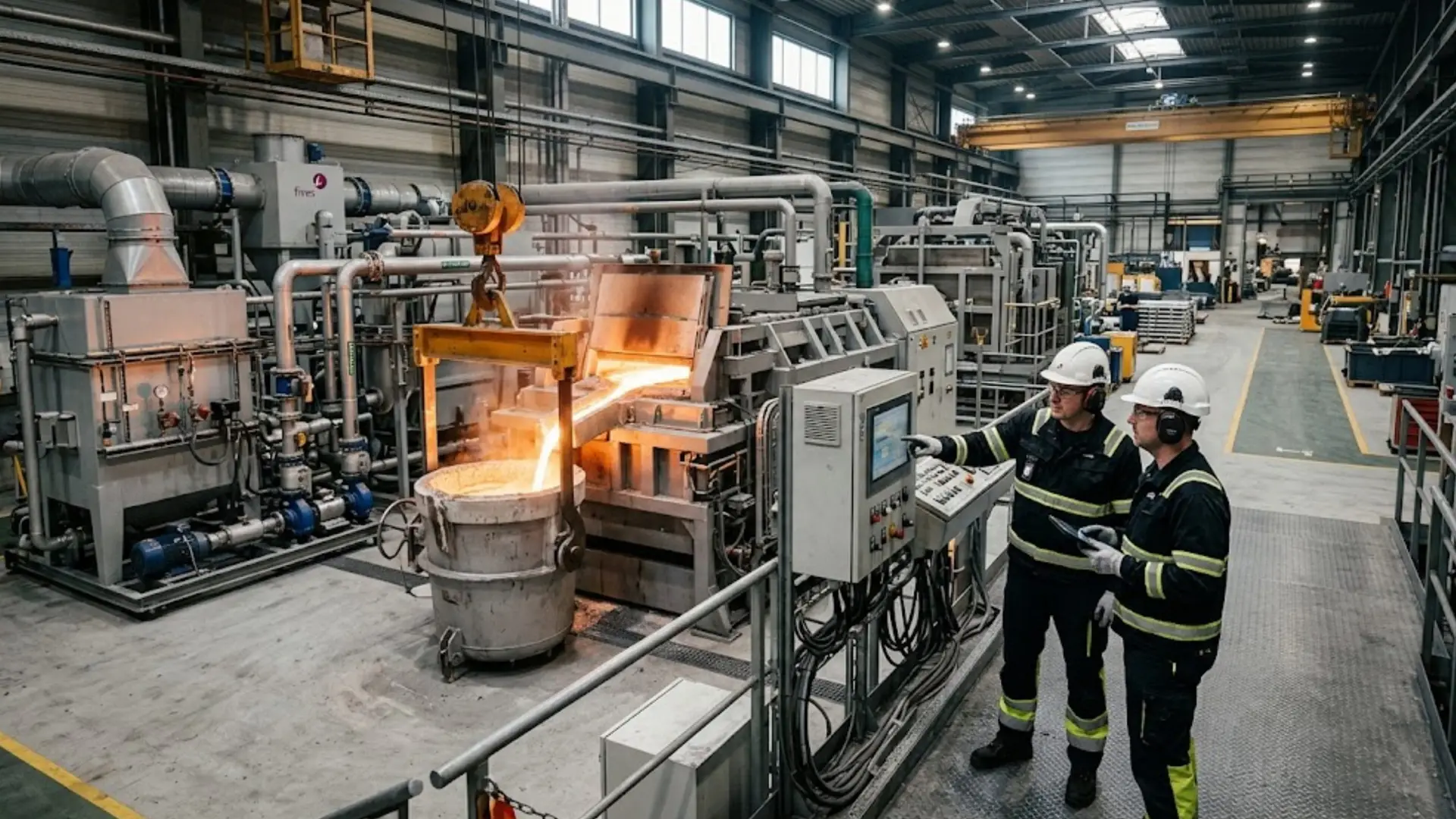
2. Why Operating Cost Matters More Than Purchase Price
Many buyers focus too heavily on capital cost. That is understandable, especially for smaller mines and new investors. But in many cases, the purchase price is only the beginning.
A cheaper system may have:
Higher power consumption
Lower recovery efficiency
More manual labor requirements
Frequent shutdowns
Higher chemical use
More expensive spare parts over time
Over several years, those factors can easily cost more than the original machine price difference. This is why experienced buyers do not ask only, “What does the plant cost?” They also ask, “What will it cost me every day, every month, and every ton?”
For operations in countries with many small mines, such as Ghana, Tanzania, Peru, and Bolivia, this is especially important. Mines in these regions often need robust systems that can run in demanding site conditions without excessive technical complexity.
3. Main Cost Components in Refining Equipment
To understand the Operating Cost of Refining Equipment, you need to break it into categories.
Energy Costs
Electricity or fuel is often one of the largest operating expenses. Furnaces, pumps, motors, agitators, dryers, and control systems all consume energy.
Labor Costs
This includes operators, plant supervisors, electricians, mechanics, and quality control staff. Manual systems generally require more people and more training.
Consumables
These may include fluxes, reagents, chemicals, filter media, refractory materials, and protective gear.
Maintenance and Spare Parts
Every refining plant needs planned and unplanned maintenance. Bearings, liners, sensors, heating elements, seals, and pumps all wear over time.
Water and Waste Management
Refining often requires water circulation, wastewater treatment, gas handling, or residue disposal. Environmental compliance affects cost more than many first-time buyers expect.
Downtime Cost
This is the hidden cost many investors ignore. If the plant stops, production stops. Lost operating hours can be more expensive than the spare part itself.
4. Step-by-Step Process Explanation
The exact sequence depends on the metal and the refining method, but the cost structure becomes easier to understand when you look at the operating flow.
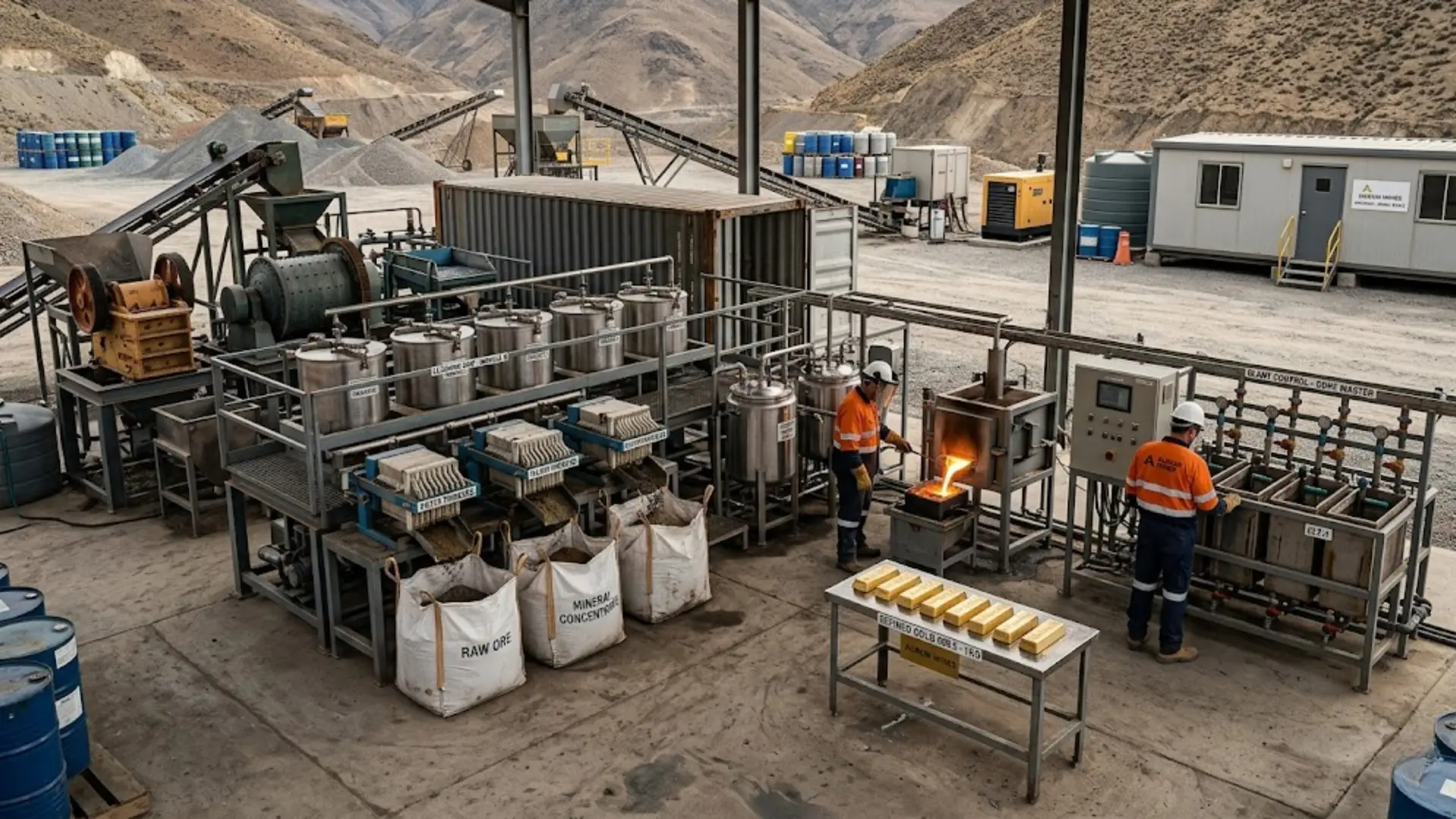
Step 1: Feed Preparation
Raw concentrate, dore, scrap, or intermediate material is received, weighed, sorted, and prepared. This stage may include crushing, screening, drying, or blending.
Cost impact comes from material handling equipment, labor, and preparation energy.
Step 2: Thermal or Chemical Treatment
The feed is processed using heat, chemicals, or both. This stage removes impurities or separates valuable metals from unwanted material.
This is often the most energy-intensive stage, especially in furnace-based systems.
Step 3: Separation and Purification
Refining units separate target metal from slag, residue, or dissolved impurities. Depending on the setup, this may involve electrochemical cells, settling systems, filtration, or controlled heating.
Cost drivers here include power, chemical input, process control, and yield efficiency.
Step 4: Casting or Final Product Handling
The refined material is cast into bars, ingots, granules, or another saleable form. It may also be tested for purity and packed for transport.
This stage affects labor, finishing energy, mold use, and quality assurance cost.
Step 5: Emission and Waste Treatment
Modern plants handle off-gas, wastewater, and residues more safely than older systems. This adds some cost, but it also protects long-term profitability by reducing environmental risk.
A smart plant balances all five stages instead of optimizing only one section.
5. Equipment List Used in Refining Operations
Below is a typical equipment list that affects the Operating Cost of Refining Equipment:
-
Feed hopper and conveyors
-
Crushing and screening units
-
Dryers or preheating units
-
Smelting or refining furnace
-
Reactors or leaching tanks
-
Agitators and mixers
-
Filtration system
-
Pumps and pipelines
-
Electrorefining cells or purification units
-
Dust collection and gas handling system
-
Cooling and water circulation system
-
Casting machine or mold station
-
Control panel and automation system
-
Laboratory testing equipment
-
Waste treatment and residue handling units
The final operating cost depends heavily on how these machines are integrated. A well-engineered flow reduces handling losses, labor dependency, and energy waste.
6. Plant Capacity Options from 10 to 1000 TPD
Plant size changes the entire cost profile. The Operating Cost of Refining Equipment at 10 TPD is very different from the cost at 500 or 1000 TPD.
10–50 TPD
These plants are common for small mines, pilot operations, and regional refiners. They need lower upfront investment and can be installed faster. However, the operating cost per ton may be higher because fixed overhead is spread across less output.
This range is often suitable for developing markets with scattered ore supply, including parts of Colombia, Bolivia, and Tanzania.
50–200 TPD
This is a strong middle range for growing operations. It balances manageable investment with better efficiency. Labor and maintenance cost per ton usually improve in this band.
200–500 TPD
At this scale, automation becomes more valuable. Energy management, process consistency, and throughput control have a major effect on profitability.
500–1000 TPD
Large plants can achieve lower unit cost when designed correctly, but they also require better infrastructure, stronger technical management, and more disciplined maintenance planning.
The right size is not always the biggest one. The best capacity is the one that matches your feed supply, infrastructure, and market plan.
7. Energy Consumption Details
Energy is one of the most important parts of Operating Cost of Refining Equipment because it affects daily cash burn immediately.
What Drives Energy Use
Furnace temperature requirements
Hours of operation per day
Feed moisture level
Type of refining method
Motor size and pump load
Plant automation quality
Heat recovery design
As a general rule, thermal refining systems consume more energy than simple mechanical separation systems. Poor feed preparation also raises energy use. Wet or inconsistent feed makes furnaces work harder and longer.
How Buyers Should Review Energy Cost
Do not just ask for installed power. Ask for:
Average operating power
Peak load demand
Energy consumption per ton
Fuel alternatives if grid power is unstable
Heat loss control measures
In regions where electricity cost is high or unstable, like some mining zones in Africa and Latin America, energy efficiency can decide whether a project remains profitable. Even a modest drop in kWh per ton can create major annual savings.
8. Labor, Maintenance, and Consumable Costs
Power is only one part of the story. In many plants, labor and maintenance become the second major cost block.
Labor Cost Factors
A highly manual plant may need operators for feeding, temperature checks, slag handling, casting, and cleaning. An automated plant can reduce headcount, improve consistency, and lower operator error.
That said, more automation can increase dependence on controls and instrumentation support. The best approach is usually practical automation, not unnecessary complexity.
Maintenance Cost Factors
Maintenance cost rises when equipment is poorly matched to local conditions. Dust, humidity, poor power quality, and remote location all affect uptime.
Important maintenance drivers include:
Furnace lining wear
Pump and seal replacement
Motor servicing
Sensor calibration
Filter replacement
Corrosion control
Consumable Cost Factors
Chemicals, refractory material, filter cloth, electrodes, and safety supplies all add to the total operating cost. Buyers should always ask for consumption rates per ton, not just annual estimates.
9. Cost Estimation: Low, Medium, and High Scenarios
A practical way to review the Operating Cost of Refining Equipment is by using cost scenarios.
Low-Cost Scenario
This usually applies when you have:
Stable feed quality
Efficient modern equipment
Low labor requirement
Good power access
Strong maintenance planning
In this case, the plant runs smoothly with lower cost per ton and fewer interruptions.
Medium-Cost Scenario
This is the most common real-world case. The plant has reasonable efficiency, but some cost pressure comes from energy, labor, or maintenance. Many medium-scale buyers in Mexico, Indonesia, and the Philippines fall into this category.
High-Cost Scenario
This happens when the plant suffers from:
Frequent downtime
Poor recovery efficiency
High chemical consumption
Old or mismatched equipment
Manual dependency
Weak environmental control
In these cases, even if the selling price of metal is favorable, margins can shrink quickly.
A proper cost model should include cost per day, cost per month, and cost per ton. That gives you a more realistic view than a single lump-sum estimate.
10. ROI and Profitability Analysis
For industrial buyers and investors, ROI is where all the numbers come together. The Operating Cost of Refining Equipment directly affects how quickly your plant pays for itself.
Basic ROI Formula
ROI = Net Annual Profit / Total Investment
Net annual profit depends on:
Output volume
Recovery rate
Metal price
Operating cost
Downtime level
By-product value if applicable
Why Operating Cost Changes ROI So Much
A small improvement in operating efficiency can have a strong effect on profit. For example, if a plant reduces power and maintenance cost per ton while maintaining recovery, the savings continue every day. Over a year, that can shorten payback significantly.
What Strong Buyers Look For
Fast payback period
Reliable throughput
Stable recovery rates
Low downtime
Scalable design
Predictable maintenance schedule
This is why many buyers now prefer modern, modular systems over oversized or outdated installations. In many cases, lower operating cost produces better ROI than simply increasing nameplate capacity.
11. Comparison with Traditional Methods
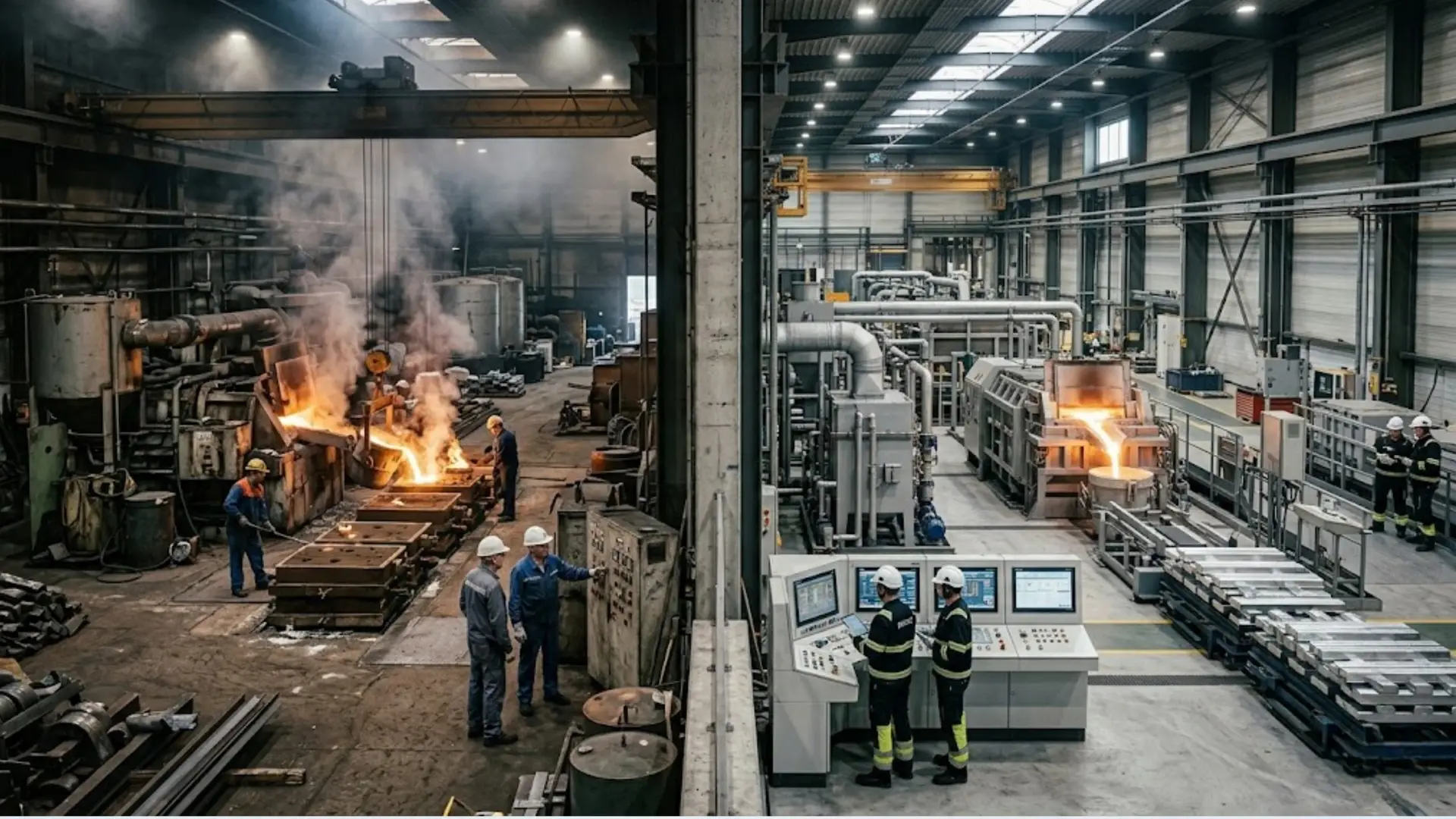
Traditional refining methods often rely on heavier manual work, basic furnaces, limited controls, and weaker emission management. They may appear cheaper at first, but the long-term operating picture is often less attractive.
Traditional Methods
Higher labor demand
Less accurate temperature and process control
Higher metal loss risk
More emissions and waste issues
Greater inconsistency in final purity
Modern Refining Systems
Better recovery efficiency
Improved process control
Lower cost per ton over time
Safer operation
Better environmental performance
Scalability for future expansion
For operations targeting export markets or serious industrial buyers, modern methods usually create more confidence because they support stable purity and traceable production quality.
12. Environmental Benefits of Modern Refining Systems
Environmental performance is no longer optional. It is now a cost, compliance, and brand issue. Modern systems can reduce the Operating Cost of Refining Equipment in the long run by lowering waste, reducing rework, and avoiding environmental penalties.
Key Environmental Benefits
Lower emissions through gas handling systems
Better dust collection
Improved water reuse
Reduced residue losses
Safer chemical handling
Cleaner working conditions
This matters in buyer-facing markets and investor discussions. A cleaner plant is often easier to finance, easier to permit, and easier to scale.
For mining businesses in Peru, Colombia, Ghana, and Indonesia, environmental performance can also improve local acceptance and reduce regulatory pressure over time.
13. Real-World Use Cases and Applications
The Operating Cost of Refining Equipment matters across many industrial situations.
Small Mine Upgrading Output
A small mine with inconsistent concentrate quality may install a 10–50 TPD refining setup to improve metal value before sale. Here, simple maintenance and manageable labor cost are often more important than maximum automation.
Growing Regional Refinery
A mid-sized refinery serving nearby mines may use a 50–200 TPD system to process mixed feed sources. In this case, cost control depends on flexible plant design, stable energy planning, and reliable filtration.
Investor-Led Processing Hub
An investor-backed project may build a larger plant to serve multiple suppliers. Here, the main goal is low cost per ton, scalable design, and predictable ROI.
Export-Oriented Industrial Operation
Some buyers need higher purity output for export or downstream manufacturing. For them, operating cost must be balanced with stricter quality and compliance standards.
14. How to Reduce Operating Cost Without Hurting Output
Lowering cost does not mean cutting corners. It means improving efficiency where it matters most.
Use Better Feed Preparation
Dry, consistent feed reduces furnace load and improves process control.
Improve Automation Where It Adds Real Value
Simple control systems can reduce operator error and stabilize output.
Plan Preventive Maintenance
Scheduled maintenance is cheaper than emergency shutdowns.
Track Cost Per Ton Closely
This is one of the best management tools for plant performance.
Choose Modular Expansion
Instead of overbuilding on day one, many buyers start with a right-sized system and expand later. This approach often works well for developing mining regions with variable supply.
Businesses also benefit from reviewing related solutions such as a modular refining plant, a gold refining plant, or a broader mining setup guide when planning future capacity growth.
15. How to Choose the Right Supplier and Plant Design
Not all suppliers talk clearly about the Operating Cost of Refining Equipment. Some focus only on output claims or machine price. Serious buyers should ask deeper questions.
Questions You Should Ask
What is the expected energy consumption per ton?
What are the maintenance intervals?
Which spare parts wear fastest?
How many operators are needed per shift?
What consumables are required monthly?
What environmental control systems are included?
Can the plant scale from 10 TPD upward?
You should also evaluate whether the supplier understands your target market. For example, small and medium mines in Peru, Bolivia, Mexico, Colombia, Ghana, Tanzania, Indonesia, and the Philippines often need compact, durable, and practical systems instead of overly complex designs.
For project planning, technical discussion, or commercial inquiry, buyers can review solutions through AVI Metal at https://avimetal.com/ or contact the team at jgim@avimetal.com and +1 470 5648883 for WhatsApp, text message, or Telegram. The listed business address is C/O AINFOX, 2060 Faith Industrial Dr., Buford, GA 30518.
Conclusion
The true Operating Cost of Refining Equipment is not just a number on a spreadsheet. It is a daily reality that affects output, margins, reliability, and long-term growth. If you want a profitable refining project, you need to evaluate energy, labor, maintenance, consumables, environmental control, and downtime together.
For mining companies, industrial buyers, engineers, and investors, the smartest decision is not always the cheapest machine. It is the system that delivers stable production, manageable operating cost, and strong ROI over time. When you choose the right design for your feed, capacity, and market, you create a plant that works not only on paper, but in the real world.
FAQs
1. What is included in the operating cost of refining equipment?
The Operating Cost of Refining Equipment usually includes electricity or fuel, labor, consumables, maintenance, spare parts, water use, waste handling, and downtime-related losses. A full cost review should also include cost per ton and monthly plant operating expenses.
2. How does plant capacity affect refining operating cost?
Smaller plants, such as 10–50 TPD systems, often have higher operating cost per ton because fixed costs are spread over lower output. Larger plants can reduce unit cost, but only when feed supply, maintenance, and power infrastructure are strong enough to support continuous operation.
3. Is modern refining equipment more profitable than traditional methods?
In many cases, yes. Modern systems usually offer better process control, lower metal loss, improved environmental performance, and more predictable maintenance. That often leads to lower long-term operating cost and stronger ROI compared with traditional refining methods.
4. How can you reduce the operating cost of refining equipment?
You can reduce cost by improving feed consistency, using energy-efficient equipment, applying preventive maintenance, reducing manual handling, and tracking performance by cost per ton. Choosing a right-sized plant instead of an oversized system also helps protect profitability.
5. What is the best refining plant size for small mining operations?
The best size depends on feed volume, ore quality, infrastructure, and budget. For many small mining operations in markets such as Ghana, Tanzania, Peru, and Bolivia, a 10–50 TPD or 50–200 TPD plant can offer a practical balance between manageable investment and acceptable operating efficiency.
Read more: https://avimetal.com/blogs/