Low Budget Refining Plant Solutions
Introduction
Many small and mid-sized mining companies struggle with the same problem. They have mineral-bearing material, concentrate, or dore output, but the cost of full-scale refining infrastructure feels too high. Traditional refining setups often demand heavy capital, complex civil works, skilled labor, and long installation timelines. For many operators, that creates a gap between production potential and actual profitability.
This is where Low Budget Refining Plant Solutions become highly valuable. If you are a mining company, industrial buyer, engineer, or investor, you need a plant model that balances cost, recovery, flexibility, and speed of deployment. You do not always need the biggest plant. You need the right plant for your ore profile, production goals, and local operating conditions.
In simple terms, a low-budget refining plant works like an industrial water filter. You do not build a massive city-wide treatment system when you only need a compact and reliable purification unit for a smaller site. The same logic applies here. You focus on the essential stages, choose practical equipment, reduce waste, and keep the layout modular and scalable.
This article explains how Low Budget Refining Plant Solutions work, what equipment is required, how much energy they use, what they cost, and why they are increasingly attractive in mining regions such as Peru, Bolivia, Mexico, Colombia, Ghana, Tanzania, Indonesia, and the Philippines.
Table of Contents
| Sr# | Headings |
|---|---|
| 1 | Overview of Low Budget Refining Plant Solutions |
| 2 | Why Small Mines Need Budget-Friendly Refining Plants |
| 3 | How the Refining Process Works Step by Step |
| 4 | Feed Material Types and Suitability |
| 5 | Equipment List for a Low Budget Refining Plant |
| 6 | Plant Capacity Options from 10 to 1000 TPD |
| 7 | Energy Consumption Details |
| 8 | Cost Estimation for Different Budget Levels |
| 9 | ROI and Profitability Analysis |
| 10 | Comparison with Traditional Refining Methods |
| 11 | Environmental Benefits |
| 12 | Real-World Use Cases and Applications |
| 13 | Key Buying Factors for Mining Companies and Investors |
| 14 | Why Modular Design Improves Project Flexibility |
| 15 | Conclusion |
Overview of Low Budget Refining Plant Solutions
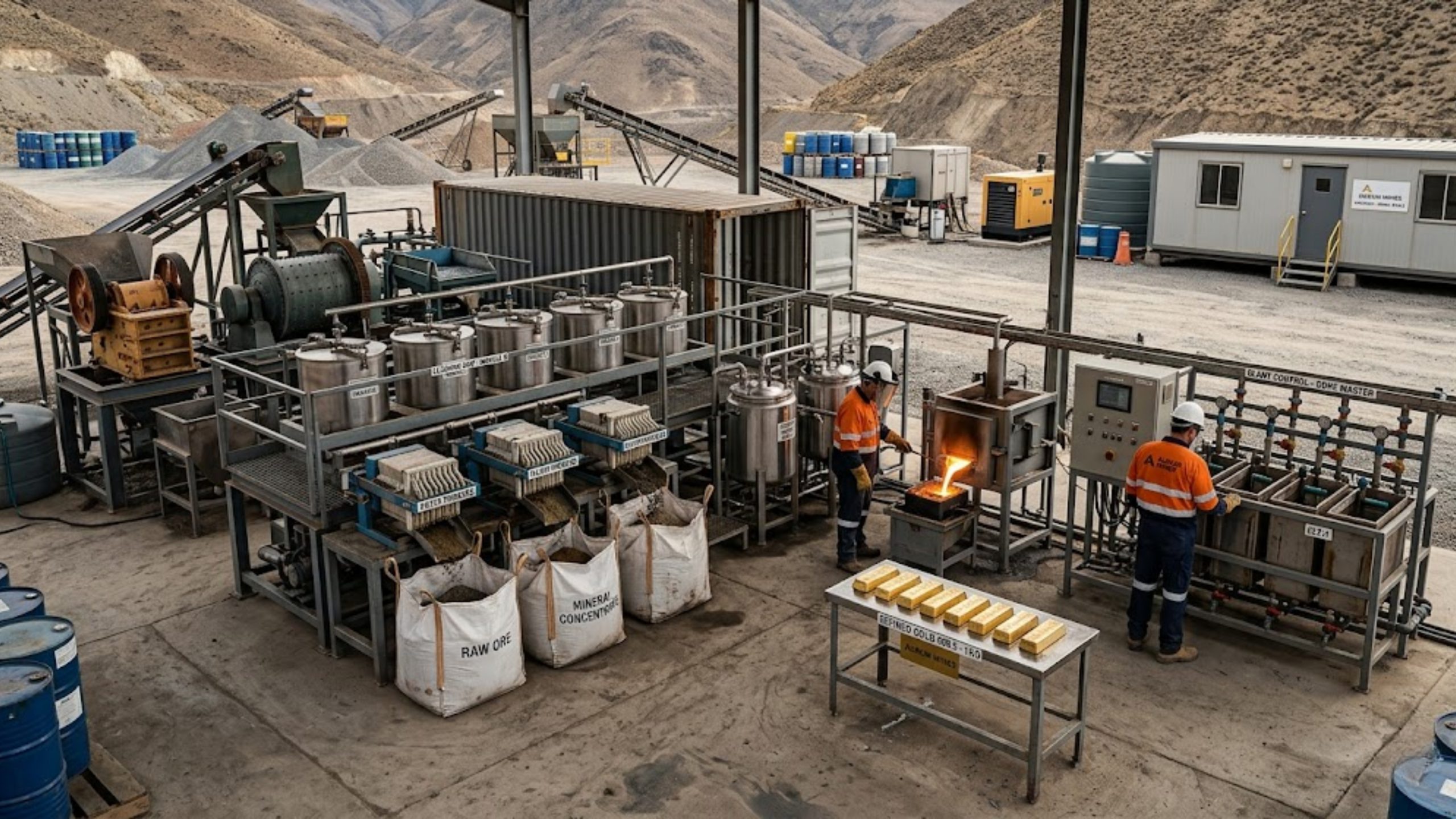
Low Budget Refining Plant Solutions are compact, cost-efficient, and practical refining systems designed for small to medium mining operations. They are built to recover valuable metals from concentrates, dore material, or semi-processed feed without the extreme cost of a large centralized refinery.
These plants usually focus on the essential refining steps only. Instead of overbuilding, the design keeps capital expenditure under control by using modular equipment, simple layouts, efficient utility use, and flexible operating systems. This makes them a strong fit for buyers who want commercial output without overspending in the first phase.
For industrial buyers, the biggest advantage is speed. A lower-budget plant can often be manufactured, shipped, installed, and commissioned faster than a large conventional facility. For engineers, the appeal is simplicity and maintainability. For investors, the value lies in lower entry cost and faster payback.
In the right project, Low Budget Refining Plant Solutions can create a clear path from raw production to saleable refined output while reducing transport dependency, toll refining charges, and metal value loss.
Why Small Mines Need Budget-Friendly Refining Plants
Small mines often operate in regions where logistics, power availability, and financing are all major constraints. Sending material to third-party refiners may seem easier at first, but it can reduce margins through transport cost, delayed payment cycles, refining charges, and metal accounting disputes.
A budget-friendly refining plant helps solve several real business problems.
First, it gives you more control over your product. You can process closer to the mine site or at a regional hub, which reduces handling losses and improves turnaround time.
Second, it improves cash flow. Instead of waiting for off-site refining schedules, you can shorten the time between production and monetization.
Third, it supports phased investment. You can start with a smaller setup and scale as ore supply and operating confidence improve.
This is especially relevant in countries with many small and medium miners. In Peru, Bolivia, Mexico, Colombia, Ghana, Tanzania, Indonesia, and the Philippines, operators often need compact, adaptable systems rather than large fixed plants built for very high-volume mining groups.
How the Refining Process Works Step by Step
The exact process depends on the feed material and target metal, but most Low Budget Refining Plant Solutions follow a practical sequence.
1. Feed Receiving and Sampling
The process starts with receiving the feed. This may include concentrate, smelted dore, precipitate, sludge, or other intermediate products. Sampling is critical because accurate analysis determines the expected metal value and the process route.
2. Pre-Treatment
Some feed materials require drying, crushing, screening, or blending. The goal is to create a more consistent feed for the refining stage. Consistency improves recovery and reduces operational instability.
3. Smelting or Thermal Preparation
If the material is not already in metallic form, it may pass through a furnace or smelting unit. Fluxes are added to separate metal-bearing phases from impurities. This stage helps produce a cleaner intermediate product.
4. Chemical or Electrochemical Refining
This is the main purification stage. Depending on the metal and plant design, the process may use leaching, precipitation, electrowinning, electrorefining, or a hybrid route. Think of this stage like filtering muddy water through finer and finer layers until only the clean product remains.
5. Separation and Recovery
Recovered metal is separated from process liquor, slag, residue, or other by-products. Proper separation is essential for both product quality and metal recovery.
6. Drying and Melting
Recovered metal powders, sludge, or cathode material may be dried and remelted into bars, ingots, or final saleable forms.
7. Quality Control
Final assay, purity verification, and documentation are carried out before sale or further downstream use.
8. Residue and Effluent Handling
A good low-budget plant does not ignore waste streams. Residues and liquids should be handled carefully to avoid metal loss and environmental risk.
Feed Material Types and Suitability
Not every plant suits every feed type. A smart buyer first confirms what material will enter the plant.
Common feed options include:
Gold or silver-bearing concentrate
Dore bars from artisanal or small mine smelting
Precious metal sludge
Gravity concentrates
Leach residues with recoverable value
Copper, lead, or polymetallic intermediate products
The best Low Budget Refining Plant Solutions are usually tailored around a narrow feed range. That is a good thing. A focused plant is easier to operate, cheaper to build, and more predictable in performance.
If your mine has variable feed, then modular circuits and adjustable process settings become more important. This gives you room to adapt without replacing the full plant.
Equipment List for a Low Budget Refining Plant
Below is a practical equipment list commonly used in Low Budget Refining Plant Solutions. The exact package depends on the metal, feed grade, and purity target.
-
Feed hopper
-
Weighing and sampling system
-
Crusher or grinder if required
-
Dryer unit
-
Mixing tanks
-
Reaction tanks
-
Smelting furnace or induction furnace
-
Flux handling system
-
Leaching tanks
-
Filter press
-
Settling tank or thickener
-
Electrowinning or electrorefining cells
-
Rectifier and control panel
-
Water treatment system
-
Fume extraction unit
-
Dust collection system
-
Drying oven
-
Melting and casting unit
-
Assay and laboratory tools
-
Pumps, valves, and piping
-
Safety shower and emergency equipment
A strong low-budget design does not mean low quality. It means choosing only the equipment that directly supports recovery, purity, compliance, and uptime.
Plant Capacity Options from 10 to 1000 TPD
Capacity selection is one of the most important investment decisions. Low Budget Refining Plant Solutions are available across different capacity levels, but the best option depends on your ore supply, expected feed quality, and cash flow plan.
10–50 TPD
This range is ideal for pilot commercial setups, small mine groups, remote operations, and first-stage regional refining hubs. It offers lower capital cost and easier commissioning.
50–100 TPD
This is a strong mid-level range for consistent small producers who want better economies of scale but still need flexible plant layout and moderate utility load.
100–250 TPD
This range fits growing mining businesses with stable feed supply and stronger quality control systems. At this size, automation and residue management become more important.
250–500 TPD
Plants in this category are often selected by mining groups, regional processors, or buyers serving multiple mines. They require better infrastructure and tighter operational management.
500–1000 TPD
This capacity is suitable for high-volume operations or centralized regional treatment models. The capital requirement rises sharply, but so does potential throughput and margin efficiency.
For many buyers in developing mining regions, the smartest entry point is not the highest capacity. It is a right-sized plant with expansion potential. That is why Low Budget Refining Plant Solutions often use modular design principles.
Key Energy Consumption Metrics
Smelting-based systems naturally consume more thermal energy, while electrochemical systems rely more on electrical power.
Typical energy demand areas include:
Crushing and grinding
These stages consume moderate electrical power, depending on feed hardness and particle size reduction targets.
Drying
Moist feed can significantly increase thermal energy demand. Pre-drying also affects downstream efficiency.
Furnace operations
This is often one of the highest energy-use areas. Fuel-fired or induction units must be matched carefully to the production rate.
Leaching and agitation
Tank mixing generally uses moderate electrical energy, but continuous operation adds up over time.
Electrowinning or electrorefining
This stage can be energy-intensive if current efficiency is low or if solution chemistry is not controlled properly.
Water treatment and pumping
Often underestimated, these systems can create a noticeable utility load in larger plants.
As a broad planning guide, smaller budget plants are usually designed to minimize unnecessary reheating, over-grinding, and excess pumping. Smart energy design can reduce operating cost per ton and improve long-term competitiveness.
Cost Estimation for Different Budget Levels
Cost depends on metal type, capacity, local labor, civil work, automation level, and environmental control systems. Still, a simple budget framework helps buyers make early decisions.
Low-Cost Range
A low-cost setup usually includes a basic modular line, limited automation, compact utilities, and essential safety and environmental controls only. This is often chosen for early-stage mines, private buyers, and pilot operations.
Best for: 10–50 TPD, simple feed, fast startup
Buyer profile: small mine owner, trading group, early investor
Medium-Cost Range
This range adds better process control, improved residue handling, stronger laboratory support, and more reliable throughput performance.
Best for: 50–250 TPD, repeatable feed quality, stronger compliance needs
Buyer profile: established operator, growing processor, regional plant developer
High-Cost Range
A high-cost low-budget solution may sound contradictory, but in industrial terms it means a plant that is still cost-conscious compared to a full conventional refinery while offering better automation, emissions control, scalability, and metallurgy support.
Best for: 250–1000 TPD, multi-source feed, long-term growth strategy
Buyer profile: investor-backed project, regional refining hub, integrated mining group
The key is not chasing the cheapest system. The goal is selecting the most profitable one over the full operating life.
ROI and Profitability Analysis
For mining companies and investors, the real question is simple: will the plant pay back its cost quickly enough?
A good profitability model for Low Budget Refining Plant Solutions should include:
Capital expenditure
Installation and commissioning cost
Energy and reagent cost
Labor cost
Maintenance cost
Recovery rate
Metal price assumptions
Refining fee savings
Transport savings
Working capital cycle
Where ROI Usually Comes From
Higher recovery
Even small recovery improvements can create strong value when metal prices are favorable.
Lower third-party refining dependence
You keep more margin in-house.
Reduced transport and insurance costs
This is especially important in remote mining regions.
Faster sales cycle
Shorter time to market improves cash flow.
Scalable design
You can expand without replacing the entire system.
Example ROI Logic
If a mine currently sends its product to an external refiner and loses margin through freight, fees, delays, and settlement deductions, then installing a compact on-site or near-site refining plant can improve net revenue per ton. In many small to medium projects, payback becomes attractive when feed supply is stable and recovery is well controlled.
For investors, the strongest projects are those where plant size matches feed certainty. Oversized plants kill ROI. Right-sized plants improve it.
Comparison with Traditional Refining Methods
Traditional refining models often rely on large centralized infrastructure, high civil cost, and fixed operating conditions. That model works well for very large producers, but not always for smaller mines or growing regional processors.
Traditional Methods
Higher capital cost
Longer installation timeline
Greater land and utility demand
More difficult expansion in phases
Often less suitable for remote mining regions
Low Budget Refining Plant Solutions
Lower entry cost
Faster deployment
Simpler maintenance
Modular scalability
Better fit for decentralized mining zones
This does not mean traditional systems are bad. It means they are not always the best fit. If your operation has limited feed volume, uncertain supply growth, or remote logistics, a smaller and modular refining plant may give you stronger business performance.
Environmental Benefits
Environmental performance is no longer optional. Even smaller mines are under pressure from regulators, partners, communities, and buyers to improve compliance.
Well-designed Low Budget Refining Plant Solutions can support better environmental performance in several ways.
Reduced transport emissions
Processing closer to the source cuts haulage distance.
Better residue control
Compact plants can be designed with contained waste handling and safer metal recovery circuits.
Improved water management
Closed-loop or partially recycled water systems reduce fresh water demand.
Lower uncontrolled emissions
Modern fume collection and dust capture systems reduce workplace and environmental exposure.
Higher metal recovery
Better recovery means less value left in waste streams.
These benefits matter not only for compliance but also for financing and market credibility. Investors increasingly favor projects that show practical environmental control from the start.
Real-World Use Cases and Applications
Low Budget Refining Plant Solutions are not limited to one mining model. They can support a wide range of business cases.
Small Gold Mining Clusters
In areas with many small producers, a shared regional plant can refine output from several mines. This lowers per-ton cost and improves metal accountability.
Remote Mine-Site Upgrading
A mine in a remote region may use a compact refining plant to upgrade product before export or sale. This reduces freight cost and increases product value density.
Investor-Led Processing Hubs
An investor group may build a plant near a mining district and secure feed through supply agreements with multiple small operators.
Reprocessing High-Value Residues
Some operations use compact refining plants to recover remaining value from old residues, sludge, or secondary materials.
Contract Refining Services
Industrial buyers may install a plant as a service model, offering refining to smaller miners who cannot justify their own system.
This is why Low Budget Refining Plant Solutions are gaining traction in Latin America, Africa, and Southeast Asia, where many mines need practical and scalable processing models.
Key Buying Factors for Mining Companies and Investors
Before buying, you should assess more than headline price.
Feed type and chemistry
A plant must match the actual material, not just a sales brochure.
Recovery target
Small differences in recovery can change the economics significantly.
Purity target
Define whether you need intermediate-grade output or near-final refined product.
Utility availability
Power, water, fuel, and reagent supply must fit local conditions.
Labor skill level
A simple plant with strong operator training often performs better than a complex plant in a low-skill environment.
Compliance needs
Air handling, effluent control, and residue management should not be treated as optional extras.
Expansion path
Your plant should allow growth from one phase to the next.
For serious buyers, technical due diligence is essential. For investors, commercial off-take confidence matters just as much as metallurgy.
Why Modular Design Improves Project Flexibility
One of the biggest strengths of Low Budget Refining Plant Solutions is modularity. A modular plant is built in sections or skids that can be transported, installed, and expanded more easily than a fully conventional site-built refinery.
This gives you several advantages.
Faster installation
Lower civil work requirement
Simpler relocation if needed
Easier staged expansion
Better cost control
For countries with scattered small mines, modular plants are often the most practical option. They support phased growth and reduce the risk of overinvestment.
If your business model includes serving multiple small producers, modular design can also make it easier to standardize quality and operations across different sites.
Conclusion
Low Budget Refining Plant Solutions offer a practical path for mining companies, industrial buyers, engineers, and investors who want real refining capability without the heavy cost of a traditional large-scale refinery. The best projects are not always the biggest. They are the ones designed around real feed, real operating conditions, and real commercial goals.
If you want stronger margins, better process control, faster monetization, and a scalable refining model for small and mid-sized operations, a well-designed budget refining plant can be a powerful investment. In high-demand mining regions such as Peru, Bolivia, Mexico, Colombia, Ghana, Tanzania, Indonesia, and the Philippines, the need for flexible and efficient refining solutions will continue to grow.
FAQs
What is a low budget refining plant solution?
A low budget refining plant solution is a compact and cost-efficient refining system designed to recover and purify valuable metals without the high capital cost of a full conventional refinery. It is usually modular, scalable, and suitable for small to medium mining operations.
How much does a low budget refining plant cost?
The cost depends on capacity, metal type, automation level, and environmental controls. A basic setup for a smaller operation costs much less than a traditional refinery, while medium and larger modular plants require higher investment but can offer stronger long-term returns.
What capacity options are available for low budget refining plants?
Typical capacity options range from 10 TPD to 1000 TPD. Smaller plants suit pilot or small mine applications, while larger modular systems fit regional processing hubs and multi-source feed operations.
Are low budget refining plant solutions profitable?
Yes, they can be highly profitable when matched correctly to feed supply, recovery targets, and local operating conditions. Profitability often improves through reduced third-party refining fees, lower transport cost, better recovery, and faster product turnaround.
How do low budget refining plants compare with traditional refining methods?
Low budget refining plants are usually more flexible, less expensive to install, and faster to deploy than traditional methods. Traditional systems may suit very large operations, but budget-friendly modular plants are often better for smaller mines, remote projects, and phased investment strategies.
Read more: https://avimetal.com/blogs/