Investment Required for Metal Refining Plant
Introduction
For many mining companies, industrial buyers, engineers, and investors, the biggest question is not whether metal refining is profitable. The real question is how much investment is required to build a practical, scalable, and profitable refining plant.
That decision becomes even more important when you are targeting regions with many small and medium mines, such as Peru, Bolivia, Mexico, Colombia, Ghana, Tanzania, Indonesia, and the Philippines. In these markets, miners often need reliable local refining capacity instead of sending material far away for processing. That creates a strong commercial opportunity, but only if you understand the real capital, operating, and return picture.
This article explains the investment required for metal refining plant in a practical and commercial way. You will learn what affects plant cost, how capacity changes investment, what equipment you need, how energy use impacts operations, and how to estimate return on investment with more confidence.
Table of Contents
| Sr# | Headings |
|---|---|
| 1 | Overview of Investment Required for Metal Refining Plant |
| 2 | Why Demand Is Growing in Small-Mining Regions |
| 3 | What Drives Refining Plant Investment Cost |
| 4 | Step-by-Step Process Explanation |
| 5 | Equipment Required for a Metal Refining Plant |
| 6 | Plant Capacity Options from 10 to 1000 TPD |
| 7 | Energy Consumption Details |
| 8 | Cost Estimation: Low, Medium, and High Investment Scenarios |
| 9 | Operating Costs You Must Plan For |
| 10 | ROI and Profitability Analysis |
| 11 | Comparison with Traditional Methods |
| 12 | Environmental Benefits |
| 13 | Real-World Use Cases and Applications |
| 14 | How to Choose the Right Plant for Your Market |
| 15 | Conclusion |
| 16 | FAQs |
1. Overview of Investment Required for Metal Refining Plant
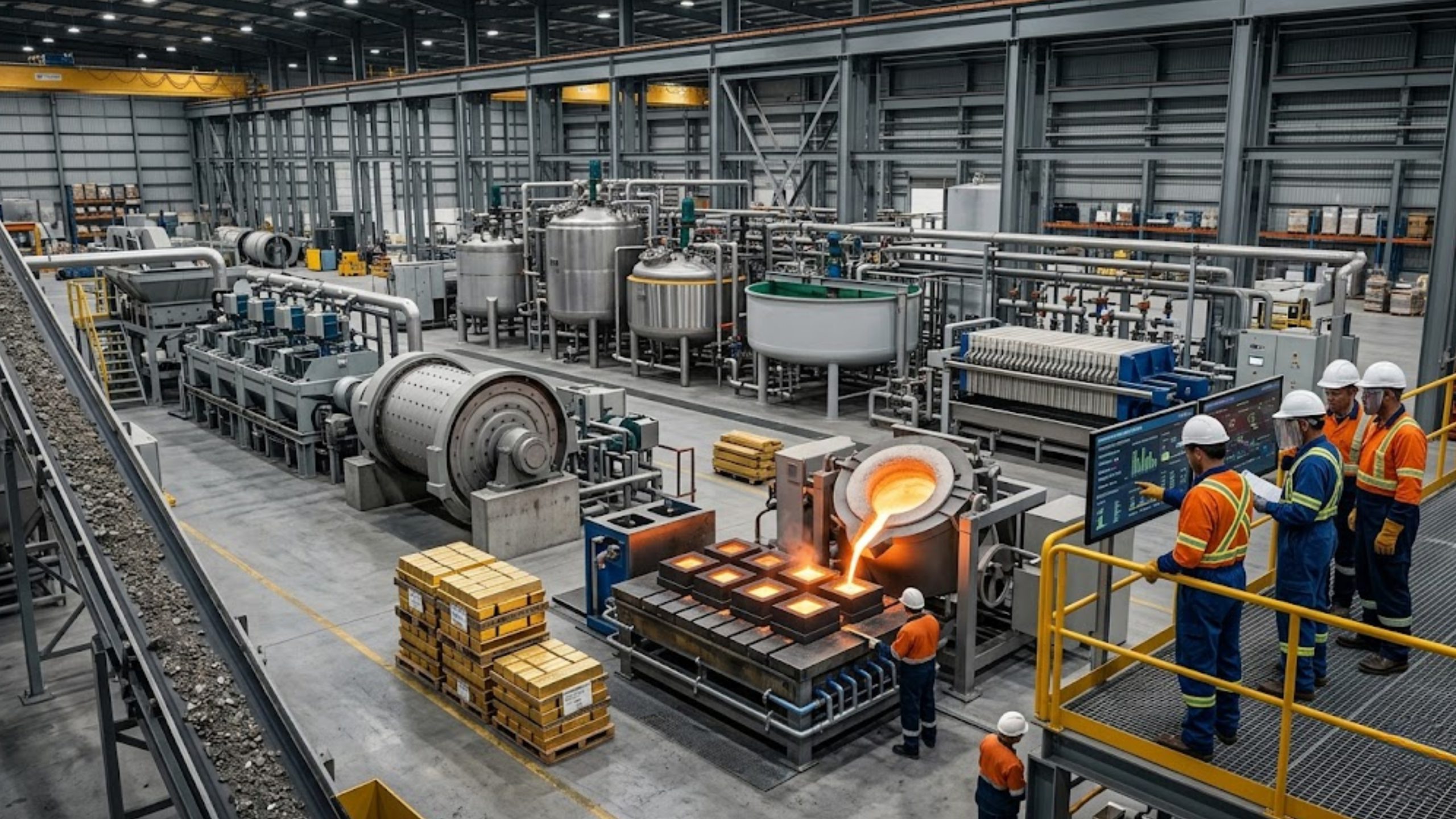
The investment required for metal refining plant depends on five main factors: feed material, process type, plant capacity, automation level, and site conditions.
A small plant handling limited daily throughput and basic purification will obviously cost much less than a fully integrated refining line with advanced controls, emission systems, laboratory support, and high-purity output. In simple terms, you are not only paying for machines. You are paying for recovery efficiency, purity level, safety, environmental compliance, and long-term operating stability.
Think of refining like a high-performance water filtration system. Dirty water can be filtered in a basic setup, but if you need ultra-pure water for industrial use, you need more stages, better controls, and higher-quality equipment. Metal refining works in a similar way. The cleaner and more consistent your final product must be, the more carefully your plant must be designed.
For buyers and investors, this means the smartest decision is not always the cheapest plant. It is the plant that gives you the best balance of capital cost, operating cost, throughput, recovery, and market value of the refined metal.
2. Why Demand Is Growing in Small-Mining Regions
Countries such as Peru, Bolivia, Mexico, Colombia, Ghana, Tanzania, Indonesia, and the Philippines have strong demand potential because they have many small mines, medium-scale operators, traders, and regional concentrate suppliers.
In these markets, miners often face the same problems:
Long transport distances to refiners
High toll refining charges
Delayed payments
Losses from impurities and poor process control
Limited access to professional metallurgical support
A local or regional refining plant can solve these pain points. It can shorten supply chains, improve transparency, increase metal recovery, and create a stronger local value-added business. That is why the investment required for metal refining plant is now attracting attention not only from mine owners, but also from trading companies, engineering groups, and private investors.
For industrial buyers, this is also a supply security issue. Local refining can help stabilize access to refined metals, especially in regions where raw material is available but processing infrastructure is weak.
3. What Drives Refining Plant Investment Cost
Before you estimate budget, you need to understand what actually changes the project cost.
Feed Material Type
Different raw materials require different treatment routes. Oxide ore, sulfide concentrate, dore, scrap metal, or mixed secondary feed all need different process configurations. A plant handling cleaner feed will usually be simpler than one dealing with variable-grade material.
Target Metal and Purity
Refining base metals is different from refining precious metals. If your output must meet high-purity industrial or export standards, you may need more process stages, tighter controls, and laboratory testing.
Plant Capacity
A 10 TPD plant can often be modular and compact. A 500 or 1000 TPD plant needs larger reaction systems, storage, utilities, automation, and civil works. Capacity affects almost every cost line.
Process Route
Common refining routes may include crushing, grinding, leaching, precipitation, solvent extraction, electrowinning, smelting, filtration, drying, and casting. More stages usually mean higher cost but may also mean better recovery.
Location and Infrastructure
Remote sites need more spending on power supply, water systems, roads, construction logistics, and workforce support. In some countries, import duties and permitting also change the economics.
Environmental and Safety Compliance
A professionally designed plant includes dust collection, fume handling, wastewater treatment, chemical storage, and worker safety systems. These are not optional if you want a serious operation.
4. Step-by-Step Process Explanation
The exact flow depends on the metal and feed, but the general refining sequence often follows a structure like this.
Step 1: Feed Preparation
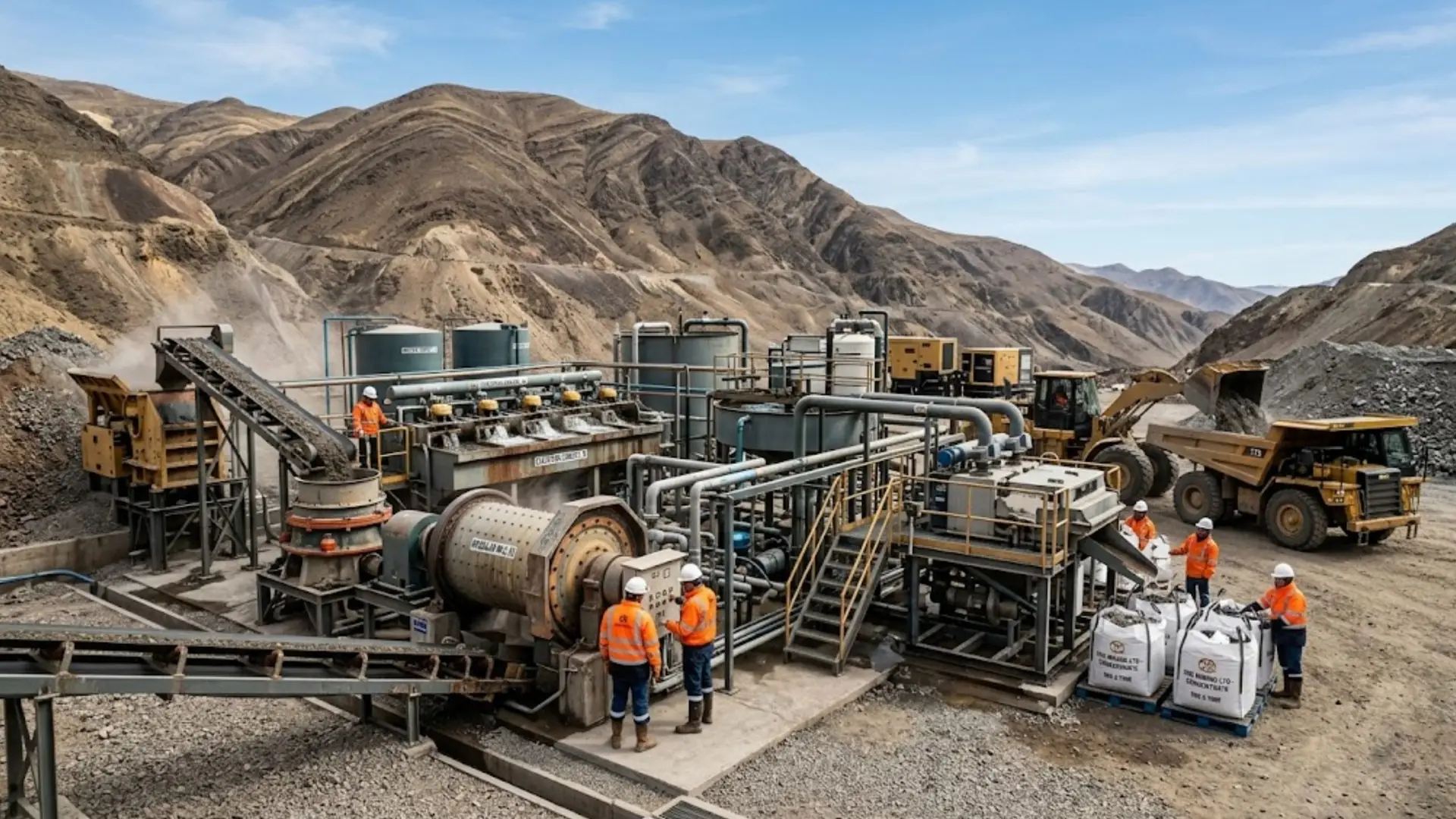
Raw material is received, sampled, weighed, and sometimes crushed or ground to prepare it for downstream treatment. Proper feed preparation improves process consistency.
Step 2: Concentration or Dissolution
The metal-bearing material is processed through a method such as leaching, smelting, or chemical dissolution. This stage separates valuable metals from gangue or unwanted components.
Step 3: Solid-Liquid Separation
Filtration, settling, or thickening is used to separate solution from residue. This stage is important for chemical recovery and clean downstream operation.
Step 4: Purification
The metal-bearing solution or intermediate product is purified by removing impurities. Depending on the plant design, this may include precipitation, neutralization, solvent extraction, ion exchange, or flux treatment.
Step 5: Metal Recovery
The purified stream is converted into saleable metal using methods such as electrowinning, precipitation, smelting, or crystallization.
Step 6: Drying and Melting
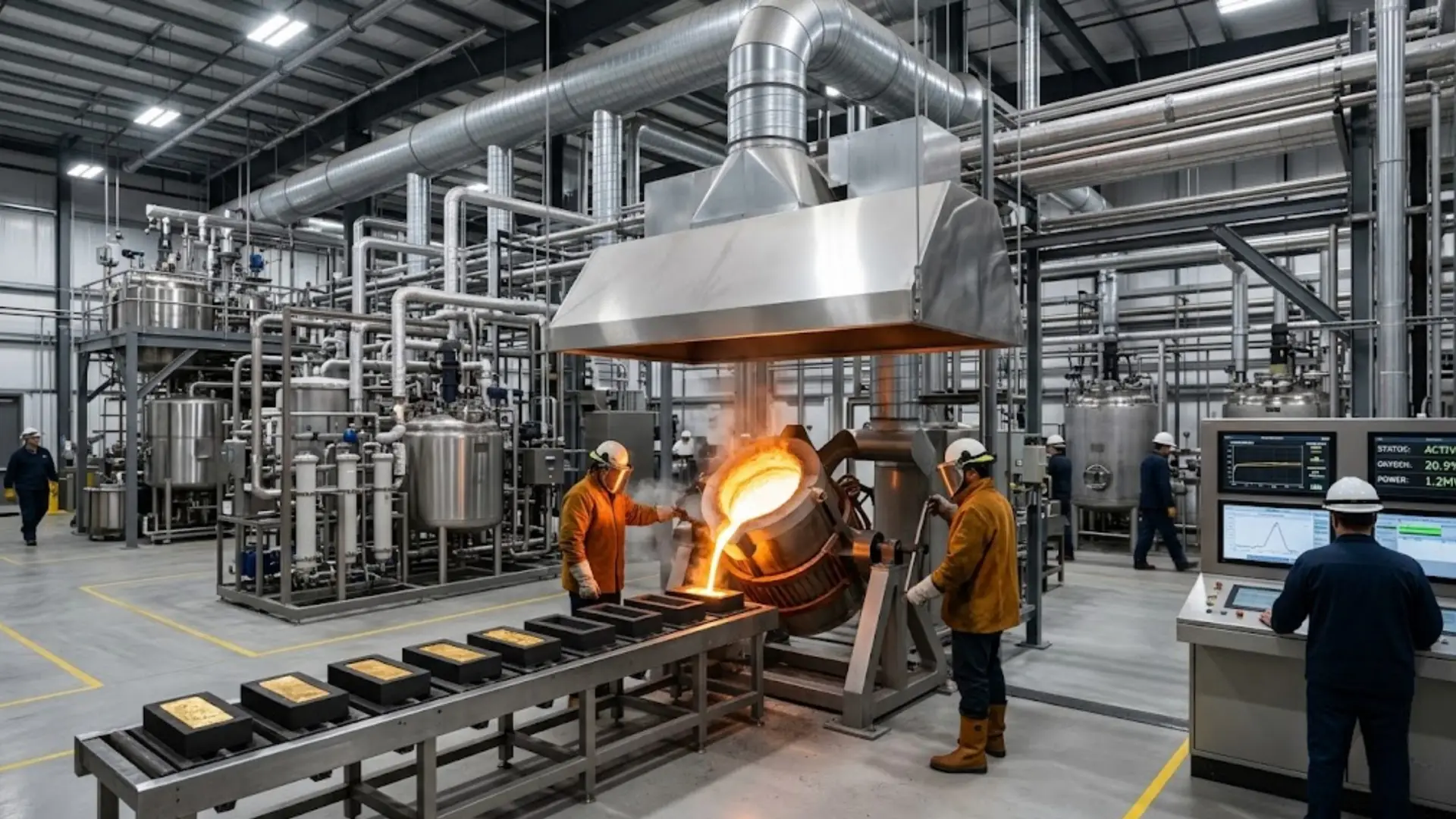
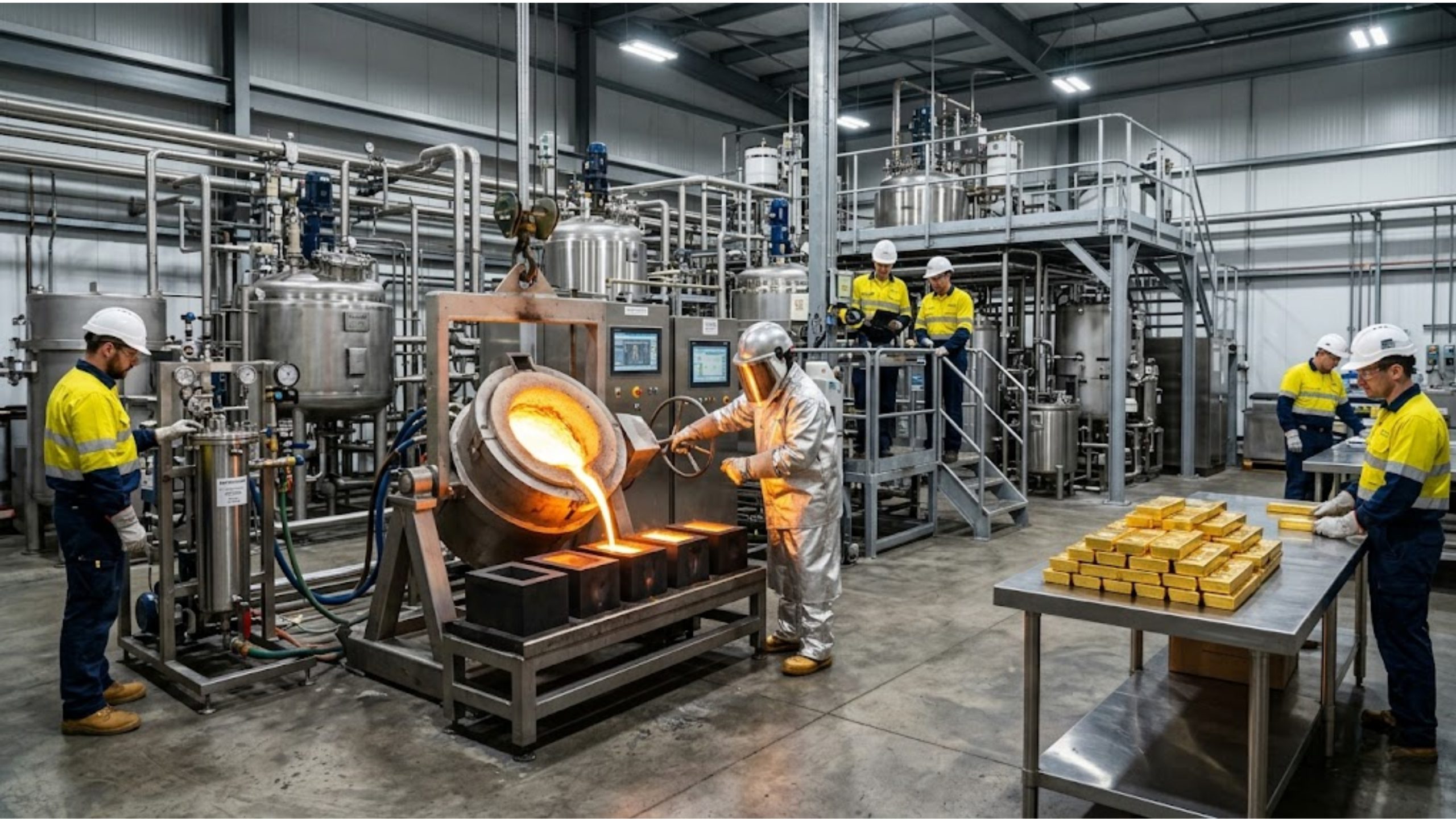
Recovered material is dried, melted, and cast into final form such as bars, ingots, cathodes, granules, or other commercial products.
Step 7: Quality Control
Samples are tested to confirm purity and metal content. Without strong quality control, even a technically functional plant can lose customer trust.
Step 8: Waste and Effluent Treatment
Residue, wastewater, fumes, and chemical leftovers must be managed responsibly. This protects both your permit status and your operating reputation.
This is why the investment required for metal refining plant should never be calculated only from the main processing machines. Supporting systems are just as important for stable production.
5. Equipment Required for a Metal Refining Plant
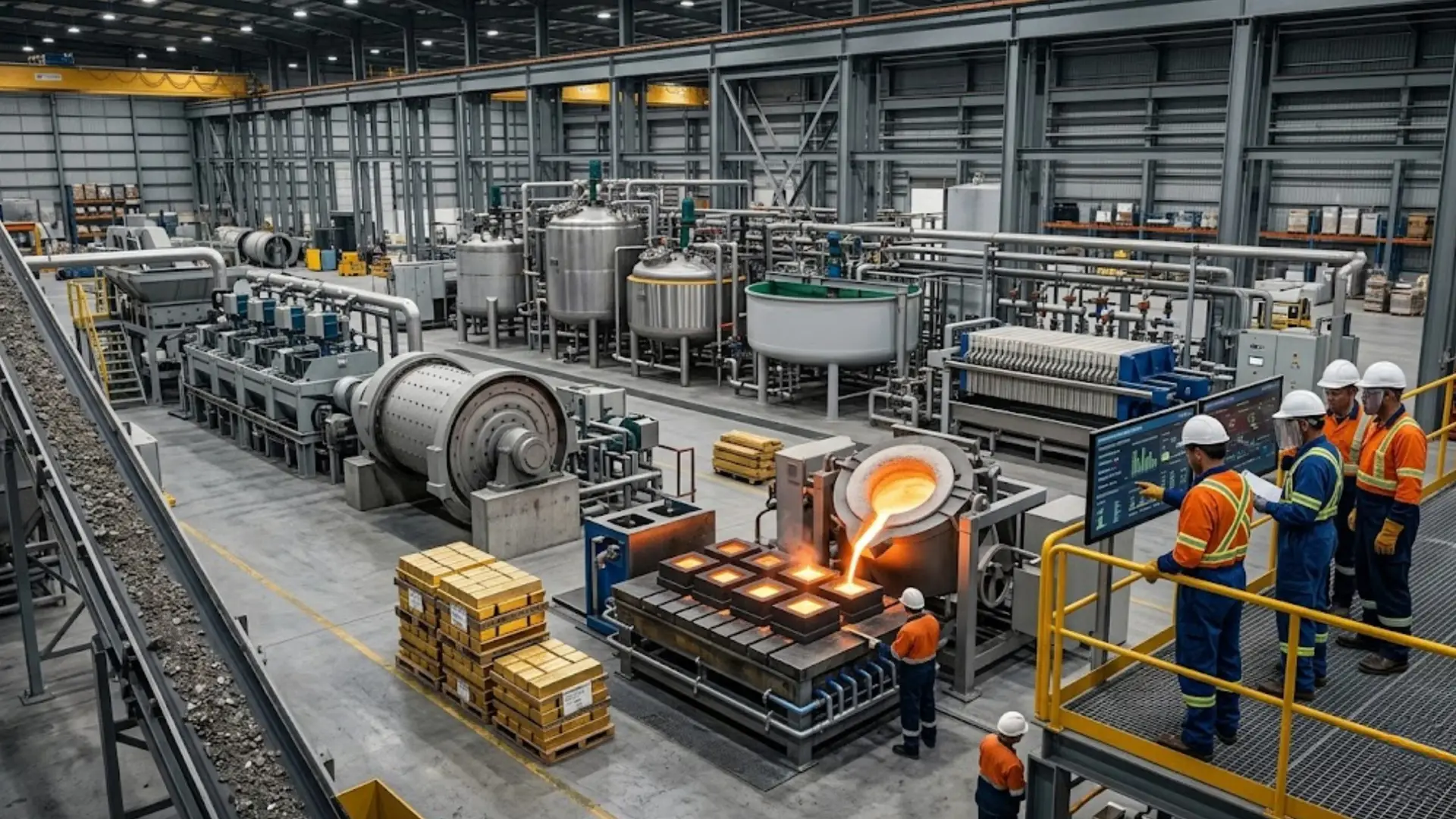
The final equipment list depends on your process, but most commercial plants include the following:
-
Feed hopper and storage bins
-
Crushers and grinders
-
Mixing tanks and reactors
-
Leach tanks or furnaces
-
Pumps and pipelines
-
Thickeners and filters
-
Precipitation tanks
-
Solvent extraction units or purification systems
-
Electrowinning cells or recovery units
-
Dryers
-
Induction furnace or melting furnace
-
Casting molds or bar-making system
-
Dust collection and fume treatment system
-
Water treatment unit
-
Laboratory assay equipment
-
Control panel and automation system
-
Chemical storage tanks
-
Material handling equipment
-
Power distribution system
-
Safety and fire protection system
For buyers comparing suppliers, the real question is not just what equipment is included. You should ask what recovery rate, purity range, uptime level, and service support come with that equipment package.
6. Plant Capacity Options from 10 to 1000 TPD
Capacity selection is one of the biggest decisions in the investment required for metal refining plant.
10 to 30 TPD
This range is suitable for pilot production, small mines, localized refining, or early-stage investors. It offers lower risk and faster installation. A modular setup is often ideal here.
50 to 100 TPD
This is a strong choice for growing mining operations and regional processors. It gives better economies of scale while keeping capital manageable.
150 to 300 TPD
This range suits mid-sized industrial operations with stable feed supply. It often requires more structured engineering, utilities, and process control.
500 to 1000 TPD
This is for large commercial operations with strong logistics, feed consistency, and long-term market strategy. At this level, detailed engineering and full environmental compliance become even more critical.
Capacity should match your real feed supply. An oversized plant can become a financial burden. An undersized plant can limit profitability and force expansion too early.
7. Energy Consumption Details
Energy is one of the most important operating cost factors. The energy load depends on process type, material hardness, heating requirements, and automation.
A plant using crushing, grinding, pumping, leaching, electrowinning, drying, and melting will consume energy across multiple points. In many projects, the biggest loads come from:
Grinding equipment
Pumps and agitators
Electrowinning cells
Dryers and furnaces
Air pollution control systems
Small plants may rely on local grid power or hybrid systems. Larger plants may need dedicated transformers, backup generators, or energy optimization systems.
As a broad planning guide:
-
Small plants usually have lower total energy use but higher energy cost per ton
-
Medium plants often achieve better efficiency per ton
-
Large plants can be more energy efficient overall, but they require larger infrastructure investment
If electricity supply is unstable, your business model must include backup solutions. Otherwise, production quality and recovery can suffer. In countries with rural mining activity, this issue can directly change project feasibility.
8. Cost Estimation: Low, Medium, and High Investment Scenarios
The investment required for metal refining plant varies widely, but a practical commercial framework can help you plan.
Low Investment Scenario
A 10 to 30 TPD modular plant with basic refining capability, limited automation, and simpler civil works may fit a lower-capital entry model. This is often suitable for small mines, toll refining startups, or regional processing hubs.
Typical cost profile includes:
Basic equipment package
Small footprint
Limited lab and automation
Lower installation complexity
Medium Investment Scenario
A 50 to 150 TPD plant with better process control, stronger environmental systems, and more complete refining stages fits a mid-range commercial setup.
Typical cost profile includes:
Expanded equipment package
Improved purification system
Better product quality control
More reliable utility systems
High Investment Scenario
A 300 to 1000 TPD industrial plant with high automation, strong environmental compliance, integrated lab support, and scalable infrastructure falls into the high-investment category.
Typical cost profile includes:
Full process integration
Advanced automation
Large utility and civil package
Higher construction and compliance cost
For most investors, total project cost includes more than equipment price. You must also include:
Engineering
Freight and import costs
Installation and commissioning
Civil construction
Electrical and piping
Permits and compliance
Training
Working capital
9. Operating Costs You Must Plan For
Capital investment gets the most attention, but operating cost determines whether the plant stays profitable.
Main operating cost categories include:
Raw Material Handling
Transport, unloading, storage, and feed preparation all affect cost per ton.
Chemicals and Reagents
Leaching agents, fluxes, neutralizers, precipitating agents, and process consumables must be budgeted carefully.
Power and Fuel
This includes electricity for mechanical systems and fuel for thermal stages where required.
Labor
Operators, supervisors, maintenance staff, metallurgists, and lab personnel all contribute to payroll.
Maintenance and Spares
Pumps, liners, filters, electrodes, motors, seals, and refractory materials need regular replacement.
Environmental Management
Wastewater treatment, residue handling, air filtration, and compliance monitoring are ongoing expenses.
Assay and Quality Control
Testing is not a luxury. It protects revenue, customer trust, and process stability.
A plant with low purchase cost but poor efficiency can become expensive very quickly. That is why serious buyers look at cost per recovered ton, not just upfront price.
10. ROI and Profitability Analysis
The return on refining investment comes from metal recovery, refining margin, throughput, and operational reliability.
A simple profitability model asks these questions:
How much feed will you process each day?
How many days per year will the plant run?
Revenue Sources
A refining plant may earn from:
Direct sale of refined metal
Toll refining charges
Recovery improvement over existing methods
Value addition from impurity removal
Regional service contracts for small miners
What Improves ROI
Stable feed supply
High recovery rate
Strong purity level
Good uptime
Efficient energy use
Low rework and low metal loss
In high-demand small-mining regions, ROI can be attractive because miners often accept local processing solutions that reduce transport and payment delays. In many cases, a refining plant becomes more than a processing unit. It becomes a regional service business.
For investors, the best projects are usually those with secured feed agreements, realistic capacity sizing, and a clear off-take strategy.
11. Comparison with Traditional Methods
Traditional metal recovery methods in many mining regions still include rudimentary smelting, informal chemical treatment, or low-control recovery systems. These methods may look cheaper at first, but they often create bigger losses.
Traditional Methods Often Struggle With:
Lower recovery
Higher impurity levels
Poor consistency
Environmental damage
Worker safety risks
Limited scalability
Modern Refining Plants Offer:
Better metal recovery
More predictable output quality
Safer chemical and thermal handling
Improved reporting and traceability
Higher-value final products
Stronger investor confidence
This is one reason the investment required for metal refining plant should be viewed as an upgrade to business quality, not only as a machinery purchase.
12. Environmental Benefits
Environmental performance is now a commercial advantage, not just a compliance issue.
A professionally designed refining plant can reduce:
Metal losses to waste
Airborne dust and fumes
Chemical discharge
Unsafe residue disposal
Water misuse
Compared with uncontrolled or traditional processing methods, modern plants can support cleaner production through closed-loop water systems, gas treatment, controlled reagent use, and managed waste handling.
This matters even more in countries where mining communities are under pressure to improve environmental standards. Buyers, exporters, regulators, and investors all prefer operations with cleaner process design.
For many projects, environmental performance also improves marketability. A plant that demonstrates responsible refining can build stronger relationships with industrial buyers and international partners.
13. Real-World Use Cases and Applications
The investment required for metal refining plant makes sense in several practical business models.
Regional Toll Refining Hub
A company builds a plant to process feed from multiple small mines in one area. This works well in countries with fragmented mining activity.
Mine-Integrated Refining Plant
A mining company adds refining capacity near its operation to capture more value from its production and reduce dependence on third parties.
Trader-Owned Processing Facility
A metal trader invests in refining to control quality, improve margin, and shorten the supply chain.
Export-Oriented Refining Operation
A plant is built to convert semi-processed material into higher-value export product that meets buyer specifications.
Industrial Recycling and Secondary Recovery
Some plants refine metal-bearing scrap or residues, turning waste into saleable product through controlled recovery.
In practice, the right model depends on feed source, local regulations, utility access, and buyer demand.
14. How to Choose the Right Plant for Your Market
Before finalizing your budget, ask these questions:
Is your feed supply secure for at least several years?
What metal purity does your target buyer require?
Do you need a modular plant or a fixed large-scale facility?
What is the local power and water situation?
What environmental permits will be required?
Can you support skilled operation and maintenance?
Will your main market be domestic buyers, exporters, or toll refining clients?
For regions like Peru, Bolivia, Mexico, Colombia, Ghana, Tanzania, Indonesia, and the Philippines, a scalable model often works best. Many successful projects start with a practical plant size and expand later as feed agreements grow.
If you are building a commercial website around this topic, related pages such as modular refining plant, gold refining plant, and mining setup guide can support stronger topical relevance and buyer intent across your site.
For project discussions, technical consultation, or commercial inquiries, you can connect with:
AVIMETAL
C/O AINFOX, 2060 Faith Industrial Dr., Buford, GA 30518
Email: jgim@avimetal.com
Text Message / WhatsApp / Telegrams: +1 470 5648883
15. Conclusion
The true investment required for metal refining plant depends on your process route, feed type, plant capacity, infrastructure, and business model. A small modular plant may be enough for a regional toll-refining opportunity, while a larger integrated facility may suit a long-term industrial strategy.
The best refining investment is not the one with the lowest sticker price. It is the one that gives you stable recovery, strong product quality, manageable operating cost, and real market demand. If you match plant size to feed supply and target the right mining regions, a refining plant can become a highly profitable and defensible industrial asset.
FAQs
1. What is the typical investment required for metal refining plant?
The typical investment required for metal refining plant depends on capacity, process complexity, automation, and site conditions. A small modular plant needs much less capital than a fully integrated industrial plant. Total budget should include equipment, engineering, installation, utilities, civil works, environmental systems, and working capital.
2. Which plant capacity is best for small mining regions?
For regions with many small and medium mines, 10 to 100 TPD is often the most practical starting range. It keeps capital more manageable while allowing local processing and future expansion. The right size depends on feed security and your commercial model.
3. Is a metal refining plant profitable?
Yes, it can be profitable when you have stable feed supply, strong recovery, controlled operating costs, and a clear sales or toll-refining model. Profitability improves when the plant reduces transport cost, improves purity, and captures more value locally.
4. What are the biggest operating costs in a refining plant?
The biggest operating costs usually include power, chemicals, labor, maintenance, assay testing, and environmental management. In some remote mining areas, energy and logistics can become especially important cost drivers.
5. How do I reduce the investment risk of a metal refining plant?
You can reduce risk by starting with the right capacity, validating feed quality, securing supply contracts, choosing proven equipment, and planning for energy, water, and environmental compliance from the beginning. A phased or modular approach often helps investors enter the market more safely.
Read more: https://avimetal.com/blogs/