Automation in Metal Refining Industry
Introduction
Metal refining is under pressure. Mining companies want higher recovery, industrial buyers want stable purity, engineers want better process control, and investors want stronger margins with lower risk. At the same time, labor shortages, energy costs, stricter environmental rules, and inconsistent feed quality are making traditional refining plants harder to manage.
This is where Automation in Metal Refining Industry becomes a serious business advantage. Automation helps you control temperature, flow, dosing, pressure, purity, and production data in real time. Instead of depending only on manual checks and operator experience, you get a more stable, measurable, and scalable refining process.
For companies working in high-demand mining regions such as Peru, Bolivia, Mexico, Colombia, Ghana, Tanzania, Indonesia, and the Philippines, automation is especially valuable. Many operations in these markets are expanding from small or mid-scale setups and need systems that improve output without creating unnecessary complexity. If you are planning a new plant or upgrading an existing one, automation can improve quality, reduce losses, and make your operation easier to scale.
Table of Contents
| Sr# | Headings |
|---|---|
| 1 | What Is Automation in Metal Refining Industry |
| 2 | Why Automation Matters for Modern Refining Plants |
| 3 | How an Automated Metal Refining Plant Works |
| 4 | Step-by-Step Process Explanation |
| 5 | Main Equipment Used in Automated Refining |
| 6 | Plant Capacity Options from 10 TPD to 1000 TPD |
| 7 | Energy Consumption Details |
| 8 | Cost Estimation for Different Plant Sizes |
| 9 | ROI and Profitability Analysis |
| 10 | Comparison with Traditional Refining Methods |
| 11 | Environmental Benefits of Automation |
| 12 | Real-World Use Cases and Applications |
| 13 | What Buyers, Engineers, and Investors Should Evaluate |
| 14 | Best Countries and Market Fit for Automation Projects |
| 15 | How to Choose the Right Automation Partner |
1. What Is Automation in Metal Refining Industry
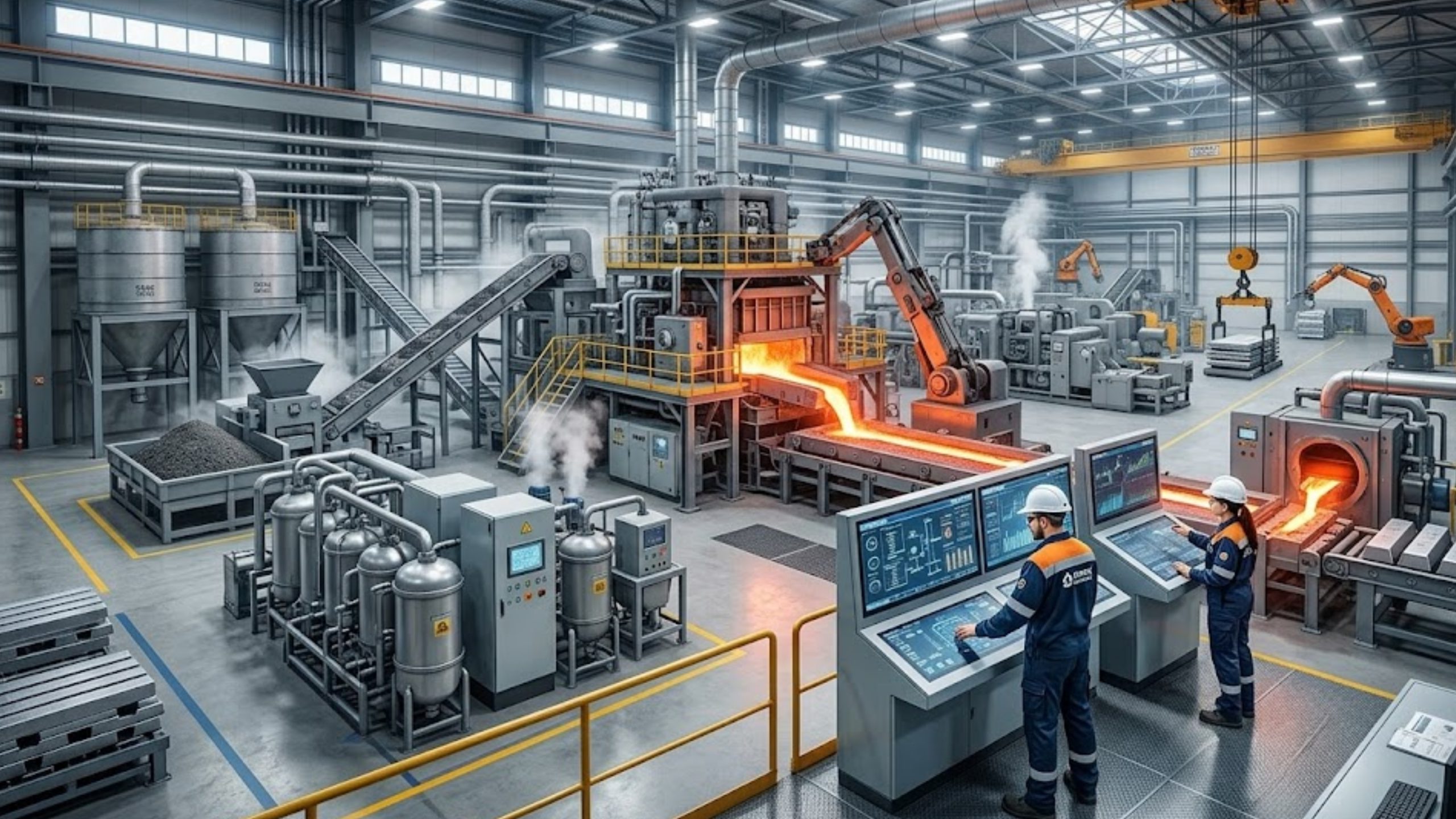
Automation in Metal Refining Industry means using sensors, control systems, software, programmable logic controllers, automated valves, dosing systems, and data monitoring tools to run refining operations with less manual intervention.
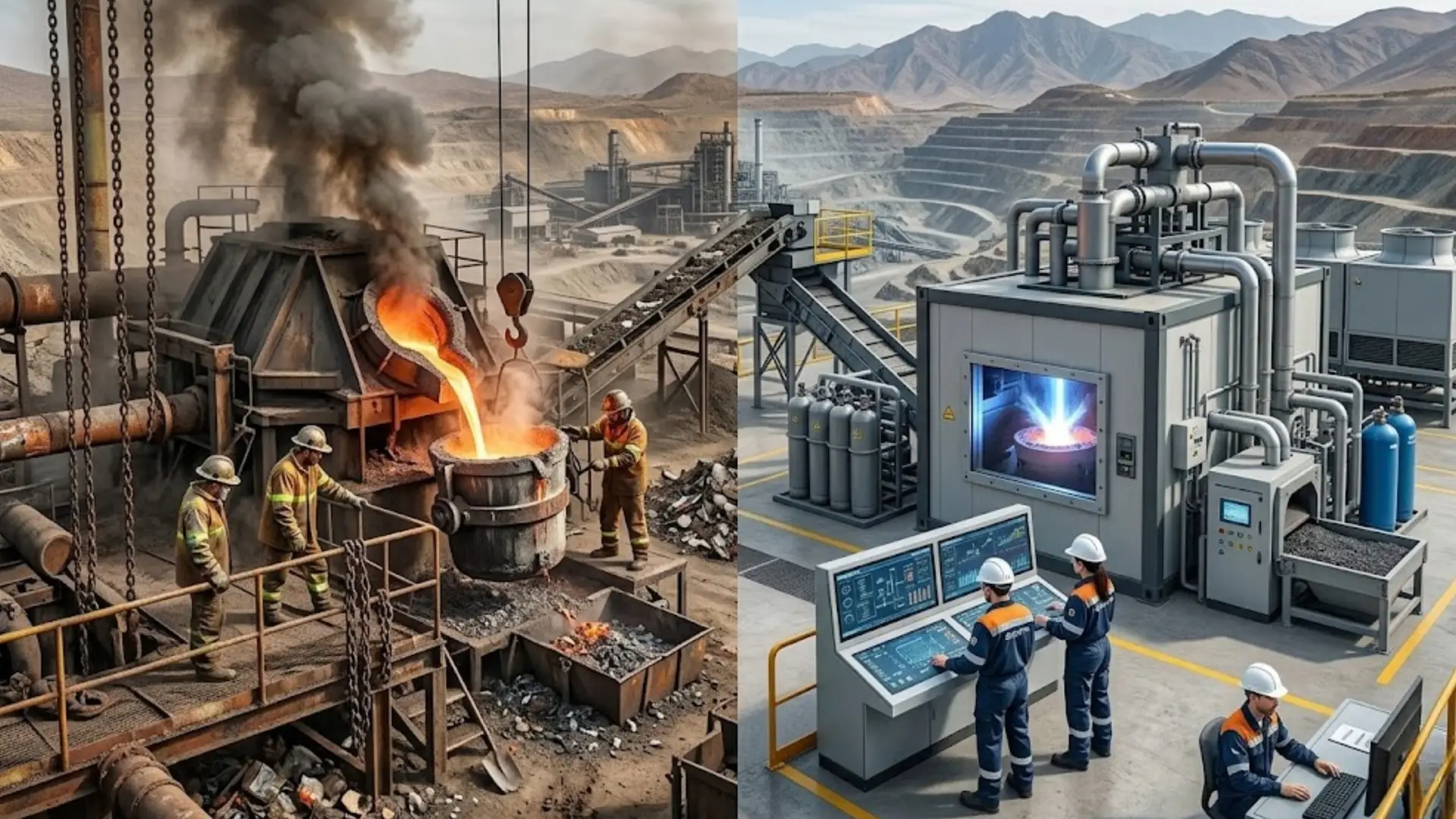
In a traditional plant, operators may manually adjust burners, chemical dosing, agitation speed, or cooling cycles based on experience. In an automated plant, those variables are monitored continuously and corrected automatically to stay within target limits.
You can think of it like water filtration at home. If the filter works at the right pressure and flow, you get clean water every time. If pressure changes too much or the filter is overloaded, quality drops. Metal refining works in a similar way. Automation keeps the “filtering and purification” conditions stable, so the final metal quality stays consistent.
This matters for gold, silver, copper, lead, zinc, tin, and other metals where purity, recovery rate, and operating safety are critical.
2. Why Automation Matters for Modern Refining Plants
A refining plant is not just a furnace and a tank. It is a chain of connected steps where one small variation can affect the final result.
Automation in Metal Refining Industry helps solve these problems by making plant performance more predictable.
Key business benefits
Better purity consistency because process variables stay within target ranges.
Lower metal loss through accurate dosing, temperature control, and reduced over-processing.
Higher throughput because downtime and manual delays are reduced.
Safer operations because fewer high-risk tasks depend on direct human intervention.
Easier reporting through digital records of production, energy, alarms, and quality data.
For mining companies in remote regions, automation also reduces dependence on highly specialized manual operators. That can be a major advantage where skilled labor is limited or turnover is high.
3. How an Automated Metal Refining Plant Works
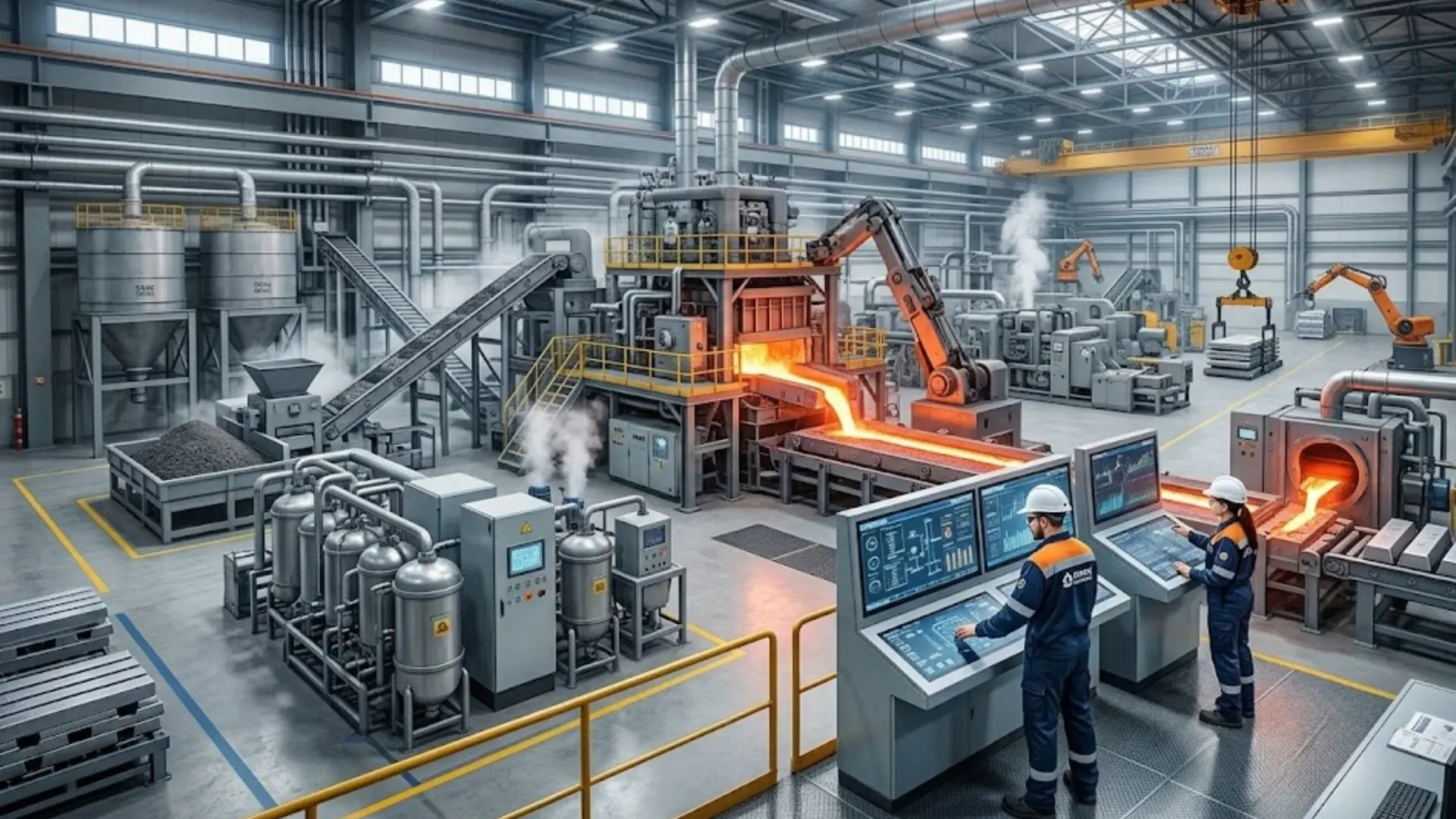
An automated refining plant combines mechanical equipment with electrical control and process intelligence. It is designed so the plant can “sense, decide, and respond” during operation.
Core automation layers
Field layer: sensors, transmitters, thermocouples, flow meters, level sensors, pressure sensors, load cells.
Control layer: PLCs, variable frequency drives, control panels, motor starters, valve actuators.
Supervisory layer: HMI screens, SCADA systems, alarms, data logging, trend analysis.
Optimization layer: recipe control, predictive maintenance, production dashboards, remote monitoring.
In practical terms, if feed material enters with a different composition, the system can adjust reagent dosing, holding time, furnace profile, or electrolyte settings based on pre-set logic. That leads to more stable metal output and fewer operator errors.
Many buyers reviewing a modular refining plant now expect this type of built-in control because it shortens commissioning time and improves long-term reliability.
4. Step-by-Step Process Explanation
The exact process depends on the metal and refining route, but the basic structure is similar across many plants.
Step 1: Feed preparation
Ore concentrate, doré, scrap, matte, or impure metal is sampled, weighed, and classified. Automated weighing systems and feed conveyors help maintain stable input rates.
Step 2: Pre-treatment
Drying, crushing, flux blending, or chemical conditioning may be required. Automated mixers and feeders improve batch uniformity.
Step 3: Smelting or melting
Material enters a furnace, induction system, or reactor. Temperature sensors and burner controls keep thermal conditions stable.
Step 4: Separation of impurities
Slagging, oxidation, electrorefining, leaching, precipitation, or filtration removes unwanted elements. Automation ensures correct timing, chemical dosage, and agitation speed.
Step 5: Refining control
This is where fine adjustment matters most. Automated systems manage temperature windows, retention time, pH, current density, electrolyte chemistry, or gas flow.
Step 6: Casting or product discharge
The purified metal is cast into bars, ingots, cathodes, granules, or other forms. Automated casting systems reduce shape variation and handling losses.
Step 7: Quality testing
Inline analyzers and digital lab integration speed up quality verification and traceability.
Step 8: Data reporting
Production, energy, metal recovery, and alarm history are recorded automatically. This supports management decisions and investor reporting.
When integrated properly, Automation in Metal Refining Industry turns refining from a mainly operator-driven activity into a data-driven production system.
5. Main Equipment Used in Automated Refining
Below is a practical equipment list commonly used in automated refining plants.
-
Feed hoppers and conveyors
-
Belt weighers or load cells
-
Crushers or grinders where needed
-
Dryers or pre-heaters
-
Mixing tanks and agitators
-
Dosing pumps for reagents and flux
-
Induction furnaces or smelting furnaces
-
Electrorefining cells
-
Rectifiers and power control systems
-
Filtration units
-
Cooling systems
-
Casting machines or molds
-
Dust collection systems
-
Gas scrubbing systems
-
PLC control panels
-
SCADA or HMI interfaces
-
Temperature, pressure, level, and flow sensors
-
Sampling and assay integration systems
-
Backup power and emergency shutdown systems
For specialized projects such as a gold refining plant, equipment selection may also include acid handling systems, precipitation reactors, and precision dosing controls for higher-purity output.
6. Plant Capacity Options from 10 TPD to 1000 TPD
One of the strongest advantages of Automation in Metal Refining Industry is scalability. You can start with a small unit and expand as supply grows.
10 to 30 TPD
Best for pilot operations, small mines, regional aggregators, and early-stage investors. This range is common in countries with many small mining operations. It offers lower capital risk and faster deployment.
50 to 100 TPD
Suitable for established local refiners and medium-scale mining groups. This range balances manageable capex with meaningful commercial production.
150 to 300 TPD
Good for industrial processors with multiple feed sources. Automation becomes more valuable here because manual control starts to create bottlenecks.
500 to 1000 TPD
Best for large integrated operations or centralized regional hubs. At this scale, automation is not optional. Without advanced control, losses, downtime, and quality variability can become expensive very quickly.
For companies studying expansion, a phased design linked to a mining setup guide is often the smartest approach. It allows you to start with a smaller module and add new units as feed security improves.
7. Energy Consumption Details
Energy use is one of the biggest operating cost drivers in refining. That is why automation has a direct financial impact.
Energy consumption depends on metal type, feed condition, furnace type, moisture content, chemical route, and final purity target. Still, some broad patterns are useful.
Typical energy drivers
Melting and smelting require high thermal energy.
Electrorefining requires steady electrical energy over longer periods.
Drying and pre-treatment can consume significant heat if feed moisture is high.
Pumps, agitators, blowers, and conveyors add continuous auxiliary load.
How automation reduces energy waste
Better temperature control reduces overheating.
Variable frequency drives reduce wasted motor power.
Timed batch sequences avoid idle heating.
Load balancing improves power stability.
Real-time alarms prevent energy loss from process drift or equipment failure.
In many plants, automation can reduce avoidable energy waste by 8% to 20%, depending on the starting condition of the operation. In regions where power is costly or unstable, that improvement can make a major difference to project viability.
8. Cost Estimation for Different Plant Sizes
Cost depends on metal, purity target, construction location, imported components, environmental controls, and degree of automation. Still, buyers usually compare projects in three broad budget levels.
Low-cost setup
Usually basic automation, limited digital monitoring, smaller capacity, and simpler process flow.
Estimated range: suitable for small units around 10 to 30 TPD.
Best for: pilot projects, small mines, early entry into local refining.
Medium-cost setup
Balanced automation, stronger safety systems, better quality control, and room for expansion.
Estimated range: suitable for 50 to 150 TPD.
Best for: growing mines, regional refiners, industrial processors.
High-cost setup
Advanced control architecture, high-efficiency systems, integrated environmental treatment, data analytics, and full-scale production automation.
Estimated range: suitable for 200 to 1000 TPD.
Best for: institutional investors, export-focused refiners, large mining groups.
The main point is not just capex. The real question is how much unstable quality, downtime, rework, and metal loss are costing you today. In many cases, a more automated plant looks expensive at first but performs better over the project life.
9. ROI and Profitability Analysis
For decision-makers, the most important issue is not whether automation looks modern. It is whether it pays back.
Automation in Metal Refining Industry improves profitability in several ways at the same time.
Direct profitability drivers
Higher recovery rates mean more sellable metal from the same feed.
Lower labor dependency reduces cost and operational risk.
Less rework lowers chemical and energy waste.
Reduced downtime improves annual output.
Better purity consistency supports stronger selling prices and buyer confidence.
Example ROI logic
Imagine a plant processing 100 TPD with fluctuating feed. If automation improves recovery by even 1% to 2%, reduces unplanned downtime by 10%, and cuts energy waste by 12%, the financial impact can be substantial over one year.
For higher-value metals, even small process gains can produce strong returns. That is why investors often see automation as margin protection, not just equipment spending.
Typical payback range
For many mid-scale projects, automation upgrades can show payback in 12 to 36 months, depending on metal value, production hours, baseline losses, and energy pricing.
10. Comparison with Traditional Refining Methods
Traditional refining still exists in many regions, especially where plants grew over time without full modernization. These systems can work, but they often depend heavily on operator skill and manual judgment.
Traditional methods
Manual temperature adjustment
Manual reagent addition
Paper-based tracking
Limited alarm systems
Inconsistent batch repeatability
Higher exposure to human error
Automated methods
Sensor-based control
Precision dosing
Digital records and traceability
Automatic alarms and shutdown logic
Repeatable recipes
Better quality consistency
If traditional refining is like cooking by eye, automated refining is like using a programmed industrial oven with exact time and temperature control. Both can produce results, but one is far more consistent and scalable.
For export-focused plants or refineries serving industrial buyers, that consistency matters. Buyers want confidence that every batch will meet specification.
11. Environmental Benefits of Automation
Environmental performance is now a commercial issue, not just a compliance issue. Poor emission control, wasted reagents, and unmonitored discharge can damage permits, reputation, and long-term project economics.
Automation in Metal Refining Industry improves environmental performance by helping you use less, waste less, and control more.
Main environmental benefits
Lower fuel waste through controlled heating.
Reduced chemical overuse through precise dosing.
Better dust and fume control through monitored ventilation and scrubbing systems.
Improved water management through controlled circulation and treatment.
Lower reject and rework volumes because process stability is higher.
This is especially important in countries where small mines and regional processors are facing increased pressure to formalize and improve environmental standards. Automation can help operations move from reactive compliance to controlled, measurable performance.
12. Real-World Use Cases and Applications
Different metals and business models use automation in different ways.
Small mine aggregation hubs
In Peru, Bolivia, Ghana, and Tanzania, small mining groups often need local refining capacity that is cleaner, more efficient, and easier to standardize. A compact automated plant can help consolidate material and improve final sale value.
Precious metal refining
Gold and silver refining benefit from precision dosing, controlled temperature, and better traceability. This is particularly important where purity claims affect price directly.
Base metal upgrading
Copper, lead, zinc, and tin processors use automation to stabilize throughput, improve separation, and reduce energy intensity.
Export-oriented refineries
Companies serving industrial buyers in international markets need stable product quality, digital reporting, and better compliance records. Automation supports all three.
Brownfield plant upgrades
Existing refineries can often improve performance without a full rebuild. Adding control panels, sensors, data logging, and automated dosing can deliver strong gains at lower cost than a greenfield project.
13. What Buyers, Engineers, and Investors Should Evaluate
If you are buying or funding a refinery project, do not focus only on nameplate capacity. Ask deeper questions.
For mining companies
Can the system handle variable feed quality?
Can it scale as production grows?
How much manual intervention is still required?
For industrial buyers
How stable is final purity?
What traceability data is available?
How reliable is the plant across different batches?
For engineers
Is the control architecture practical for local conditions?
Are spare parts accessible?
Can the automation system be maintained by the local team?
For investors
What is the expected payback period?
How sensitive is ROI to energy cost and metal price?
Does the plant reduce compliance and operating risk?
The best projects balance metallurgy, automation, logistics, and market access together.
14. Best Countries and Market Fit for Automation Projects
From a marketing and project development perspective, the best target markets are regions with many small to medium mining operations and growing interest in local value addition.
Peru, Bolivia, Mexico, Colombia, Ghana, Tanzania, Indonesia, and the Philippines are especially relevant because they combine mineral activity with rising demand for more organized and efficient processing solutions.
In these markets, Automation in Metal Refining Industry is attractive for three reasons.
First, many operations need modular growth rather than oversized plants.
Second, labor quality and process consistency can vary, so automation improves reliability.
Third, local and export buyers increasingly prefer better traceability, cleaner production, and higher-purity output.
For companies selling plant solutions, this means your content and commercial messaging should focus on practical outcomes: lower losses, scalable capacity, faster ROI, easier operation, and stronger compliance.
15. How to Choose the Right Automation Partner
Choosing the right supplier or engineering partner is one of the most important decisions in any refining project.
Look for a company that understands both metallurgy and industrial automation. A control system alone is not enough. The process logic must match the real behavior of the material being refined.
A strong partner should offer plant design support, equipment integration, automation architecture, commissioning guidance, operator training, and after-sales service. They should also understand how to adapt solutions for countries where mining operations may be remote, modular, or developing in phases.
If you are planning an automation project, it is important to work with a team that can translate technical design into practical plant performance.
Avimetal provides industrial support for refining and plant solutions.
Website: avimetal.com
Address: C/O AINFOX, 2060 Faith Industrial Dr., Buford, GA 30518
Email: jgim@avimetal.com
Text Message / WhatsApp / Telegram: +1 470 564 8883
Conclusion
Automation in Metal Refining Industry is no longer a premium extra. It is becoming a core requirement for plants that want better purity, stronger recovery, lower operating cost, and more reliable growth.
If you want a refining plant that is scalable, efficient, and commercially competitive, automation should be built into the project from the start.
FAQs
What is the main benefit of automation in metal refining industry?
The main benefit is better process control. Automation helps you maintain stable temperature, dosing, flow, and refining conditions, which improves purity, lowers losses, reduces downtime, and increases profitability.
How much does an automated metal refining plant cost?
Cost depends on capacity, metal type, level of automation, environmental systems, and location. Small plants with basic automation cost less, while larger integrated plants with advanced controls and emission systems require higher investment.
What plant capacity is best for small mining operations?
For many small and medium mining operations, 10 to 100 TPD is a practical starting range. It offers manageable capital cost, easier installation, and room for future expansion as feed availability improves.
Is automation in metal refining industry profitable?
Yes, in many cases it is highly profitable. Automation can improve metal recovery, reduce energy waste, cut manual errors, lower downtime, and increase product consistency, all of which support stronger ROI.
Can traditional refining plants be upgraded with automation?
Yes, many traditional plants can be upgraded step by step. Common improvements include sensors, PLC controls, automated dosing, digital monitoring, alarm systems, and better reporting tools without needing a full plant rebuild.
Read more: https://avimetal.com/blogs/