Equipment List for Gold Refinery Plant
Introduction
Gold producers, mine owners, and industrial buyers often face the same challenge: how do you choose the right refinery setup without overspending, under-sizing, or buying equipment that does not match your ore source and business goal? That is where a clear understanding of the Equipment List for Gold Refinery Plant becomes critical.
If you are planning a new gold refining line, upgrading an existing facility, or evaluating an investment opportunity, you need more than a simple machine list. You need to know how each unit fits into the process, what capacity range makes sense, how much energy the plant may consume, and where profitability really comes from.
This guide is written for mining companies, engineers, industrial buyers, and investors in high-demand gold markets such as Peru, Bolivia, Mexico, Colombia, Ghana, Tanzania, Indonesia, and the Philippines. These regions have many small and mid-sized mines, so practical, scalable, and cost-aware refinery planning matters a lot. In this article, you will learn the full Equipment List for Gold Refinery Plant, the refining workflow, cost and ROI factors, and how to choose a plant that supports long-term growth.
| Sr# | Headings |
|---|---|
| 1 | Overview of Equipment List for Gold Refinery Plant |
| 2 | Why the Right Equipment Selection Matters |
| 3 | Step-by-Step Gold Refining Process Explanation |
| 4 | Core Equipment List for Gold Refinery Plant |
| 5 | Supporting and Auxiliary Equipment |
| 6 | Plant Capacity Options from 10 TPD to 1000 TPD |
| 7 | Energy Consumption Details |
| 8 | Cost Estimation for Different Plant Sizes |
| 9 | ROI and Profitability Analysis |
| 10 | Comparison with Traditional Methods |
| 11 | Environmental Benefits of Modern Refinery Plants |
| 12 | Real-World Use Cases and Applications |
| 13 | How to Choose the Right Plant for Your Market |
| 14 | Conclusion |
| 15 | FAQs |
Overview of Equipment List for Gold Refinery Plant
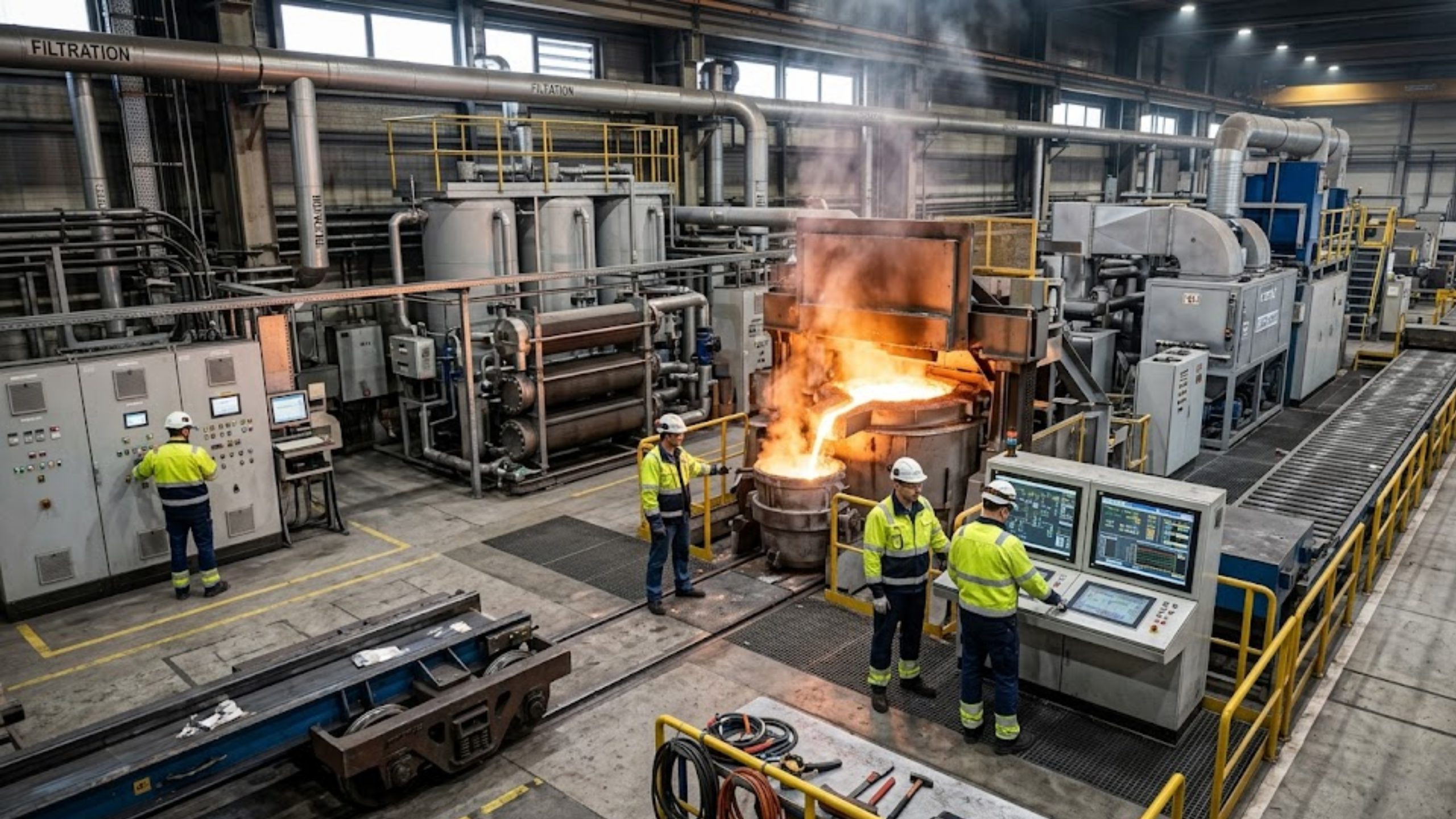
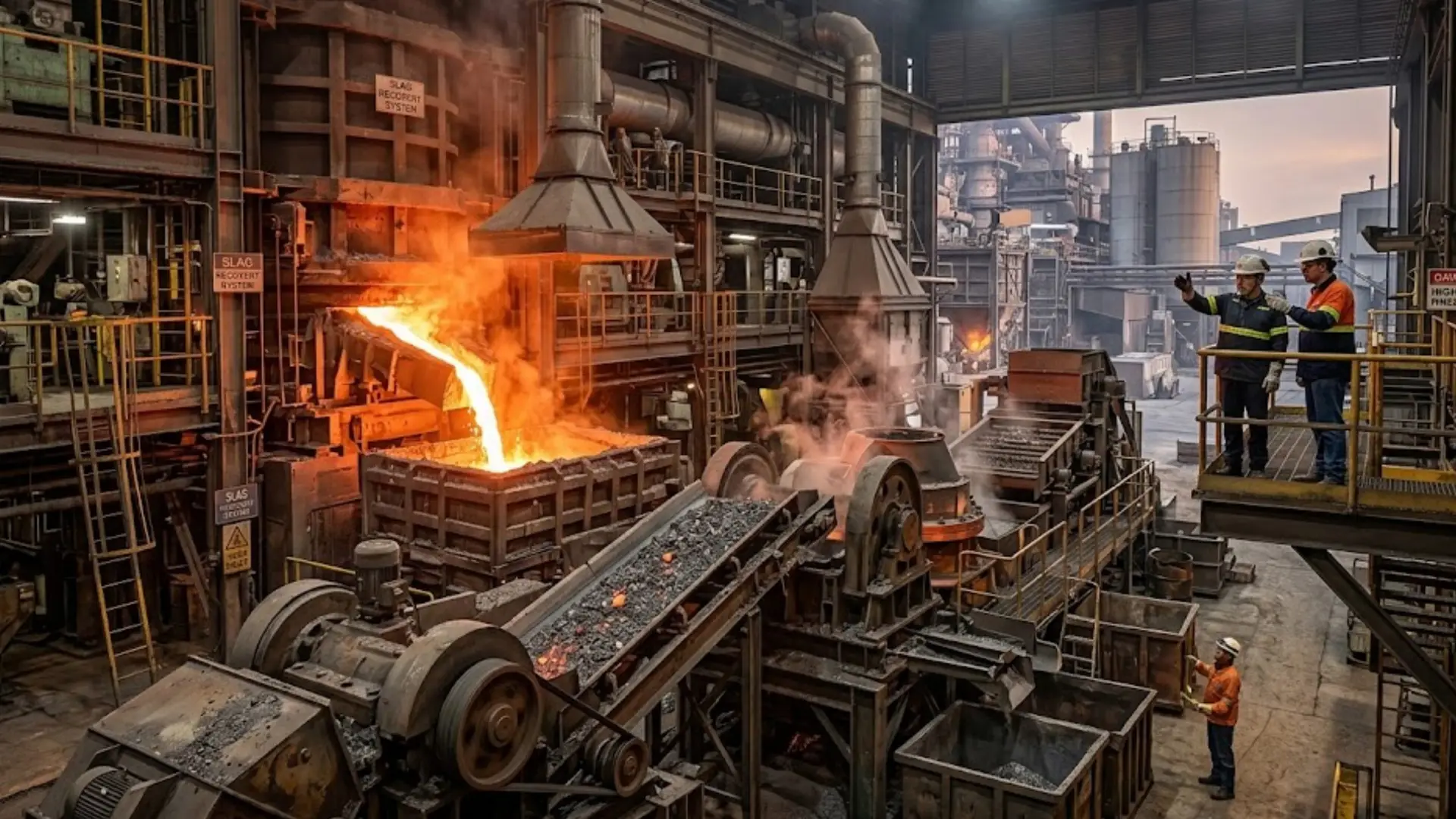
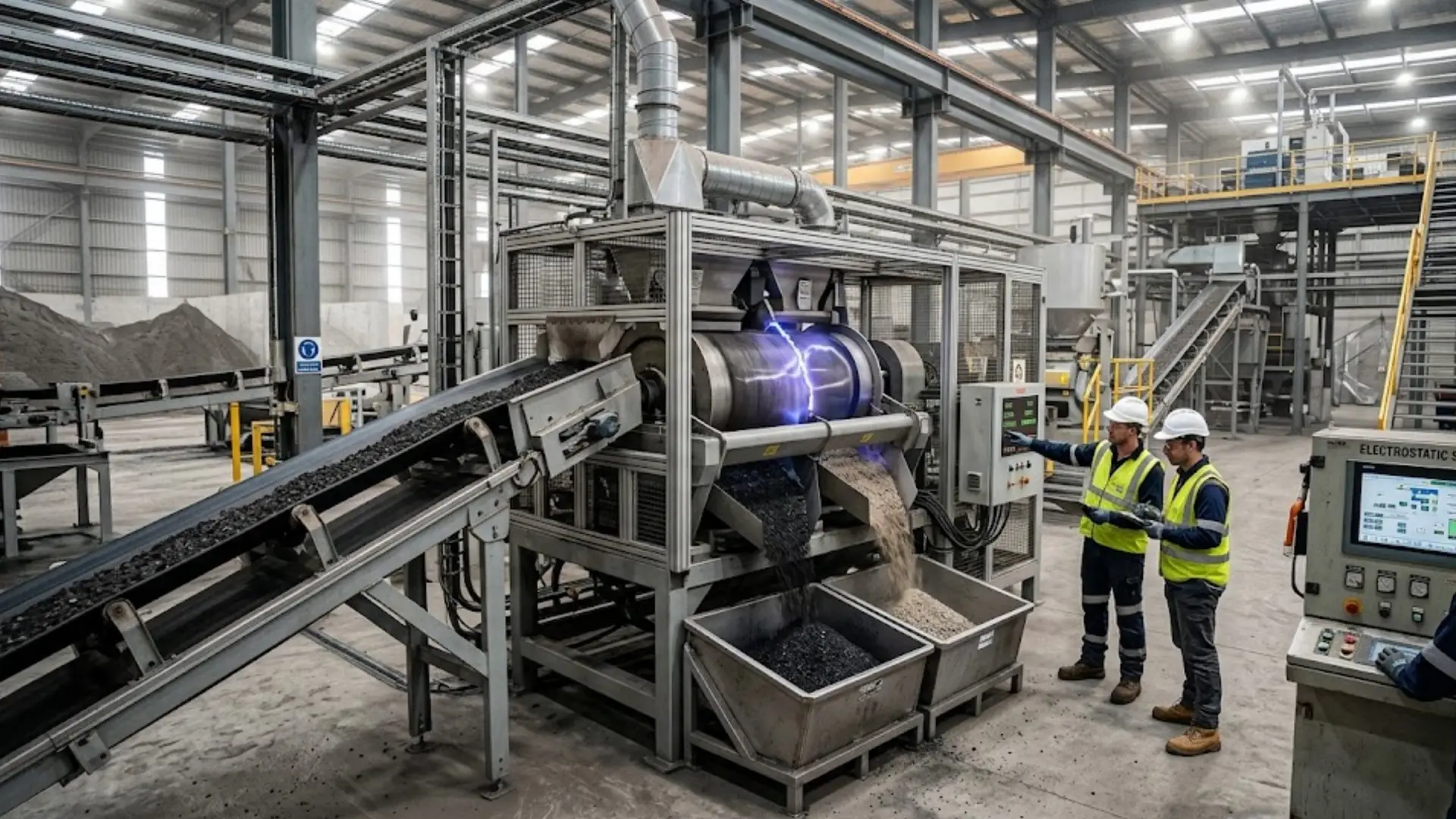
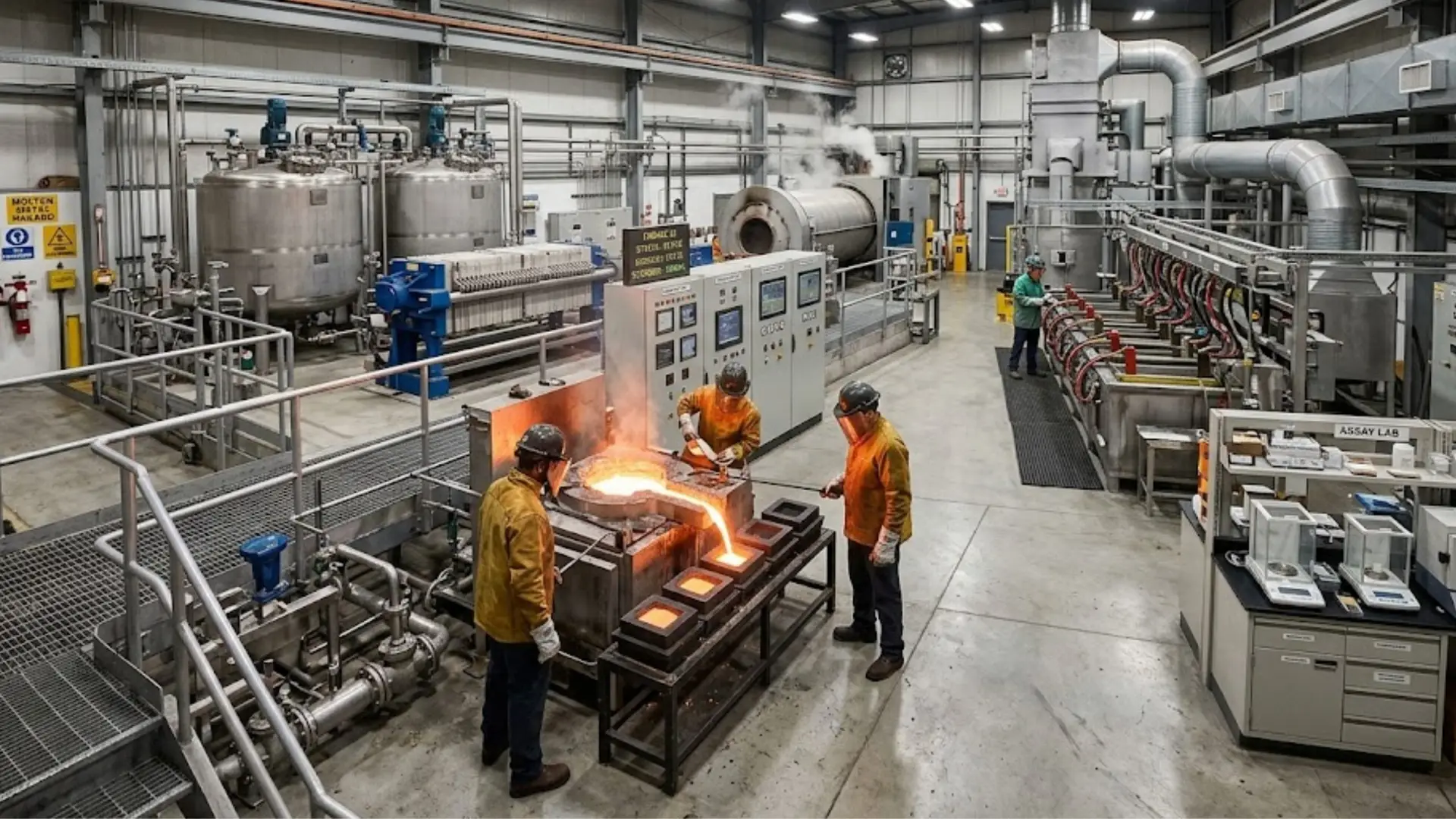
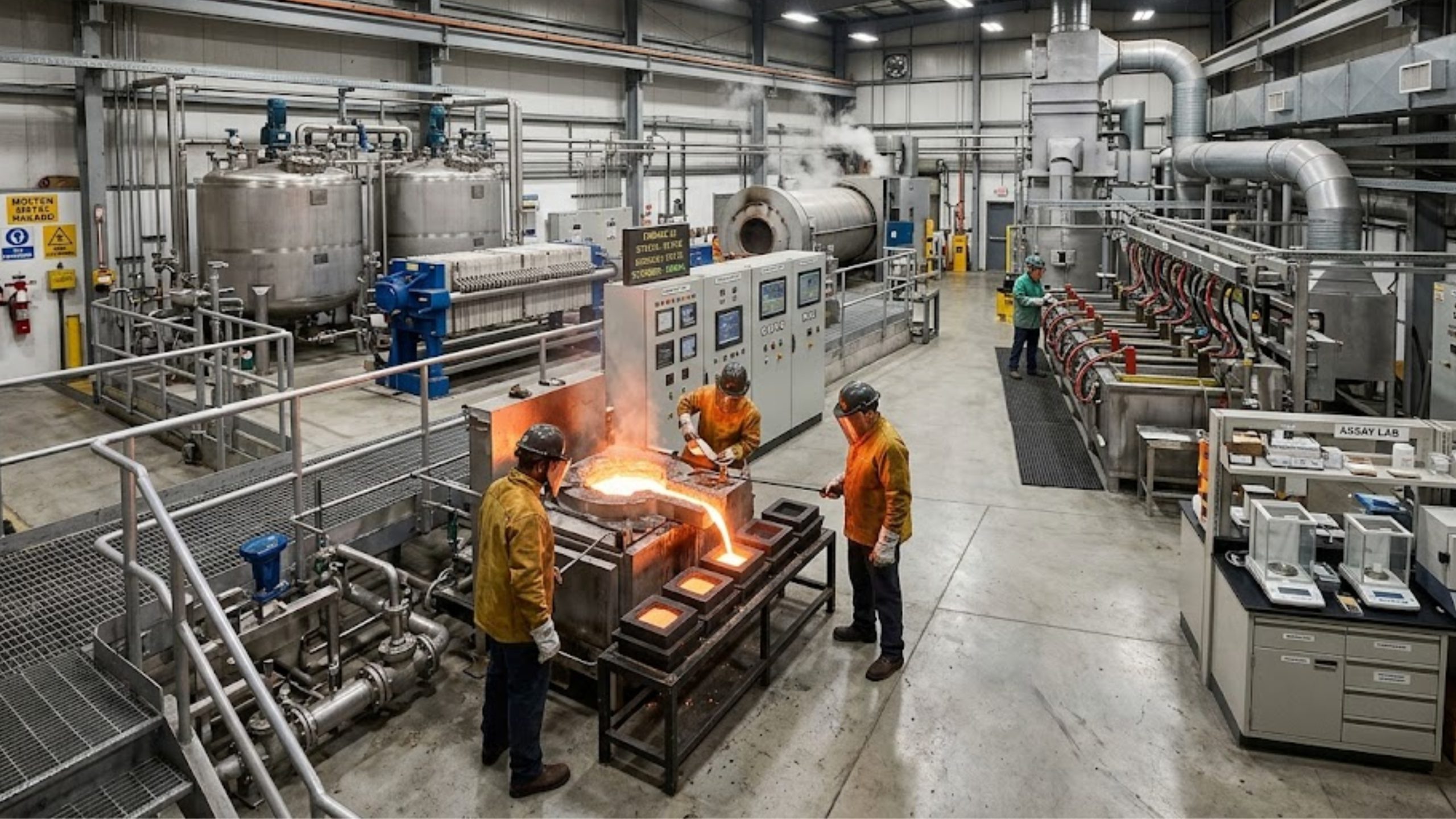
The term Equipment List for Gold Refinery Plant refers to the complete set of machines, process units, safety systems, and support utilities used to convert impure gold-bearing material into high-purity refined gold. Depending on the feed material, the plant may process dore bars, gold concentrates, scrap gold, or precipitated gold sludge.
A refinery plant is not just one furnace or one chemical tank. It is a connected system. Each machine performs a specific job, such as melting, chemical treatment, filtration, washing, drying, smelting, assaying, and emission control. When these machines are selected properly, the plant becomes safer, more efficient, and more profitable.
You can think of refining like filtering dirty water through multiple stages. At each stage, more unwanted material is removed until you get a cleaner final result. Gold refining works in a similar way. Instead of dirt and sand, the plant removes silver, copper, iron, zinc, and other impurities until the final bullion reaches the required purity.
For industrial buyers, the real value of a strong Equipment List for Gold Refinery Plant is that it reduces downtime, improves recovery, and makes capacity planning easier from day one.
Why the Right Equipment Selection Matters
Buying refinery equipment without process matching is one of the most expensive mistakes in the gold business. A plant that works well for dore bars may not be suitable for concentrate-based feed. A system built for 50 TPD may become a bottleneck if your mine output grows to 150 TPD.
The right equipment selection affects your business in five important ways. First, it controls recovery rate. Second, it influences final gold purity. Third, it impacts labor and operating cost. Fourth, it determines safety and environmental compliance. Fifth, it affects your ability to scale production later.
This is especially important in target markets with many small and medium mines. In countries such as Ghana, Tanzania, Peru, and Indonesia, buyers often need compact and modular plants that can start at a lower capacity and expand later. In Latin American markets like Bolivia, Mexico, and Colombia, transport, utility access, and site conditions also influence what type of equipment is practical.
So when you review an Equipment List for Gold Refinery Plant, you should not only ask what machines are included. You should ask whether the equipment fits your feed grade, your local infrastructure, your purity target, and your expansion plan.
Step-by-Step Gold Refining Process Explanation
The refining route depends on the raw material, but a modern plant usually follows a structured flow.
Feed Preparation
The process starts with receiving and preparing the feed. This may include dore bars, concentrate, scrap, or gold-bearing sludge. The material is weighed, sampled, and recorded for traceability.
Crushing, Grinding, or Sizing if Required
If the plant handles concentrate or mineral-based feed, size reduction may be needed before treatment. This helps expose the gold-bearing particles and improves downstream efficiency.
Melting or Leaching Stage
Some plants begin with direct melting, while others use chemical leaching or dissolution. The chosen route depends on impurity profile and desired purity level.
Chemical Separation
This is where non-gold metals are removed. Depending on the process, acids, fluxes, precipitation agents, or electrochemical methods are used to separate gold from silver and base metals.
Filtration and Washing
Solid and liquid phases are separated through filter systems. Washing helps recover more gold and remove residual chemicals.
Drying and Smelting
Recovered gold powder or sponge is dried and melted into bars. Fluxes may be added to capture remaining impurities.
Refining and Purity Upgrade
If higher purity is needed, the material may go through electrolytic refining or additional chemical purification stages.
Assaying and Final Casting
The refined gold is tested for purity and then cast into bullion, ingots, or saleable forms.
This step-by-step flow shows why the Equipment List for Gold Refinery Plant must cover more than one stage. If one step is weak, the whole refining chain suffers.
Core Equipment List for Gold Refinery Plant
Below is the practical Equipment List for Gold Refinery Plant that most buyers need to evaluate.
-
Crushing unit for feed size reduction when processing ore or concentrate
-
Ball mill or grinding mill for fine particle preparation
-
Vibrating screen for material classification
-
Melting furnace for dore, precipitate, or gold-bearing solids
-
Induction furnace for controlled and efficient melting
-
Leaching tanks for chemical dissolution and reaction control
-
Agitators or mixers for uniform slurry movement
-
Acid-resistant reaction vessels for chemical refining stages
-
Filter press for solid-liquid separation
-
Vacuum filtration unit for fine material recovery
-
Drying oven for precipitated gold powder or sludge
-
Smelting furnace for final metal recovery and bar formation
-
Electrolytic refining cell where high-purity refining is required
-
Rectifier or power supply unit for electrorefining systems
-
Dust collection system to control particulate emissions
-
Fume scrubber system for acid gas and vapor control
-
Cooling system for temperature management
-
Assay laboratory equipment for purity and recovery analysis
-
Weighing and dosing system for process control
-
Bullion casting molds for final product shaping
-
Control panel and automation system for plant operation
-
Safety shower and chemical handling stations for worker protection
This Equipment List for Gold Refinery Plant can be configured in modular or integrated layouts depending on site size and budget.
Supporting and Auxiliary Equipment
Many buyers focus only on the main process machines, but support systems are just as important. A refinery plant with a good furnace but poor fume control or weak water circulation can quickly become inefficient and unsafe.
Utility Systems
These include power distribution panels, backup generators, compressors, process water tanks, pumps, and piping systems. In remote mining locations, stable utilities are often the difference between smooth operation and repeated shutdowns.
Safety and Environmental Systems
Emergency showers, spill containment, personal protective equipment stations, acid storage cabinets, and ventilation systems are essential. If your operation handles acids and hot metal, these are not optional items.
Lab and Quality Control Units
An assay lab supports daily production decisions. It helps you check feed grade, intermediate recovery, and final bullion purity. Without testing, your process becomes guesswork.
When reviewing the Equipment List for Gold Refinery Plant, you should always ask whether auxiliary systems are included in the quotation or charged separately.
Plant Capacity Options from 10 TPD to 1000 TPD
Capacity planning is one of the biggest buying decisions. A plant that is too small limits revenue. A plant that is too large ties up capital and raises fixed costs.
10 to 30 TPD
This range suits pilot projects, small mines, local aggregators, and entry-level refining operations. It is often preferred in regions with fragmented artisanal or small-scale supply.
50 to 100 TPD
This is a strong option for growing mining businesses that want commercial output with moderate capital investment. It balances throughput, flexibility, and manageable operating cost.
150 to 300 TPD
This range fits established operators processing higher feed volumes or multiple feed sources. It usually needs better automation, stronger environmental systems, and more skilled staffing.
500 to 1000 TPD
This capacity is designed for industrial-scale operations and integrated refining businesses. It requires advanced control systems, robust utilities, and higher upfront investment, but it offers strong economies of scale.
For many buyers in Peru, Ghana, Tanzania, and the Philippines, a modular design is often the smartest route. You can start at 30 or 50 TPD and expand later as ore supply, financing, and market demand improve.
That is why a flexible Equipment List for Gold Refinery Plant should support phased growth rather than forcing you into an oversized plant from the start.
Energy Consumption Details
Energy cost has a direct effect on your operating margin. The most energy-intensive parts of a gold refinery plant are usually grinding, heating, melting, ventilation, drying, and electrorefining.
Small plants in the 10 to 30 TPD range may have relatively low total power demand, but their cost per ton can be higher because fixed loads are spread over smaller production volumes.
Mid-sized plants in the 50 to 150 TPD range often achieve better efficiency because furnaces, pumps, and control systems are used more consistently.
Larger plants from 300 to 1000 TPD usually consume more total energy, but their energy cost per unit of output may decline if heat recovery, automation, and optimized scheduling are used.
Typical energy use depends on feed type, moisture, hardness, and refining route. A dore-based plant generally consumes less grinding power than a concentrate-based operation. Electrolytic refining adds electrical demand but can produce very high purity gold.
To reduce energy cost, buyers should focus on induction furnaces, insulated thermal units, variable-speed drives, process automation, proper load balancing, and efficient ventilation design. In countries where grid reliability is weak, backup generation must also be considered in the total energy plan.
A serious Equipment List for Gold Refinery Plant should include estimated connected load, operating load, and fuel or electricity assumptions, not just machine names.
Cost Estimation for Different Plant Sizes
Gold refinery plant cost depends on technology route, automation level, metallurgy, environmental package, civil work, and country-specific logistics.
Low Investment Range
A low-cost setup usually covers smaller or semi-modular systems with basic melting, chemical treatment, filtration, drying, and casting. This range may suit small operators entering the market, but buyers should be careful not to sacrifice safety, fume control, or recovery performance.
Medium Investment Range
A mid-range plant often includes better automation, stronger emission control, improved lab capability, and more reliable utility systems. For many industrial buyers, this level offers the best balance between cost and output.
High Investment Range
A high-end plant includes advanced control systems, electrolytic refining, large-capacity furnaces, automated dosing, full environmental treatment, and integrated assay and casting units. This range is common for serious commercial operations and investor-backed projects.
Total project cost should include equipment supply, installation, commissioning, freight, duties, civil work, operator training, spare parts, safety systems, and startup chemicals. Many buyers underestimate these indirect costs.
So when analyzing the Equipment List for Gold Refinery Plant, never compare quotes on machine price alone. Compare total installed cost and lifetime operating value.
ROI and Profitability Analysis
Profitability in gold refining comes from four main drivers: feed volume, recovery rate, gold purity premium, and operating cost control.
A refinery with better process equipment can recover more gold from the same feed. Even a small increase in recovery percentage can create a major financial difference over a year. The same is true for purity. Higher purity bullion may attract better pricing and stronger buyer confidence.
Key ROI Drivers
Recovery efficiency improves total saleable gold output.
Lower reagent and energy waste protects operating margin.
Shorter downtime increases annual production.
Better environmental compliance reduces the risk of penalties and shutdowns.
Modular expansion potential improves capital efficiency over time.
For investors, ROI should be modeled under conservative, base, and strong market scenarios. For mine owners, the biggest question is often whether refining in-house creates more value than selling semi-processed material. In many cases, local refining can improve margins if feed quality and plant utilization remain consistent.
In high-demand target countries with many small mines, a refinery can also create a commercial advantage by serving third-party suppliers. That opens an extra revenue stream beyond your own mine feed.
A well-planned Equipment List for Gold Refinery Plant is therefore not just a technical document. It is a profitability tool.
Comparison with Traditional Methods
Traditional gold purification methods are often labor-heavy, inconsistent, and risky. They may depend on basic furnaces, manual chemical handling, weak filtration, and poor emission control.
Modern refinery systems improve on these methods in several ways. They offer tighter process control, better temperature stability, stronger recovery, safer chemical handling, and more consistent bullion purity.
Traditional methods may look cheaper at the beginning, but they often create hidden losses through lower recovery, more rework, higher safety risk, and reduced product quality. This is similar to using a rough hand sieve instead of a precision filter. You may still get some output, but you lose valuable material along the way.
For industrial buyers and engineers, the decision should not be based only on initial purchase cost. It should be based on long-term throughput, compliance, and total gold recovered.
That is why the modern Equipment List for Gold Refinery Plant is becoming more important in export-focused and investor-led projects.
Environmental Benefits of Modern Refinery Plants
Environmental performance is no longer a side issue. It affects licensing, community trust, export relationships, and investor confidence.
Modern plants reduce environmental impact through better gas scrubbing, dust collection, controlled reagent use, wastewater management, and improved metal recovery. They also reduce the chance of uncontrolled chemical release and unsafe emissions.
Key Environmental Advantages
Fume scrubbers help capture harmful gases from refining reactions.
Dust collection units reduce airborne particulate release.
Closed-loop water systems can lower fresh water demand.
Better filtration improves recovery and reduces waste discharge.
Automation and dosing control reduce chemical overuse.
In countries with rising environmental oversight, these benefits are commercially important. Even in less regulated areas, buyers and financial partners increasingly prefer cleaner operations.
A complete Equipment List for Gold Refinery Plant should therefore include environmental systems as standard, not as add-on options.
Real-World Use Cases and Applications
Gold refinery plants are used in more than one business model.
Small mine clusters may use a central facility to process dore or concentrate from several sites. This approach is practical in regions like Peru, Bolivia, Ghana, and Tanzania, where many smaller operations need reliable refining capacity.
Mid-sized mining companies may build their own refinery plant to capture more value from their production chain. Instead of selling semi-refined output, they produce higher-value final bullion.
Industrial recyclers may use similar refining systems to recover gold from jewelry scrap, electronic scrap, and industrial residues.
Trading groups and mineral buyers may also install refinery lines to improve product quality, reduce dependence on third parties, and build stronger export credibility.
These use cases show that the best Equipment List for Gold Refinery Plant depends on your business model, not just your metallurgy.
How to Choose the Right Plant for Your Market
If your target market includes countries with many small mines, your equipment strategy should focus on flexibility, ease of operation, and strong after-sales support.
Before you buy, ask these questions:
Is the plant designed for dore, concentrate, sludge, or mixed feed?
>Can it start small and expand later?
If you want better SEO performance for your website, you should also align your product page content with buyer intent from these regions. That means writing clear pages around capacity, process, equipment, operating cost, and local use cases rather than only publishing a generic machine list.
For website content structure, you should naturally build supporting pages around related buyer topics such as modular refining plant, gold refining plant, and mining setup guide. These should be used as internal anchor topics across your site content strategy, not as a separate suggestions block inside the article.
For business inquiries, site visitors should also be able to quickly find your company details:
AVIMETAL
C/O AINFOX, 2060 Faith Industrial Dr., Buford, GA 30518
Email: jgim@avimetal.com
Text Message / WhatsApp / Telegram: +1 470 564 8883
Conclusion
Choosing the right Equipment List for Gold Refinery Plant is not just about buying machines. It is about building a refining system that matches your feed, your budget, your market, and your long-term production goals. When the equipment is selected correctly, you get better recovery, stronger purity, safer operation, improved compliance, and better profitability. For mining companies, engineers, buyers, and investors, that makes the refinery plant a strategic asset rather than just a processing unit.
FAQs
What is included in an Equipment List for Gold Refinery Plant?
A standard list usually includes crushing or grinding units if needed, melting furnaces, leaching tanks, reaction vessels, filter press systems, drying ovens, smelting furnaces, assay equipment, fume scrubbers, dust collectors, casting molds, and control panels. The exact list depends on feed type and target purity.
How much does a gold refinery plant cost?
The cost can range from relatively low for small modular setups to high for large automated refinery systems with environmental controls and electrolytic refining. The real project cost should include equipment, installation, utilities, civil work, freight, training, and startup consumables.
What plant capacity is best for small and medium mining operations?
For many small and medium operations, 10 to 100 TPD is a practical starting range. It allows manageable capital investment while giving room for commercial production. A modular plant is often the best choice if you expect future expansion.
Is a gold refinery plant profitable?
Yes, it can be highly profitable when feed supply is stable, recovery is strong, and operating costs are controlled. Profitability improves when the plant increases gold recovery, produces higher purity bullion, and reduces dependence on outside refiners.
How much energy does a gold refinery plant consume?
Energy use depends on the refining route, plant capacity, and feed condition. Concentrate-based plants usually need more power for grinding and thermal treatment, while electrorefining adds electrical demand. Efficient furnaces, automation, and proper utility design can significantly reduce energy cost per unit of output.
Read more: https://avimetal.com/blogs/