Gold Refining Process Step by Step
Introduction
If you are producing dore bars, mining gold-bearing ore, or buying precious metal recovery equipment, one question matters more than most: how do you turn impure gold into saleable, high-purity metal efficiently and profitably? That is where the Gold Refining Process Step by Step becomes important. In this article, you’ll find a Gold Refining Process Step by Step Guide to help you achieve the highest purity possible.
For mining companies, industrial buyers, engineers, and investors, gold refining is not just a technical activity. It is a business decision that affects recovery rate, operating cost, environmental compliance, and final profit. A well-designed refining system can help you increase purity, reduce losses, and improve the value of every kilogram you produce.
This guide explains the Gold Refining Process Step by Step in simple and practical language. It covers process stages, equipment, plant capacities, energy use, costs, ROI, traditional vs modern methods, and real-world industrial applications. The goal is to help you understand what works, what it costs, and what makes a refining plant commercially successful, especially in high-demand markets such as Peru, Bolivia, Mexico, Colombia, Ghana, Tanzania, Indonesia, and the Philippines.
Table of Contents
| Sr# | Headings |
|---|---|
| 1 | Overview of Gold Refining Process Step by Step |
| 2 | Why Gold Refining Matters for Industrial Buyers |
| 3 | Raw Materials and Feed Types in Gold Refining |
| 4 | Gold Refining Process Step by Step Explained |
| 5 | Equipment Required for a Gold Refining Plant |
| 6 | Plant Capacity Options from 10 to 1000 TPD |
| 7 | Energy Consumption Details |
| 8 | Cost Estimation for Different Plant Sizes |
| 9 | ROI and Profitability Analysis |
| 10 | Comparison with Traditional Methods |
| 11 | Environmental Benefits of Modern Refining |
| 12 | Real-World Use Cases and Applications |
| 13 | How to Choose the Right Plant for Your Market |
| 14 | Conclusion |
| 15 | FAQs |
1. Overview of Gold Refining Process Step by Step
The Gold Refining Process Step by Step is the sequence of operations used to remove impurities from raw gold-bearing materials and produce high-purity gold. These impurities can include silver, copper, iron, lead, zinc, and other trace metals.
In simple terms, refining gold is a lot like filtering dirty water into clean drinking water. At first, the material contains valuable gold mixed with unwanted substances. Through controlled physical and chemical stages, the non-gold elements are separated until only refined gold remains.
Depending on the feed material, refining may start from dore bars, gold sludge, precipitated gold, jewelry scrap, electronic scrap, or concentrate from mining operations. The final output can range from 95% purity to 99.99% purity, depending on the process route and plant design.
For industrial buyers, this process is important because purity directly affects market price, export value, and downstream usability.
2. Why Gold Refining Matters for Industrial Buyers
If you are buying or planning a gold refining system, you are not just purchasing machinery. You are investing in metal value upgrading.
A mining company may produce dore bars that still contain silver and base metals. Without proper refining, the product may sell at a discount. A refinery helps convert that semi-finished product into a premium-grade metal with better pricing and broader market acceptance.
For engineers, refining matters because process efficiency determines recovery. Even a small percentage loss can become a major financial issue when dealing with large volumes.
For investors, refining matters because it creates a clearer business model. Instead of selling low-value mixed output, you sell high-purity gold with stronger margins and more predictable returns.
In countries with many small and medium mines such as Peru, Bolivia, Colombia, Ghana, Tanzania, Indonesia, and the Philippines, compact and modular refining plants are especially attractive because miners need reliable local processing instead of sending material to distant facilities.
3. Raw Materials and Feed Types in Gold Refining
Not all gold feed is the same. The Gold Refining Process Step by Step changes depending on the source material.
Common feed materials include:
Dore bars: Semi-pure gold bars from mines that usually contain silver and other metals.
Gold concentrate: Material from gravity separation or flotation containing valuable gold particles.
Gold sludge or precipitate: Fine material collected from chemical recovery systems.
Jewelry scrap: Recycled gold with alloy metals such as copper, silver, nickel, and zinc.
Electronic scrap: Gold-bearing materials from circuit boards and connectors.
The feed type affects the choice of refining route. For example, dore bars often go through smelting followed by chemical refining, while scrap materials may need pretreatment and separation first.
A strong plant design begins with a clear understanding of feed composition. Without this, you risk poor recovery, excessive reagent use, and unstable product quality.
4. Gold Refining Process Step by Step Explained
This is the heart of the article. Below is the Gold Refining Process Step by Step in a clear industrial format.
Step 1: Sampling and Assay
Before refining starts, the incoming material is sampled and tested. This identifies gold content and impurity levels.
This step is essential because it tells you what process settings to use. It also protects buyers and sellers by confirming the actual value of the feed.
Step 2: Crushing or Feed Preparation
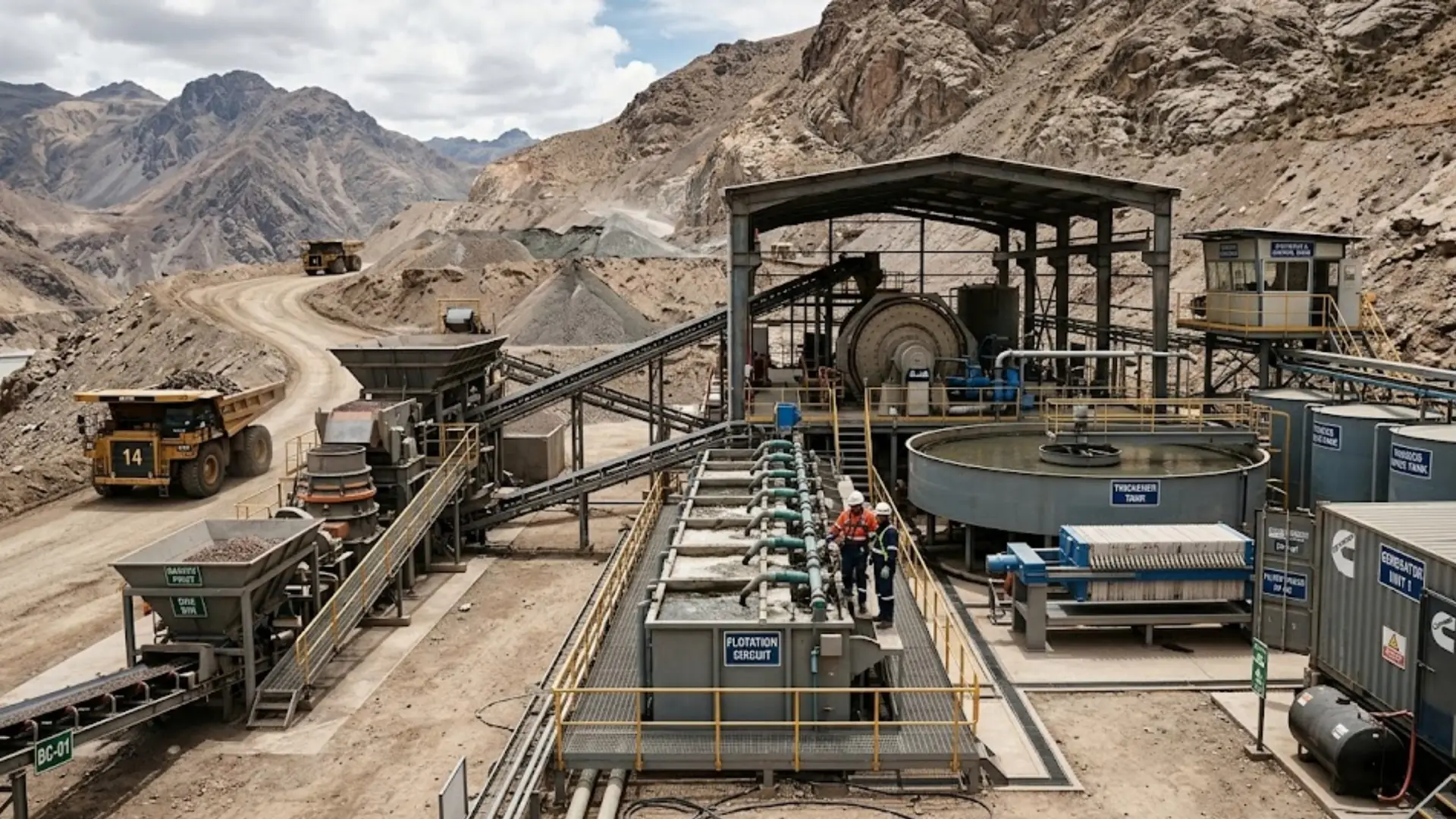
If the material is ore, concentrate, or solid scrap, it may need size reduction. Crushing, grinding, or shredding improves handling and helps expose gold-bearing surfaces.
For dore bars or already processed sludge, this step may be limited or skipped.
Step 3: Smelting
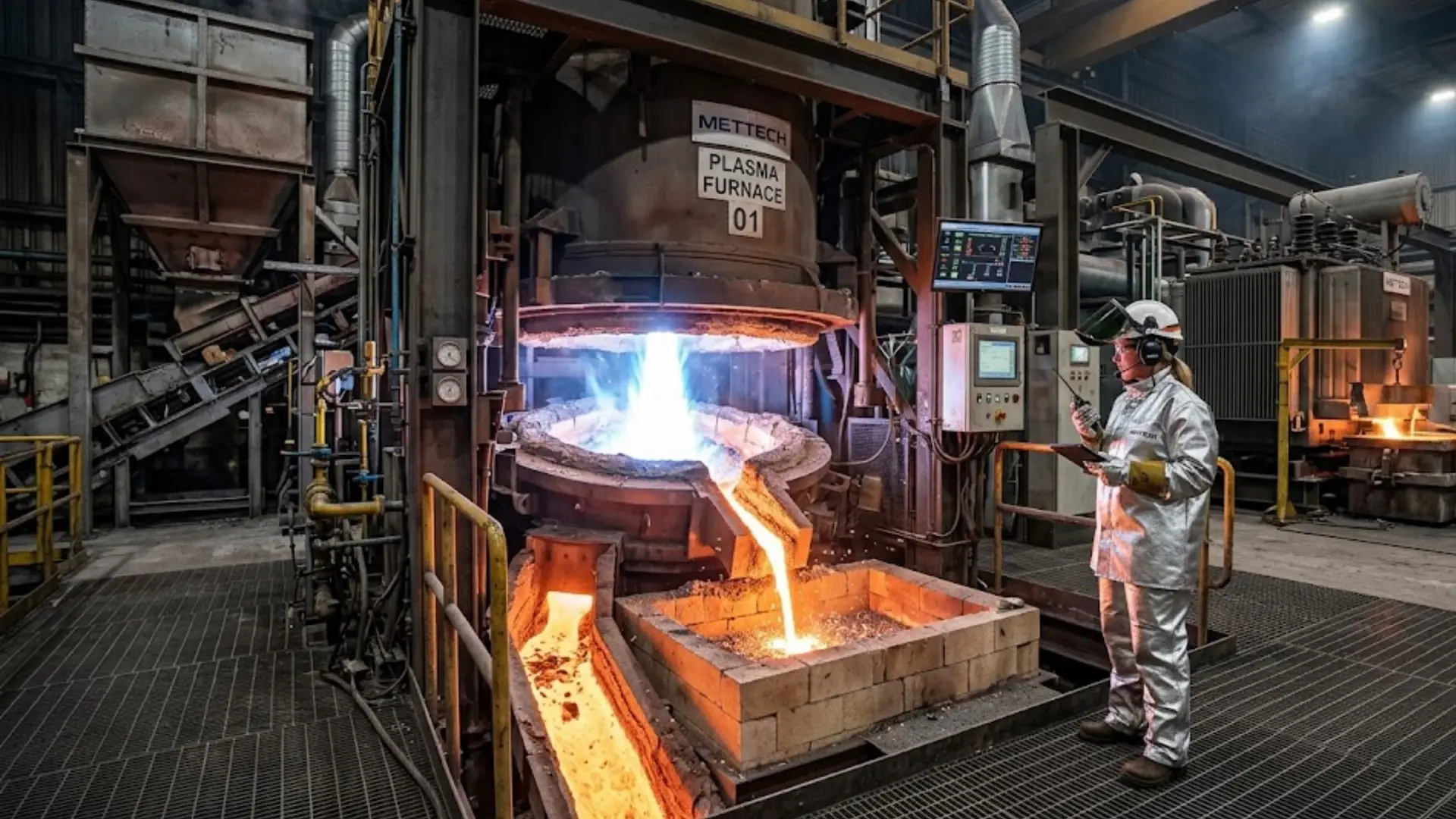
The material is heated in a furnace with fluxes. Smelting separates metallic values from gangue and unwanted materials.
Fluxes help collect impurities into slag while valuable metals settle into a metallic phase. In many plants, smelting is the first major upgrading step.
Step 4: Casting into Dore or Intermediate Form
After smelting, the molten metal is poured into molds. This creates dore bars or other intermediate products for further refining.
At this stage, gold is still not fully pure. Silver and base metals remain.
Step 5: Chemical Leaching or Dissolution
In many refining systems, the metal is dissolved using acids or specialized reagents. Popular methods include aqua regia or other controlled hydrometallurgical systems.
This stage allows gold to separate more precisely from silver and base metals.
Step 6: Filtration and Solid-Liquid Separation
Once the material is dissolved, the solution is filtered to remove insoluble solids.
This is where the purification analogy becomes useful. Just as a water filter removes dirt before final treatment, filtration removes unwanted solid residue before gold recovery.
Step 7: Gold Precipitation
Gold is recovered from solution using a precipitating agent. The dissolved gold comes out of solution as fine powder or sludge.
This step must be controlled carefully to avoid metal loss.
Step 8: Washing and Purification
The precipitated gold is washed several times to remove chemical residues and soluble impurities.
Poor washing can reduce final purity, so this step matters more than many first-time buyers expect.
Step 9: Drying
The washed gold powder is dried before melting. Moisture must be removed to avoid safety problems and inconsistent melting behavior.
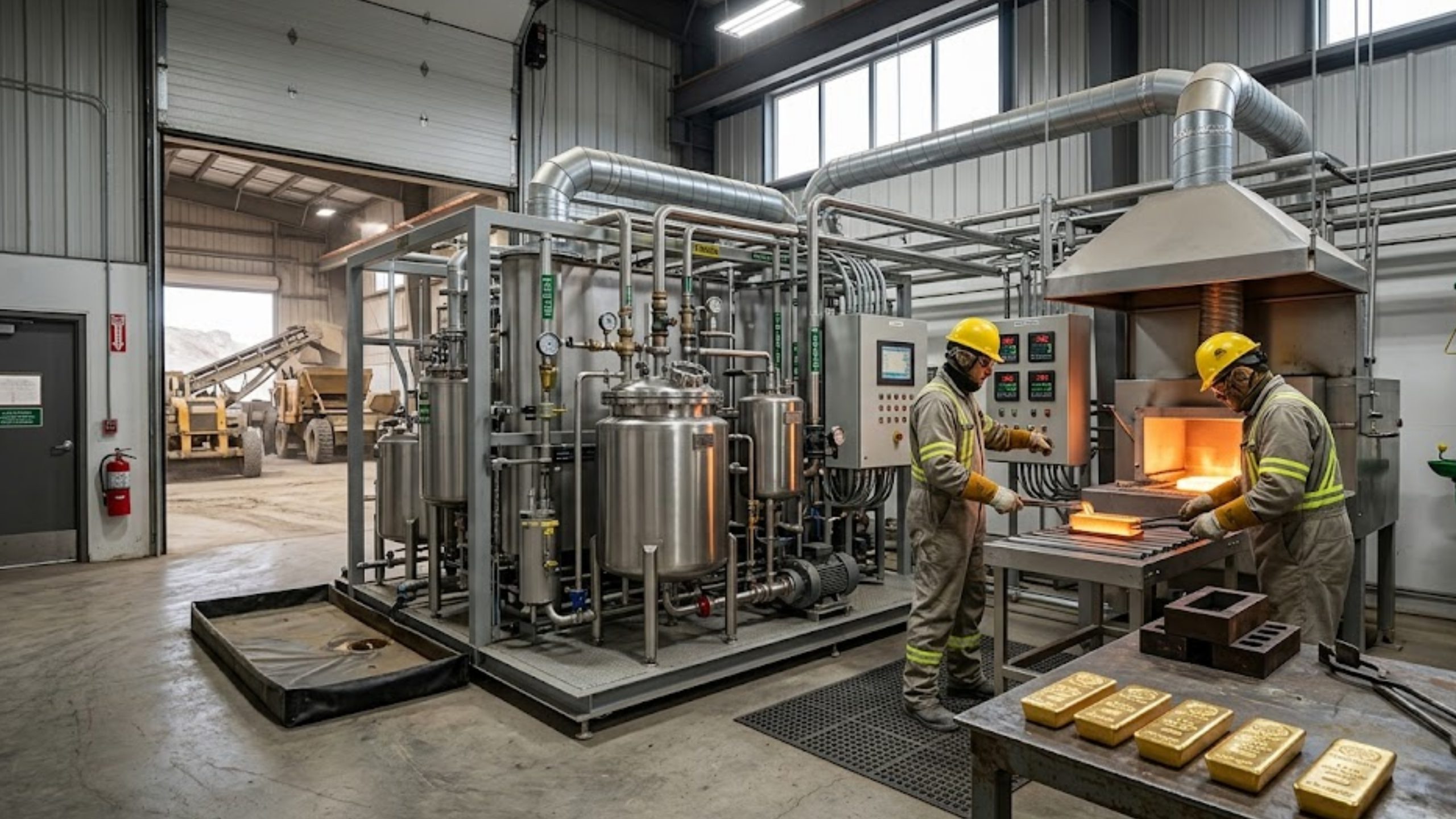
Step 10: Final Melting and Casting
The dried gold is melted again and cast into bullion bars, ingots, or granules.
At this point, the final product may reach 99.5%, 99.9%, or 99.99% purity, depending on the system.
Step 11: Quality Control and Final Assay
The final bars are tested to verify purity. This confirms the success of the Gold Refining Process Step by Step and supports commercial sale.
Step 12: Waste Treatment and Reagent Recovery
A professional plant does not end with metal production. It also includes neutralization, wastewater treatment, gas handling, and safe disposal or recycling of by-products.
This part is critical for regulatory compliance and long-term plant sustainability.
5. Equipment Required for a Gold Refining Plant
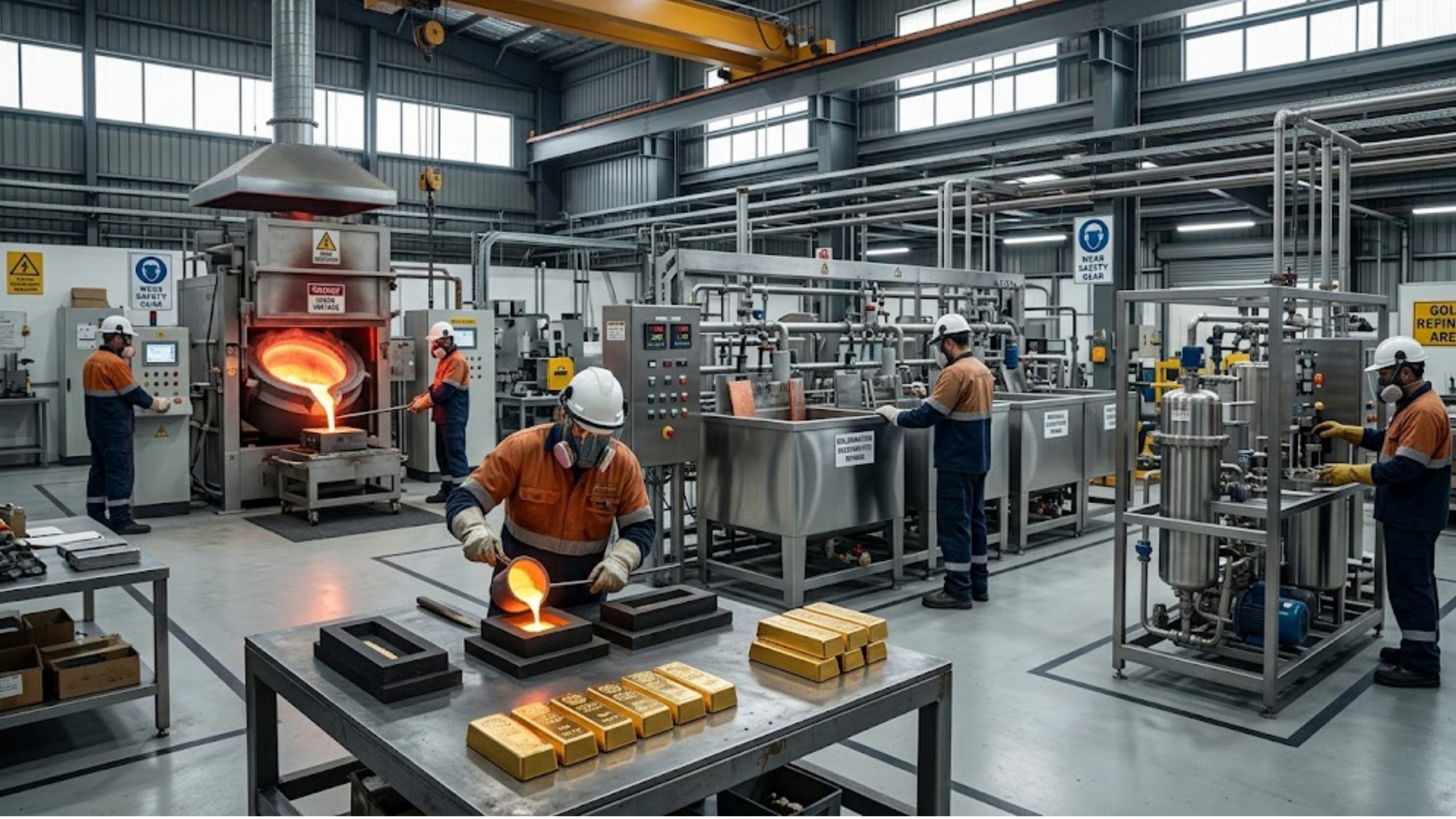
The exact setup depends on capacity and process route, but most systems include the following:
-
Feed hopper
-
Crusher or grinder
-
Smelting furnace
-
Flux dosing system
-
Reaction tanks
-
Acid-resistant leaching vessels
-
Agitators or mixers
-
Filtration unit
-
Precipitation tank
-
Drying oven
-
Melting furnace
-
Casting molds
-
Fume scrubber
-
Dust collection system
-
Water treatment unit
-
Assay laboratory equipment
-
Control panel and automation system
For buyers in remote mining regions, modular skid-mounted equipment can reduce installation time and simplify transport.
6. Plant Capacity Options from 10 to 1000 TPD
Plant size should match your feed availability, ore grade, and business model. The Gold Refining Process Step by Step can be designed for small, medium, or large operations.
10 to 50 TPD
This range is suitable for small mines, pilot projects, and regional processing centers. It offers lower capital cost and faster installation.
This is often a strong fit for miners in Bolivia, Ghana, Tanzania, and the Philippines, where many small operations need practical local refining capacity.
50 to 200 TPD
This is a common mid-scale range for growing mines and commercial processors. It balances throughput and cost while allowing better automation.
200 to 500 TPD
This capacity is suitable for established mining groups and centralized refining hubs. It supports stronger economies of scale and lower per-ton processing cost.
500 to 1000 TPD
Large industrial systems in this range are designed for major mining operations or regional metal processing centers. They require higher capital investment but can deliver stronger long-term profitability when feed supply is stable.
When choosing capacity, avoid oversizing. A plant running far below design capacity usually produces weak financial results.
7. Energy Consumption Details
Energy use depends on feed type, moisture, furnace temperature, process chemistry, and plant automation level. However, buyers should always evaluate energy in three parts:
Thermal Energy
Used in smelting, drying, and melting. Furnaces are major energy consumers, especially if the feed has high moisture or high impurity content.
Electrical Energy
Used for crushers, pumps, agitators, control systems, filters, and laboratory equipment.
Utility Demand
Water circulation, ventilation, scrubbers, and wastewater treatment also add to the operating load.
In practical terms, small modular plants usually have manageable energy demand, while large continuous systems need stable industrial power supply. Fuel-fired furnaces may work well in remote areas, while electric furnaces offer better process control where reliable grid power is available.
For serious buyers, energy consumption should be modeled as kWh per ton of feed and fuel per ton of refined gold output. This gives a more realistic operating picture than looking at furnace size alone.
8. Cost Estimation for Different Plant Sizes
Cost depends on plant design, metallurgy, automation, environmental controls, and site conditions. The numbers below are broad commercial ranges for planning purposes.
Low-Cost Range
A smaller or semi-manual plant with basic refining capability, limited automation, and simple infrastructure.
Best for startups, small mines, and regional buyers entering the market.
Medium-Cost Range
A professionally engineered plant with good process control, moderate automation, safety systems, and wastewater handling.
This is often the best value zone for serious industrial buyers.
High-Cost Range
A large, highly automated plant with advanced refining technology, strong environmental systems, higher purity capability, and full lab integration.
Best for major producers and investors building long-term refining hubs.
Practical Cost View
Low: Small 10 to 50 TPD plant, entry-level setup, lower capital expenditure
Medium: 50 to 200 TPD plant, industrial-grade system, balanced capex and opex
High: 200 to 1000 TPD plant, full-scale industrial complex with advanced compliance features
You should also include installation, civil works, power connection, reagent storage, training, spare parts, and commissioning in your budget. Many buyers underestimate these indirect costs.
9. ROI and Profitability Analysis
A refining plant becomes attractive when it improves gold value faster than it increases total operating cost.
Key profitability drivers
Feed grade: Higher gold content usually improves returns.
Recovery rate: Even a 1% increase in recovery can create major added revenue.
Final purity: Higher purity improves selling price and buyer confidence.
Reagent efficiency: Better chemical control reduces waste.
Energy cost: Power and fuel directly affect margins.
Downtime: A plant that stops often destroys profitability.
For example, if a mining company currently sells low-purity dore at a discount, installing a refining plant can increase realized metal value significantly. That extra value may recover the plant investment over time.
Simple ROI logic
If your plant:
-
upgrades product purity
-
lowers transport dependency
-
reduces third-party refining charges
-
improves recovery
-
supports direct bullion sales
then your payback period may become attractive, especially in countries with fragmented mining activity and limited local refining capacity.
For investors, the strongest projects are those with:
-
stable feed supply
-
clear target purity
-
compliant environmental design
-
strong local demand
-
experienced operations team
10. Comparison with Traditional Methods
The Gold Refining Process Step by Step used in modern plants is very different from older, traditional systems.
Traditional Methods
Traditional refining may rely on basic smelting, manual handling, poor emissions control, and inconsistent chemistry. These methods may appear cheaper at first, but they often cause low purity, poor recovery, high losses, and environmental problems.
Modern Refining Methods
Modern systems use controlled reaction tanks, filtration, assay support, emissions handling, and better process monitoring. This improves metal recovery, worker safety, and final product consistency.
Why the difference matters
Traditional methods are like cooking without measuring ingredients. Sometimes the result is acceptable, but often it is inconsistent. Modern refining is more like an industrial recipe with exact temperature, time, and chemical control. That consistency is what industrial buyers need.
For operations targeting export markets or investor-grade projects, traditional refining usually becomes a bottleneck.
11. Environmental Benefits of Modern Refining
Environmental performance is no longer optional. It is a market requirement.
A properly engineered Gold Refining Process Step by Step system offers several advantages:
Lower emissions
Fume scrubbers and gas control systems reduce harmful releases from smelting and chemical stages.
Safer wastewater management
Neutralization and treatment units help prevent contaminated discharge.
Reduced chemical losses
Closed-loop systems improve reagent efficiency and reduce waste.
Better worker safety
Automation, containment, and controlled handling reduce exposure risks.
Improved regulatory compliance
This is especially important for exporters, investors, and operations working with government oversight.
In modern mining regions, environmental design is also a commercial advantage. Buyers, regulators, and funding partners increasingly prefer refining plants that are cleaner and easier to audit.
12. Real-World Use Cases and Applications
The Gold Refining Process Step by Step is used across multiple industrial scenarios.
Small mine aggregation centers
A regional plant collects dore or concentrate from several small mines, refines it locally, and produces higher-value bullion.
On-site mine refining
A mid-size mine installs a refining unit to avoid shipping semi-processed material to third-party refiners.
Jewelry recycling operations
Refining systems recover gold from scrap and improve metal purity for reuse.
Investor-backed processing hubs
A central plant serves a mining district and creates revenue through toll refining.
Remote operations in high-demand countries
In Peru, Mexico, Colombia, Ghana, Tanzania, Indonesia, and the Philippines, local refining reduces logistics cost and can shorten the value chain between mine production and final bullion sale.
These use cases show why the Gold Refining Process Step by Step has become both a technical and commercial asset.
13. How to Choose the Right Plant for Your Market
Before you buy, evaluate your project through four questions:
What is your feed source?
Ore, dore, scrap, precipitate, and concentrate all need different design choices.
What is your target purity?
Not every project needs 99.99%. Some only require a marketable bullion grade.
What is your actual throughput?
Choose a capacity that reflects reliable feed, not optimistic assumptions.
What country conditions affect your project?
In markets with many small mines, modularity, transport simplicity, operator training, and reagent availability are major decision factors.
For your SEO and industrial marketing strategy, it also makes sense to position the content toward small and medium mine operators in Peru, Bolivia, Mexico, Colombia, Ghana, Tanzania, Indonesia, and the Philippines, because these regions often need practical, scalable refining solutions rather than oversized complex plants.
Internal Linking Suggestions
-
modular refining plant
-
gold refining plant
-
mining setup guide
Conclusion
The Gold Refining Process Step by Step is more than a metallurgical sequence. It is a value-creation system for mines, refiners, buyers, and investors. When designed correctly, it improves purity, raises recovery, supports compliance, and strengthens profitability.
If you want to compete in fast-growing mining regions and sell higher-value gold with more confidence, the right refining plant can become one of the smartest industrial investments you make.
For industrial inquiries, plant discussion, or buyer-level consultation, you can position your contact section like this:
Website: https://avimetal.com/
Address: C/O AINFOX, 2060 Faith Industrial Dr., Buford, GA 30518
Email: jgim@avimetal.com
Text Message / WhatsApp / Telegram: +1 470 564 8883
FAQs
1. What is the Gold Refining Process Step by Step?
The Gold Refining Process Step by Step is the sequence used to purify raw gold-bearing material into high-purity gold. It usually includes sampling, feed preparation, smelting, chemical dissolution, filtration, precipitation, drying, melting, casting, and final assay.
2. How much does a gold refining plant cost?
The cost depends on capacity, automation, metallurgy, and environmental systems. A small plant falls into the low-cost range, a mid-size industrial plant fits the medium-cost range, and a large advanced plant enters the high-cost range. You should also budget for civil works, installation, utilities, and commissioning.
3. What plant capacity is best for small mining operations?
For small and medium mines, 10 to 50 TPD or 50 to 200 TPD is often the most practical range. It offers manageable investment, easier installation, and good suitability for regional mining markets.
4. Is gold refining profitable?
Yes, gold refining can be profitable when feed supply is stable and the plant improves recovery, purity, and selling price. Profitability is strongest when you reduce third-party refining charges, limit metal loss, and maintain efficient energy and reagent consumption.
5. How does modern gold refining compare with traditional methods?
Modern refining offers better purity, higher recovery, safer operation, stronger emissions control, and more consistent commercial output. Traditional methods may seem cheaper initially, but they often lead to lower efficiency, weaker compliance, and reduced long-term returns.
Read more: https://avimetal.com/2026/03/17/modular-gold-refining-plant-for-small-scale-mining/