Mining Plant Setup for Beginners
Introduction
Starting a mining operation sounds exciting, but for most beginners, the real challenge begins after the mineral deposit is identified. If you’re new to the process, this Mining Plant Setup for Beginners Guide will help you navigate the essential decisions. You need to decide how to process ore efficiently, how much plant capacity to install, what equipment to buy, how much power you will need, and whether the whole project can generate profit. A wrong decision at the setup stage can lead to wasted capital, poor recovery, high operating costs, and slow payback.
This is why Mining Plant Setup for Beginners is not only about buying machines. It is about building the right system for your ore type, production target, budget, and long-term business goals. Whether you are a small mining company in Peru, a plant investor in Ghana, an engineer in Indonesia, or an industrial buyer supporting local mining growth, you need a practical roadmap.
This guide explains the full setup process in simple language. It is designed for mining companies, industrial buyers, engineers, and investors looking at high-demand markets such as Peru, Bolivia, Mexico, Colombia, Ghana, Tanzania, Indonesia, and the Philippines, where many small and medium mines need reliable plant solutions.
Table of Contents
| Sr# | Headings |
|---|---|
| 1 | Overview of Mining Plant Setup for Beginners |
| 2 | Why Small and Mid-Scale Mines Need Proper Plant Planning |
| 3 | Step-by-Step Process Explanation |
| 4 | Site Selection and Infrastructure Requirements |
| 5 | Ore Testing and Process Design Basics |
| 6 | Equipment List for a Beginner Mining Plant |
| 7 | Plant Capacity Options from 10 to 1000 TPD |
| 8 | Energy Consumption Details |
| 9 | Water Use and Utility Planning |
| 10 | Cost Estimation for Different Plant Sizes |
| 11 | ROI and Profitability Analysis |
| 12 | Comparison with Traditional Methods |
| 13 | Environmental Benefits of Modern Mining Plants |
| 14 | Real-World Use Cases and Applications |
| 15 | How to Choose the Right Plant Partner |
1. Overview of Mining Plant Setup for Beginners
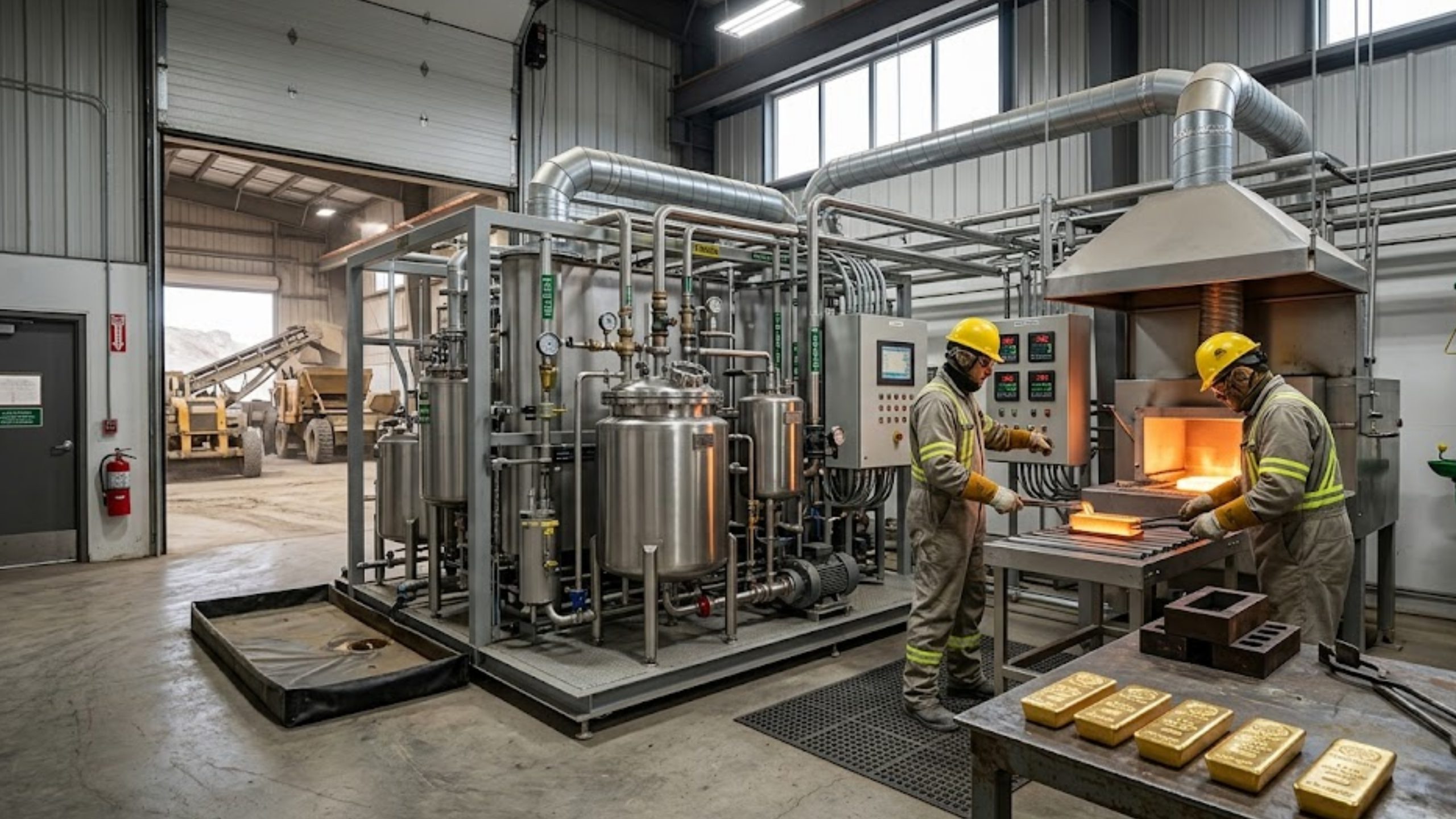
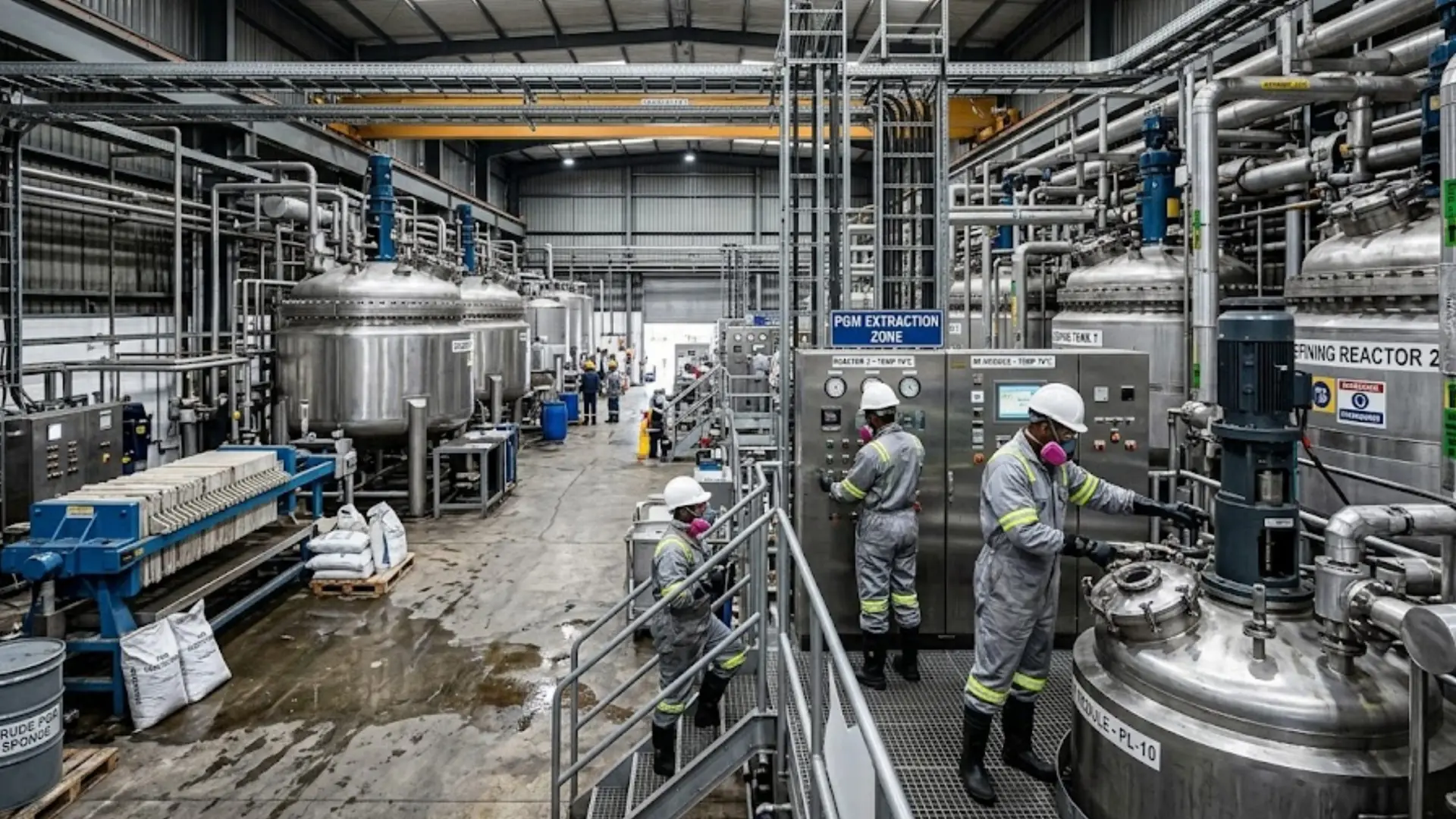
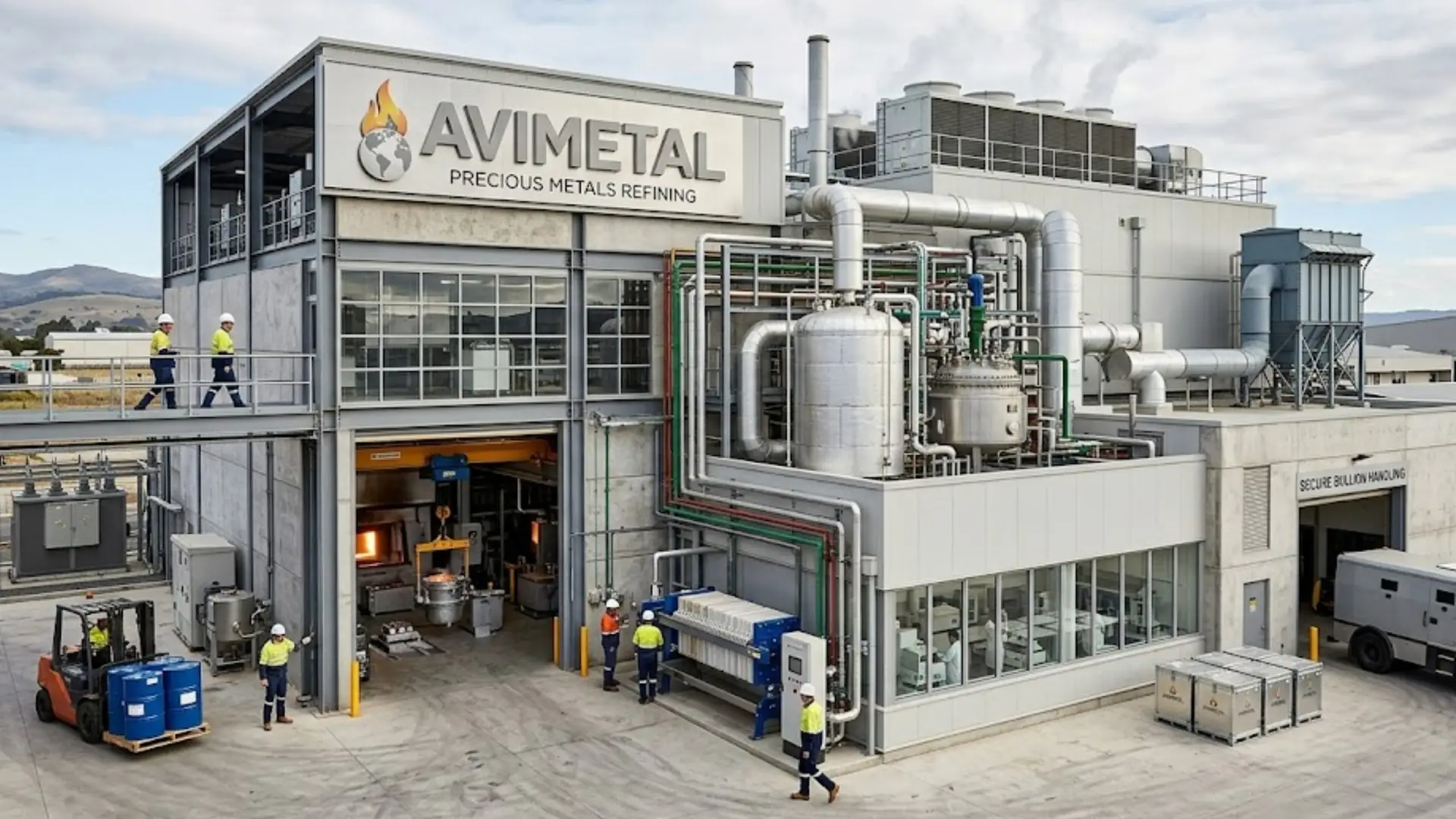
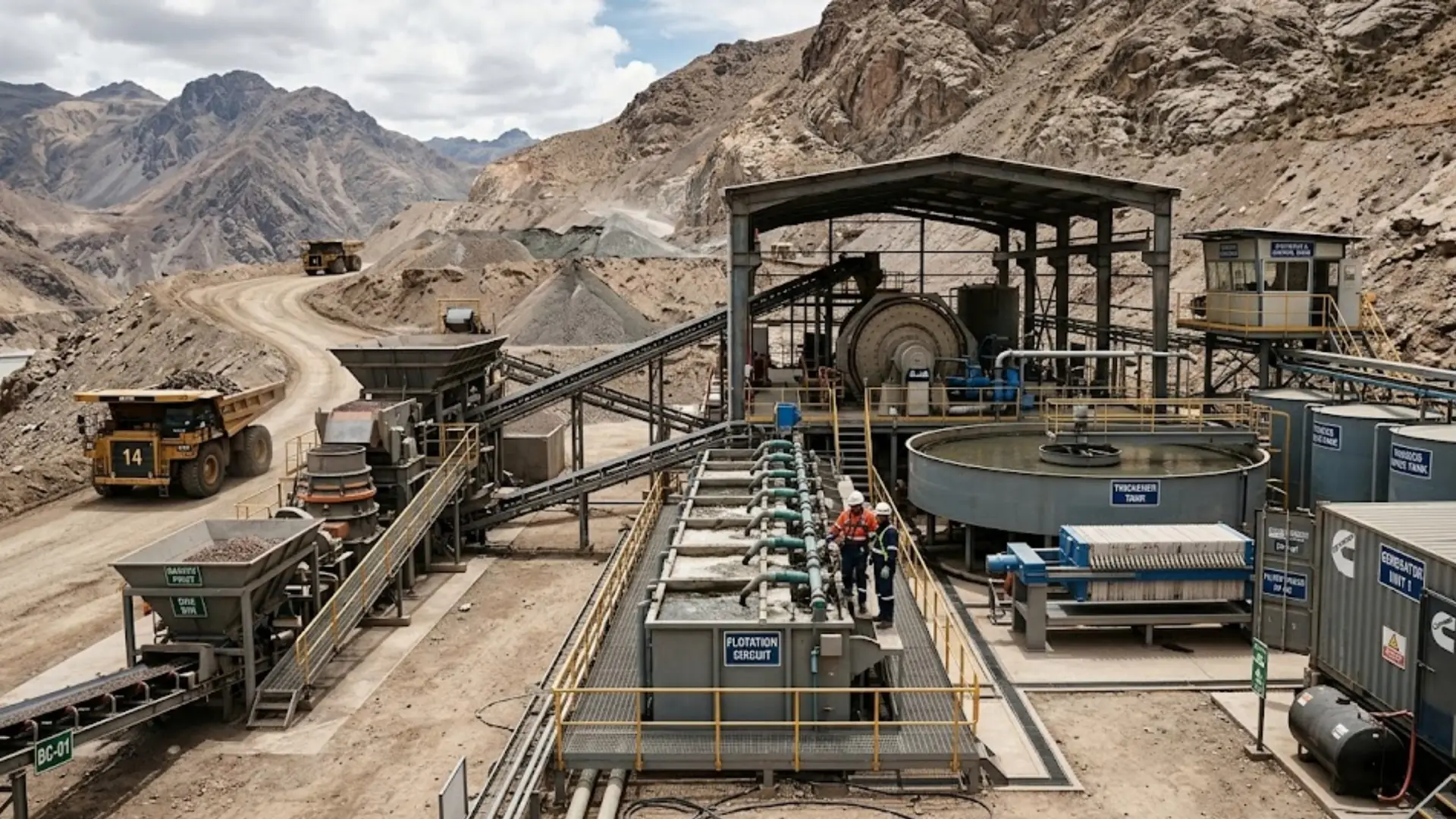
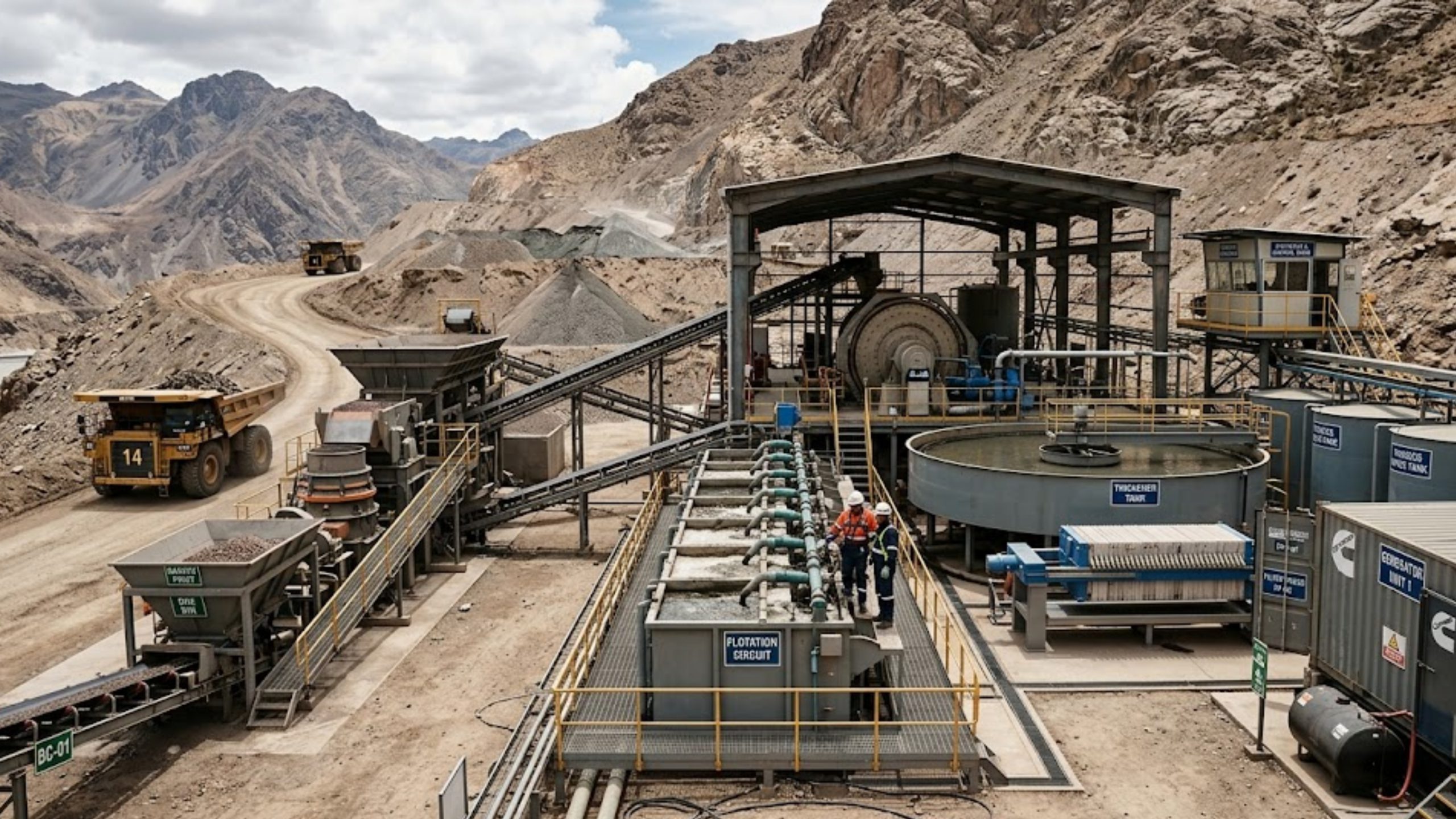
Mining Plant Setup for Beginners means planning, designing, and installing the processing system that turns raw ore into a sellable product or concentrate. This can include crushing, grinding, gravity separation, flotation, leaching, thickening, filtration, and refining support systems depending on the mineral.
For beginners, the biggest mistake is assuming that one plant design works for every ore body. It does not. Gold ore in Tanzania may need a very different flowsheet than copper ore in Peru or polymetallic ore in Bolivia. The plant must match the mineralogy, ore grade, and expected recovery target.
Think of the process like filtering dirty water. If you use the wrong filter, you either lose valuable material or spend more time and energy than necessary. A mining plant works in a similar way. Each stage removes waste and improves concentration, but only if the system is selected correctly.
A beginner-friendly plant should focus on five things: simplicity, recoverability, scalability, operating stability, and return on investment.
2. Why Small and Mid-Scale Mines Need Proper Plant Planning
Many small mines start with manual or semi-mechanized methods. This can work in the short term, but it often limits production, reduces metal recovery, and creates inconsistent output. Buyers and investors want predictable performance, not guesswork.
In countries like Colombia, Ghana, and the Philippines, there is strong demand for modular and scalable mining plants because many operators want to move from informal production to structured, higher-value operations. A properly planned plant helps you:
Increase recovery rates
Reduce ore losses
Improve concentrate quality
Control operating costs
Meet environmental standards
Build investor confidence
For industrial buyers, a well-planned plant means better feed consistency and easier downstream refining. For investors, it means clearer capital planning and measurable project economics.
3. Step-by-Step Process Explanation
A successful Mining Plant Setup for Beginners project usually follows a clear sequence.
Step 1: Define the ore and target product
First, identify the mineral, grade, impurity level, and the final product you want. Are you producing dore, concentrate, cathode, or industrial mineral product?
Step 2: Conduct ore testing
Laboratory and pilot tests show how the ore responds to crushing, gravity concentration, flotation, or chemical treatment. This is the foundation of plant design.
Step 3: Select the process flowsheet
Based on test results, engineers prepare the best route. For example, a gold plant may use crushing, grinding, gravity concentration, and cyanidation. A base metal plant may use crushing, milling, flotation, and dewatering.
Step 4: Choose plant capacity
Capacity is usually measured in TPD, or tons per day. The right size depends on ore reserves, mine production rate, and budget.
Step 5: Prepare layout and civil planning
This includes equipment arrangement, foundations, drainage, roads, utility lines, and access for maintenance.
Step 6: Procure equipment
Machines, pumps, tanks, structural steel, piping, control panels, and power systems are ordered based on the final design.
Step 7: Install and commission
The plant is erected, wired, tested, and gradually started with water and ore feed.
Step 8: Optimize operations
After startup, real operating data helps improve throughput, recovery, reagent use, and energy performance.
This structured path makes Mining Plant Setup for Beginners more manageable and lowers startup risk.
4. Site Selection and Infrastructure Requirements
Plant success depends heavily on location. Even a good flowsheet can struggle if the site has poor access or weak infrastructure.
You should evaluate:
Road access for equipment and concentrate transport
Power availability and backup solutions
Water source and water recycling options
Tailings or waste management area
Foundation stability and topography
Distance from mine face to plant
A remote project in Indonesia or Tanzania may need diesel generators or hybrid power. A project in Mexico or Peru may have better grid access but stricter environmental approvals. Good site planning reduces logistics cost and future shutdown risk.
Layout matters
A compact, logical layout lowers piping length, pumping load, and maintenance time. Material should move smoothly from crushing to final product handling without backtracking.
5. Ore Testing and Process Design Basics
No serious project should skip ore testing. This is where many beginner operations fail. They buy equipment first and test later, which often causes mismatched plant performance.
Important test work includes:
Head assay and grade analysis
Mineralogy and liberation study
Crushability and grindability testing
Gravity recovery tests
Flotation response tests
Leaching or chemical extraction tests
For Mining Plant Setup for Beginners, process design should always be based on actual ore behavior, not assumptions.
6. Equipment List for a Beginner Mining Plant
The equipment depends on the mineral and flowsheet, but a typical beginner mining plant may include:
-
Primary crusher
-
Secondary crusher
-
Ball mill or rod mill
-
Screens and feeders
-
Conveyors
-
Gravity concentrator
-
Flotation cells
-
Leaching tanks
-
Agitators
-
Thickener
-
Filter press
-
Slurry pumps
-
Water pumps
-
Reagent dosing system
-
Control panel and automation system
-
Generator or power distribution system
-
Laboratory equipment
-
Tailings handling system
-
Weighing and sampling system
Support equipment is equally important
Many beginners focus only on the main machines, but support systems are what keep the plant running. Pumps, valves, pipes, electrical panels, spares, and sampling tools should never be treated as secondary purchases.
7. Plant Capacity Options from 10 to 1000 TPD
Capacity selection is one of the most important parts of Mining Plant Setup for Beginners. A plant that is too small limits revenue. A plant that is too large can lock up capital and run below utilization.
10–30 TPD
This range suits pilot operations, bulk sampling, very small mines, and proof-of-concept projects. It is ideal for new operators testing economics before expansion.
50–100 TPD
This is a strong entry point for small commercial mines. It offers reasonable throughput without excessive capital cost. Many small mines in Bolivia, Colombia, and Ghana prefer this range.
150–300 TPD
This suits growing operations with stable ore supply. It provides better economies of scale and usually justifies more automation and process control.
500–1000 TPD
This range is for larger organized operations or investor-backed projects. It requires stronger infrastructure, better water and power systems, and more advanced operational planning.
The best option depends on mine life, ore reserve confidence, logistics, and financing. Modular design is often the smartest choice because you can start small and expand later.
8. Energy Consumption Details
Power cost has a direct impact on profitability. In many mining plants, crushing and grinding consume the largest share of energy.
Typical energy use varies by ore hardness, equipment efficiency, and plant design, but the general pattern is:
Crushing: relatively lower power demand per ton
Grinding: highest power demand stage
Pumping and agitation: moderate but continuous
Flotation and dewatering: variable depending on flowsheet
Refining support systems: additional load if included
A small 50 TPD plant may run with a modest connected load, while a 500 TPD plant may require a much stronger power system and backup planning. In remote areas, energy cost can become a major part of operating expenses.
How to reduce energy use
Use proper ore sizing before milling
Choose efficient motors and pumps
Optimize grinding time
Install variable frequency drives where useful
Recycle water to reduce pumping demand
For Mining Plant Setup for Beginners, energy planning should be done early, not after equipment purchase.
9. Use of Water
You should evaluate raw water source, water quality, storage, pumping distance, and recycling potential. In many modern plants, process water is reused to lower both operating cost and environmental pressure.
Other utilities include compressed air, reagent storage, workshop tools, lighting, communications, and lab services. These may seem small at first, but they strongly affect plant reliability.
10. Cost Estimation for Different Plant Sizes
Cost varies widely depending on ore type, country, automation level, and whether the system is modular or site-built. Still, a practical way to think about cost is to use low, medium, and high investment levels.
Low-cost setup
A low-cost plant usually targets 10–50 TPD. It uses simpler layouts, limited automation, and basic processing equipment. This can suit early-stage miners or pilot projects.
Medium-cost setup
A medium-cost plant usually serves 50–300 TPD. It includes better process control, improved recovery circuits, stronger civil work, and more reliable utility systems.
High-cost setup
A high-cost plant usually targets 300–1000 TPD or includes advanced recovery methods, environmental control systems, laboratory integration, and larger infrastructure packages.
Main cost categories
Process equipment
Structural steel and piping
Civil works and foundations
Electrical systems
Power generation or connection
Water system
Installation and commissioning
Spares and consumables
Training and technical support
For investors and buyers, capital cost should always be evaluated alongside recovery performance and operating efficiency, not in isolation.
11. ROI and Profitability Analysis
A plant should not be judged only by how much it costs. It should be judged by how fast it turns ore into profit.
The core profitability drivers are:
Ore grade
Recovery percentage
Plant throughput
Metal price
Power and reagent cost
Labor cost
Maintenance cost
Transport cost
Here is a simple logic. If you process more tons per day, recover more metal per ton, and keep operating cost under control, your revenue improves faster. Even a slightly better recovery rate can have a major effect over time.
Example of ROI thinking
Suppose two plants process the same ore. Plant A is cheaper, but recovery is low. Plant B costs more, but recovery is much higher. Over time, Plant B may generate much more saleable metal and repay its cost faster.
This is why Mining Plant Setup for Beginners should focus on total business value, not only initial purchase price.
Typical investor questions
What is the payback period?
What is the expected gross margin per ton?
How sensitive is the project to metal price changes?
Can the plant scale with mine expansion?
A strong ROI case is especially important in target markets such as Peru, Mexico, Ghana, and Indonesia, where operators often need practical, fast-payback plant solutions.
12. Comparison with Traditional Methods
Traditional small-scale mining methods often rely on manual sorting, basic gravity recovery, or inefficient local processing routes. These methods may have lower upfront cost, but they usually suffer from poor recovery, inconsistent output, and environmental challenges.
Modern plant advantages over traditional methods
Higher recovery of fine particles
Better control of concentrate quality
Lower metal losses
Improved worker safety
More stable daily production
Better reporting for investors and buyers
Traditional methods can be compared to washing gold-bearing sand with a kitchen bowl. You may recover something, but you will likely lose a lot of value in the overflow. A properly designed plant is like using a professional filtration and separation system. It captures more of what matters and wastes less.
For anyone serious about growth, Mining Plant Setup for Beginners should move beyond temporary methods and toward engineered processing systems.
13. Environmental Benefits of Modern Mining Plants
Environmental performance is now a business issue, not just a legal issue. Buyers, regulators, and local communities increasingly expect cleaner and more responsible operations.
Modern mining plants can provide:
Better water recycling
Reduced tailings losses
Lower dust emissions with enclosed systems
Improved chemical control
Safer waste handling
Better compliance reporting
This matters a lot in countries where small mines are under pressure to modernize. A clean, efficient plant improves not only compliance but also financing potential and business reputation.
Why this matters for export markets
Industrial buyers and international partners often prefer suppliers with more controlled and documented operations. Environmental improvement can therefore support both market access and long-term business value.
14. Real-World Use Cases and Applications
The practical use of Mining Plant Setup for Beginners depends on the mineral and region.
Gold mining in Ghana or Tanzania
A small gold operator may start with a modular plant using crushing, grinding, gravity recovery, and leaching support. The goal is to improve recovery compared with manual methods and create a more bankable operation.
Polymetallic ore in Bolivia or Peru
A mine producing lead, zinc, or silver-bearing ore may need crushing, milling, flotation, and dewatering. A scalable plant helps the operator increase throughput as reserves are better defined.
Copper or mixed sulfide operations in Mexico or Colombia
These projects often benefit from stronger process testing and better flotation design to improve concentrate grade and reduce smelter penalties.
Island and remote projects in Indonesia or the Philippines
Compact modular plants are especially useful where transport and construction conditions are difficult. Ease of installation becomes a major buying factor.
For industrial buyers, these use cases show that the right plant setup is not generic. It must fit ore, geography, budget, and market.
15. How to Choose the Right Plant Partner
Plant success depends not only on equipment but also on the supplier behind it. You should look for a partner who understands process design, metallurgy, modular engineering, installation, and commercial reality.
Ask these questions:
Do they review ore test data before recommending a plant?
Can they support 10–1000 TPD capacity planning?
Do they offer modular and scalable plant options?
Can they explain energy, water, and operating cost clearly?
Do they provide commissioning and training support?
Do they understand the needs of small mines in high-demand markets?
If your goal is buyer conversion, your content and marketing should also match your audience. Since your target markets include Peru, Bolivia, Mexico, Colombia, Ghana, Tanzania, Indonesia, and the Philippines, your SEO approach should highlight small-mine modernization, modular plant flexibility, fast installation, and ROI-focused engineering.
Internal Linking Suggestions
modular refining plant
gold refining plant
mining setup guide
Conclusion
Mining Plant Setup for Beginners is not just a technical task. It is a business decision that affects recovery, cost, compliance, and long-term profitability. The right plant starts with ore testing, follows a practical process design, matches capacity to mine reality, and supports future expansion. For mining companies, buyers, engineers, and investors, the best results come from a plant that is simple to operate, efficient in recovery, and strong in ROI.
If you want to compete in fast-growing mining regions, the smartest move is to build a plant that is engineered for your ore, your market, and your business goals.
FAQs
1. What is the ideal capacity for Mining Plant Setup for Beginners?
The ideal capacity depends on ore reserves, production target, and budget. For many first-time operators, 50–100 TPD is a practical starting point because it balances manageable capital cost with commercial output potential.
2. How much does Mining Plant Setup for Beginners cost?
Cost depends on mineral type, process complexity, plant capacity, automation, and site conditions. Small pilot or entry plants have lower capital needs, while medium and large plants require more investment in equipment, civil works, power, and water systems.
3. Is Mining Plant Setup for Beginners profitable?
Yes, it can be profitable if ore grade is suitable, recovery is strong, and operating costs are controlled. Profitability improves when the plant is matched correctly to the ore and when capacity is scaled in line with actual mine supply.
4. What is the process for Mining Plant Setup for Beginners?
The process usually includes ore testing, process design, equipment selection, layout planning, utility planning, installation, commissioning, and performance optimization. Each step is important for reducing risk and improving recovery.
5. Can a beginner mining plant be expanded later?
Yes, many modern plants are designed as modular systems. This allows you to start with a smaller capacity, such as 50 or 100 TPD, and expand later as reserves, funding, and operating experience improve.
Business Contact
Website: avimetal.com
Address: C/O AINFOX, 2060 Faith Industrial Dr., Buford, GA 30518
Email Us: jgim@avimetal.com
Text Message / WhatsApp / Telegrams: +1 470 564 8883
Read more: https://avimetal.com/2026/03/17/modular-gold-refining-plant-for-small-scale-mining/