Eco-Friendly Metal Smelting Technologies
Introduction
Metal smelting is essential for turning raw ore into usable metal, but traditional methods often come with high fuel use, heavy emissions, and rising operating costs. For mining companies, industrial buyers, engineers, and investors, this creates a serious challenge. If you’re searching for solutions, this Eco-Friendly Metal Smelting Technologies Guide will help you find cleaner production methods without sacrificing recovery, capacity, or profit.
That is where Eco-Friendly Metal Smelting Technologies are changing the industry. These technologies focus on lower emissions, better energy efficiency, smarter process control, and improved metal recovery. In simple terms, they help you produce metal in a cleaner, more competitive way. As regulations tighten and buyers demand greener supply chains, choosing the right smelting solution is no longer just a technical decision. It is a business decision.
Table of Contents
| Sr# | Headings |
|---|---|
| 1 | Overview of Eco-Friendly Metal Smelting Technologies |
| 2 | Why the Mining and Metals Industry Is Moving Toward Cleaner Smelting |
| 3 | How Eco-Friendly Metal Smelting Technologies Work |
| 4 | Step-by-Step Process Explanation |
| 5 | Main Equipment Used in Modern Green Smelting Plants |
| 6 | Plant Capacity Options from 10 TPD to 1000 TPD |
| 7 | Energy Consumption Details |
| 8 | Cost Estimation: Low, Medium, and High Investment Levels |
| 9 | ROI and Profitability Analysis |
| 10 | Comparison with Traditional Smelting Methods |
| 11 | Environmental Benefits |
| 12 | Real-World Use Cases and Industrial Applications |
| 13 | Key Factors to Consider Before Investing |
| 14 | Future Trends in Sustainable Smelting |
| 15 | Conclusion |
1. Overview of Eco-Friendly Metal Smelting Technologies
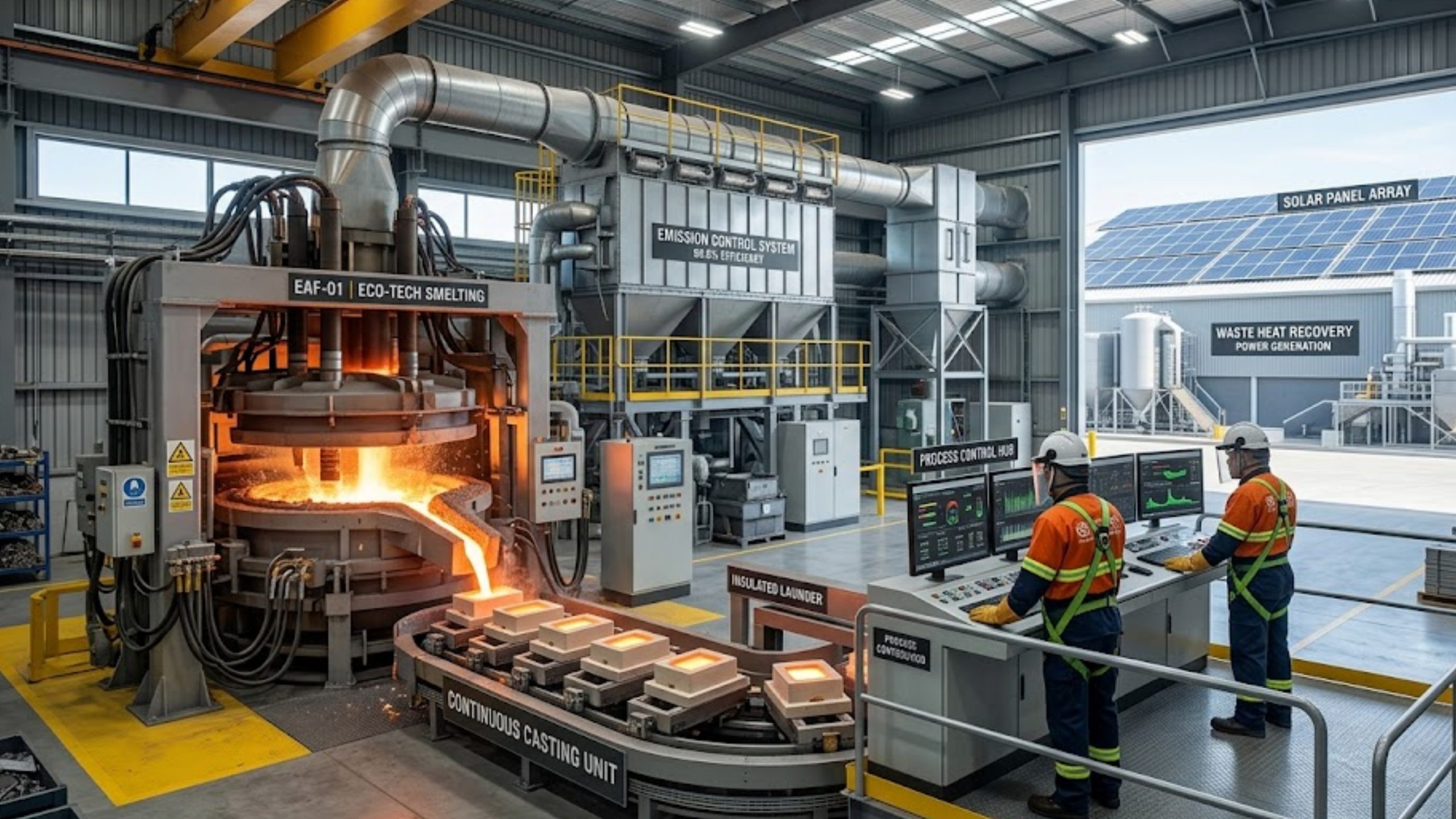
Eco-Friendly Metal Smelting Technologies are modern smelting systems designed to reduce pollution, improve energy use, and recover more value from ore or concentrate. These systems can include electric furnaces, oxygen-enriched combustion, waste heat recovery, advanced gas cleaning, and digital process controls.
Traditional smelting often depends on coal, coke, or heavy fuel oil. That approach can produce high levels of carbon dioxide, sulfur oxides, dust, and slag waste. In contrast, cleaner smelting systems aim to use less fuel, capture more emissions, and create a more controlled refining environment.
You can think of it like upgrading from an old diesel generator to a smart hybrid power system. Both create output, but one does it with more waste, more noise, and more cost over time. The other gives you better control, lower losses, and a more future-ready operation.
For mining companies and metal processors, this means a practical path toward compliance, premium product positioning, and stronger long-term returns.
2. Why the Mining and Metals Industry Is Moving Toward Cleaner Smelting
The shift toward cleaner metal production is happening for several reasons. First, environmental rules are becoming stricter in many regions. Companies that fail to control emissions may face fines, permit delays, or community pushback.
Second, industrial buyers are paying more attention to supply chain sustainability. If you are selling refined metal to manufacturers, exporters, or large industrial users, your environmental profile can affect buyer confidence. In some sectors, greener production can even support better pricing or easier market access.
Third, energy costs continue to pressure margins. Smelting is energy-intensive, so even a modest improvement in efficiency can significantly affect profitability. A plant that saves fuel or power every day builds a stronger business over time.
Finally, investors increasingly look at environmental performance alongside technical performance. A modern plant using Eco-Friendly Metal Smelting Technologies may be seen as lower-risk, more scalable, and better aligned with future market expectations.
3. How Eco-Friendly Metal Smelting Technologies Work
At a basic level, smelting separates valuable metal from impurities by using heat, chemistry, and controlled airflow. The eco-friendly version does the same job, but in a smarter and cleaner way.
Instead of relying only on brute force heat, these systems optimize the process using better furnace design, oxygen control, precise feed preparation, and heat recycling. This reduces fuel waste and improves reaction efficiency.
Better Heat Management
Modern systems keep temperatures more stable. Stable heat means more predictable recovery, lower refractory wear, and less wasted energy.
Cleaner Gas Handling
Instead of releasing gases directly, advanced systems capture and treat them. Dust collectors, scrubbers, and sulfur capture units help reduce harmful emissions.
Improved Recovery
When process variables are controlled more precisely, more metal is recovered from the same feed. That means less metal in slag and more value in the final product.
A good analogy is water filtration. If you pour muddy water through a rough cloth, you remove only the largest particles. But if you use a multi-stage filtration system, you get cleaner water with less waste. Smelting works in a similar way. The more refined the process control, the cleaner and more efficient the result.
4. Step-by-Step Process Explanation
Below is a simplified step-by-step view of how Eco-Friendly Metal Smelting Technologies are typically applied in a commercial plant.
Step 1: Ore or Concentrate Preparation
Raw feed is crushed, screened, dried, or concentrated before entering the furnace. Proper preparation improves thermal efficiency and supports consistent smelting conditions.
Step 2: Feed Blending
Different ore grades or concentrates are blended to maintain a stable chemical composition. This helps reduce process fluctuations and improves metal recovery.
Step 3: Controlled Charging
The prepared feed is introduced into the furnace at a controlled rate. Automated feed systems can improve uniformity and reduce heat losses.
Step 4: Smelting Reaction
Inside the furnace, heat causes the valuable metal phase to separate from unwanted gangue and impurities. Depending on the metal, fluxes may be added to form slag and support separation.
Step 5: Oxygen or Air Management
Many green smelting systems use oxygen-enriched air. This improves combustion efficiency, shortens reaction time, and can reduce total fuel use.
Step 6: Slag and Metal Separation
The molten metal and slag separate due to density differences. Proper control at this stage is critical because metal losses in slag directly reduce profitability.
Step 7: Off-Gas Collection and Cleaning
Hot gases move through a gas handling system. Dust, sulfur compounds, and fine particles are captured before release or reuse.
Step 8: Heat Recovery
Waste heat from off-gases can be recovered for drying, preheating, steam generation, or power integration. This is one of the biggest energy-saving opportunities.
Step 9: Refining or Secondary Treatment
The crude metal may pass through further refining to reach product purity targets. This can include oxidation, reduction, electrorefining, or alloy adjustment.
Step 10: Casting and Product Handling
The final metal is cast into bars, ingots, anodes, billets, or other saleable forms depending on the target market.
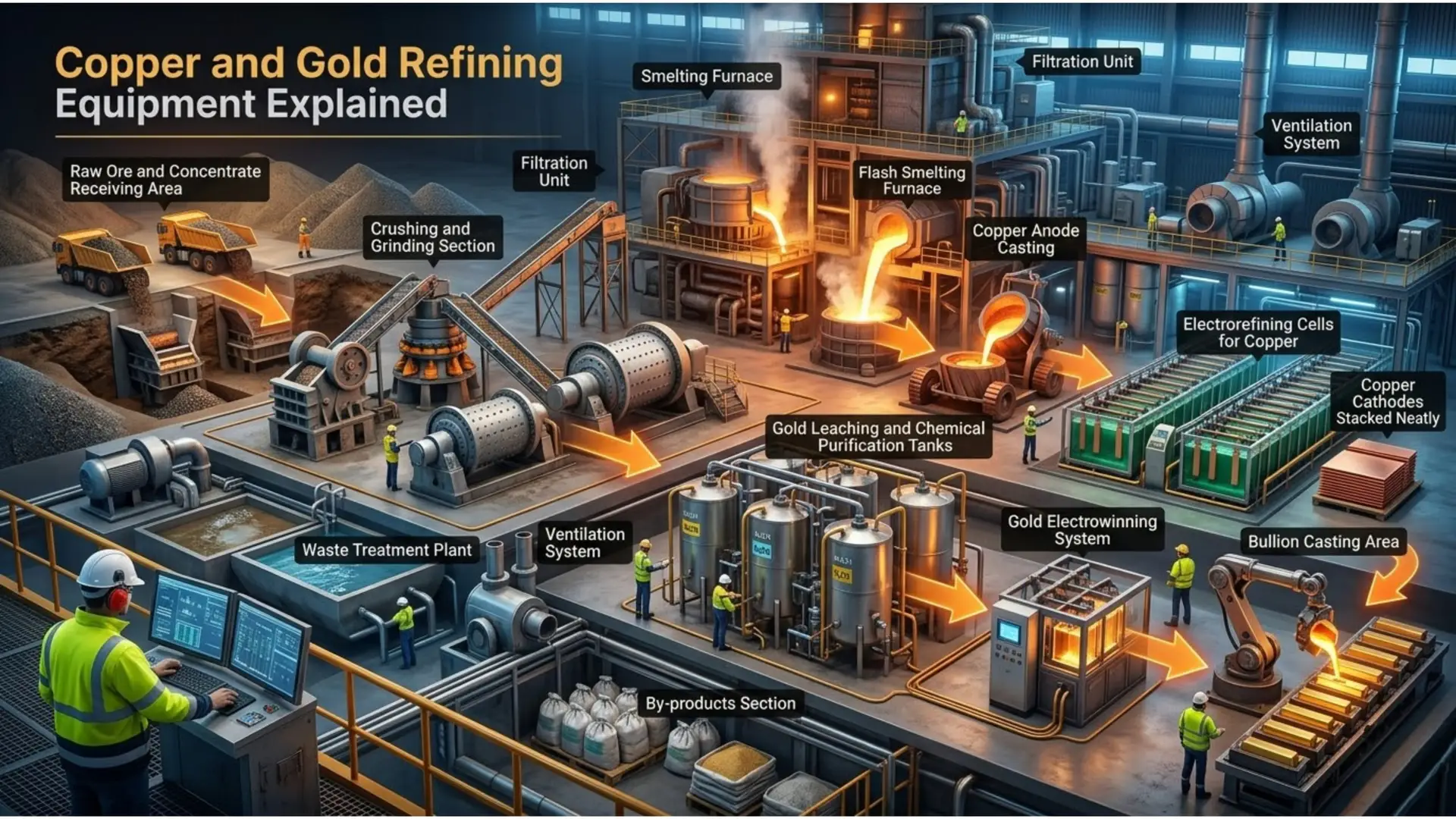
5. Main Equipment Used in Modern Green Smelting Plants
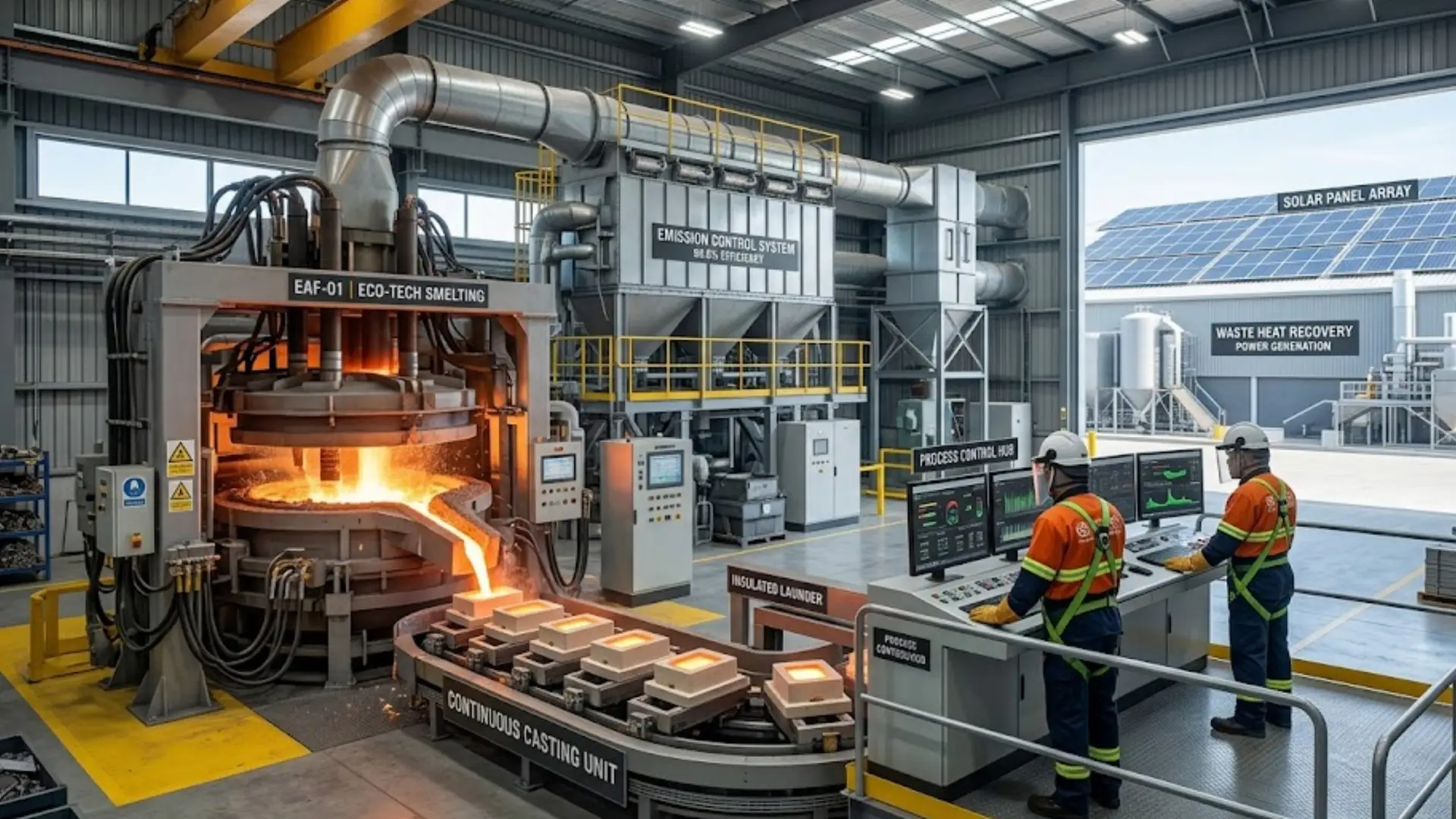
A modern plant built around Eco-Friendly Metal Smelting Technologies usually includes a combination of thermal, mechanical, and environmental control equipment.
Equipment List
-
Ore crushing and screening unit
-
Dryer or feed preparation system
-
Concentrate blending system
-
Electric arc furnace or induction furnace
-
Oxygen injection or enriched air system
-
Burners with high-efficiency combustion control
-
Flux dosing equipment
-
Molten metal tapping system
-
Slag handling unit
-
Baghouse filter or dust collection system
-
Wet scrubber or gas cleaning unit
-
Waste heat recovery boiler
-
Cooling water system
-
Transformer and power control system
-
PLC or automated control panel
-
Casting machine or ingot molds
-
Laboratory testing and quality control tools
Why Equipment Selection Matters
The right equipment setup affects recovery, emissions, downtime, and product quality. A lower-cost furnace with poor temperature control may look attractive at first, but it can lead to higher power use and higher metal losses later.
6. Plant Capacity Options from 10 TPD to 1000 TPD
Plant capacity should match your ore availability, capital budget, infrastructure, and business model. One of the strengths of Eco-Friendly Metal Smelting Technologies is that they can be scaled from small modular plants to large industrial systems.
10–50 TPD
This range is often suitable for pilot operations, small mining groups, or remote projects. It offers lower capital cost and easier installation. It is also useful when you want to prove ore behavior before expanding.
50–200 TPD
This is a practical range for many medium-sized mining and processing companies. It balances manageable investment with strong commercial output.
200–500 TPD
Plants in this range are typically designed for established operations with stable feed supply. Automation becomes more important, and waste heat recovery usually delivers stronger returns.
500–1000 TPD
Larger plants support bulk production and can justify more advanced environmental systems, integrated refining, and process optimization tools. These are attractive for long-life mines and industrial-scale investors.
Choosing the Right Capacity
The best capacity is not always the largest one. If feed quality is inconsistent or logistics are weak, oversizing can create underutilized assets. A well-matched plant often performs better financially than an oversized plant running below design capacity.
7. Energy Consumption Details
Energy is one of the most important operating costs in metal smelting. Cleaner systems aim to reduce consumption per ton of metal produced.
The exact energy demand depends on the metal type, feed grade, moisture level, furnace design, and operating discipline. Electric-based systems may consume more power directly but reduce fossil fuel dependence. Fuel-fired systems with oxygen enrichment may cut overall thermal losses.
Typical Energy Cost Drivers
-
Feed moisture
-
Ore grade
-
Furnace insulation quality
-
Heat recovery efficiency
-
Batch vs continuous operation
-
Operator skill and automation level
How Energy Savings Are Achieved
Eco-Friendly Metal Smelting Technologies often improve energy use through:
-
Waste heat recovery
-
Better refractory insulation
-
Oxygen-enriched combustion
-
Automated temperature control
-
Feed preheating
-
Reduced rework and metal loss
Practical View
If your plant runs every day, even a small reduction in energy use per ton can produce large annual savings. That is why energy design should be treated as a profit driver, not just a technical detail.
8. Cost Estimation: Low, Medium, and High Investment Levels
The investment required depends on capacity, metal type, level of automation, local infrastructure, and environmental compliance targets. Below is a simple cost framework for planning purposes.
Low Investment Setup
A low-cost setup usually applies to small plants in the 10–50 TPD range with semi-automatic operation and basic emission control.
Best for: pilot plants, small miners, entry-stage projects
Features: compact furnace, basic gas cleaning, limited automation
Challenge: lower efficiency and less flexibility for stricter future regulations
Medium Investment Setup
A medium-cost plant often falls in the 50–200 TPD range and includes better automation, stronger emission controls, and improved energy efficiency.
Best for: growing mining operations, commercial processors, regional smelters
Features: automated feed control, better dust collection, improved power management
Advantage: balanced capex and better operating performance
High Investment Setup
A high-investment plant is usually built for 200–1000 TPD and includes advanced furnace systems, waste heat recovery, robust gas treatment, and integrated refining.
Best for: industrial operators, long-term mine owners, strategic investors
Features: full automation, compliance-ready design, high recovery potential
Advantage: lower long-term operating cost per ton and better scalability
What Affects Total Cost
-
Land and civil works
-
Power connection
-
Environmental control systems
-
Imported vs local equipment
-
Installation complexity
-
Labor training
-
Testing and commissioning
9. ROI and Profitability Analysis
A good smelting project should not only reduce emissions. It should also make financial sense. The profitability of Eco-Friendly Metal Smelting Technologies comes from a combination of better recovery, lower energy waste, reduced penalties, and stronger market positioning.
Main Sources of Return
-
Higher metal recovery
-
Lower fuel or power cost per ton
-
Reduced slag losses
-
Fewer shutdowns
-
Lower environmental compliance risk
-
Potential premium for cleaner metal supply
Simple ROI Logic
If a cleaner furnace recovers more metal from the same feed and cuts energy use, your output value rises while operating costs fall. Even if the initial capex is higher, the payback can be attractive over the life of the project.
Profitability Example
Imagine two smelting plants treating similar feed. Plant A uses older technology and loses more metal in slag. Plant B uses modern controls and captures more heat. Plant B may cost more to build, but over time it can produce more saleable metal with less energy and fewer emission-related issues. That is where ROI improves.
What Investors Look For
Investors typically evaluate:
-
Feed security
-
Recovery rate
-
Operating cost stability
-
Regulatory compliance
-
Scalability
-
Expected payback period
A well-designed green smelting plant often presents a stronger long-term value case than a cheaper but outdated alternative.
10. Comparison with Traditional Smelting Methods
Comparing old and new systems helps show why the market is shifting.
Traditional Smelting
Traditional methods often rely on high coke use, lower process control, and simpler gas release systems. They may have lower initial equipment cost, but they often carry higher emissions, energy waste, and product inconsistency.
Eco-Friendly Smelting
Eco-Friendly Metal Smelting Technologies focus on cleaner combustion, electric heating options, efficient heat use, and stronger pollution control. They are usually more data-driven and easier to optimize over time.
Key Differences
Traditional methods:
-
Higher emissions
-
More fuel consumption
-
Less precise temperature control
-
Greater metal loss risk
-
Harder to meet modern environmental standards
Eco-friendly methods:
-
Lower emissions
-
Better energy efficiency
-
Higher process stability
-
Improved recovery
-
Better long-term compliance
For many operations, the real difference is not just environmental. It is operational discipline. Modern systems simply help you run a more controlled and profitable plant.
11. Environmental Benefits
The environmental case for cleaner smelting is strong, but it also supports business continuity.
Lower Air Emissions
Advanced gas handling reduces dust, sulfur compounds, and greenhouse gas output. This protects surrounding communities and helps plants meet permit conditions.
Reduced Fuel Dependency
Electric or hybrid systems can reduce dependence on fossil fuels. In regions with cleaner power grids, this can significantly reduce the plant’s carbon footprint.
Better Waste Management
Improved smelting control can reduce metal losses in slag and make waste streams easier to manage or reprocess.
Lower Water and Land Impact
Efficient plants often produce less uncontrolled waste and need fewer corrective measures later. That reduces overall site burden.
Stronger Social License
Communities, regulators, and buyers are more likely to support projects that clearly reduce environmental harm. In today’s market, that support can be as valuable as technical performance.
12. Real-World Use Cases and Industrial Applications
Eco-Friendly Metal Smelting Technologies can be applied across many metals and project types.
Copper Smelting
Oxygen-enriched systems and waste heat recovery are commonly used to improve efficiency and reduce sulfur-related emissions.
Gold and Precious Metals
Smaller, modular smelting and refining plants can help mining groups produce doré or intermediate products with better process control.
Lead and Zinc Operations
Cleaner gas collection and dust handling are especially important in these sectors due to stricter emission concerns.
Nickel and Ferroalloy Projects
Large-scale electric furnace applications are increasingly relevant where power access is strong and carbon reduction targets are important.
Recycling and Secondary Metal Recovery
Eco-friendly smelting is also valuable for processing scrap, electronic waste, and industrial residues. In these cases, controlled emissions and flexible furnace design are major advantages.
For industrial buyers, these applications matter because they show supply reliability and cleaner sourcing. For investors, they demonstrate market flexibility across both primary mining and secondary recovery sectors.
13. Key Factors to Consider Before Investing
Before selecting a technology or supplier, you should review both technical and commercial factors.
Feed Material Characteristics
Not all ores or concentrates behave the same way. Mineralogy, sulfur content, moisture, and impurity levels all affect smelting performance.
Energy Availability
A plant design must match your local power and fuel reality. A highly electric solution is attractive, but only if reliable power is available at a workable cost.
Regulatory Environment
Emission limits, permit timelines, and waste disposal rules can shape the entire project design.
Expansion Plans
If you plan to grow production later, modular or scalable designs may reduce future upgrade costs.
Supplier Support
Good equipment matters, but so does commissioning, training, spares, and process optimization support.
This is where many projects succeed or fail. The best technology on paper still needs the right site conditions, operational team, and service support.
14. Future Trends in Sustainable Smelting
The next phase of metal processing will likely be defined by decarbonization, digitalization, and modular design.
Electrification
More smelters are exploring electric furnaces, especially where renewable power is available.
Automation and Data Control
Sensors, PLC systems, and predictive maintenance tools are helping operators reduce downtime and improve consistency.
Heat Integration
Plants are becoming better at using waste heat for upstream drying, steam generation, and energy reuse.
Hybrid Processing Models
Some operations are combining smelting with hydrometallurgical steps to improve flexibility and reduce environmental pressure.
Buyer-Driven Green Supply Chains
End users increasingly want proof of lower-carbon, responsibly processed metals. This trend will continue shaping plant design decisions.
For anyone planning a new project today, building with future standards in mind is a smart move. The market is rewarding cleaner and more traceable production.
Internal Linking Suggestions
To strengthen SEO and user navigation, you can internally link this article to related pages such as:
-
modular refining plant
-
gold refining plant
-
mining setup guide
These links help users explore connected solutions and improve topical authority across your website.
15. Conclusion
Eco-Friendly Metal Smelting Technologies are no longer a niche idea. They are becoming a practical standard for mining companies, industrial buyers, engineers, and investors who want cleaner production, lower operating waste, and stronger long-term returns.
If you want a smelting plant that can compete in a modern market, you need more than heat and metal recovery. You need efficiency, compliance, flexibility, and a design that supports future growth. Cleaner smelting delivers exactly that. It helps you produce metal in a way that is smarter for your operation, better for the environment, and more attractive to serious buyers.
FAQs
1. What is the cost of Eco-Friendly Metal Smelting Technologies?
The cost depends on plant size, automation level, and environmental controls. Small plants in the 10–50 TPD range require lower investment, while large 200–1000 TPD plants need significantly higher capex but often deliver better long-term operating economics.
2. How does the process of Eco-Friendly Metal Smelting Technologies work?
The process usually includes feed preparation, controlled charging, smelting, slag-metal separation, off-gas treatment, heat recovery, and final refining or casting. The key difference is that the process is more energy-efficient and produces lower emissions than older methods.
3. What plant capacity options are available for Eco-Friendly Metal Smelting Technologies?
Capacity options commonly range from 10 TPD to 1000 TPD. Smaller units are suitable for pilot or modular operations, while larger plants support full commercial production for long-life mining or refining projects.
4. Are Eco-Friendly Metal Smelting Technologies profitable?
Yes, they can be highly profitable when matched with the right feed and plant design. Profitability comes from better metal recovery, lower energy waste, fewer environmental risks, and improved market acceptance for cleaner metal products.
5. How do Eco-Friendly Metal Smelting Technologies compare with traditional smelting methods?
Compared with traditional methods, they usually offer lower emissions, better heat efficiency, improved process control, and stronger compliance performance. While the upfront cost may be higher, the long-term operational and financial benefits are often much stronger.
Read More : https://avimetal.com/2026/03/18/precious-metal-refining-plant-cost-breakdown-guide/