Modular Gold Refining Plant for Small Scale Mining
Introduction
Small-scale mining operations often face a hard truth: finding gold is only part of the business. The bigger challenge is turning raw material into saleable gold efficiently, safely, and profitably. Many miners lose value because they depend on outdated refining methods, inconsistent toll refiners, or small manual systems that cannot deliver stable purity.
That is where a Modular Gold Refining Plant for Small Scale Mining becomes important. It gives you a practical way to refine gold closer to the source, control quality, reduce transportation risks, and scale your plant as production grows. Instead of building a large fixed refinery from day one, you can install a flexible modular system that matches your ore supply, budget, and operating targets.
For mining companies, engineers, industrial buyers, and investors, this model offers something very attractive: lower upfront risk with room for future expansion. In simple terms, it is like starting with a smart filtration system that can be expanded one stage at a time, rather than building a giant treatment plant before you know your true feed volume. That flexibility is exactly why modular refining is getting more attention across the mining and precious metals sector.
Table of Contents
| Sr# | Headings |
|---|---|
| 1 | Overview of Modular Gold Refining Plant for Small Scale Mining |
| 2 | Why Small-Scale Miners Need Modular Refining Solutions |
| 3 | How a Modular Gold Refining Plant Works |
| 4 | Step-by-Step Process Explanation |
| 5 | Equipment List for a Modular Gold Refining Plant |
| 6 | Plant Capacity Options: 10–1000 TPD |
| 7 | Energy Consumption Details |
| 8 | Cost Estimation: Low, Medium, and High Investment |
| 9 | ROI and Profitability Analysis |
| 10 | Comparison with Traditional Gold Refining Methods |
| 11 | Environmental Benefits |
| 12 | Real-World Use Cases and Applications |
| 13 | Key Factors to Consider Before Buying |
| 14 | Internal Linking Suggestions |
| 15 | Conclusion |
| 16 | FAQs |
1. Overview of Modular Gold Refining Plant for Small Scale Mining
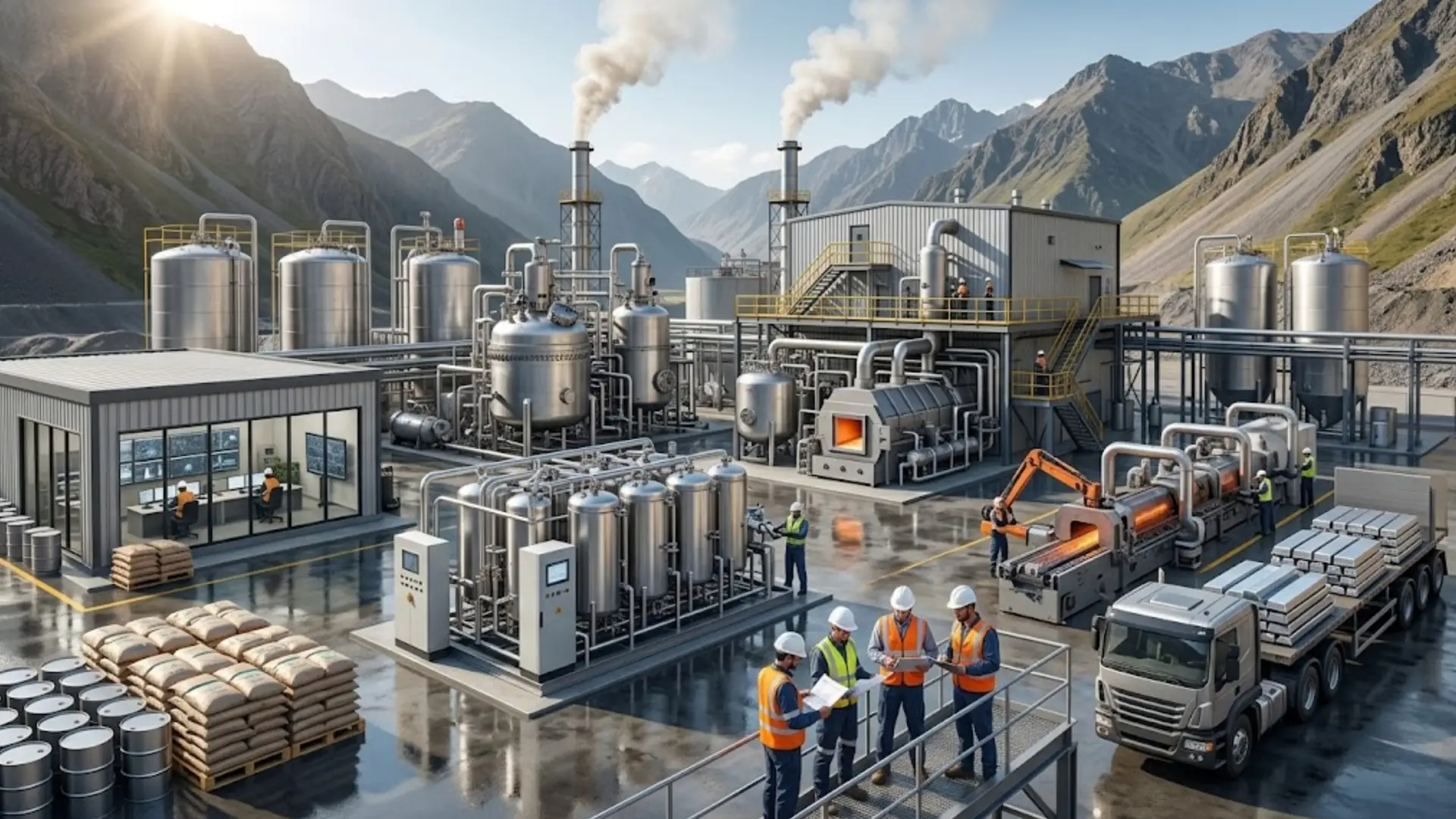
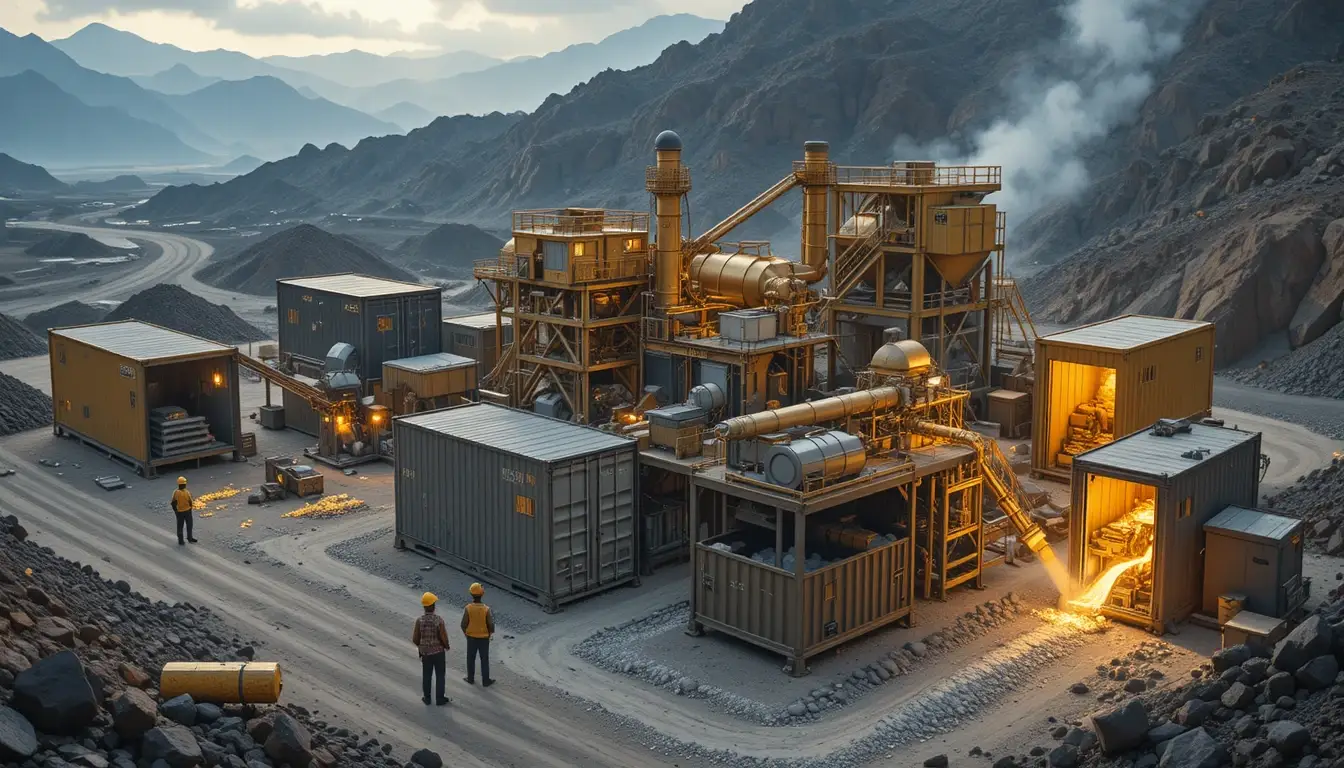
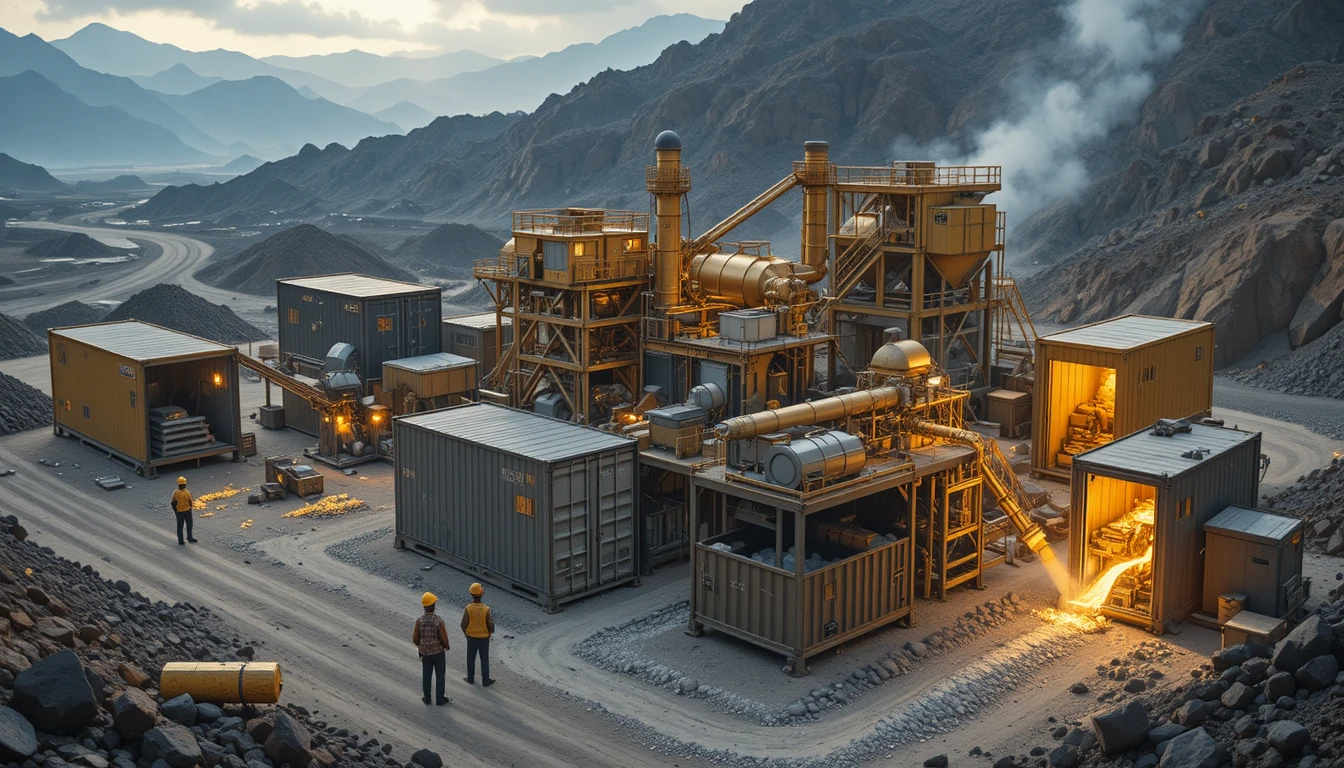
A Modular Gold Refining Plant for Small Scale Mining is a compact, pre-engineered refining system designed to recover and purify gold from small to medium feed volumes. It is usually built in transportable modules or skid-mounted units, making installation faster and easier than conventional fixed plants.
These plants are ideal for miners who want better control over refining quality without committing to a very large central refinery. Modules can include crushing, grinding, leaching, adsorption, elution, smelting, and final refining sections, depending on the plant design and feed type.
The biggest advantage is flexibility. If your mine starts at lower throughput and later expands, you can add more modules instead of replacing the whole plant. This reduces financial pressure and supports better production planning.
For investors, this also lowers project risk. A modular plant allows phased capital deployment, which means money is spent in line with actual production growth rather than projected volumes only.
2. Why Small-Scale Miners Need Modular Refining Solutions
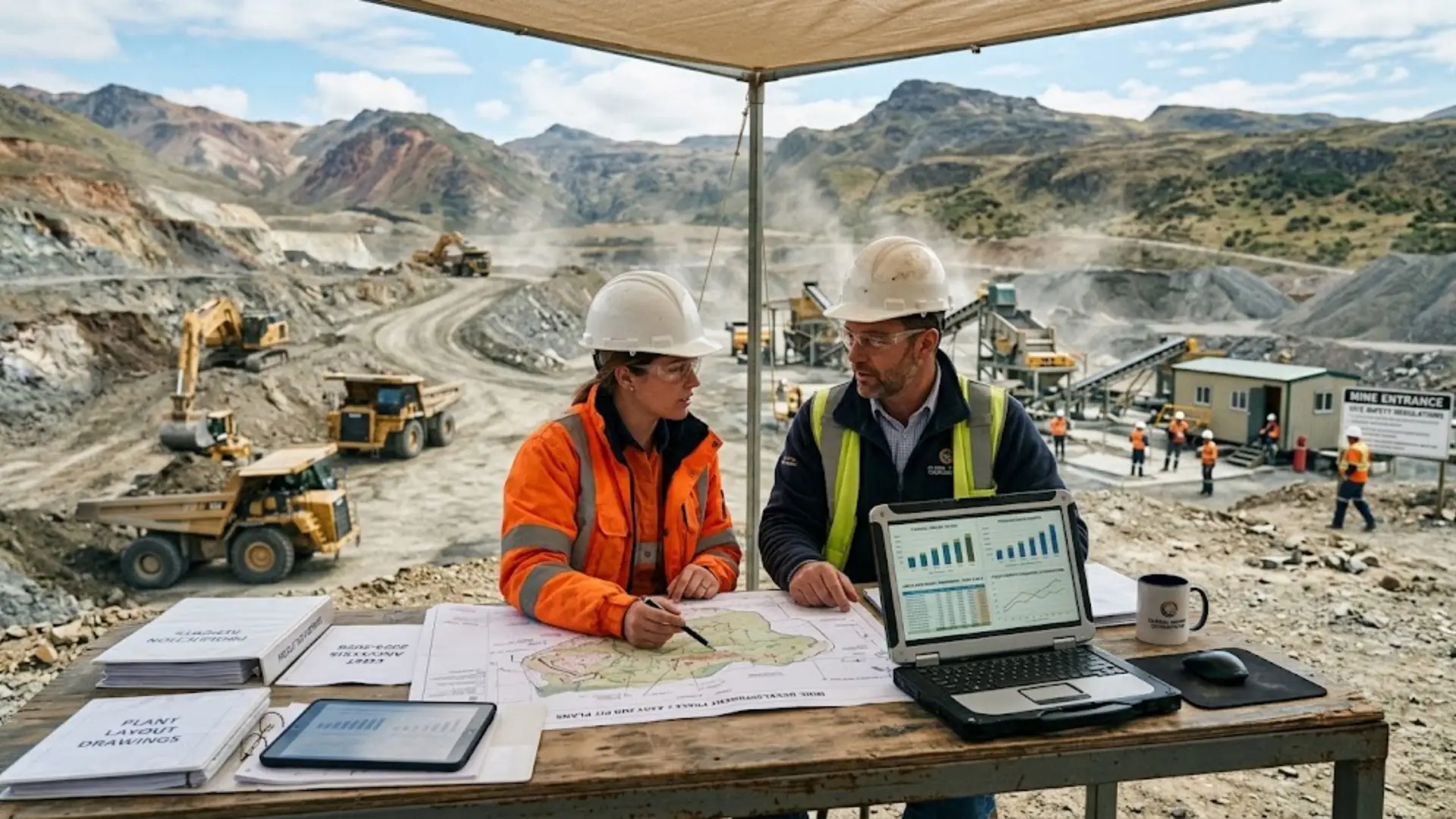
Small-scale mining businesses usually work in challenging conditions. Ore grades can vary. Site infrastructure may be weak. Access to power, water, and skilled labor may be limited. In many cases, miners sell semi-processed concentrate or doré at discounted prices because they do not have efficient refining systems on-site.
A Modular Gold Refining Plant for Small Scale Mining solves several of these issues.
First, it reduces dependence on third-party refiners. When you refine closer to the mine, you keep more control over purity, recovery, and final product value.
Second, it shortens the processing chain. Less handling often means fewer losses, better security, and faster cash flow.
Third, it supports remote mining locations. Modular systems are easier to transport and install compared to large civil-intensive plants.
Fourth, it improves scalability. A miner producing 20 TPD today may grow to 100 TPD next year. Modular systems make that transition easier.
This is especially useful in emerging mining districts where operators want to start lean, prove the resource, and expand with confidence.
3. How a Modular Gold Refining Plant Works
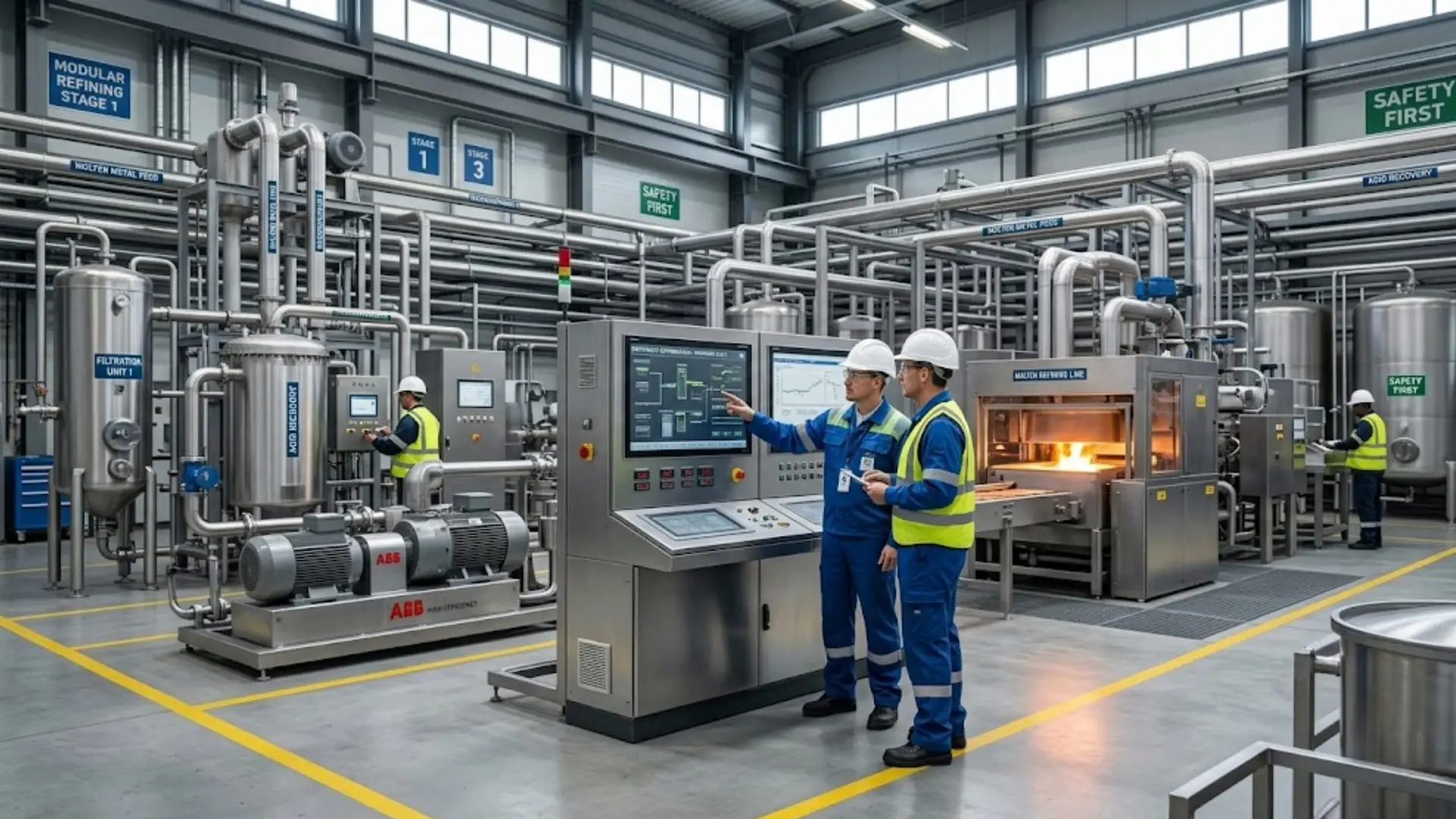
A Modular Gold Refining Plant for Small Scale Mining is designed around a simple principle: process ore or concentrate through connected units that each handle one stage of gold recovery and purification.
Think of it like a water purification line. Dirty water does not become clean in one step. It passes through screening, settling, filtering, and treatment. Gold refining works in a similar way. Raw material moves through stages that remove waste, separate valuable particles, and upgrade the gold into a saleable product.
Depending on your feed material, the plant may process:
-
Gravity concentrate
-
Flotation concentrate
-
High-grade ore
-
Doré material
-
Tailings with recoverable gold
The exact route depends on mineralogy, feed grade, and desired product purity. Some systems focus on doré production first, while others go further into final bullion-grade refining.
4. Step-by-Step Process Explanation
4.1 Feed Preparation
Raw ore or concentrate is first prepared for treatment. If the plant handles ore directly, this may include crushing and grinding to achieve the right particle size. Finer particles increase contact with reagents and improve gold liberation.
4.2 Gravity Separation or Pre-Concentration
If coarse gold is present, gravity equipment such as centrifuges, shaking tables, or sluice systems may recover a portion before chemical treatment. This reduces load on downstream sections and improves overall efficiency.
4.3 Leaching
In many plants, the next stage is leaching. Here, gold is dissolved into solution using suitable reagents. Cyanidation remains common in many operations, but the plant design can vary depending on regulations, safety policy, and ore characteristics.
4.4 Adsorption or Recovery from Solution
Once gold enters the solution, it is recovered using activated carbon, resin, or precipitation methods. This stage captures dissolved gold from the liquid stream.
4.5 Desorption and Elution
Gold-loaded carbon or resin is then treated so the gold can be stripped off and concentrated into a smaller volume. This step prepares the material for electrowinning or precipitation.
4.6 Electrowinning
In electrowinning, dissolved gold is deposited onto cathodes by passing electric current through the solution. This creates a gold-rich sludge or deposit that can be collected.
4.7 Smelting
The recovered gold-bearing sludge is dried, mixed with fluxes, and smelted in a furnace. This produces doré bars, which contain gold plus some silver and other impurities.
4.8 Final Refining
If higher purity is required, doré bars go through refining steps such as chemical purification, electrorefining, or selective precipitation. The result is higher-purity gold suitable for trading or industrial use.
4.9 Assaying and Quality Control
Final product quality must be checked through assaying. Reliable assays help confirm purity, support pricing, and maintain buyer confidence.
4.10 Waste Treatment and Water Management
A modern Modular Gold Refining Plant for Small Scale Mining should also include water recycling, detox systems, and residue handling to reduce environmental risk and improve compliance.
5. Equipment List for a Modular Gold Refining Plant
The exact equipment depends on feed type and process route, but a typical plant may include:
-
Ore hopper and feeders
-
Jaw crusher or hammer mill
-
Ball mill or grinding mill
-
Gravity concentrator
-
Shaking table
-
Leach tanks
-
Agitators and pumps
-
Carbon-in-pulp or carbon-in-leach system
-
Elution column
-
Electrowinning cell
-
Filter press
-
Drying oven
-
Smelting furnace
-
Refining reactor
-
Dust collection unit
-
Water treatment system
-
Tailings handling unit
-
Assay lab equipment
-
Control panel and automation system
For buyers, the best suppliers provide equipment as integrated modules rather than disconnected machines. That improves commissioning speed and lowers installation errors.
6. Plant Capacity Options: 10–1000 TPD
Capacity selection is one of the most important decisions in any Modular Gold Refining Plant for Small Scale Mining project.
10–30 TPD
This range suits pilot operations, artisanal-to-formal transitions, and very small mines. It is often used where ore supply is limited but gold grade is relatively high.
50–100 TPD
This is a strong entry-level commercial range for many small mining companies. It offers good balance between investment level and revenue potential.
100–250 TPD
This range works well for growing mines with more stable reserves. It supports better economies of scale and often justifies more advanced automation.
250–500 TPD
This capacity is suitable for organized small-to-mid tier mining operations. At this stage, process optimization, reagent control, and energy efficiency become much more important.
500–1000 TPD
This upper modular range suits larger projects that still want phased construction instead of a single large plant build. Investors often prefer this route because expansion can follow proven mine performance.
When sizing a plant, you should consider:
-
Ore reserve confidence
-
Feed grade variability
-
Expected mine life
-
Power availability
-
Water supply
-
Local labor skills
-
Future expansion plans
A plant that is too small can create bottlenecks. A plant that is too large can tie up capital and reduce return on investment.
7. Energy Consumption Details
Energy use is a major operating cost in any gold processing project. In a Modular Gold Refining Plant for Small Scale Mining, the highest power demand usually comes from crushing, grinding, agitation, pumping, electrowinning, and smelting.
Typical Energy Consumers
Comminution equipment such as crushers and mills often takes the largest share of total power use.
Leaching and agitation systems consume continuous power over long operating hours.
Pumps and slurry transfer lines add to the base electrical load.
Electrowinning cells require controlled electrical input.
Smelting furnaces use significant thermal energy, especially if operated frequently in batches.
Estimated Consumption Range
Actual values depend on ore hardness, grind size, throughput, and process design, but small modular plants often fall within these broad bands:
-
10–50 TPD: low to moderate energy demand
-
50–250 TPD: moderate energy demand with rising pumping and milling load
-
250–1000 TPD: higher energy demand but often lower energy cost per ton due to scale efficiency
How to Reduce Energy Costs
-
Use energy-efficient motors
-
Match mill size to ore hardness
-
Install variable frequency drives
-
Recover and recycle process water
-
Automate pumps and agitators
-
Optimize furnace cycles
-
Use solar-diesel hybrid systems where practical
For remote mines, energy planning is just as important as metallurgical planning. A good plant supplier should provide load data, power factor analysis, and backup power recommendations.
8. Cost Estimation: Low, Medium, and High Investment
The cost of a Modular Gold Refining Plant for Small Scale Mining depends on capacity, automation level, metallurgy, site conditions, and environmental control requirements.
Low-Cost Range
A low-cost setup usually includes smaller throughput, basic recovery circuits, limited automation, and simpler civil works.
Suitable for: early-stage miners, pilot projects, or small operations with high-grade feed.
Cost profile includes:
-
Basic equipment package
-
Manual or semi-manual controls
-
Lower infrastructure complexity
-
Limited lab and automation systems
Medium-Cost Range
This is the most common range for serious small mining businesses.
Suitable for: commercial small-scale operations seeking stable recovery and better product quality.
Cost profile includes:
-
Better process integration
-
Improved safety systems
-
Moderate automation
-
Smelting and refining modules
-
Water treatment and tailings support systems
High-Cost Range
A high-cost modular plant usually involves larger capacity, better automation, advanced refining stages, and stronger environmental compliance systems.
Suitable for: investors, expanding mines, and operations aiming for long-term scale.
Cost profile includes:
-
Full modular engineering package
-
Advanced controls and instrumentation
-
Larger energy systems
-
Laboratory and assay support
-
Strong environmental management units
Main Cost Drivers
-
Plant throughput
-
Ore mineralogy
-
Required product purity
-
Site logistics
-
Power generation
-
Water systems
-
Civil and installation work
-
Environmental controls
-
Level of automation
A low-price plant may look attractive at first, but if recovery is poor or maintenance is high, your real cost per ounce can become much worse.
9. ROI and Profitability Analysis
A Modular Gold Refining Plant for Small Scale Mining is attractive because profitability can improve from multiple directions, not just one.
9.1 Higher Recovery
Even a small increase in recovery can have a major impact on profit. If your current process loses fine gold, upgrading to a better modular system can add meaningful revenue every month.
9.2 Better Product Value
When you sell cleaner doré or higher-purity refined gold, you usually reduce discounts from buyers and improve realized price.
9.3 Lower Transport and Security Risk
Refining closer to the mine can lower the cost and risk of moving concentrate or partially processed material over long distances.
9.4 Faster Cash Conversion
Shorter processing cycles can improve working capital. That matters for small miners who need more predictable cash flow.
9.5 Scalable Investment
Instead of spending heavily on a full-size refinery upfront, you can invest in stages. That protects capital and improves payback confidence.
Example Profitability View
If a mine processes modest tonnage but improves gold recovery by even a few percentage points, the added ounces can quickly offset plant operating costs. For many operations, the most important ROI factor is not the headline cost of the plant, but the amount of recoverable gold that was previously being lost.
Investors typically look at:
-
-
Payback period
-
Operating margin per ounce
-
Cost per ton processed
-
Recovery rate
-
Gold purity and sale price
-
Expansion potential
-
A well-designed modular plant can offer strong returns because it aligns capital cost with real production growth instead of theoretical mine forecasts.
10. Comparison with Traditional Gold Refining Methods
Traditional Fixed Plant
Traditional plants are often large, site-built, and designed for long-term high throughput. They can be powerful, but they also demand more civil work, longer installation time, and higher upfront capital.
Modular Plant
A Modular Gold Refining Plant for Small Scale Mining is faster to deploy, easier to transport, and simpler to expand in stages. It suits operators who need flexibility more than maximum initial scale.
Key Differences
Capital risk:
Modular plants usually require lower initial commitment.
Installation time:
Modular systems are generally faster to commission.
Scalability:
Traditional plants are harder to expand in small phases.
Mobility:
Modular systems are better for remote or changing mine sites.
Customization:
Traditional plants may allow more large-scale custom design, but modular plants now offer strong process flexibility as well.
For many small miners, traditional refining methods are like building a large factory before confirming market demand. A modular plant is more like setting up a proven production line that can be extended as orders increase.
11. Environmental Benefits
Environmental performance is no longer optional. Buyers, regulators, and investors all want cleaner operations. A modern Modular Gold Refining Plant for Small Scale Mining can support better environmental outcomes when designed correctly.
Lower Land Disturbance
Modular plants often need less on-site construction and smaller footprints than conventional fixed facilities.
Better Water Management
Many modular systems include water recycling loops, which reduce fresh water demand and lower discharge volumes.
Controlled Reagent Handling
Integrated tanks, piping, and monitoring systems can improve reagent dosing and reduce the chance of spills or misuse.
Improved Tailings Control
With better process consistency, tailings can be managed more safely and with lower residual gold losses.
Opportunity to Reduce Informal Mercury Use
In regions where informal mining still uses mercury, modular refining offers a path toward cleaner, safer recovery systems.
For project developers, environmental performance is not just about compliance. It also affects community trust, financing access, and long-term operating stability.
12. Real-World Use Cases and Applications
A Modular Gold Refining Plant for Small Scale Mining can be used in several practical scenarios.
Remote Small Gold Mines
Remote operators often need fast deployment and simple installation. Modular systems are ideal because transportable units reduce construction complexity.
Mine Expansion Projects
A miner producing at small scale today may use a modular plant to bridge the gap before a larger central plant is justified.
High-Grade Deposit Development
For high-grade but limited-tonnage deposits, a modular plant can deliver excellent economics without oversized infrastructure.
Toll Processing Businesses
Entrepreneurs or industrial buyers can use modular gold plants to process feed from multiple nearby miners and create a regional service business.
Tailings Reprocessing
Some projects use modular systems to recover gold from old tailings where a full conventional plant would not be cost-effective.
Formalization of Artisanal Mining
Governments and private investors may support modular plants as part of efforts to move artisanal miners into safer and more transparent production systems.
13. Key Factors to Consider Before Buying
Before you invest in a Modular Gold Refining Plant for Small Scale Mining, you should evaluate more than just the equipment price.
Ore Characterization
Without proper metallurgical testing, even the best plant may perform poorly. Mineralogy must guide process design.
Recovery Guarantee
Ask suppliers about expected recovery rates and whether they support pilot testing.
After-Sales Support
A good supplier should provide commissioning, training, spare parts, and troubleshooting support.
Automation Level
Too little automation can reduce consistency. Too much can raise cost without matching site skill levels. Balance is important.
Compliance Requirements
Check local rules for emissions, reagent handling, tailings, and gold sales.
Expansion Path
Choose a design that allows additional modules as throughput grows.
Security and Gold Accountability
Precious metal operations need strong material tracking, assay systems, and access control.
The best purchase is not always the cheapest plant. It is the plant that gives you reliable recovery, safe operation, manageable maintenance, and room to grow.
14. Internal Linking Suggestions
To strengthen SEO and help users explore related industrial solutions, use internal links around these anchor phrases:
-
modular refining plant
-
gold refining plant
-
mining setup guide
You can also build supporting content around topics like plant commissioning, gold recovery methods, process testing, refining costs, and small-scale mining equipment selection.
15. Conclusion
A Modular Gold Refining Plant for Small Scale Mining gives you a smarter path to gold recovery, quality control, and scalable growth. It helps small miners move beyond inefficient manual methods and gives industrial buyers and investors a more flexible project model with lower upfront risk.
If your goal is to improve recovery, reduce losses, and build a stronger gold business step by step, modular refining is one of the most practical solutions available today. The right plant is not just a processing unit. It is a profit tool, a control system, and a foundation for long-term growth.
FAQs
1. What is a Modular Gold Refining Plant for Small Scale Mining?
A Modular Gold Refining Plant for Small Scale Mining is a compact, pre-engineered processing system designed to recover and refine gold in smaller throughput ranges. It is built in modules, which makes it easier to transport, install, and expand as production increases.
2. How much does a modular gold refining plant cost?
The cost depends on capacity, process complexity, automation, site conditions, and environmental systems. Small basic plants are cheaper, while larger plants with advanced refining and compliance systems require higher investment. The most important point is to compare total cost against recovery, operating efficiency, and long-term profitability.
3. What plant capacity is best for small-scale mining?
That depends on your ore reserves, feed grade, and growth plan. Many small commercial miners start in the 10–100 TPD range, while more established operations may choose 100–500 TPD modular systems. A phased approach is often the safest option.
4. Is a modular gold refining plant profitable?
Yes, it can be highly profitable when the plant is matched correctly to your ore and throughput. Profitability usually improves through higher recovery, lower losses, better final gold value, and reduced dependence on outside refiners.
5. How does a modular plant compare with traditional refining methods?
A modular plant usually needs lower upfront capital, shorter installation time, and easier expansion. Traditional fixed plants may suit very large long-life projects, but modular systems are often better for small-scale miners who need flexibility and lower project risk.
Read More: Articles Avimetal